
 Preview
 Send
Send Share
Share
 Details
 Guide
Guide

 Download
 Similars
 X-Ray
X-Ray Diaporama
 Stats
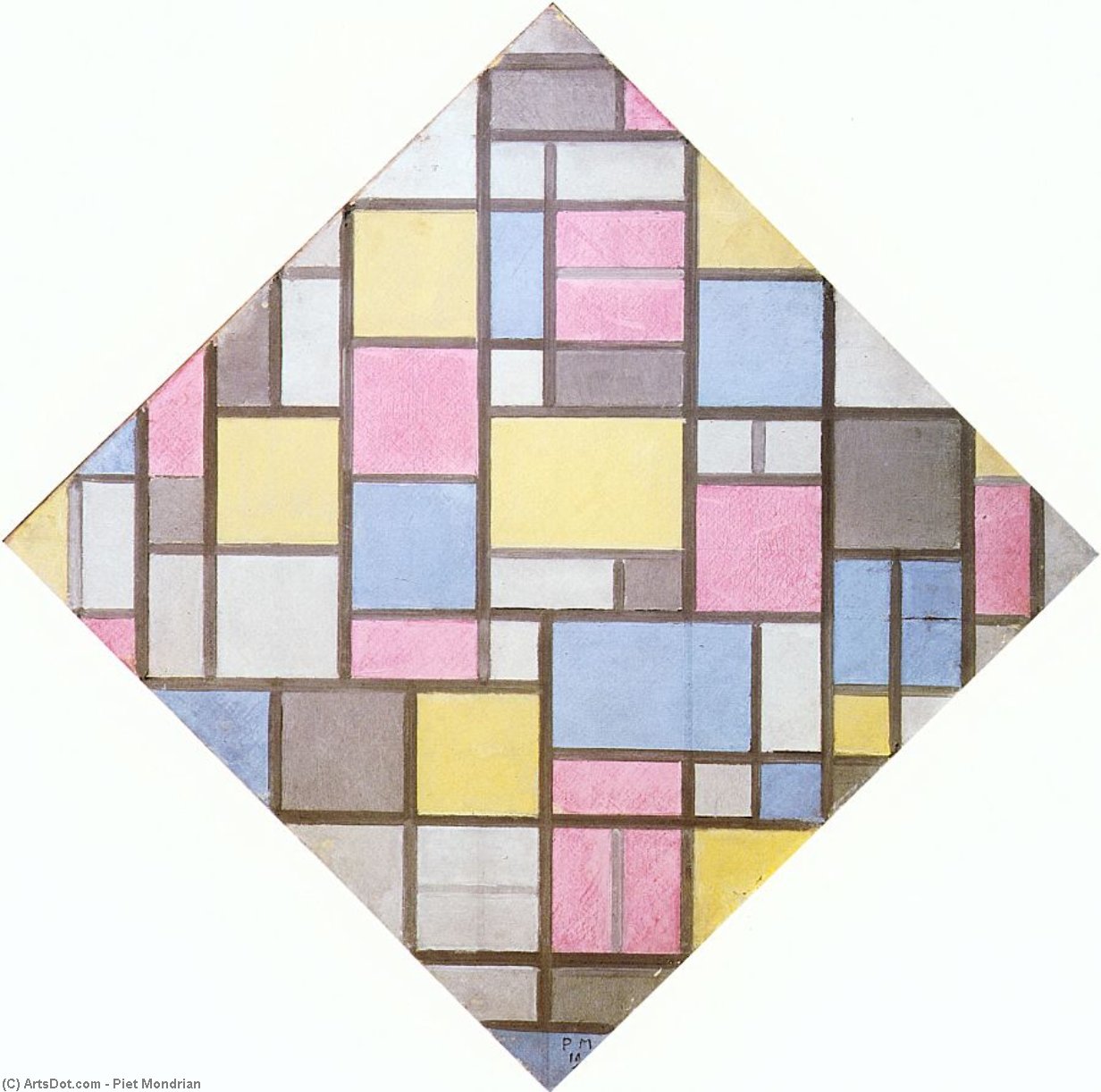
StatsComposition with Grid VII


 Read More
Get a print-ready file that goes far beyond the web preview. Every digital image we sell comes from a high-resolution master in our stock database — usually 5,000 to 15,000 pixels wide — so you can print large, crop tightly, or reproduce fine detail with confidence.
No file leaves our studio untouched. A digital expert checks the colors against the original painting and corrects them if needed, then improves clarity and detail with professional retouching tools — always staying faithful to the artist's brushwork and style. The result is an image that looks like the painting, not like a filtered scan.
You approve before you're done: our expert sends the image by e-mail within 72 hours for your review. Not satisfied? Ask for improvements or corrections, or request a refund if the quality falls short.
This is the quality relied on by publishers, design studios, galleries and print shops.
Digital Image
Download a high-resolution file for personal display, printing, and creative projects. ( Switch to Print Buy Hand Made Painting)
Included in Every Digital Image Order
Expert Digital Delivery, Guaranteed
When you choose OriginalUniqueArt.com, you're not just getting an image - you're receiving a professionally enhanced digital artwork, crafted with precision and backed by a satisfaction guarantee. Here's everything that comes with your order, automatically:

Fast Email Delivery
Your high-resolution digital image file will be emailed to you within 72 hours of ordering - ready for immediate use.

AI-Enhanced Digital File
Your artwork is professionally optimized using advanced AI tools and manual editing, ensuring maximum detail, clarity, and color accuracy.

Free Lifetime Re-Delivery
Accidentally deleted or lost your file? No worries - we'll resend it to you anytime, free of charge.

No Import Fees - Ever
Enjoy your artwork instantly with zero customs, duties, or delivery fees - digital downloads are always tax-free.

Color Accuracy Guarantee
We ensure your digital image reflects the original colors as closely as possible using professional tools and color management.

100-Day Satisfaction Guarantee
If you're not satisfied with your digital image, we'll revise it or refund 100% within 100 days - no questions asked.

100% Money-Back Guarantee
Not satisfied? Get a full refund within 100 days of receiving your digital file - no questions asked.

Bulk Order Discounts
Buy 3 images, save 10% - Buy 5, save 15% - Buy 10+, save 20%. Great for creative projects, galleries, and agencies.
A Geometry of Feeling: Deconstructing Reality in Piet Mondrian’s Composition with Grid VII
Piet Mondrian's Composition with Grid VII, created in 1919, is not merely an arrangement of colored squares and black lines; it is a visual manifesto of a radical artistic philosophy. Emerging from the tumultuous aftermath of World War I, this work embodies a yearning for order and universality amidst chaos – a distillation of reality into its most fundamental components. The painting presents a carefully calibrated grid structure populated with rectangles of varying sizes, each filled with hues of blue, yellow, pink, and gray, alongside areas of stark white. This isn’t about depicting the world *as* it is seen, but rather exploring the underlying principles that govern existence itself.
The Path to Neoplasticism: A Journey of Abstraction
To understand Composition with Grid VII, one must trace Mondrian's artistic evolution. Born Pieter Cornelis Mondriaan in Amersfoort, Netherlands, he began his career painting naturalistic landscapes, influenced by the Hague School and Dutch Impressionism. However, a restless spirit drove him to experiment – Pointillism, Fauvism, and ultimately, Cubism. His pivotal move to Paris in 1912 exposed him to the avant-garde, sparking a deconstruction of form that would define his life’s work. He began stripping away representational elements, seeking an art free from the subjective distortions of individual perception. This quest culminated in Neoplasticism (also known as De Stijl), a style predicated on pure abstraction and universal harmony. Composition with Grid VII stands as a crucial stepping stone within this journey; it’s not yet the fully realized, rigorously geometric aesthetic of his later works like Composition with Red, Blue and Yellow, but rather a dynamic exploration *towards* that endpoint. The grid isn't absolute here – lines are slightly irregular, colors subtly nuanced – hinting at the organic origins from which this abstract language emerged.
Beyond Aesthetics: A Spiritual and Philosophical Undertone
Mondrian wasn’t simply interested in creating visually pleasing arrangements; his art was deeply rooted in spiritual and philosophical beliefs. Influenced by Theosophy, he believed that underlying all of reality were fundamental geometric forms and primary colors – the building blocks of the universe. By reducing painting to these essential elements, he aimed to express a universal truth, transcending individual experience and cultural specificity. The horizontal and vertical lines, in particular, represented opposing forces—masculine and feminine, static and dynamic—brought into equilibrium. The limited palette wasn’t arbitrary; it was chosen for its purity and symbolic resonance. The grid itself can be interpreted as a metaphor for the structure of existence, while the colored rectangles represent individual energies contained within that framework. This isn't cold intellectualism, however. There is an emotional current running through the work – a sense of calm, balance, and quiet contemplation.
A Lasting Legacy: Mondrian’s Influence on Modern Design
The impact of Piet Mondrian extends far beyond the realm of painting. His aesthetic principles have profoundly influenced countless designers, architects, and artists. From fashion to furniture, the clean lines, geometric forms, and primary color palettes characteristic of Neoplasticism continue to resonate in contemporary design. Composition with Grid VII, as a key work within this movement, serves as a powerful reminder of Mondrian’s enduring vision – a vision that sought not merely to depict the world, but to reshape our perception of it. Owning a reproduction of this artwork isn't just acquiring a beautiful object; it is inviting a piece of art history and philosophical inquiry into your space—a testament to the power of abstraction to evoke emotion, inspire thought, and transform our surroundings.
Questions & Answers
What is "Composition with Grid VII" made with, and in which style?
"Composition with Grid VII" by Piet Mondrian combines the acrylic on canvas technique with the Neoplasticism style. Technique and movement describe the making and the style of the work.
What aliases or alternate names does Piet Mondrian have?
Piet Mondrian appears under the alternate names Pieter Cornelis Mondriaan, Jr..
Are the colors of "Composition with Grid VII" by Piet Mondrian saturated or muted?
The colors of "Composition with Grid VII" by Piet Mondrian have a muted saturation. Saturation describes how vivid or muted the colors are.
Artist Biography
The Architecture of Order
To look at a Mondrian today is to see the blueprint of modern visual culture. We encounter his logic every time we interact with a clean graphic layout or a minimalist building facade. He stripped away the unnecessary until only the essential remained. This was not an act of destruction, but one of extreme distillation. By reducing his vocabulary to straight lines, right angles, and a strict palette of red, blue, and yellow, he removed the distraction of reality to reveal a structural truth.
His early work in the Netherlands followed much more traditional paths. He began with landscapes that captured the windmills and rivers of the Dutch countryside, heavily influenced by the Hague School and Impressionism. Pieces like The Red Mill show an artist focused on naturalistic detail and the soft light of his homeland. However, even in these early years, a drive toward simplification was present. He moved through Pointillism and Fauvism, testing how much color and form could be compressed before the subject disappeared entirely.
The Parisian Shift and Neoplasticism
The move to Paris in 1912 changed everything. Encountering Cubism forced him to deconstruct objects into geometric components. He stopped trying to depict what he saw and began exploring how he saw it. This period was deeply tied to his interest in Theosophy, a mystical philosophy that sought universal principles beneath surface appearances. He believed art could express these hidden truths through pure abstraction.
By 1917, this search resulted in Neoplasticism, or "pure plastic art." Alongside Theo van Doesburg, he co-founded the De Stijl movement to promote a rigid aesthetic of horizontal and vertical lines. The rules were absolute:
- The use of primary colors: red, blue, and yellow.
- The use of primary values: black, white, and gray.
- A focus on right angles and straight lines.
This reduction was a deliberate attempt to manifest spiritual order through visual balance. Works like Composition with Red, Blue and Yellow demonstrate this commitment to geometric purity.
New York and the Final Rhythm
The arrival of World War II forced Mondrian to flee Europe for New York City in 1940. The transition from the organic landscapes of his youth to the rigid grid of Manhattan provided a new, unexpected energy. His late works, such as Broadway Boogie Woogie, show a shift in rhythm. While he maintained his core principles, the lines began to dance with a new, syncopated movement inspired by the city's pulse and jazz music.
His death in 1944 ended a career that had fundamentally altered the trajectory of 20th-century art. He left behind a legacy that moved far beyond the canvas, influencing everything from architecture to fashion, including the famous 1965 collection by Yves Saint Laurent. His work remains a standard for anyone seeking clarity and structural integrity in a chaotic visual age.

Piet Mondrian
1872 - 1944 , Netherlands