Preview
 Send
Send Share
Share
 Details
 Guide
Guide

 Download
 Similars
 X-Ray
X-Ray Diaporama
 Stats
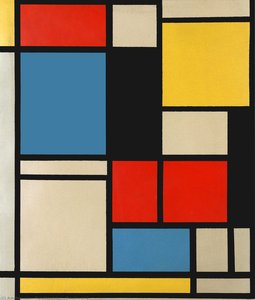
StatsComposition in gray-blue


 Read More
Hand Made Oil Reproduction
Hand-painted oil on canvas in your size and frame, made to order by our artists. ( Switch to Print Switch to Digital Image)




P118B $10

P118H $10

P118W $10

P438Z $10

P508JH $12

P508YH $12

P805H $10

P805Z $10

P919BZ $10

P919G $10

P919XJ $10

P959ZH $10

P968JZ $12

W106C $8

W218G $10

W218JH $8

W218Y $10

W307PJ $10

W316G $10

W316PJ $8

W316Y $10

W398PJ $8

W4111J $10

W500HY $15

W500JH $15

W692G $12

W849H $8

W940BG $15

W953PJ $8




Pick from our preset sizes that match the artwork's original proportions.

Type the width and the height you need, to fit your frame or your wall. This is hand-painted, so for a size with a different shape the artist can paint a bit more around the picture, or cut a bit — you choose. We send you a digital mockup to approve before the painting starts. The picture shown on this page does not show the real result — only the mockup does.
After order, OriginalUniqueArt.com team will email client for instructions and provide a mockup preview
Worldwide Delivery () in 3/4 weeks instead of standard 5 weeks. (22 October). No compromise on quality.

Free Worldwide Express Shipping

High-Quality Linen Canvas

Full Shipping Insurance

Customs Tax Refund Guarantee

True Color Matching Guarantee

100-Day Return Policy (Defects Only)

100% Money-Back Guarantee

Bulk Discount Offer
 Glass option is only available in size under 110 CM

Composition in gray-blue
Reproduction Medium
Reproduction Size
-


Total Price
$ 300
A Pivotal Step Towards Abstraction: Exploring Mondrian’s Composition in Gray-Blue
Piet Mondrian's *Composition in Gray-Blue*, created between 1912 and 1913, represents a crucial turning point in the artist’s journey toward pure abstraction. This oil on canvas, now housed at the Thyssen-Bornemisza Museum in Spain, isn’t merely a painting; it's a visual manifesto of early Modernism, reflecting the seismic shifts occurring within the art world at the dawn of the 20th century.Cubist Influences and Artistic Context
Mondrian didn’t arrive at abstraction in a vacuum. The artwork is deeply rooted in the burgeoning Cubist movement pioneered by Pablo Picasso and Georges Braque. However, while embracing Cubism's fragmentation of form and multiple perspectives, Mondrian began to diverge from its representational anchors. The reintroduction of color into Cubist palettes around 1913 significantly impacted him – a development clearly visible in related works like *Oval Composition* (1913-14), which foreshadows his later emphasis on primary colors. This period was one of intense experimentation, as Mondrian sought to move beyond merely depicting objects and instead explore the underlying structures of reality.Deconstructing Form: Composition and Style
*Composition in Gray-Blue* is characterized by its deliberate rejection of recognizable subject matter. Instead of a landscape or portrait, we encounter an intricate network of interlocking black lines and subtly shifting planes of gray and blue. The painting’s composition isn't built *from* a central point but rather seems to radiate outwards, anchored to the edges of the canvas – a novel approach that further destabilizes traditional pictorial space. The technique is marked by a textured surface, achieved through visible brushstrokes and impasto, adding a tactile quality to the abstract forms. The fragmentation echoes Cubist principles, yet Mondrian pushes beyond representation, eliminating any illusion of volume or depth.Symbolism and Emotional Resonance
While devoid of explicit symbolism, *Composition in Gray-Blue* evokes a sense of quiet contemplation and intellectual rigor. The muted color palette – dominated by cool grays and blues – contributes to an atmosphere of serenity and introspection. The dynamic interplay of lines suggests movement and energy contained within a carefully balanced structure. It’s not a painting that shouts for attention; rather, it invites prolonged viewing and encourages the viewer to engage with its formal qualities on a deeper level. The work feels both analytical and emotionally resonant, hinting at Mondrian's spiritual quest for universal harmony.Legacy and Influence
This artwork is not an end point but a crucial stepping stone towards Mondrian’s iconic Neoplasticist style – the geometric abstraction defined by primary colors and black grids. The principles explored in *Composition in Gray-Blue* directly inform his later masterpieces, such as *Composition with Large Red Plane, Yellow, Black, Gray and Blue*. It demonstrates a profound continuity of artistic vision, revealing Mondrian’s unwavering commitment to reducing painting to its essential elements.Key Characteristics
- Early Abstraction: A pivotal work in Mondrian's transition from representational art to pure abstraction.
- Cubist Dialogue: Demonstrates a clear engagement with, and departure from, the principles of Cubism.
- Formal Innovation: Challenges traditional compositional structures by anchoring forms to the canvas edges.
- Subtle Palette: The restrained use of gray and blue creates a contemplative atmosphere.
- Foundation for Neoplasticism: Lays the groundwork for Mondrian’s later, more rigorously geometric style.
A Timeless Masterpiece for Today's Spaces
*Composition in Gray-Blue* is a powerful statement of artistic innovation and a testament to Mondrian’s enduring legacy. Its sophisticated palette and dynamic composition make it an ideal choice for modern interiors, adding a touch of intellectual elegance and timeless appeal. Whether appreciated as a historical landmark or a source of contemporary inspiration, this painting continues to captivate and challenge viewers over a century after its creation.Questions & Answers
What is the art-historical place of "Composition in gray-blue" by Piet Mondrian?
Historically, "Composition in gray-blue" is a Cubism work of the broader Modern era.
How can I get a print of "Composition in gray-blue" by Piet Mondrian?
"Composition in gray-blue" is available as a fine art print on cotton canvas or archival canvas paper. Orders are placed on its Fine Art Print page, in the size of your choice.
How much light do the colors of "Composition in gray-blue" appear to reflect?
The colors of "Composition in gray-blue" show a gentle luminance luminance.
Artist Biography
The Architecture of Order
To look at a Mondrian today is to see the blueprint of modern visual culture. We encounter his logic every time we interact with a clean graphic layout or a minimalist building facade. He stripped away the unnecessary until only the essential remained. This was not an act of destruction, but one of extreme distillation. By reducing his vocabulary to straight lines, right angles, and a strict palette of red, blue, and yellow, he removed the distraction of reality to reveal a structural truth.
His early work in the Netherlands followed much more traditional paths. He began with landscapes that captured the windmills and rivers of the Dutch countryside, heavily influenced by the Hague School and Impressionism. Pieces like The Red Mill show an artist focused on naturalistic detail and the soft light of his homeland. However, even in these early years, a drive toward simplification was present. He moved through Pointillism and Fauvism, testing how much color and form could be compressed before the subject disappeared entirely.
The Parisian Shift and Neoplasticism
The move to Paris in 1912 changed everything. Encountering Cubism forced him to deconstruct objects into geometric components. He stopped trying to depict what he saw and began exploring how he saw it. This period was deeply tied to his interest in Theosophy, a mystical philosophy that sought universal principles beneath surface appearances. He believed art could express these hidden truths through pure abstraction.
By 1917, this search resulted in Neoplasticism, or "pure plastic art." Alongside Theo van Doesburg, he co-founded the De Stijl movement to promote a rigid aesthetic of horizontal and vertical lines. The rules were absolute:
- The use of primary colors: red, blue, and yellow.
- The use of primary values: black, white, and gray.
- A focus on right angles and straight lines.
This reduction was a deliberate attempt to manifest spiritual order through visual balance. Works like Composition with Red, Blue and Yellow demonstrate this commitment to geometric purity.
New York and the Final Rhythm
The arrival of World War II forced Mondrian to flee Europe for New York City in 1940. The transition from the organic landscapes of his youth to the rigid grid of Manhattan provided a new, unexpected energy. His late works, such as Broadway Boogie Woogie, show a shift in rhythm. While he maintained his core principles, the lines began to dance with a new, syncopated movement inspired by the city's pulse and jazz music.
His death in 1944 ended a career that had fundamentally altered the trajectory of 20th-century art. He left behind a legacy that moved far beyond the canvas, influencing everything from architecture to fashion, including the famous 1965 collection by Yves Saint Laurent. His work remains a standard for anyone seeking clarity and structural integrity in a chaotic visual age.

Piet Mondrian
1872 - 1944 , Netherlands
Related Articles
Dark Gray Masterpieces: 10 Iconic Paintings & Timeless Home Decor Ideas
Explore 10 iconic paintings dominated by dark gray tones, from Rembrandt & Caravaggio to Goya. Discover the stories behind these masterpieces and find museum-quality art reproductions for your home at . Explore the full collection online.

Geometric Abstraction's 10 Defining Masterpieces | Art for Your Home - OriginalUniqueArt
Explore 10 defining masterpieces of Geometric Abstraction! Discover Kandinsky, Mondrian & Malevich’s iconic works. Find museum-quality art reproductions and curated decor ideas to elevate your home at OriginalUniqueArt.com.

Slate Blue Masterpieces: 10 Iconic Paintings & Timeless Home Decor Ideas
Immerse yourself in the captivating world of slate blue! Explore 10 iconic paintings by Monet, Van Gogh & Renoir. Discover their stories, techniques & find museum-quality art reproductions for your home at .
The Allure of Azure: Exploring the Symbolic & Aesthetic Depths of Blue in Art History
Explore the rich history of blue in art! Discover its symbolism, from ancient pigments to modern masterpieces by Kandinsky & Seurat. Uncover the psychological impact and cultural meanings behind this captivating hue.
Piet Mondrian: Deconstructing Reality – A Study of Neo-Plasticism & Universal Harmony
Explore the revolutionary art of Piet Mondrian and the principles of Neo-Plasticism. Discover De Stijl's influence, iconic compositions like 'Composition with Red, Yellow and Blue,' and Mondrian’s lasting legacy on modern design.