- Home

- Oil Painting Reproduction
- Pierre-Auguste Renoir
- Mother Nursing Her Child (Aline and Pierre)
 Buy print
 Send
Send Share
Share
 Details

 Download
 Similars
 X-Ray
X-Ray Diaporama
Mother Nursing Her Child (Aline and Pierre)

 Read More
Hand Made Oil Reproduction
Hand-painted oil on canvas in your size and frame, made to order by our artists.




P118B $10

P118H $10

P118W $10

P438Z $10

P508JH $12

P508YH $12

P805H $10

P805Z $10

P919BZ $10

P919G $10

P919XJ $10

P959ZH $10

P968JZ $12

W106C $8

W218G $10

W218JH $8

W218Y $10

W307PJ $10

W316G $10

W316PJ $8

W316Y $10

W398PJ $8

W4111J $10

W500HY $15

W500JH $15

W692G $12

W849H $8

W940BG $15

W953PJ $8




Pick from our preset sizes that match the artwork's original proportions.

You may enter your own dimensions to fit a specific frame or space. If your selected size does not match the original image's proportions, we will either crop the artwork or extend the painting with additional hand-painted elements. A digital mockup will be sent for your approval before production begins.
Please note that the on-screen preview does not reflect the actual cropping or extension. Only the mockup will accurately show the final composition.
While custom sizes are available, we recommend selecting a dimension from the predefined list to preserve the original proportions.
After order, OriginalUniqueArt.com team will email client for instructions and provide a mockup preview
Worldwide Delivery () in 3/4 weeks instead of standard 5 weeks. (16 July). No compromise on quality.

Free Worldwide Express Shipping

High-Quality Linen Canvas

Full Shipping Insurance

Customs Tax Refund Guarantee

True Color Matching Guarantee

60-Day Return Policy (Defects Only)

100% Money-Back Guarantee

Bulk Discount Offer
 Glass option is only available in size under 110 CM

Mother Nursing Her Child (Aline and Pierre)
Reproduction Medium
Reproduction Size
-


Total Price
-
Artwork Description
A Tender Embrace: Pierre-Auguste Renoir’s “Mother Nursing Her Child (Aline and Pierre)”
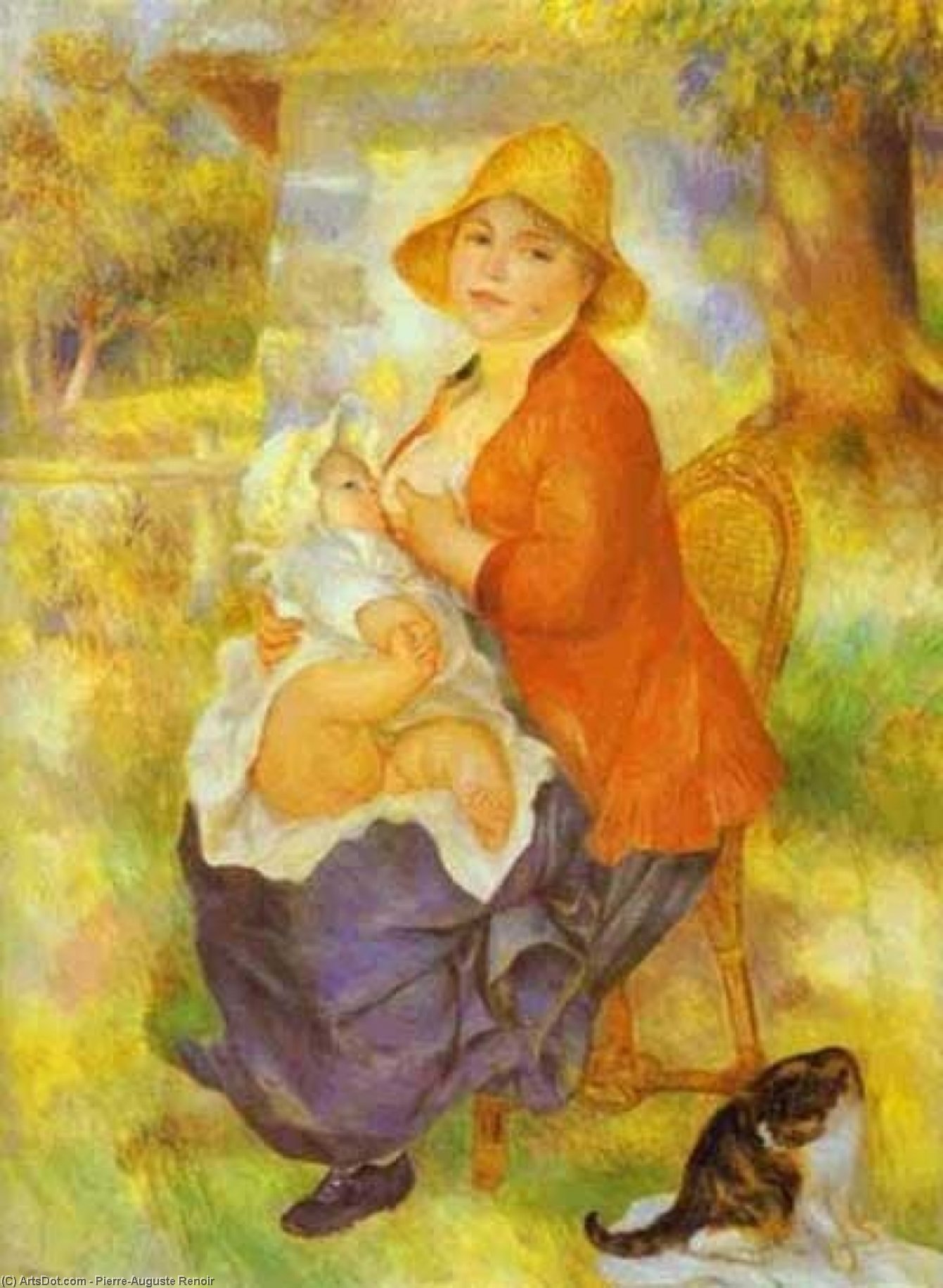
Pierre-Auguste Renoir's "Mother Nursing Her Child (Aline and Pierre)" is more than just a charming domestic scene; it’s a luminous distillation of love, intimacy, and the quiet beauty of everyday life. Painted in 1886, this masterpiece captures a fleeting moment within the artist’s long-term relationship with Aline Charigot, who served as his muse and model for many years. The painting unfolds within a sun-drenched garden setting – a deliberate choice by Renoir to evoke feelings of warmth, serenity, and connection to nature, central themes throughout his oeuvre.
Renoir’s signature Impressionistic style is immediately apparent. He eschews sharp outlines and precise detail in favor of capturing the ephemeral effects of light and color. The dappled sunlight filtering through the foliage creates a mosaic of shimmering highlights on Aline's skin and the baby Pierre’s soft features. Notice how Renoir uses loose, visible brushstrokes – not to create a photographic likeness, but rather to convey the feeling of warmth and movement within the scene. The colors are rich and vibrant, dominated by warm yellows, greens, and pinks, contributing to the painting's overall sense of idyllic contentment.
The composition itself is remarkably balanced. Aline sits comfortably in a wicker chair, her posture relaxed and natural as she nurses Pierre. Her gaze is directed towards the child, radiating an expression of profound tenderness and devotion. The inclusion of two playful cats – one nestled near the right side of the scene and another closer to the center – adds a touch of domestic charm and reinforces the feeling of a harmonious family life. A bottle, subtly placed nearby, hints at the practicalities of motherhood without disrupting the painting’s serene atmosphere.
The Woman Behind the Masterpiece: Aline Charigot
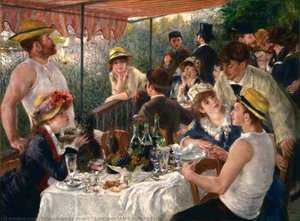
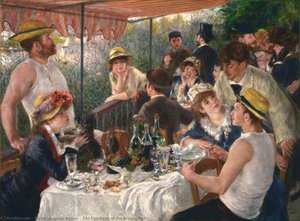
Understanding the subject of “Mother Nursing Her Child” requires delving into the story of Aline Victorine Charigot, a woman who played an extraordinary role in Renoir's life and artistic development. Initially a model for several of his works, including "Luncheon of the Boating Party," their relationship evolved over many years, eventually culminating in marriage in 1885. Aline was not merely a passive subject; she actively participated in Renoir’s creative process, offering suggestions and contributing to the atmosphere of his studio.
Renoir frequently depicted Aline in various poses and settings, often returning to her as a recurring motif throughout his work. This sustained focus speaks volumes about his deep affection for her and his desire to capture her beauty and personality. The intimacy of this particular painting – capturing the quiet act of nursing – offers a rare glimpse into their private world, revealing a tender bond built on mutual respect and artistic collaboration. The fact that she cared for him during his later years, when he suffered from debilitating illness, further solidifies her importance in his life and legacy.
Renoir’s Impressionistic Vision: A Celebration of Modern Life
Pierre-Auguste Renoir was a pivotal figure in the development of Impressionism, a movement that sought to capture the fleeting effects of light and color on the eye. Rejecting the academic traditions of the Salon system, Renoir and his fellow Impressionists embraced plein air painting – working outdoors directly from nature – and experimented with new techniques to achieve their desired results.
His work reflects a fascination with modern Parisian life, particularly the leisure activities and social gatherings of the bourgeoisie. However, unlike some of his contemporaries who focused solely on urban scenes, Renoir often sought refuge in the tranquility of gardens and landscapes, using these settings to explore themes of love, beauty, and human connection. “Mother Nursing Her Child” exemplifies this approach, transforming a simple domestic scene into a profound meditation on motherhood and the enduring power of familial affection.
Preserving a Classic: Hand-Painted Reproductions by OriginalUniqueArt.com
OriginalUniqueArt.com specializes in meticulously crafted hand-painted oil painting reproductions of iconic artworks like “Mother Nursing Her Child (Aline and Pierre).” Unlike digital prints or mass-produced facsimiles, our reproductions are created by skilled artists who painstakingly recreate Renoir’s brushstrokes, color palette, and overall atmosphere using the finest quality materials.
Each reproduction is a unique work of art in its own right, capturing not just the visual likeness of the original but also its emotional resonance. We offer this painting in various sizes to suit your individual needs and décor. To learn more about our process – which combines traditional techniques with modern precision – please visit Mastering the Art of Oil Painting Reproductions: How OriginalUniqueArt.com Preserves Classic Beauty. Explore our collection today and bring a touch of Renoir’s luminous beauty into your home.
Artist Biography
A Life Bathed in Light: The World of Pierre-Auguste Renoir
Born in the provincial French city of Limoges in 1841, Pierre-Auguste Renoir’s journey from humble beginnings as a porcelain painter to becoming a celebrated master of Impressionism is a testament to his unwavering dedication and artistic vision. His early life was marked by a move to Paris with his family, seeking economic opportunity, an experience that would profoundly shape his artistic sensibilities. The bustling city, with its vibrant street life and diverse characters, became the wellspring of inspiration for much of his later work. Initially apprenticed to paint porcelain – a practical necessity dictated by financial constraints – young Renoir found solace in frequent visits to the Louvre, where he meticulously studied the Old Masters, absorbing their techniques and developing an appreciation for beauty that would become a hallmark of his style. This early exposure ignited within him a passion that transcended mere craftsmanship; it was a calling to capture the ephemeral qualities of light and life on canvas. He later enrolled at the studio of Charles Gleyre, where he forged lifelong friendships with fellow aspiring artists Claude Monet, Alfred Sisley, and Frédéric Bazille – a pivotal moment that would lay the foundation for the Impressionist movement.From Realism to Radiant Impressions
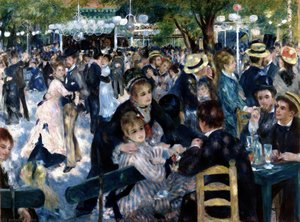
Renoir’s artistic development was a fascinating evolution, influenced by a diverse range of masters. He initially gravitated towards the realism of Gustave Courbet and Édouard Manet, admiring their commitment to depicting contemporary life with honesty and directness. However, it was the luminous palettes and sensual forms of Peter Paul Rubens and Jean-Antoine Watteau that truly captivated him, instilling in his work a deep appreciation for beauty and an inclination towards portraying scenes of joy and leisure. These early influences coalesced as Renoir began to forge his own unique style, characterized by vibrant colors, broken brushstrokes, and a focus on capturing the fleeting effects of light. His participation in the first Impressionist exhibition in 1874 was a watershed moment, though initially met with criticism from traditional art circles. This bold move signaled a rejection of academic conventions and an embrace of a new artistic vision – one that sought to capture not just what the eye sees, but how it *feels* to experience a particular moment in time. Paintings like Dance at Le Moulin de la Galette (1876) exemplify this approach, immersing viewers in the lively atmosphere of Parisian nightlife with its dappled sunlight and joyous figures.Capturing Life’s Fleeting Moments: Key Works and Themes
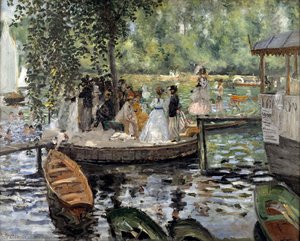
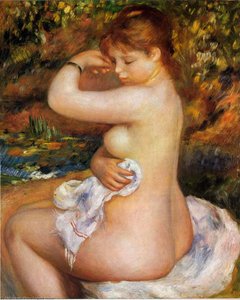
Renoir's oeuvre is a celebration of life’s simple pleasures – intimate gatherings, sun-drenched landscapes, and the radiant beauty of the human form. Luncheon of the Boating Party (1880-81) stands as perhaps one of his most iconic works, depicting a convivial group enjoying a leisurely afternoon on the Seine. The painting is a masterclass in capturing light and movement, with figures bathed in warm sunlight and reflections shimmering on the water. After the Bath (1885-87) showcases Renoir’s exquisite skill in portraying the female nude, emphasizing delicate skin tones and graceful poses. His paintings are not merely representations of reality; they are imbued with a sense of warmth, intimacy, and joy that resonates deeply with viewers. He wasn't interested in grand historical narratives or dramatic allegories; instead, he focused on capturing the beauty inherent in everyday life, elevating ordinary moments into works of art. Dance at Bougival, another celebrated piece, demonstrates his ability to capture fleeting impressions and atmospheric effects, creating a sense of movement and spontaneity.A Shift Towards Form and Structure: Later Years and Legacy
In the 1890s, Renoir’s style underwent a significant transformation. While he never entirely abandoned his Impressionist roots, he began to move towards a more sculptural and classical approach, influenced by his travels to Italy and a renewed interest in form and structure. This shift was also partly prompted by physical limitations – arthritis gradually restricted his mobility, forcing him to adapt his technique. Despite these challenges, Renoir continued to paint with unwavering dedication, producing works characterized by fuller figures and a warmer palette. His later paintings often reflect a more contemplative mood, yet they retain the same underlying celebration of beauty that defined his earlier work. Beyond his artistic achievements, Renoir’s legacy extends through his family; his son, Jean Renoir, became a renowned filmmaker, carrying forward a creative spirit across generations. Pierre-Auguste Renoir died in 1919, leaving behind an enduring body of work that continues to inspire and delight audiences worldwide. He remains one of the most beloved figures in art history, celebrated for his ability to capture the joy of life and the beauty of the human experience with unparalleled sensitivity and grace.Enduring Influence
- Renoir’s influence on subsequent generations of artists is undeniable. His emphasis on light, color, and capturing fleeting moments paved the way for many modern artistic movements.
- His celebration of beauty and sensuality continues to resonate with audiences today, making his work universally appealing.
- He played a pivotal role in establishing Impressionism as a major force in art history, challenging traditional conventions and opening up new possibilities for artistic expression.
- The enduring popularity of his paintings – reproduced on countless posters, calendars, and other merchandise – testifies to the timeless quality of his work.
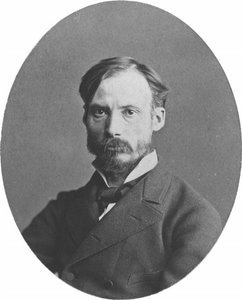
Pierre-Auguste Renoir
1841 - 1919 , France
Quick Facts
- Artistic Movement Or Style: Impressionism
- Artists Or Movements Influenced By This Artist: Impressionism
- Artists Who Influenced This Artist:
- Rubens
- Watteau
- Courbet
- Manet
- Date Of Birth: February 25, 1841
- Date Of Death: December 3, 1919
- Full Name: Pierre-Auguste Renoir
- Nationality: French
- Notable Artworks:
- Dance at Le Moulin de la Galette
- Luncheon of the Boating Party
- After the Bath
- Dance at Bougival
- Place Of Birth: Limoges, France
Related Articles
The Enduring Portrait of Kinship: Family Representations Across Art History
Explore the rich history of family portraiture through art! Discover masterpieces from across centuries & learn how artists captured kinship, intimacy, and societal values. Expert insights for collectors & enthusiasts.
Renoir's Masterpieces: Explore 25 Iconic Paintings & Bring Art Home | OriginalUniqueArt
Explore 25 iconic Pierre-Auguste Renoir paintings! Discover the stories behind Impressionist masterpieces like 'Dance at Le Moulin de la Galette' & 'Luncheon of the Boating Party'. Find museum-quality art reproductions and elevate your home decor with OriginalUniqueArt.com.

Recomposing Time: Preserve Family Bonds with Heirloom Portrait Art
Transform cherished photos into timeless family portraits with OriginalUniqueArt.com! Museum-quality reproductions & custom paintings by skilled artists. Preserve your legacy – request a quote today.
Musée d'Orsay Masterpieces: 25 Iconic Paintings & Art Decor Ideas
Journey through the Musée d'Orsay’s 25 most iconic artworks! Explore Impressionist & Post-Impressionist masterpieces by Monet, Van Gogh, Degas & more. Find museum-quality art reproductions and curated decor ideas to bring timeless beauty home. Discover all masterpieces on OriginalUniqueArt.com
Impressionism's Legacy: 10 Masterpieces That Transformed Art & Decor
Journey through Impressionism's radiant world! Explore 10 masterpieces by Monet, Renoir & Degas that revolutionized art. Discover the stories behind these iconic paintings and find museum-quality reproductions for your home at .