

 Preview
 Send
Send Share
Share
 Details
 Guide
Guide

 Download
 Similars
 X-Ray
X-Ray Diaporama
 Stats
StatsGirl Reading


 Read More
Hand Made Oil Reproduction
Hand-painted oil on canvas in your size and frame, made to order by our artists. ( Switch to Print Switch to Digital Image)




P118B $10

P118H $10

P118W $10

P438Z $10

P508JH $12

P508YH $12

P805H $10

P805Z $10

P919BZ $10

P919G $10

P919XJ $10

P959ZH $10

P968JZ $12

W106C $8

W218G $10

W218JH $8

W218Y $10

W307PJ $10

W316G $10

W316PJ $8

W316Y $10

W398PJ $8

W4111J $10

W500HY $15

W500JH $15

W692G $12

W849H $8

W940BG $15

W953PJ $8




Pick from our preset sizes that match the artwork's original proportions.

Type the width and the height you need, to fit your frame or your wall. This is hand-painted, so for a size with a different shape the artist can paint a bit more around the picture, or cut a bit — you choose. We send you a digital mockup to approve before the painting starts. The picture shown on this page does not show the real result — only the mockup does.
After order, OriginalUniqueArt.com team will email client for instructions and provide a mockup preview
Worldwide Delivery () in 3/4 weeks instead of standard 5 weeks. (26 October). No compromise on quality.

Free Worldwide Express Shipping

High-Quality Linen Canvas

Full Shipping Insurance

Customs Tax Refund Guarantee

True Color Matching Guarantee

100-Day Return Policy (Defects Only)

100% Money-Back Guarantee

Bulk Discount Offer
 Glass option is only available in size under 110 CM

Girl Reading
Reproduction Medium
Reproduction Size
-


Total Price
$ 300
A Moment of Quiet Contemplation: Pierre-Auguste Renoir’s “Girl Reading”
Pierre-Auguste Renoir's "Girl Reading," painted in 1890 and now residing within the hallowed halls of the Museum of Fine Arts Houston, is more than just a portrait; it’s an invitation into a world of serene intimacy. This captivating work transcends its simple subject matter – a young woman absorbed in her book – to become a profound meditation on beauty, solitude, and the quiet pleasures of intellectual pursuit. Renoir, a master of capturing fleeting moments and imbued with a deep appreciation for feminine sensuality, has created an image that resonates with a timeless appeal, inviting viewers to share in the girl’s peaceful reverie.
The painting immediately draws the eye with its warm, enveloping palette. Renoir skillfully employs a symphony of ochres, oranges, and soft pinks, creating a sense of cozy domesticity. The vibrant orange of the girl's dress stands out against the muted background, not as a jarring element but rather as a focal point that anchors the composition. Notice how he uses light to sculpt her form – a gentle illumination highlighting her face and hands, while leaving the surrounding space in soft shadow. This masterful use of chiaroscuro adds depth and drama, transforming a simple scene into one brimming with atmosphere.
Impressionist Techniques: Capturing the Essence of Light
As an exemplar of Impressionism, “Girl Reading” is characterized by Renoir’s signature loose, fluid brushstrokes. These aren't precise lines meant to define form; instead, they are delicate dabs and dashes of color designed to capture the *impression* of light and movement. The background, rendered with vertical strokes of varying tones, suggests a curtain or wall hanging – an element that subtly frames the girl and adds depth to the scene without distracting from her central presence. Observe how he uses broken brushstrokes to create a sense of shimmering light on the fabric, mimicking the way sunlight would filter through a window.
Renoir’s technique is particularly evident in his treatment of the book itself. Rather than meticulously detailing every page, he employs short, quick strokes to suggest its volume and texture. This approach emphasizes the *act* of reading – the absorption and engagement that consumes the girl's attention – over a literal representation of the object. The soft focus applied to the background elements further directs the viewer’s gaze towards the girl and her book, reinforcing their importance within the composition.
A Window into Modern Life
“Girl Reading” was created during a period of significant artistic experimentation and social change in France. Modern art, as it was then understood, was characterized by a willingness to challenge traditional conventions and explore new ways of seeing the world. Renoir’s work reflects this spirit of innovation, capturing a tranquil moment in a modern setting – a young woman finding solace and intellectual stimulation within her home. The painting speaks to the burgeoning interest in leisure activities and private moments that defined late 19th-century Parisian life.
Interestingly, Renoir’s style shares affinities with both the Realist painters of the earlier part of the century, particularly Courbet's focus on everyday subjects, and the decorative elegance of Watteau. However, he elevates these influences through his Impressionistic techniques, imbuing them with a sense of light, color, and emotional resonance. The painting’s composition—the girl seated comfortably in a chair, lost in her book—echoes the idealized depictions of women found in eighteenth-century portraiture, yet it is imbued with a distinctly modern sensibility.
Symbolism and Emotional Resonance
Beyond its technical brilliance, “Girl Reading” possesses a subtle but powerful symbolic weight. The act of reading itself represents knowledge, imagination, and escape – all highly valued pursuits in the late 19th century. The girl’s serene expression suggests a state of contentment and intellectual fulfillment. She is not merely passively receiving information; she is actively engaging with ideas and exploring new worlds through literature. The painting invites us to contemplate the transformative power of reading and its ability to transport us beyond our immediate surroundings.
For those seeking to bring the beauty and tranquility of Renoir’s “Girl Reading” into their homes, OriginalUniqueArt offers meticulously crafted hand-painted reproductions that faithfully capture the essence of this iconic masterpiece. Each reproduction is created using traditional oil painting techniques, ensuring a stunningly authentic representation of Renoir's original vision. Explore our collection today and discover how you can own a piece of art history.
Questions & Answers
What color leads the composition of "Girl Reading" by Pierre-Auguste Renoir?
espresso (#45282a) is the leading color of "Girl Reading" by Pierre-Auguste Renoir.
What space matches the colors of "Girl Reading" by Pierre-Auguste Renoir?
Considering its dark colors, "Girl Reading" is suggested for a living room.
How do I download the image of "Girl Reading" by Pierre-Auguste Renoir?
"Girl Reading" by Pierre-Auguste Renoir can be downloaded from the artwork's Download page, as a high-resolution digital image download.
Artist Biography
A Childhood of Porcelain and Light
In the provincial streets of Limoges, France, a young boy named Pierre-Auguste Renoir began his life immersed in the delicate precision of craftsmanship. His father was a tailor, and the family eventually moved to Paris in 1845, seeking better prospects in the bustling capital. At thirteen, necessity led him into an apprenticeship as a porcelain painter, a role that demanded a keen eye for detail and a steady hand. This early work with ceramics instilled in him a lasting appreciation for color and texture. While his days were spent decorating fine china, his spirit often wandered toward the galleries of the Louvre. There, he studied the techniques of the Old Masters, absorbing the way they handled light and form.
The path from decorative art to the canvas was paved by a desire for something more expressive than mere reproduction. After leaving the porcelain factory, he sought formal training at the studio of Charles Gleyre. It was within this creative circle that he met fellow students such as Claude Monet, Alfred Sisley, and Frédéric Bazille. These friendships formed the bedrock of a new way of seeing. They shared a common goal to move away from the rigid rules of academic painting, preferring instead to capture the fleeting atmosphere of a moment. His early successes, like Lise with a Parasol in 1867, began to show this emerging interest in the natural world and the soft glow of outdoor light.
The Pulse of Parisian Life
As the years progressed, Renoir became a central figure in the movement known as Impressionism. He participated in the first exhibition of this group in 1874, displaying six paintings that challenged the traditional art establishment. His work during this period focused on the joy found in everyday social gatherings and the lively energy of the city. In works such as Dance at Le Moulin de la Galette, he used broken brushstrokes to mimic the way sunlight filters through leaves, creating a sense of movement and warmth. He did not seek grand historical narratives; rather, he looked for beauty in the simple pleasure of a summer afternoon or a group of friends enjoying a meal.
The subject matter of his canvases often celebrated the human form and the softness of skin. He had a particular talent for portraying feminine beauty, drawing inspiration from the sensual lines of Peter Paul Rubens and Jean-Antoine Watteau. His paintings, such as Luncheon of the Boating Party, captured the conviviality of life on the Seine, with figures bathed in a natural, luminous glow. This period of his life was defined by an embrace of the ephemeral, focusing on how light dances across fabric and settles upon a garden landscape.
A Shift Toward Form and Final Years
In the 1890s, Renoir’s approach to the canvas underwent a significant change. Following travels to Italy, where he studied the works of Raphael and Titian, he began to move away from the loose, blurry edges of his youth. He sought a more structured and classical method, emphasizing volume, contour, and clear lines. This transition toward a more disciplined technique is evident in his later works, such as The Great Bathers, which possess a sculptural quality. Despite the physical struggle of rheumatoid arthritis, which eventually forced him to paint with a brush attached to his hand, his dedication to his vision never wavered.
He eventually settled in Cagnes-sur-Mer, France, at the Domaine des Collettes, a place filled with olive groves and orange trees that provided fresh inspiration. In these later years, his palette remained warm, even as his style became more formal. He continued to produce portraits, landscapes, and still lifes until his death in 1919. His legacy remains tied to his ability to find divinity in the mundane, leaving behind a body of work that continues to reflect the warmth and light of the human experience.
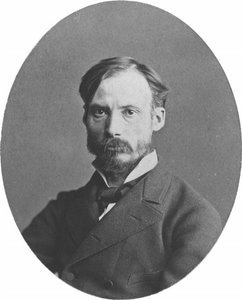
Pierre-Auguste Renoir
1841 - 1919 , France
Quick Facts
- Artistic Movement Or Style: Impressionism
- Artists Or Movements Influenced By This Artist: ['Impressionism']
- Artists Who Influenced This Artist:
- Gustave Courbet
- Édouard Manet
- Peter Paul Rubens
- Jean-Antoine Watteau
- Full Name: Pierre-Auguste Renoir
- Nationality: French
- Notable Artworks:
- Dance at Le Moulin de la Galette
- Luncheon of the Boating Party
- After the Bath
- Place Of Birth: Limoges, France
- Date Of Birth: 1841
- Date Of Death: 1919
Related Articles
Impressionism's Greatest Hits: 10 Masterpieces for Your Home | OriginalUniqueArt
Journey through Impressionism's finest! Explore 10 masterpieces by Monet, Degas & Renoir – discover their stories, techniques & lasting impact. Find museum-quality art reproductions for your home at OriginalUniqueArt.com. Explore the full collection online.

The Luminous World of Pierre-Auguste Renoir: An Exploration of Impressionism's Sensuous Embrace
Explore the captivating world of Pierre-Auguste Renoir! Discover his life, iconic Impressionist masterpieces & enduring legacy with our expert guide. High-quality reproductions available.

Impressionism's Finest: 10 Masterpieces That Revolutionized Art | OriginalUniqueArt
Journey through Impressionism's golden age! Explore 10 masterpieces by Monet, Renoir & Degas that redefined art. Discover the stories behind these iconic paintings and find museum-quality reproductions to elevate your home decor on OriginalUniqueArt.com.

Impressionism's Masterpieces: 10 Paintings That Defined a Movement | OriginalUniqueArt
Journey through Impressionism's heart with 10 iconic paintings by Monet, Renoir & Degas. Explore light, color & the stories behind these masterpieces. Find museum-quality art reproductions and elevate your home decor on OriginalUniqueArt.com.
Renoir's Masterpieces: Explore 25 Iconic Paintings & Bring Art Home | OriginalUniqueArt
Explore 25 iconic Pierre-Auguste Renoir paintings! Discover the stories behind Impressionist masterpieces like 'Dance at Le Moulin de la Galette' & 'Luncheon of the Boating Party'. Find museum-quality art reproductions and elevate your home decor with OriginalUniqueArt.com.


