Impressionism
Coco (Pierre-Auguste Renoir)
Pierre-Auguste Renoir (1841–1919) made Coco. It belongs to the Impressionism movement. It is made in drawing. It is kept at Detroit Institute of Arts in Detroit, United States of America.
- Drawing
- Detroit Institute of Arts

 Preview

 Hand Made Oil Painting
 Send
 Share
 Fact sheet


 Download
 Similars
 X-Ray
 Diaporama
 Q&A

 Stats
Coco, in brief
- Title
- Coco
- Artist
- Pierre-Auguste Renoir (1841–1919)
- Artist born in
- Limoges, France
- Medium
- Drawing
- Where to see it
- Detroit Institute of Arts, Detroit, United States of America
- Movement
- Impressionism
- Period
- 19th Century
- Subject
- portrait, man, suit, tie, drawing, black and white
What does Coco depict?
A Study in Quiet Contemplation: Renoir’s “Coco”
Pierre-Auguste Renoir's "Coco," a deceptively simple black and white drawing, is far more than a portrait; it’s a window into the artist’s evolving understanding of form, light, and human emotion. Born in Limoges in 1841, Renoir’s early life was steeped in the practicalities of porcelain painting – a skill he honed before dedicating himself fully to his artistic ambitions. This apprenticeship, however, proved invaluable, fostering an acute observation of detail and a deep appreciation for texture, qualities that would later inform his Impressionistic style. The drawing itself, though lacking specific provenance details, embodies this meticulous approach. It captures a man—likely a friend or acquaintance of Renoir’s—in a moment of quiet introspection. His posture is relaxed yet attentive, his gaze downward suggesting an absorption in thought, perhaps examining something held gently within his hand.
The Impressionistic Palette – Light and Shadow
While rendered in monochrome, “Coco” reveals the hallmarks of Renoir’s developing technique. Notice how he doesn't simply outline the figure; instead, he employs subtle gradations of tone to create a sense of volume and depth. The shading is delicate, almost translucent, mimicking the way light would play across skin and fabric. This masterful manipulation of shadow isn’t merely about depicting form; it’s about capturing the *feeling* of light – its warmth, its diffusion, its ability to transform the mundane into something beautiful. Renoir was deeply influenced by his studies at the Louvre, particularly the works of artists like Ingres and Delacroix, who demonstrated a sophisticated understanding of chiaroscuro—the dramatic contrast between light and dark—a technique he skillfully adapted to his own style.
Symbolism and the Portraiture of Modernity
The subject’s attire – a suit and tie – immediately places “Coco” within the context of late 19th-century Parisian society. This was an era of rapid industrialization, social change, and burgeoning urban life. Portraits like this weren't simply representations of individuals; they were statements about status, profession, and belonging. The man’s downward gaze could be interpreted as a reflection on the complexities of modern existence – the pressures of commerce, the anxieties of a rapidly changing world. Renoir frequently depicted figures engaged in everyday activities, elevating these ordinary moments to the level of art. Here, he invites us to contemplate the quiet dignity and introspection within the commonplace.
A Reproduction for Your Space: Bringing Renoir’s Vision Home
- Authentic Detail: OriginalUniqueArt offers meticulously hand-painted reproductions of “Coco,” ensuring that every nuance of Renoir's original technique is faithfully recreated.
- Premium Materials: Our reproductions are created on archival-quality canvas and utilize museum-grade pigments, guaranteeing lasting beauty and color vibrancy for generations to come.
- Versatile Style: The timeless elegance of “Coco” makes it a perfect addition to a variety of interior design styles – from classic and traditional to contemporary and minimalist. It’s particularly well-suited for studies, libraries, or any space where quiet contemplation is valued.
- Investment in Art History: Owning a OriginalUniqueArt reproduction of “Coco” is not just acquiring a beautiful piece of art; it's investing in a significant work by one of the most beloved Impressionist painters.
Explore our collection of Pierre-Auguste Renoir reproductions today and bring the evocative beauty of "Coco" into your home or office. Each reproduction is a testament to the enduring power of art and the artist’s ability to capture the essence of human experience.
Which museum holds Coco?
Detroit Institute of Arts
Detroit, United States of America
Origins and History of the Detroit Institute of Arts The roots of the Detroit Institute of Arts trace back to 1883, beginning as a modest collection of European paintings. By 1885, this collection was established as the Detroit Museum of Art. The institution made its public debut on September 1, 1888, within a building located on Jefferson Avenue.


High-resolution images of Coco

Pierre-Auguste Renoir, Coco, Detroit Institute of Arts. Public domain.
Questions on Coco, answered
Where can I see the original "Coco" by Pierre-Auguste Renoir?
The original "Coco" by Pierre-Auguste Renoir is held at the Detroit Institute of Arts, Detroit, United States of America. A reproduction allows the work to be displayed at home.
What is "Coco" made with?
The medium of "Coco" by Pierre-Auguste Renoir is drawing. Reproductions aim to render the appearance of this technique.
What is "Coco" about?
"Coco" by Pierre-Auguste Renoir depicts: portrait, man, suit, tie, drawing, black and white, expression, dignified.
Can the image of "Coco" by Pierre-Auguste Renoir be freely reproduced?
The copyright answer for "Coco" by Pierre-Auguste Renoir: the work is in the public domain - its copyright has expired. This determines whether reproductions of the image may be freely made.
Who is the artist behind "Coco"?
"Coco" was created by Pierre-Auguste Renoir. The information on this page describes Pierre-Auguste Renoir's original work.
Which artistic current is "Coco" by Pierre-Auguste Renoir part of?
The movement associated with "Coco" by Pierre-Auguste Renoir is Impressionism. This classification situates the work among related artists and artworks.
What stage of Pierre-Auguste Renoir's development does "Coco" represent?
"Coco" belongs to the Mature Period of Pierre-Auguste Renoir's career. This classification relates the work to the artist's development.
Why is the copyright status of "Coco" what it is?
"Coco" by Pierre-Auguste Renoir is in the public domain - its copyright has expired. Copyright terms are measured from the artist's death, and Pierre-Auguste Renoir died in 1919.
Is "Coco" by Pierre-Auguste Renoir kept in the artist's home country?
No - the artwork is kept abroad. "Coco" is held in United States of America, while Pierre-Auguste Renoir was born in France.
About the artist, Pierre-Auguste Renoir
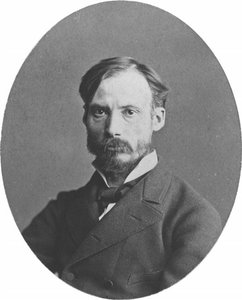
1841–1919, France
Pierre-Auguste Renoir
The Life of Pierre-Auguste Renoir Born on February 25, 1841, in Limoges, France, Pierre-Auguste Renoir entered a world of practical craftsmanship. His father, Léonard Renoir, worked as a tailor, while his mother, Marguerite Renoir, was a dressmaker. This domestic background of textiles and fine detail would quietly influence his later sensibilities. In 1845, the family moved to Paris, seeking the opportunities offered by the capital.
About Pierre-Auguste Renoir Notable works by Pierre-Auguste Renoir
Also by Pierre-Auguste Renoir
 Dance at the Moulin de la Galette1876
 Luncheon of the Boating Party1881
 Young Girls at the Piano1892
 Irene Cahen d'Anvers (also known as Little Irene)1880

Essays around Coco
 Masterpieces of Light: The Top 25 Pierre-Auguste Renoir ArtworksImmerse yourself in the luminous world of Pierre-Auguste Renoir. Explore 25 iconic Impressionist masterpieces, from vibrant portraits to sc…
 Renoir’s Impressionist Masterpieces: A Definitive Guide to Light, Color, and the Art of JoyExplore the luminous world of Pierre-Auguste Renoir. Discover the history, technique, and emotional depth behind his Impressionist masterpi…
 OriginalUniqueArt.com F.A.Q.: How Our Master Artists Hand-Paint Museum-Quality Impressionist ReproductionsDiscover the exquisite craftsmanship behind our museum-quality Impressionist reproductions. From Monet to Renoir, our master artists hand-p…