
 Preview
 Send
Send Share
Share
 Details
 Guide
Guide

 Download
 Similars
 X-Ray
X-Ray Diaporama
 Q&A
Q&A Stats
StatsDay Dress


 Read More
The artwork displayed on this page is protected by copyright law, which means we cannot legally create or sell an identical reproduction. This protection is enforced under international agreements such as the Berne Convention and by national laws, including those outlined by the U.S. Copyright Law - Title 17.
This method fully complies with copyright regulations because it does not involve copying or duplicating the protected artwork. Instead, it is a creative reinterpretation - a new painting that is influenced by the original but not identical to it.
Giclée / Art Print
Museum-quality giclée or canvas print with fast production and flexible finish options. ( Buy Hand Made Painting Switch to Digital Image)




P118B $10

P118H $10

P118W $10

P438Z $10

P508JH $12

P508YH $12

P805H $10

P805Z $10

P919BZ $10

P919G $10

P919XJ $10

P959ZH $10

P968JZ $12

W106C $8

W218G $10

W218JH $8

W218Y $10

W307PJ $10

W316G $10

W316PJ $8

W316Y $10

W398PJ $8

W4111J $10

W500HY $15

W500JH $15

W692G $12

W849H $8

W940BG $15

W953PJ $8




Pick from our preset sizes that match the artwork's original proportions.

Type the width and the height you need, to fit your frame or your wall. A print can only be cut, never made bigger than the picture, so a size with a different shape loses a part of the image. We send you a digital mockup to approve before we print anything. The picture shown on this page does not show the real cut — only the mockup does.
Worldwide Delivery () in 2 weeks instead of standard 4/5 weeks. (4 November)

Free Worldwide Express Shipping

High-Quality Linen Canvas

Full Shipping Insurance

Customs Tax Refund Guarantee

True Color Matching Guarantee

100-Day Return Policy (Defects Only)

100% Money-Back Guarantee

Bulk Discount Offer
 Glass option is only available in size under 110 CM

Day Dress
Giclée / Art Print
Reproduction Size
-


Total Price
$ 81
The Whisper of Post-War Parisian Grace
To gaze upon this depiction of "Day Dress" is to step directly into the luminous aftermath of conflict—a moment when fashion did not merely clothe, but celebrated resilience and rebirth. Painted in 1972, this work by Pierre Alexandre Claudius Balmain captures more than just a yellow garment; it encapsulates the enduring spirit of Parisian elegance. The subject, presented with such delicate artistry, embodies a sophisticated femininity that speaks volumes without uttering a single word. Notice the meticulous rendering of the fabric—the patterned design catching the light across the long sleeves and high neckline. It is an ode to structure meeting softness, a perfect visual metaphor for life itself.
A Study in Color and Form
The choice of yellow is nothing short of brilliant. In art history, such vibrant hues often symbolize joy, optimism, and illumination—a necessary burst of sunshine against the muted tones that might otherwise dominate a room. Balmain has masterfully utilized this color to draw the eye immediately to the centerpiece: the dress itself. The inclusion of the visible earrings adds an exquisite layer of detail, suggesting that every element of the ensemble was considered, curated for maximum impact. The painting’s technique allows one to almost feel the texture of the material, a testament to the artist's skilled hand in rendering both the crisp lines of tailoring and the gentle drape of fine cloth.
Context and Enduring Allure
While painted decades after Balmain’s own formative years as a couturier, this piece remains deeply rooted in the aesthetic principles he championed: refinement, impeccable taste, and an almost architectural approach to beauty. The presence of the mannequin within the composition serves not only as a device for scale but also as a silent muse, presenting the fashion as an ideal form—a timeless silhouette divorced from fleeting trends. For the collector or designer, this artwork offers a powerful narrative anchor; it suggests that true style is both historically informed and eternally fresh.
Bringing Parisian Light Home
Owning a reproduction of "Day Dress" is to invite a piece of curated history into your personal space. It functions as more than mere decoration; it acts as an emotional conduit, evoking the glamour and quiet confidence of mid-century high fashion. Whether placed above a dressing table or centered in a grand hall, its vibrant yet controlled palette ensures that it becomes an immediate focal point. The intricate details—from the pattern on the yellow fabric to the subtle gleam suggested by the jewelry—invite prolonged contemplation, making it a conversation starter and a source of daily inspiration.
Questions & Answers
Is "Day Dress" held in the country of its creator?
No - the artwork is kept abroad. Pierre Alexandre Claudius Balmain was born in France, and the original "Day Dress" is held in a museum in Thailand.
What does "Day Dress" share with the rest of Pierre Alexandre Claudius Balmain's output?
"Day Dress" belongs to Pierre Alexandre Claudius Balmain's Contemporary Realism work, whose recorded themes include post-war parisian fashion elegance, celebration of feminine beauty, showcasing couture artistry.
Is "Day Dress" available as a fine art print?
A print of "Day Dress" by Pierre Alexandre Claudius Balmain can be ordered directly on its Fine Art Print page: a fine art print on cotton canvas or archival canvas paper.
Artist Biography
A Legacy of Post-War Elegance: The World of Pierre Balmain
Pierre Alexandre Claudius Balmain, a name synonymous with post-war Parisian couture, emerged as a beacon of refinement and elegance in a world yearning for beauty after the austerity of conflict. Born in 1914 in Saint-Jean-de-Maurienne, France, Balmain’s path to becoming one of fashion's most celebrated designers was subtly shaped by his upbringing. His mother, Françoise, managed a fashionable boutique, Galeries Parisiennes, and this early exposure ignited within him a fascination with the artistry of dressmaking. While he initially pursued studies in architecture at the École des Beaux-Arts in 1933, it wasn’t long before Balmain found himself drawn to the more immediate allure of fashion, beginning freelance work sketching designs for Robert Piguet. This shift marked the true commencement of a career that would redefine post-war style.From Apprenticeship to Independent Vision
Balmain's formative years were spent honing his skills under the tutelage of established designers. He worked with Edward Molyneux for five years, absorbing invaluable experience in haute couture techniques and construction. A pivotal moment arrived when he joined Lucien Lelong during World War II, a period that also saw him forge a connection with a rising star – Christian Dior. This wartime collaboration proved significant, as both men would soon become leading figures in the revitalization of French fashion. In 1945, Balmain boldly established his own fashion house, an act of entrepreneurial spirit and artistic confidence. His debut collection immediately captured attention, presenting designs that embraced a distinctly feminine silhouette – long, bell-shaped skirts nipped at the waist, embodying a return to luxury and grace. This aesthetic resonated deeply with a public eager to shed the constraints of wartime practicality and embrace a renewed sense of optimism and glamour.Defining the ‘New Look’ and Expanding Horizons
Balmain's designs quickly became emblematic of what would be known as the “New Look,” though he was not its sole originator, his contribution was undeniably significant. He masterfully blended structure with fluidity, creating garments that celebrated the female form while maintaining an air of sophisticated restraint. His signature style featured impeccably tailored jackets with defined waists and accentuated shoulders, luxurious fabrics like velvet and silk, and a meticulous attention to detail. Beyond clothing, Balmain expanded his creative vision into fragrance, launching successful perfumes such as *Vent Vert* and *Elysees 64-83*, which further solidified the brand’s identity as a purveyor of refined elegance. His influence extended beyond the Parisian ateliers; in 1951, he brought his designs to the United States, earning recognition with a Neiman Marcus Fashion Award in 1955. Throughout the 1960s and 70s, Balmain’s reach broadened further as he designed uniforms for TWA and Malaysia-Singapore Airlines cabin crews, demonstrating his ability to seamlessly blend fashion with functionality. Even Air France's first female pilot donned a Balmain uniform in 1975, a testament to the brand’s prestige and versatility.A Lasting Impression: Legacy and Enduring Style
Pierre Balmain passed away in 1982, leaving behind a legacy that continues to inspire designers and captivate fashion enthusiasts today. His clientele read like a roll call of royalty and Hollywood stars – the Duchess of Windsor, Marlene Dietrich, Katharine Hepburn, and Queen Sirikit of Thailand were among those who favored his creations. Even decades after his death, Balmain’s vintage couture gowns are still sought after by celebrities such as Angelina Jolie, Penélope Cruz, and Kate Moss, proving the timeless appeal of his designs. His emphasis on impeccable tailoring, luxurious fabrics, and a celebration of feminine form remains a cornerstone of modern fashion. Balmain's vision wasn’t merely about creating beautiful clothes; it was about crafting an experience of elegance and sophistication that empowered women and reflected a renewed sense of hope in the post-war era. He understood that dressmaking was, as he himself eloquently stated, “the architecture of movement,” and his designs continue to move and inspire generations.
Pierre Alexandre Claudius Balmain
1914 - 1982 , France
Quick Facts
- Full Name: Pierre Alexandre Claudius Balmain
- Nationality: French
- Date Of Birth: 1914
- Date Of Death: 1982
- Place Of Birth: Saint-Jean-de-Maurienne, France
- Notable Artworks:
- Ball gown of coral velvet
- Suit
- Coat
- Evening Dress in Thai Style
- Artistic Movement Or Style: Haute Couture, New Look
- Artists Who Influenced This Artist:
- Robert Piguet
- Edward Molyneux
- Lucien Lelong
- Christian Dior
- Artists Or Movements Influenced By This Artist:
- Fashion design
- Post-war elegance
Related Articles

Cristóbal Balenciaga: Deconstructing Haute Couture's Architectural Legacy
Explore the revolutionary world of Cristóbal Balenciaga, the 'couturier's couturier'. Discover his architectural designs, lasting influence on haute couture, and guide to collecting rare pieces. A connoisseur’s resource.
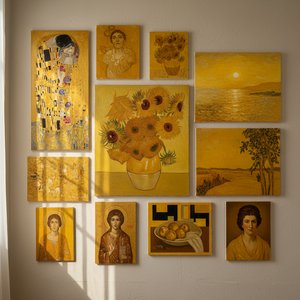
Golden Hues: Top 10 Paintings Dominated by Yellow Ochre |
Explore 10 iconic paintings bathed in golden yellow ochre! From Van Gogh's sunflowers to Monet’s haystacks, discover the stories behind these masterpieces. Find museum-quality art reproductions & elevate your home decor on .
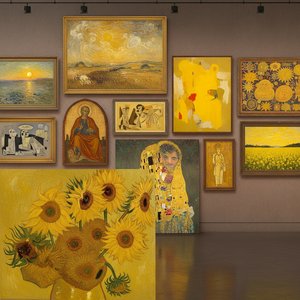
Golden Hues: 10 Masterpieces Dominated by Chrome Yellow | OriginalUniqueArt
Immerse yourself in golden light! Explore 10 famous paintings dominated by 'Chrome Yellow', from Van Gogh’s Sunflowers to Monet's Haystacks. Discover the stories behind these iconic Impressionist & Post-Impressionist masterpieces and find museum-quality art reproductions at OriginalUniqueArt.com.
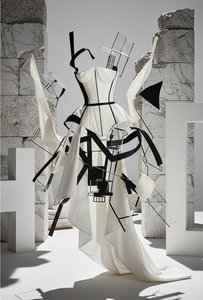
Gianfranco Ferré: Deconstructing Haute Couture – A Legacy of Architectural Form
Explore the revolutionary world of Gianfranco Ferré, 'the architect of fashion.' Discover his architectural approach to haute couture, iconic Dior designs, and lasting influence on luxury style. A deep dive for collectors & enthusiasts.
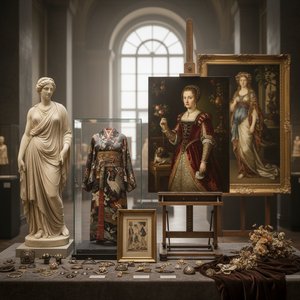
Draped Narratives: Fashion as Symbol & Subject in Historical Art
Explore the fascinating history of fashion as a symbol of power & status in art! Discover masterpieces from Gainsborough to Tissot and learn how clothing shaped societal narratives. Find museum-quality reproductions at OriginalUniqueArt.


