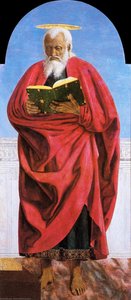
Preview
 Send
Send Share
Share
 Details
 Guide
Guide

 Download
 Similars
 X-Ray
X-Ray Diaporama
 Stats
StatsThe Nativity
 Oil
Oil- WallArt
- Early Renaissance
 1470
1470- Renaissance
 124.0 x 122.0 cm
 National Gallery
 Read More
Giclée / Art Print
Museum-quality giclée or canvas print with fast production and flexible finish options. ( Buy Hand Made Painting Switch to Digital Image)




P118B $10

P118H $10

P118W $10

P438Z $10

P508JH $12

P508YH $12

P805H $10

P805Z $10

P919BZ $10

P919G $10

P919XJ $10

P959ZH $10

P968JZ $12

W106C $8

W218G $10

W218JH $8

W218Y $10

W307PJ $10

W316G $10

W316PJ $8

W316Y $10

W398PJ $8

W4111J $10

W500HY $15

W500JH $15

W692G $12

W849H $8

W940BG $15

W953PJ $8




Pick from our preset sizes that match the artwork's original proportions.

Type the width and the height you need, to fit your frame or your wall. A print can only be cut, never made bigger than the picture, so a size with a different shape loses a part of the image. We send you a digital mockup to approve before we print anything. The picture shown on this page does not show the real cut — only the mockup does.
Worldwide Delivery () in 2 weeks instead of standard 4/5 weeks. (22 October)

Free Worldwide Express Shipping

High-Quality Linen Canvas

Full Shipping Insurance

Customs Tax Refund Guarantee

True Color Matching Guarantee

100-Day Return Policy (Defects Only)

100% Money-Back Guarantee

Bulk Discount Offer
 Glass option is only available in size under 110 CM

The Nativity
Giclée / Art Print
Reproduction Size
-


Total Price
$ 81
A Serene Vision of Divine Birth
Piero della Francesca’s “The Nativity,” painted around 1470, is more than just a depiction of the biblical birth of Christ; it's a profound meditation on reverence, humility, and the quiet majesty of faith. This work, measuring 124 x 122 cm, transcends its religious subject matter to become a study in geometric harmony, luminous color, and deeply human emotion – qualities that continue to resonate powerfully with viewers centuries later. The scene unfolds within a meticulously rendered interior space, bathed in the soft, diffused light characteristic of della Francesca’s style, creating an atmosphere of profound stillness and contemplation.
At the heart of the composition lies Mary, kneeling in adoration before the infant Jesus laid upon her cloak. Her posture is one of utter devotion, a quiet surrender to the divine. Notice how she isn't dramatically posed or overly expressive; instead, her serenity speaks volumes – a testament to the inner peace and acceptance that faith inspires. Beside her, Joseph stands in deep contemplation, his crossed legs suggesting a thoughtful engagement with this momentous event. The artist’s masterful use of foreshortening draws our eye directly to the infant Christ, whose vulnerability is juxtaposed against the solemnity of the surrounding figures.
The Language of Symbolism and Gesture
“The Nativity” is rich in symbolic detail, each element carefully chosen to convey a specific meaning. The five angels, rendered with an almost ethereal quality, sing welcoming hymns – two playing lutes, adding a touch of earthly joy to the sacred scene. Observe the subtle gestures: the angel’s lute-playing suggests a celebration of the divine birth, while the donkey and ox, traditional symbols of humility and service, underscore the humble origins of Christ. The shepherds, though partially obscured by cleaning in previous centuries, represent the common people who first witnessed the miracle – their upward pointing staff acting as a visual metaphor for their aspiration towards heaven.
The magpie, a detail often noted in Piero’s work, adds an intriguing element of folklore and symbolism. Its presence hints at the broader tapestry of medieval beliefs and superstitions surrounding the Nativity story. The careful arrangement of figures – each exhibiting a distinct attitude of reverence – creates a dynamic composition that speaks to the multifaceted nature of faith: from the profound devotion of Mary to the humble acceptance of the shepherds, and even the quiet contemplation of Joseph.
Renaissance Precision and Artistic Innovation
Piero della Francesca’s “The Nativity” exemplifies the artistic innovations of the Early Renaissance. His mastery of perspective—particularly evident in the foreshortened figures and the receding architectural elements—creates a sense of depth and realism rarely seen in contemporary works. The use of *sfumato*, a subtle blurring of lines and colors, contributes to the painting’s atmospheric quality and adds to its overall sense of serenity. The palette is restrained yet luminous, dominated by earthy tones punctuated by highlights of gold and crimson, further enhancing the work's solemn beauty.
Born in San Sepolcro around 1415, Piero della Francesca was a profoundly intellectual artist who sought to reconcile art with mathematics and geometry. His meticulous approach to composition, his unwavering attention to detail, and his profound understanding of human psychology are all evident in “The Nativity.” This painting stands as a testament to his artistic genius and offers a timeless meditation on the birth of Christ – a scene that continues to inspire awe and wonder centuries after its creation.
Questions & Answers
Can I see "The Nativity" by Piero della Francesca on my own wall before buying?
"The Nativity" has an augmented reality preview: the artwork's AR Preview page shows it in your own space on a compatible device.
What color leads the composition of "The Nativity" by Piero della Francesca?
The dominant color of "The Nativity" by Piero della Francesca is sap green (#685b40).
Which period of Piero della Francesca's career does "The Nativity" belong to?
"The Nativity" represents the Early Renaissance of Piero della Francesca.
Artist Biography
The geometry of a quiet life
In the small, sun-drenched town of Sansepolcro, Piero di Benedetto de’ Franceschi lived a life shaped by the precise lines of his surroundings. His father worked with leather and wool, a trade that required a steady hand and an eye for detail. This early environment, far from the crowded workshops of larger cities, provided a foundation of stillness. He learned to see the world through the lens of order. Around 1439, he moved toward Florence, where the air was thick with new ways of seeing. There, he worked alongside Domenico Veneziano and studied the works of Masaccio in the Brancacci Chapel. He did not simply look at these paintings; he measured them. He took the innovations of Brunelleschi and broke them down into mathematical truths.
His hands moved between the brush and the compass. To him, a figure was as much a product of geometry as it was of anatomy. This way of working meant that light did not just fall upon a surface; it defined the volume of every limb and stone. He understood how a single vanishing point could pull a viewer into a deep, constructed space. His mind occupied the space between art and science, treating the canvas as a field for mathematical exploration.
The weight of the fresco
Much of his work remains fixed to the walls of churches in Tuscany. In the Basilica of San Francesco in Arezzo, he spent years working on the cycle of frescoes known as The History of the True Cross. These scenes are not hurried. Each figure possesses a heavy, quiet dignity. He used light and shadow to give weight to the characters, making them feel as solid as the architecture surrounding them. In other works, like the Baptism of Christ, he used a restrained palette to create an atmosphere of clarity. The colors are not loud, yet they possess a luminous quality that seems to come from within the figures themselves.
His approach to composition relied on strict principles:
- The use of linear perspective to create measurable depth.
- A focus on balanced, symmetrical arrangements.
- The application of geometric forms to human anatomy.
- The use of light to define physical volume and mass.
In the Montefeltro Altarpiece, his skill with oil painting allowed for a meticulous rendering of detail in the portraits of Federico da Montefeltro and Battista Sforza. He captured the texture of skin and the weight of fabric with a scientific precision. Even in his more recent works, such as The Nativity, he placed sacred scenes within a recognizable landscape, using the hills and rivers of the Tuscan countryside to ground the divine in the earthly.
A legacy of measurement
Piero was also a writer, documenting his findings in De Prospectiva Pingendi. This treatise on perspective painting shows that his interest in math was not secondary to his art; it was the core of it. He wrote about how to use geometry to represent the three-dimensional world on a flat surface. His work bridged the gap between the older, more decorative Gothic traditions and the new, rational Renaissance style. He sought beauty through proportion and order.
He died in 1492, leaving behind a body of work that influenced those who followed, including Leonardo da Vinci and Raphael. They looked to his mastery of light and his ability to organize space with mathematical certainty. His paintings remain windows into a world where the spiritual and the rational exist in a state of permanent, quiet balance.

Piero della Francesca
1415 - 1492 , Italy
Quick Facts
- Artistic Movement Or Style: Early Renaissance
- Artists Or Movements Influenced By This Artist:
- Leonardo da Vinci
- Raphael
- Artists Who Influenced This Artist:
- Masaccio
- Brunelleschi
- Full Name: Piero di Benedetto de' Franceschi
- Nationality: Italian
- Notable Artworks:
- The History of the True Cross
- Montefeltro Altarpiece
- Baptism of Christ
- The Resurrection
- The Nativity
- Place Of Birth: San Sepolcro, Italy
- Date Of Birth: 1415
- Date Of Death: 1492
Related Articles
Early Renaissance Masters: 10 Paintings That Changed Art History |
Journey through the Early Renaissance! Explore 10 iconic paintings by Botticelli, Leonardo da Vinci & Michelangelo. Discover their stories, techniques & lasting impact. Find museum-quality art reproductions and elevate your home decor with .
Fra Angelico's Masterpieces: 25 Renaissance Paintings for Your Home | OriginalUniqueArt
Explore 25 breathtaking masterpieces by Fra Angelico, a Renaissance master. Discover the stories behind his iconic frescoes, Annunciations & religious art. Find museum-quality reproductions and elevate your home decor with OriginalUniqueArt.com.
Uffizi's 25 Masterpieces: Renaissance Art & Timeless Decor Inspiration
Journey through the Uffizi Gallery's 25 most iconic Renaissance artworks! Explore Botticelli, Leonardo da Vinci & Michelangelo’s masterpieces. Find museum-quality art reproductions and curated decor ideas to bring timeless Italian beauty into your home. Discover all masterpieces on OriginalUniqueArt.com
Piero della Francesca: Renaissance Perspective, Divine Proportion & the Pursuit of Ideal Form
Explore the revolutionary art of Piero della Francesca – master of perspective, divine proportion & Renaissance humanism. Discover his iconic paintings & lasting influence on art history.

Luca della Robbia: Renaissance Sculpture & the Innovation of Terracotta Glazing
Discover the innovative terracotta glazing techniques of Luca della Robbia, a Renaissance master sculptor. Explore his iconic works, legacy, and collecting tips with OriginalUniqueArt.