Send
Send Share
Share
 Details
 Guide
Guide

 Download
 Similars
 Diaporama
 Stats
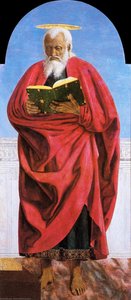
StatsResurrection (detail)


 Read More
Giclée / Art Print
Museum-quality giclée or canvas print with fast production and flexible finish options. ( Buy Hand Made Painting Switch to Digital Image)




































Pick from our preset sizes that match the artwork's original proportions.

Type the width and the height you need, to fit your frame or your wall. A print can only be cut, never made bigger than the picture, so a size with a different shape loses a part of the image. We send you a digital mockup to approve before we print anything. The picture shown on this page does not show the real cut — only the mockup does.
Worldwide Delivery () in 2 weeks instead of standard 4/5 weeks. (27 October)

Free Worldwide Express Shipping

High-Quality Linen Canvas

Full Shipping Insurance

Customs Tax Refund Guarantee

True Color Matching Guarantee

100-Day Return Policy (Defects Only)

100% Money-Back Guarantee

Bulk Discount Offer
 Glass option is only available in size under 110 CM

Resurrection (detail)
Giclée / Art Print
Reproduction Size
-


Total Price
$ 81
A Moment Frozen in Time: The Triumph of Piero della Francesca
In the quiet, hallowed halls of the Civic Museum of Sansepolcro, there exists a vision of profound spiritual gravity and mathematical grace. Piero della Francesca’s Resurrection is not merely a depiction of a biblical event; it is a masterclass in the Early Renaissance ability to marry the divine with the tangible. Painted around 1463 for the Palazzo della Residenza, this fresco captures the precise moment when the eternal breaks into the temporal world. Unlike many of his contemporaries who favored ethereal, floating figures to denote divinity, Piero presents a Christ who possesses a startling, heavy humanity. He is seen physically emerging from the tomb, his body language suggesting the immense weight of his sacrifice, yet his presence radiates an undeniable, quiet triumph.
The composition is a breathtaking display of trompe-l'œil and geometric precision, hallmarks of Piero’s unique genius. The artist utilizes a rigorous understanding of perspective to create an illusionistic depth that draws the viewer into the very landscape of Sansepolcro. As one gazes upon the scene, the meticulous rendering of the background—from the soft, atmospheric clouds to the vibrant, life-affirming trees—creates a sense of infinite space. There is a subtle, poetic duality in the foliage; the fuller, more verdant branches on one side serve as a silent metaphor for renewal and the eternal spring of the soul, contrasting with the more somber elements of the tomb below.
Symbolism and the Human Spirit
Beyond its technical brilliance, the artwork serves as a profound meditation on faith and the resilience of the human spirit. The four Roman soldiers, slumped in deep, undisturbed slumber, provide a stark contrast to the awakening power of Christ. Their heavy, earthbound sleep emphasizes the transition from the darkness of death to the light of resurrection. The flag held by Jesus, often used as a staff for support, becomes a symbol of victory over the grave, its movement suggesting a sudden, powerful surge of life. For the collector or the admirer of fine art, this piece offers more than just visual beauty; it provides an emotional anchor, a reminder of strength found in moments of profound struggle.
For interior designers and connoisseurs of classical art, a high-quality reproduction of this masterpiece brings an atmosphere of intellectual depth and historical prestige to any space. The painting’s ability to command attention through its balanced composition and muted, yet soulful, palette makes it an ideal centerpiece for a gallery wall or a sophisticated study. It is a work that invites contemplation, encouraging anyone in its presence to pause and reflect on the intersection of human effort and divine grace. To possess such a piece is to hold a fragment of the Renaissance spirit—a period where art, science, and soul were inextricably linked.
Questions & Answers
What color palette is used in "Resurrection (detail)" by Piero della Francesca?
The palette of "Resurrection (detail)" by Piero della Francesca is described as earthy. It is a compact description of the work's colors.
What mood and emotion does "Resurrection (detail)" by Piero della Francesca express?
"Resurrection (detail)" by Piero della Francesca conveys a powerful feeling within an overall dramatic mood.
Where can I see the original "Resurrection (detail)" by Piero della Francesca?
You can see the original "Resurrection (detail)" at the Pinacoteca Comunale, San Sepolcro, Italy.
Artist Biography
The geometry of a quiet life
In the small, sun-drenched town of Sansepolcro, Piero di Benedetto de’ Franceschi lived a life shaped by the precise lines of his surroundings. His father worked with leather and wool, a trade that required a steady hand and an eye for detail. This early environment, far from the crowded workshops of larger cities, provided a foundation of stillness. He learned to see the world through the lens of order. Around 1439, he moved toward Florence, where the air was thick with new ways of seeing. There, he worked alongside Domenico Veneziano and studied the works of Masaccio in the Brancacci Chapel. He did not simply look at these paintings; he measured them. He took the innovations of Brunelleschi and broke them down into mathematical truths.
His hands moved between the brush and the compass. To him, a figure was as much a product of geometry as it was of anatomy. This way of working meant that light did not just fall upon a surface; it defined the volume of every limb and stone. He understood how a single vanishing point could pull a viewer into a deep, constructed space. His mind occupied the space between art and science, treating the canvas as a field for mathematical exploration.
The weight of the fresco
Much of his work remains fixed to the walls of churches in Tuscany. In the Basilica of San Francesco in Arezzo, he spent years working on the cycle of frescoes known as The History of the True Cross. These scenes are not hurried. Each figure possesses a heavy, quiet dignity. He used light and shadow to give weight to the characters, making them feel as solid as the architecture surrounding them. In other works, like the Baptism of Christ, he used a restrained palette to create an atmosphere of clarity. The colors are not loud, yet they possess a luminous quality that seems to come from within the figures themselves.
His approach to composition relied on strict principles:
- The use of linear perspective to create measurable depth.
- A focus on balanced, symmetrical arrangements.
- The application of geometric forms to human anatomy.
- The use of light to define physical volume and mass.
In the Montefeltro Altarpiece, his skill with oil painting allowed for a meticulous rendering of detail in the portraits of Federico da Montefeltro and Battista Sforza. He captured the texture of skin and the weight of fabric with a scientific precision. Even in his more recent works, such as The Nativity, he placed sacred scenes within a recognizable landscape, using the hills and rivers of the Tuscan countryside to ground the divine in the earthly.
A legacy of measurement
Piero was also a writer, documenting his findings in De Prospectiva Pingendi. This treatise on perspective painting shows that his interest in math was not secondary to his art; it was the core of it. He wrote about how to use geometry to represent the three-dimensional world on a flat surface. His work bridged the gap between the older, more decorative Gothic traditions and the new, rational Renaissance style. He sought beauty through proportion and order.
He died in 1492, leaving behind a body of work that influenced those who followed, including Leonardo da Vinci and Raphael. They looked to his mastery of light and his ability to organize space with mathematical certainty. His paintings remain windows into a world where the spiritual and the rational exist in a state of permanent, quiet balance.

Piero della Francesca
1415 - 1492 , Italy
Quick Facts
- Artistic Movement Or Style: Early Renaissance
- Artists Or Movements Influenced By This Artist:
- Leonardo da Vinci
- Raphael
- Artists Who Influenced This Artist:
- Masaccio
- Brunelleschi
- Full Name: Piero di Benedetto de' Franceschi
- Nationality: Italian
- Notable Artworks:
- The History of the True Cross
- Montefeltro Altarpiece
- Baptism of Christ
- The Resurrection
- The Nativity
- Place Of Birth: San Sepolcro, Italy
- Date Of Birth: 1415
- Date Of Death: 1492
Related Articles

OriginalUniqueArt.com F.A.Q.: Elevating Interiors with Bespoke Wall Murals & Masterpiece Frescoes
Discover the pinnacle of bespoke interior transformation with OriginalUniqueArt.com. Our master fresco artists create exquisite, hand-painted wall murals and ceiling masterpieces tailored to your estate. Elevate your architectural space with timeless, museum-quality artistry.