Preview
 Send
Send Share
Share
 Details
 Guide
Guide

 Download
 Similars
 X-Ray
X-Ray Diaporama
 Stats
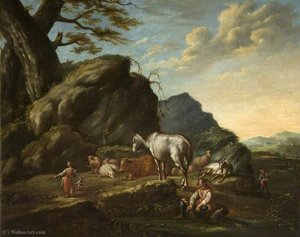
StatsCows and Goats drinking in a brook


 Read More
Hand Made Oil Reproduction
Hand-painted oil on canvas in your size and frame, made to order by our artists. ( Switch to Print Switch to Digital Image)




P118B $10

P118H $10

P118W $10

P438Z $10

P508JH $12

P508YH $12

P805H $10

P805Z $10

P919BZ $10

P919G $10

P919XJ $10

P959ZH $10

P968JZ $12

W106C $8

W218G $10

W218JH $8

W218Y $10

W307PJ $10

W316G $10

W316PJ $8

W316Y $10

W398PJ $8

W4111J $10

W500HY $15

W500JH $15

W692G $12

W849H $8

W940BG $15

W953PJ $8




Pick from our preset sizes that match the artwork's original proportions.

Type the width and the height you need, to fit your frame or your wall. This is hand-painted, so for a size with a different shape the artist can paint a bit more around the picture, or cut a bit — you choose. We send you a digital mockup to approve before the painting starts. The picture shown on this page does not show the real result — only the mockup does.
After order, OriginalUniqueArt.com team will email client for instructions and provide a mockup preview
Worldwide Delivery () in 3/4 weeks instead of standard 5 weeks. (25 October). No compromise on quality.

Free Worldwide Express Shipping

High-Quality Linen Canvas

Full Shipping Insurance

Customs Tax Refund Guarantee

True Color Matching Guarantee

100-Day Return Policy (Defects Only)

100% Money-Back Guarantee

Bulk Discount Offer
 Glass option is only available in size under 110 CM

Cows and Goats drinking in a brook
Reproduction Medium
Reproduction Size
-


Total Price
$ 300
A Tranquil Pastoral Vision: Philipp Peter Roos’s Cows and Goats Drinking in a Brook
Philipp Peter Roos, later celebrated as Rosa di Tivoli, embodies the spirit of Baroque Italy – specifically its fascination with idealized landscapes infused with scientific observation. Born in Frankfurt am Main around 1655, his artistic journey began under the influence of his father, Johann Heinrich Roos, a landscape painter who instilled in him a profound understanding of tonal harmony and compositional balance. This foundational training proved crucial as Roos honed his craft independently before accepting an invitation to Rome in 1677, marking the commencement of his illustrious career amidst the burgeoning artistic fervor of the papal city. Roos’s distinctive style swiftly gained recognition: Italianate landscapes populated with meticulously rendered animals. Unlike many contemporaries preoccupied solely with grand narratives and dramatic gestures, Roos focused on capturing serene moments of rural life—a deliberate choice reflecting the broader intellectual currents of the era. The painting depicts a picturesque brook meandering through mountainous terrain, teeming with cows and goats peacefully drinking their fill. Twelve cows are strategically positioned throughout the scene, each subtly varying in size and posture, contributing to an overall sense of dynamism within the stillness of the landscape. Three goats add further detail, one centrally located near the stream’s edge while others occupy flanking positions. The artist's masterful technique—characterized by tonal shading—is evident in every brushstroke. Roos employed a layered approach, building up color gradations to create depth and luminosity, mirroring the atmospheric perspective favored by artists of his time. This meticulous attention to detail underscores not only Roos’s technical prowess but also his commitment to faithfully representing nature as understood through emerging scientific principles. The composition itself adheres to classical ideals—a balanced pyramid structure guiding the viewer's gaze towards the central focal point: the tranquil brook and its inhabitants. Beyond mere visual beauty, “Cows and Goats Drinking in a Brook” carries symbolic weight. Pastoral imagery was prevalent during the Baroque period, serving as a counterpoint to opulent courtly art and representing themes of innocence, fertility, and harmony with God’s creation. The animals themselves—cows symbolizing abundance and piety, goats representing sacrifice and pastoral virtues—are depicted not as subjects of grandeur but as emblems of humility and communion with the natural world. This understated elegance speaks volumes about Roos's artistic vision – a desire to elevate the commonplace into something sublime.- Artist: Philipp Peter Roos (Rosa di Tivoli)
- Date: Unknown
- Medium: Oil on Canvas
- Style: Italianate Landscape Painting
Questions & Answers
How much light do the colors of "Cows and Goats drinking in a brook" appear to reflect?
The colors of "Cows and Goats drinking in a brook" show a soft shadow luminance.
Does the copyright of "Cows and Goats drinking in a brook" by Philipp Peter Roos allow reproductions?
The copyright status of "Cows and Goats drinking in a brook" by Philipp Peter Roos is clear: the work is in the public domain - its copyright has expired. Its presence at the Fondazione Brescia Musei does not change that status.
Who created "Cows and Goats drinking in a brook"?
"Cows and Goats drinking in a brook" was created by Philipp Peter Roos. The information on this page describes Philipp Peter Roos's original work.
Artist Biography
The Shepherd of Tivoli: The Life and Legacy of Philipp Peter Roos
In the golden light of the Italian Baroque, few names evoke the pastoral serenity of the countryside quite like Philipp Peter Roos. Known to history by his evocative moniker, Rosa di Tivoli, this German-born master transformed the landscape genre through a profound, almost visceral connection to the natural world. Born in 1655 in the Rhineland region—specifically near Sankt Goar—Roos was destined for the brush from his earliest years. He was the son of Johann Heinrich Roos, a respected landscape painter who provided the foundational lessons in tonal harmony and compositional balance that would later define the artist's mature style. This early apprenticeship was not merely about technique; it was an immersion into a way of seeing the world through the lens of light, shadow, and the quiet dignity of the earth.
The trajectory of Roos’s life shifted dramatically in 1677, a moment precipitated by the generosity of Charles I, Landgrave of Hesse-Kassel. Recognizing the burgeoning talent within the young painter, the Landgrave provided the financial means for Roos to embark on a transformative journey to Rome. This migration from the Germanic traditions to the heart of the Italian Baroque allowed Roos to absorb the vibrant energy of Roman art. It was here that he sought mentorship under the celebrated Giacinto Brandi, whose influence helped refine Roos’s ability to blend classical structure with a more spontaneous, atmospheric realism. This period in Rome was also deeply personal; it was during these years that Roos fell in love with Isabella Brandi, the daughter of his mentor. Their union would eventually lead him to settle in Tivoli, a move that would forever link his identity to the landscape he so loved.
A Living Studio: The Artistry of the Natural World
What truly distinguishes the oeuvre of Rosa di Tivoli is the unparalleled authenticity of his animal subjects. Unlike many of his contemporaries who used animals as mere decorative afterthoughts in a landscape, Roos treated every creature—from the heavy-set bull to the nimble goat—with the reverence of a portraitist. His residence in Tivoli was famously designed around a concept akin to a living studio; he maintained a sprawling collection of exotic and domestic animals, effectively turning his surroundings into a continuous study of movement, anatomy, and temperament. This intimate proximity allowed him to capture the subtle twitch of an ear or the muscular tension of a beast under duress, lending his canvases a breathtaking vitality.
His technical mastery is evident in the way he navigated the complexities of the Baroque aesthetic. While his compositions often draw upon the serene, atmospheric qualities of the Dutch Golden Age, they are infused with a dramatic intensity characteristic of the Italian school. His works frequently feature:
- Pastoral Serenity: Idyllic scenes where shepherds and livestock exist in a state of timeless, quiet harmony.
- Dramatic Action: Rare but striking moments of tension, such as his depictions of hounds attacking prey, which showcase his ability to render raw, naturalistic conflict.
- Tonal Mastery: A sophisticated use of muted, earthy palettes that ground his landscapes in a sense of profound realism and atmospheric depth.
Historical Significance and the Baroque Spirit
The historical importance of Philipp Peter Roos lies in his ability to bridge the gap between the structured landscape traditions of Northern Europe and the emotive, light-filled drama of Italy. He emerged at a time when the scientific inquiry of the era was beginning to demand more precise observations of the natural world, even as religious and mythological themes still dominated the artistic consciousness. In his paintings, one finds both the meticulous detail of a naturalist and the poetic soul of a romantic. By documenting the flora and fauna of the Roman countryside with such devotion, he created a visual record that is as much about the spirit of the age as it is about the subjects themselves.
Though he passed away in 1706, leaving behind a legacy etched into the very soil of Tivoli, his influence endured. He remains a pivotal figure for anyone studying the evolution of animalier painting and the development of the Italianate landscape. Through his eyes, we do not merely see a collection of livestock; we witness a profound celebration of life in its most fundamental, unadorned forms. His work continues to resonate as a testament to the power of observation and the enduring beauty of the pastoral ideal.

Philipp Peter Roos
1655 - 1706 , Germany
Quick Facts
- Full Name: Philipp Peter Roos
- Nationality: German
- Date Of Birth: 1655
- Date Of Death: 1706
- Place Of Birth: Frankfurt, Germany
- Notable Artworks:
- A Landscape with a Milkmaid
- Landscape with Goats and Cattle
- Landscape with Bull, Goats and Attendant
- Artistic Movement Or Style: Baroque
- Artists Who Influenced This Artist: ['Johann Heinrich Roos']
- Artists Or Movements Influenced By This Artist: ['Dutch Golden Age']
Related Articles

Drama in Nature: The Captivating Grandeur of Baroque Landscapes and the Art of Emotional Spectacle
Explore the breathtaking drama of Baroque landscapes. From Rubens's grand vistas to the mastery of chiaroscuro, discover how 17th-century artists transformed nature into a theatrical stage of emotion and light. A deep dive for true art enthusiasts.
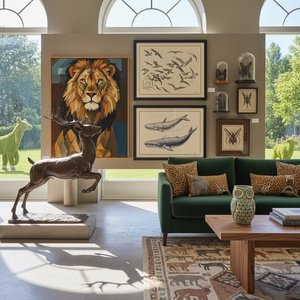
Animalia: Exploring the Enduring Presence of Animals in Art & Interior Design
Explore the rich history of animal symbolism in art, from ancient mythology to modern masterpieces. Discover how animals have inspired artists for centuries and learn how to incorporate these powerful motifs into your home décor.
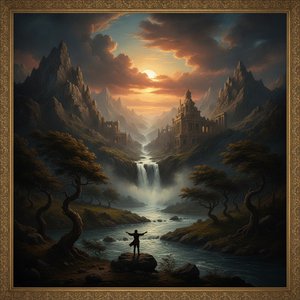
Epic Drama & Dark Vibes: The Ultimate Collector's Guide to Baroque Landscapes
Master the art of drama with our ultimate guide to Baroque landscapes. Discover the power of chiaroscuro, explore legendary masters, and learn how to curate epic, dark-vibe masterpieces for your collection with expert insights from OriginalUniqueArt.

Romantic Landscapes: 10 Masterpieces for Your Home | OriginalUniqueArt
Journey through 10 Romantic landscape masterpieces by Friedrich, Turner & Cole. Explore emotional art, sublime nature scenes & iconic 19th-century paintings. Find museum-quality reproductions for your home at OriginalUniqueArt.com – discover the full collection online!

Evocations of Place: A Historical Journey Through Landscape Art
Explore the rich history of landscape art with OriginalUniqueArt. Discover renowned artists, movements like Impressionism & Romanticism, and expert guidance for collecting timeless pieces. Find your perfect serene escape today!