

 Preview
 Send
Send Share
Share
 Details
 Guide
Guide

 Download
 Similars
 X-Ray
X-Ray Diaporama
 Stats
StatsMonopoly


 Read More
The artwork displayed on this page is protected by copyright law, which means we cannot legally create or sell an identical reproduction. This protection is enforced under international agreements such as the Berne Convention and by national laws, including those outlined by the U.S. Copyright Law - Title 17.
This method fully complies with copyright regulations because it does not involve copying or duplicating the protected artwork. Instead, it is a creative reinterpretation - a new painting that is influenced by the original but not identical to it.
Giclée / Art Print
Museum-quality giclée or canvas print with fast production and flexible finish options. ( Buy Hand Made Painting Switch to Digital Image)




P118B $10

P118H $10

P118W $10

P438Z $10

P508JH $12

P508YH $12

P805H $10

P805Z $10

P919BZ $10

P919G $10

P919XJ $10

P959ZH $10

P968JZ $12

W106C $8

W218G $10

W218JH $8

W218Y $10

W307PJ $10

W316G $10

W316PJ $8

W316Y $10

W398PJ $8

W4111J $10

W500HY $15

W500JH $15

W692G $12

W849H $8

W940BG $15

W953PJ $8




Pick from our preset sizes that match the artwork's original proportions.

Type the width and the height you need, to fit your frame or your wall. A print can only be cut, never made bigger than the picture, so a size with a different shape loses a part of the image. We send you a digital mockup to approve before we print anything. The picture shown on this page does not show the real cut — only the mockup does.
Worldwide Delivery () in 2 weeks instead of standard 4/5 weeks. (21 October)

Free Worldwide Express Shipping

High-Quality Linen Canvas

Full Shipping Insurance

Customs Tax Refund Guarantee

True Color Matching Guarantee

100-Day Return Policy (Defects Only)

100% Money-Back Guarantee

Bulk Discount Offer
 Glass option is only available in size under 110 CM

Monopoly
Giclée / Art Print
Reproduction Size
-


Total Price
$ 81
The Canvas of a Nation’s Obsession
Warren Brandt's 1964 painting, “Monopoly,” isn’t merely a depiction of a family gathered around a board game; it’s a potent visual metaphor for the American experience in mid-20th century. The scene unfolds within a comfortably furnished living room – a quintessential image of suburban domesticity – yet an underlying tension permeates the artwork. Three figures, rendered with Brandt's signature bold color palette and slightly stylized forms, are deeply engaged in the game, their faces reflecting a mixture of concentration, competitive spirit, and perhaps, a touch of anxiety. The meticulously arranged furniture—a patterned rug, a vase holding flowers, stacks of books – speaks to an aspiration for stability and intellectual fulfillment, juxtaposed against the chaotic potential of the game itself. The painting immediately invites us to consider the complex relationship between individual ambition and collective prosperity, a theme that resonated deeply within American society during this era.
A Fusion of Artistic Influences
Brandt’s artistic journey, shaped by a confluence of influential mentors, is evident in “Monopoly.” His training at Pratt Institute and subsequent studies with the abstract expressionists Philip Guston and Max Beckmann profoundly impacted his approach to color and form. Guston's emphasis on vibrant hues and expressive brushwork—particularly his later work exploring social commentary—is palpable here, while Beckmann’s influence is seen in the painting’s slightly unsettling quality, a subtle hint of unease beneath the surface of domestic tranquility. The inclusion of Yasuo Kuniyoshi, a Japanese-American painter who faced significant challenges during World War II, further enriches the artwork's narrative, suggesting themes of displacement and resilience. Brandt masterfully synthesizes these diverse influences into a distinctly personal style—one characterized by bold color, simplified forms, and a willingness to engage with complex social issues.
The Game as Social Commentary
“Monopoly” transcends the simple depiction of a family game night. The painting subtly critiques the American obsession with wealth accumulation and the potential for unchecked capitalism. The board itself, a symbol of both opportunity and exploitation, dominates the composition. The figures are not simply playing a game; they’re caught in its web, their fates seemingly determined by dice rolls and strategic decisions. Brandt's use of color—particularly the vibrant reds and yellows associated with property acquisition—heightens this sense of urgency and competition. The painting subtly suggests that the pursuit of wealth can be both exhilarating and ultimately isolating, a sentiment that resonated powerfully during a period of rapid economic growth and social change in America.
A Legacy of Reproduction
OriginalUniqueArt has meticulously reproduced “Monopoly” with exceptional attention to detail, capturing Brandt’s distinctive style and the painting's inherent emotional depth. The reproduction faithfully recreates the original’s rich color palette and dynamic composition, offering a stunning addition to any collection or interior space. The artwork’s enduring appeal lies in its ability to evoke both nostalgia for a bygone era and a critical reflection on contemporary social dynamics. By commissioning a hand-painted reproduction, collectors can bring this iconic work into their homes while supporting the preservation of artistic heritage.
Questions & Answers
What was Philip Guston's age when "Monopoly" was created?
When "Monopoly" was created in 1964, Philip Guston - born in 1913 - was 51 years old.
Where does "Monopoly" stand among Philip Guston's recurring subjects?
"Monopoly" depicts family game, monopoly, 1964, warren brandt, color palette, domestic scene, american art, while Philip Guston's recorded themes are guston’s color, social critique, identity, american satire, figurative art. Comparing the two shows how the work relates to the artist's usual subjects.
Are the colors of "Monopoly" by Philip Guston vivid or muted?
The color of "Monopoly" is clear color presence in saturation and vivid in intensity.
Artist Biography
Philip Guston: A Life in Art
- Born: Montreal, Canada (June 27, 1913)
- Died: June 7, 1980
Philip Guston was a renowned Canadian-American painter and printmaker whose career spanned over four decades. His artistic journey is marked by significant shifts in style and subject matter, blending elements of abstract expressionism and representational art to explore complex themes of racism, antisemitism, fascism, and American identity.
Early Life and Influences
Guston's early life was profoundly impacted by tragedy. His father, a Ukrainian Jewish immigrant, took his own life in 1923. This event deeply affected Guston’s artistic development. He began drawing at a young age and attended Los Angeles Manual Arts High School, where he started painting in 1927. Supported by his mother, he often created art in a small closet with a hanging bulb.
- Education: Studied under Frederick John de St. Vrain Schwankovsky, who introduced him to European modern art, Eastern philosophy, Theosophy, and mystic literature.
- Early Connections: Met Jackson Pollock, with whom he published a paper opposing the high school's policies.
Artistic Evolution: From Abstraction to Figurative Expression
Guston’s artistic career can be broadly divided into two distinct phases. Initially, his work was figurative and representational, showcasing early influences from Renaissance masters like Piero della Francesca. He later embraced abstraction, becoming a prominent figure in the New York School alongside artists like Jackson Pollock and Willem de Kooning.
- Abstract Expressionism: By the 1950s, Guston achieved recognition for his abstract expressionist paintings, characterized by dynamic compositions and gestural brushwork.
- Shift to Figuration: In the mid-1960s, he dramatically renounced abstraction, pioneering a modified form of representational art known as neo-expressionism. This shift was accompanied by a critical reevaluation of his earlier work and a desire to engage with more direct social and political commentary.
The Late Period: Satire and Social Commentary
Guston’s later works are perhaps the most controversial and impactful of his career. These paintings often featured dark, satirical elements, including drawings of Richard Nixon and hooded Klansmen. He explored themes of racism, antisemitism, and American identity with a raw honesty that challenged conventional artistic norms.
- Recurring Motifs: His late period is characterized by a limited palette and cartoonish renderings of various personal situations, symbols, and objects—often depicting figures with exaggerated features and unsettling expressions.
- Influences & Themes: Influenced by his experiences with racism and antisemitism, as well as his interest in Eastern philosophy and mystic literature, Guston’s work became a powerful commentary on the darker aspects of American society.
Legacy and Significance
Philip Guston's legacy continues to inspire artists and art enthusiasts alike. His unique perspective and artistic style have left an indelible mark on the world of art.
- Key Figure: A prominent figure in the abstract expressionist movement, Guston’s work challenged established conventions and paved the way for new forms of artistic expression.
- Museum Presence: His works are featured in prestigious museums worldwide, including the Whitney Museum of American Art and the Tate Modern.
- Ongoing Relevance: The postponement of his international retrospective in 2020 underscored the ongoing relevance of Guston’s work in addressing issues of social justice and racial equality.
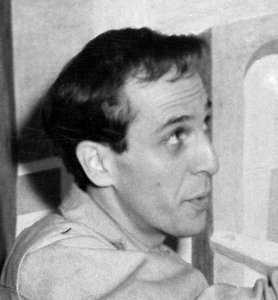
Philip Guston
1913 - 1980 , Canada
Quick Facts
- Full Name: Philip Guston
- Nationality: Canadian-American
- Date Of Birth: 1913
- Date Of Death: 1980
- Place Of Birth: Montreal, Canada
- Notable Artworks: ['To Fellini']
- Artistic Movement Or Style:
- Abstract Expressionism
- Neo-Expressionism
- Artists Who Influenced This Artist: ['Piero della Francesca']
- Artists Or Movements Influenced By This Artist: ['Eddie Martinez']
Related Articles

From Pixels to Pavement: How Gaming Aesthetics Are Shaping Pop Culture
Explore the exciting convergence of gaming aesthetics and pop culture! Discover how video games are influencing fashion, streetwear, art & more. Stay ahead of the trends with .

Bridging Realities: Exploring Aesthetic Crossovers Between Video Game Universes and Fine Art Traditions
Explore the fascinating intersection of video game aesthetics & fine art traditions. Discover how gaming influences design, collect iconic art reproductions, and elevate your space with expert guidance from OriginalUniqueArt.
Beyond Pixels and Play: The Aesthetic and Identity Significance of Gaming Art for the Modern Collector
Explore the rising world of gaming art! Discover why collectors are investing in vintage games & interactive experiences. Expert insights on value, trends & cultural significance.

Pixelated Prestige: Exploring Scarcity, Value, and Cultural Impact in Limited Edition Gaming Paintings
Explore the world of limited edition gaming paintings! Discover investment strategies, artist insights & preservation tips for collectors. Trusted expertise in rare video game art.

Pixel & Palette: Exploring the Artistic Craftsmanship of Hand-Painted Game Universes and the Artists Who Bring Them to Life
Explore the artistry of hand-painted game universes! Discover techniques, artists & history behind this unique style. Expert insights for collectors & developers.


