
 Preview
 Send
Send Share
Share
 Details

 Download
 Similars
 X-Ray
X-Ray Diaporama
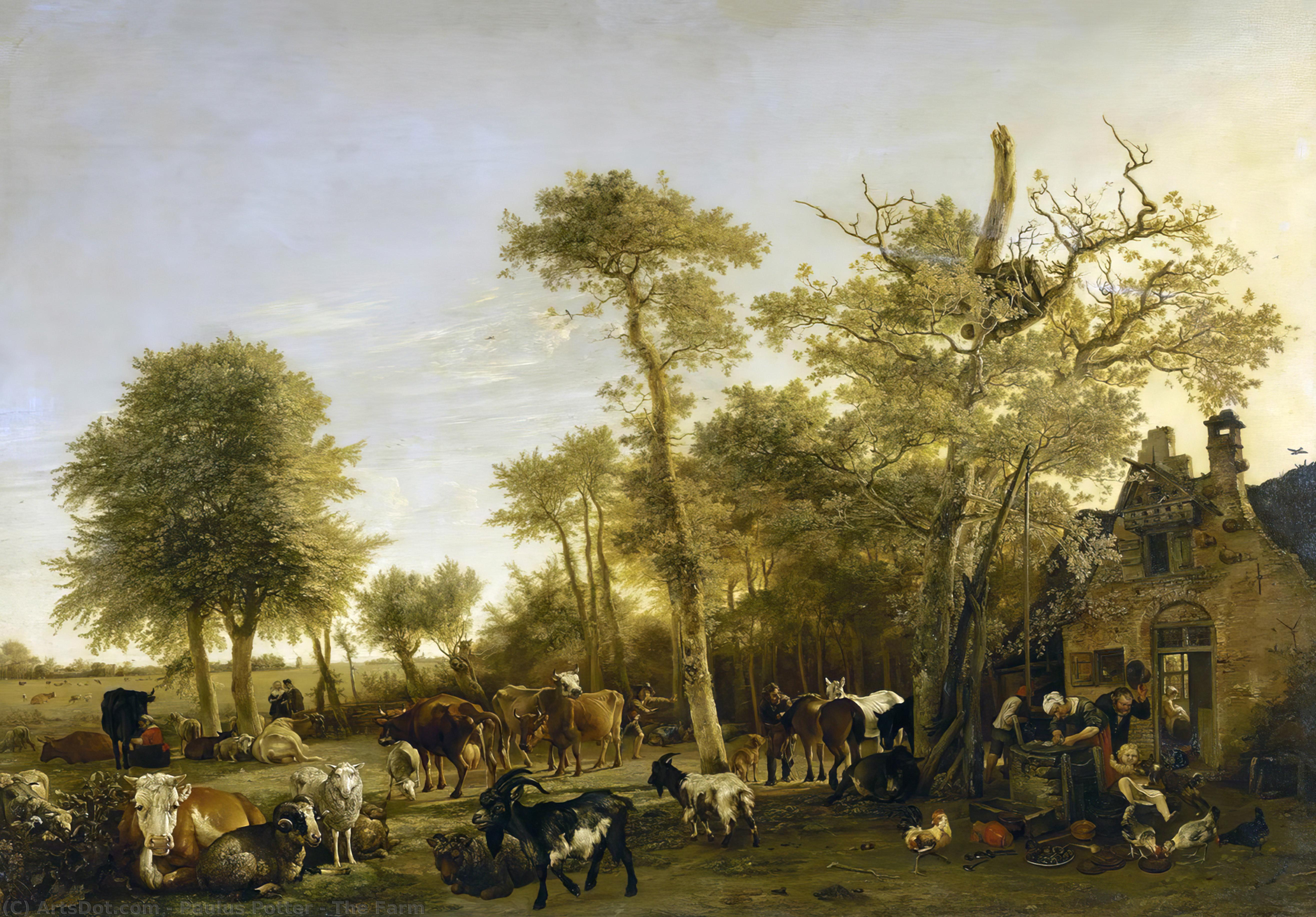
The Farm
 Oil On Panel
- Dutch Golden Age Realism
 1649
1649 81.0 x 116.0 cm
 Hermitage Museum
 Read More
Purchase a high-resolution, enhanced digital image, far superior to the online preview.
Each file is meticulously prepared by our in-house specialists using advanced tools and expert manual retouching. We ensure every image has exceptional clarity, precise color accuracy, and fine detail.
The final file is delivered via email within 72 hours, optimized for immediate use in professional, editorial, and print environments. This is the same quality trusted by top-tier design studios, publishers, and galleries.
Digital Image
Download a high-resolution file for personal display, printing, and creative projects. ( Buy Print Buy Hand Made Painting)
Included in Every Digital Image Order
Expert Digital Delivery, Guaranteed
When you choose OriginalUniqueArt.com, you're not just getting an image - you're receiving a professionally enhanced digital artwork, crafted with precision and backed by a satisfaction guarantee. Here's everything that comes with your order, automatically:

Fast Email Delivery
Your high-resolution digital image file will be emailed to you within 72 hours of ordering - ready for immediate use.

AI-Enhanced Digital File
Your artwork is professionally optimized using advanced AI tools and manual editing, ensuring maximum detail, clarity, and color accuracy.

Free Lifetime Re-Delivery
Accidentally deleted or lost your file? No worries - we'll resend it to you anytime, free of charge.

No Import Fees - Ever
Enjoy your artwork instantly with zero customs, duties, or delivery fees - digital downloads are always tax-free.

Color Accuracy Guarantee
We ensure your digital image reflects the original colors as closely as possible using professional tools and color management.

60-Day Satisfaction Guarantee
If you're not satisfied with your digital image, we'll revise it or refund 100% within 60 days - no questions asked.

100% Money-Back Guarantee
Not satisfied? Get a full refund within 60 days of receiving your digital file - no questions asked.

Bulk Order Discounts
Buy 3 images, save 10% - Buy 5, save 15% - Buy 10+, save 20%. Great for creative projects, galleries, and agencies.
Collectible Description
A Window into Rural Life: Paulus Potter’s “The Farm”
Paulus Potter's "The Farm," painted in 1649, isn’t merely a depiction of livestock; it’s a meticulously crafted window into the heart of 17th-century Dutch rural life. Housed within The Hermitage Museum in St. Petersburg, this oil on panel masterpiece offers an intimate glimpse into a world where human activity and animal husbandry were inextricably linked – a world rendered with astonishing realism and imbued with a quiet dignity rarely found in earlier depictions of farm scenes. Potter’s skill lies not just in his technical proficiency, but in his ability to capture the essence of daily life within this agrarian setting, transforming a commonplace subject into an enduring work of art. The painting immediately draws the eye to the central group of cows, their forms rendered with a remarkable sensitivity to musculature and texture; each ripple of hide, each subtle shift in posture, speaks volumes about their individual personalities and the rhythms of their existence.The Master of Light and Shadow: Potter’s Technique
Potter's approach to painting was revolutionary for his time. He eschewed the highly polished surfaces favored by many of his contemporaries, opting instead for a deliberately rougher texture achieved through layering thin glazes of paint – a technique known as *alla prima*. This method allowed him to capture the fleeting effects of light and shadow with unparalleled immediacy, lending a remarkable sense of depth and volume to the scene. Notice how the sunlight filters through the trees, casting dappled patterns across the pasture floor and illuminating the animals in a warm, inviting glow. The artist’s masterful use of chiaroscuro – the dramatic contrast between light and dark – not only creates a visually compelling image but also emphasizes the tactile qualities of the subjects, making them feel almost tangible to the viewer. The careful attention to detail extends beyond the animals themselves; even the individual blades of grass are rendered with painstaking accuracy, contributing to the overall sense of realism.A Dutch Golden Age Vision: Context and Symbolism
“The Farm” is a quintessential example of the Dutch Golden Age’s fascination with nature and its profound impact on daily life. During this period, artists sought to capture the beauty and tranquility of the countryside, reflecting a growing appreciation for rural values and a desire to connect with the natural world. Potter's work aligns perfectly with this trend, offering a romanticized yet undeniably authentic portrayal of farm life. The presence of various animals – cows, horses, sheep, chickens – symbolizes prosperity and abundance, key themes in Dutch society at the time. Furthermore, the inclusion of several figures engaged in agricultural tasks—milking, tending to the livestock, preparing for market—underscores the central role of farming in the Dutch economy and culture. The low vantage point adopted by Potter further emphasizes this connection between humanity and nature, inviting the viewer to step into the scene and experience it firsthand.A Legacy of Realism: Paulus Potter’s Influence
Paulus Potter's legacy extends far beyond his individual works; he fundamentally shifted the way artists approached the depiction of animals in painting. Prior to his work, livestock were often treated as mere decorative elements within landscapes, lacking a sense of individuality or vitality. Potter, however, elevated them to the status of protagonists, imbuing each animal with its own unique character and presence. His influence can be seen in the works of subsequent generations of Dutch artists, including Rembrandt van Rijn and Jan Vermeer, who were both deeply impressed by his realism and sensitivity. Potter’s tragically short life – he died at just 28 – ensured that his artistic vision remained largely unappreciated during his own time. However, today, “The Farm” stands as a testament to his extraordinary talent and a poignant reminder of the enduring power of art to capture the beauty and complexity of the natural world.Reproductions: Bringing "The Farm" Home
OriginalUniqueArt offers meticulously crafted reproductions of Paulus Potter’s “The Farm,” ensuring that this iconic masterpiece can be enjoyed in your own home or office. Utilizing state-of-the-art digital printing techniques and premium archival materials, our reproductions faithfully capture the painting's rich colors, intricate details, and atmospheric depth. Whether you are an art enthusiast, a collector, or simply seeking to add a touch of timeless beauty to your space, a OriginalUniqueArt reproduction of “The Farm” is a perfect choice. Explore our range of sizes and framing options to find the ideal representation for your personal taste and décor.Artist Biography
A Brief Life Illuminated: The World of Paulus Potter
Paulus Potter, a name synonymous with the Dutch Golden Age’s profound connection to nature, enjoyed a tragically short but remarkably impactful career. Born in Enkhuizen on November 20, 1625, and baptized the same day, his artistic journey began within a family already touched by creative inclination. His father, Pieter Symonsz Potter, was a skilled painter specializing in the intricate craft of gilded leather hangings and charming genre scenes, while his mother, Aaltje Paulusdr Bartsius, boasted familial ties to the esteemed painter Willem Bartsius. This nurturing environment undoubtedly laid the foundation for young Paulus’s artistic sensibilities. The family's relocation first to Leiden in 1628, and then to the bustling metropolis of Amsterdam in 1631, proved pivotal, providing him with access to a wider world of artistic influence and opportunity. It was in Amsterdam that he began his formal training under his father’s guidance, though some scholars suggest potential studies with Claes Moeyaert may have further shaped his early development.From Delft Guilds to Hague Landscapes
Potter's ambition led him to join the prestigious Guild of Saint Luke in Delft, a significant step for any aspiring artist in the Dutch Republic. However, it was his move to The Hague around 1649 that truly began to define his artistic path. Establishing himself near the renowned landscape painter Jan van Goyen proved incredibly influential; Van Goyen’s mastery of atmospheric effects and realistic depictions of nature would subtly permeate Potter's own style. This period also marked a turning point in Potter’s personal life. In July 1650, he married Adriana van Balckeneynde, a union that opened doors to influential circles thanks to her father, a prominent building contractor. Through this connection, Potter found himself introduced to members of Dutch high society, including the esteemed Amalia of Solms-Braunfels, who would become a patron of his work. A brief return to Amsterdam in May 1652, at the invitation of physician and art enthusiast Nicolaes Tulp – who commissioned a portrait of his son Dirck – offered further recognition. Sadly, this period of burgeoning success was cut short by illness; Paulus Potter succumbed to tuberculosis on January 17, 1654, at the young age of twenty-eight.The Pastoral Vision: Style and Major Works
Paulus Potter carved a unique niche for himself within the vibrant landscape of Dutch Golden Age painting. He became celebrated for his captivating depictions of animals – particularly cattle – seamlessly integrated into expansive, meticulously rendered landscapes. His compositions are often characterized by a strikingly low vantage point, an artistic choice that dramatically emphasizes the scale and grandeur of nature, dwarfing even the majestic beasts he portrayed. The Young Bull, created around 1647, remains his most iconic work, now housed in the Mauritshuis in The Hague. Initially met with some critical reservation, it later gained widespread acclaim as a pioneering example of Romanticism’s nascent sensibility – a profound emotional connection to the natural world. Beyond this masterpiece, Potter produced other notable paintings such as Figures with Horses by a Stable (1647), Punishment of a Hunter (circa 1647), Two Pigs in a Sty (1649), and Wolf-hound (approximately 1650–1652). He also demonstrated his versatility through numerous etchings, often focusing on the detailed portrayal of cattle and other animals.Legacy and Lasting Influence
Though his life was tragically brief, Paulus Potter’s artistic legacy endures. His work stands as a testament to his exceptional talent and unique vision. The influence of Jan van Goyen is readily apparent in Potter's landscapes, particularly in the subtle atmospheric effects and commitment to realistic representation. However, Potter transcended mere imitation; he infused his scenes with an emotional depth that resonated deeply with viewers then, and continues to do so today. He is now recognized as a precursor to the Romantic movement, anticipating its emphasis on the sublime power of nature and the emotional response it evokes. Despite producing approximately 100 paintings during his short career, his impact was considerable. His work enjoyed renewed appreciation in the 19th century for its naturalism and profound emotional resonance. Even today, Potter is honored with a statue in his birthplace of Enkhuizen, depicting him sketching a goat – a fitting tribute to an artist who dedicated his life to capturing the beauty and majesty of the natural world.Key Artistic Characteristics
- Low Horizon Lines: Potter consistently employed low horizon lines in his compositions, creating a sense of vastness and emphasizing the scale of the landscape.
- Realistic Animal Depiction: He was renowned for his meticulous attention to detail when rendering animals, capturing their anatomy and behavior with remarkable accuracy.
- Atmospheric Effects: His landscapes frequently feature subtle atmospheric effects – light, shadow, and mist – that contribute significantly to the overall mood and realism of each scene.
- Subtle Color Palette: Potter typically favored a muted color palette dominated by earth tones, reflecting the natural hues of the Dutch countryside. This restrained approach further enhances the sense of authenticity and harmony within his paintings.

Paulus Potter
1625 - 1654 , Netherlands
Quick Facts
- Artistic Movement Or Style: Romanticism
- Artists Or Movements Influenced By This Artist: ['Romanticism']
- Artists Who Influenced This Artist: ['Jan van Goyen']
- Date Of Birth: November 20, 1625
- Date Of Death: January 17, 1654
- Full Name: Paulus Potter
- Nationality: Dutch
- Notable Artworks:
- The Young Bull
- Figures with Horses...
- Punishment of a Hunter
- Two Pigs in a Sty
- Wolf-hound
- Place Of Birth: Enkhuizen, Netherlands

