Menu
Text size

() ·

A painting made for you, by hand

The Lighthouse, Groix

Hand Made Oil Reproduction

Hand-painted oil on canvas in your size and frame, made to order by our artists. ( Switch to Print Switch to Digital Image)

Collectible Description

Paul Signac's "The Lighthouse, Groix" captures the vibrant beauty of Brittany’s coastline through Pointillism. Explore the harmonious vision of this Neo-Impressionist master and his innovative use of color.

Artist Biography

Discover Paul Signac (1863-1935), a key Neo-Impressionist painter & master of Pointillism. Explore vibrant coastal scenes, harbor views & his influence on modern art at OriginalUniqueArt!

from ·

Chapter 1

How large should it be?

Slide to change the size; the picture on the left shows the frame at its real width. The proportions of the original are kept.

Standard
custom
CM
INCH

Pick from our preset sizes that match the artwork's original proportions.

width
height

Type the width and the height you need, to fit your frame or your wall. This is hand-painted, so for a size with a different shape the artist can paint a bit more around the picture, or cut a bit — you choose. We send you a digital mockup to approve before the painting starts. The picture shown on this page does not show the real result — only the mockup does.

Chapter 2

How should it arrive?

Choose the edges of the stretched canvas

Choose your frame

Corner sample of the WhiteWrap canvas edge finish, stretched on solid wood bars
White $1
Corner sample of the BlurSideWrap canvas edge finish, stretched on solid wood bars
Blurside $1
Corner sample of the ExtendedWrap canvas edge finish, stretched on solid wood bars
Extended $1
Corner sample of the P118B picture frame: moulded polystyrene, 5 cm wide and 3 cm thick
P118B $10
Corner sample of the P118H picture frame: moulded polystyrene, 5 cm wide and 3 cm thick
P118H $10
Corner sample of the P118W picture frame: moulded polystyrene, 5 cm wide and 3 cm thick
P118W $10
Corner sample of the P438Z picture frame: moulded polystyrene, 5.5 cm wide and 3.5 cm thick
P438Z $10
Corner sample of the P508JH picture frame: moulded polystyrene, 7 cm wide and 3.5 cm thick
P508JH $12
Corner sample of the P508YH picture frame: moulded polystyrene, 7 cm wide and 3.5 cm thick
P508YH $12
Corner sample of the P805H picture frame: moulded polystyrene, 5 cm wide and 3.5 cm thick
P805H $10
Corner sample of the P805Z picture frame: moulded polystyrene, 5 cm wide and 3.5 cm thick
P805Z $10
Corner sample of the P919BZ picture frame: moulded polystyrene, 7 cm wide and 3.5 cm thick
P919BZ $10
Corner sample of the P919G picture frame: moulded polystyrene, 7 cm wide and 3.5 cm thick
P919G $10
Corner sample of the P919XJ picture frame: moulded polystyrene, 7 cm wide and 3.5 cm thick
P919XJ $10
Corner sample of the P959ZH picture frame: moulded polystyrene, 5 cm wide and 3 cm thick
P959ZH $10
Corner sample of the P968JZ picture frame: moulded polystyrene, 6 cm wide and 4 cm thick
P968JZ $12
Corner sample of the W106C picture frame: solid wood, 5 cm wide and 3 cm thick
W106C $8
Corner sample of the W218G picture frame: solid wood, 5 cm wide and 3 cm thick
W218G $10
Corner sample of the W218JH picture frame: solid wood, 5 cm wide and 3 cm thick
W218JH $8
Corner sample of the W218Y picture frame: solid wood, 5 cm wide and 3 cm thick
W218Y $10
Corner sample of the W307PJ picture frame: solid wood, 6 cm wide and 3 cm thick
W307PJ $10
Corner sample of the W316G picture frame: solid wood, 6 cm wide and 3 cm thick
W316G $10
Corner sample of the W316PJ picture frame: solid wood, 6 cm wide and 3 cm thick
W316PJ $8
Corner sample of the W316Y picture frame: solid wood, 6 cm wide and 3 cm thick
W316Y $10
Corner sample of the W398PJ picture frame: solid wood, 5 cm wide and 3 cm thick
W398PJ $8
Corner sample of the W4111J picture frame: solid wood, 6.5 cm wide and 3.5 cm thick
W4111J $10
Corner sample of the W500HY picture frame: solid wood, 7 cm wide and 5 cm thick
W500HY $15
Corner sample of the W500JH picture frame: solid wood, 7 cm wide and 5 cm thick
W500JH $15
Corner sample of the W692G picture frame: solid wood, 8 cm wide and 4 cm thick
W692G $12
Corner sample of the W849H picture frame: solid wood, 5 cm wide and 3 cm thick
W849H $8
Corner sample of the W940BG picture frame: solid wood, 7.5 cm wide and 4.5 cm thick
W940BG $15
Corner sample of the W953PJ picture frame: solid wood, 6 cm wide and 3.5 cm thick
W953PJ $8
Corner sample of the H24-GOLD picture frame: carved wood with gesso, 10 cm wide and 6 cm thick
H24-GOLD $30
Corner sample of the H24-SILVER picture frame: carved wood with gesso, 10 cm wide and 6 cm thick
H24-SILVER $30
Corner sample of the H36-GOLD picture frame: carved wood with gesso, 15 cm wide and 6.5 cm thick
H36-GOLD $45
Corner sample of the H36-SILVER picture frame: carved wood with gesso, 15 cm wide and 6.5 cm thick
H36-SILVER $45
Frame preview
Framed

Moulding: . Overall size with the frame: .

Chapter 3

Who paints it, and should anything change?

Examples of what can be changed: Replace face with customer photo; Add pet (e.g., replace cat with dog); Include hidden message in background; Change background landscape or elements.
After order, OriginalUniqueArt.com team will email client for instructions and provide a mockup preview

Worldwide Delivery () in 3/4 weeks instead of standard 5 weeks. (29 October). No compromise on quality.

Chapter 4

The finishing touches

A nameplate, as in a museum?

Engraved Bronze Plaque Details

This elegant plaque features the artist's name and the title of the artwork, finely engraved for a timeless presentation.

It is made from bronze with a refined, elegant finish. The text is precisely laser-engraved for a sharp and permanent result. Measuring 9x2 cm, the plaque is compact yet easy to read. It's built to be durable and scratch-resistant, offering a professional, museum-quality look. Mounting is simple thanks to the included adhesive backing.

Transparent Acrylic Plaque Details

The plaque includes essential engraved details such as the artist's name, the title of the artwork, the date it was created, the type of media used-like oil on canvas or watercolor-a brief description of the piece, and a QR code that links to the complete artwork information.

It is crafted from clear acrylic, offering a sleek, modern appearance. The text is UV-engraved in black to ensure strong visual contrast. With a size of 10x15 cm, it ensures optimal readability. It comes equipped with two metal hooks for secure wall mounting. The plaque is designed to be weather-resistant, making it suitable for various environments, and it includes interactive features that work seamlessly with smartphone scanning.

Black Acrylic Plaque Details

This elegant plaque includes engraved information such as the artist's name, the title of the artwork, the date it was created, the type of media used (like oil on canvas or watercolor), a short description of the artwork, and a QR code for quick access to more information.

The plaque itself is made from refined black acrylic with a premium finish. The text is laser-engraved in white for high contrast and readability. Its size is 10x15 cm, designed to be easy to read. It comes with two metal hooks for professional mounting. The design is sleek and fits any interior style. It is also weather-resistant and durable, with built-in digital integration for mobile compatibility.

A protective varnish?

When do you need it?

Chapter 5

Your painting, as you ordered it

The Lighthouse, Groix

Reproduction Medium

Reproduction Size

-

Elite Senior Artist

More detail, finesse, and extra production time

-

Reproduction Frame

-

-

For artworks or reproductions larger than 105 cm (approximately 41 inches) on any side, the frame will be shipped as a kit, disassembled. This method ensures safe delivery and prevents damage during transport.

Professional assembly required - this is not a DIY product.
The kit must be assembled and the canvas stretched by an experienced professional framer, using wood glue (not supplied), a canvas stretching plier and clamps to hold the bars square while the glue dries. Incorrect assembly or uneven canvas tension can permanently damage the artwork and is not covered by our warranty.

  • All solid wood bars are included, precisely cut to size.

  • Assembled with the screws provided, plus wood glue for the corner joints, which is not supplied and must be sourced by your framer.

  • Professional tools are required and not included: a canvas stretching plier (tensioner) and clamps to hold the bars square while the glue dries.

Important:
The corner joints require wood glue, the bars must be held with clamps until the glue is fully dry, and tightening the canvas on the assembled frame requires a canvas stretching plier. None of these are included in the kit. Please arrange an experienced professional framer before ordering this size.

Nameplate

-

-

Protective Varnish

Glossy Varnish (enhances colors, protects against light/moisture)

-

Customize My Artwork

Examples of what can be changed: Replace face with customer photo; Add pet (e.g., replace cat with dog); Include hidden message in background; Change background landscape or elements.

-

Urgent

Worldwide Delivery () in 3/4 weeks instead of standard 5 weeks. (29 October). No compromise on quality.

-

Express Shipping

Worldwide Delivery () in 5 weeks. (5 November).

Included

Total Price

$ 300

Total Price $ 300

Glass option is only available in size under 110 CM

Included with every order

  • Free Worldwide Express Shipping
  • High-Quality Linen Canvas
  • Full Shipping Insurance
  • Customs Tax Refund Guarantee
  • True Color Matching Guarantee
  • 100-Day Return Policy (Defects Only)
  • 100% Money-Back Guarantee
  • Bulk Discount Offer

The Harmonious Vision of Paul Signac: *The Lighthouse, Groix*

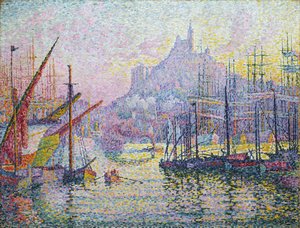
Paul Signac’s *The Lighthouse, Groix*, painted in 1925, is more than just a depiction of a coastal scene; it's a meticulously constructed exploration of light, color, and the very nature of perception. This captivating work embodies the core tenets of Neo-Impressionism, offering a glimpse into the artist’s systematic approach to painting – a deliberate departure from the fleeting impressions of Impressionism in favor of a scientifically informed method. The canvas vibrates with an almost palpable energy, born not from brushstrokes alone but from the careful orchestration of tiny, distinct dots of pure color, a technique Signac championed alongside Georges Seurat as Pointillism.

The subject itself – the iconic lighthouse of Groix Island off the coast of Brittany – is rendered with remarkable detail and atmospheric depth. The island’s rugged coastline, punctuated by the stark verticality of the lighthouse, dominates the composition. However, Signac doesn't simply record this view; he transforms it into a study in color and light. The sea, a shifting expanse of blues ranging from deep indigo to shimmering turquoise, is built up layer upon layer with these minuscule dots, creating an illusion of movement and depth that transcends mere representation. The boats scattered across the water – varying in size and type – are not merely incidental elements but contribute to the overall sense of scale and maritime activity.

The Science of Color: Pointillism Unveiled

At the heart of *The Lighthouse, Groix* lies Signac’s revolutionary approach to color. He believed that the eye could actually blend colors optically when viewed from a distance, rather than mixing them on the palette. This principle – known as Divisionism or Pointillism – dictated his meticulous process. Each individual dot is painted with a pure hue, carefully chosen for its specific optical effect. The viewer’s eye then performs the work of blending these dots together, creating a richer, more vibrant image than could be achieved through traditional brushwork. Notice how Signac uses complementary colors—blues and oranges, greens and reds—strategically placed to intensify their visual impact and create a dynamic interplay of light and shadow.

Signac’s research into color theory was deeply influenced by scientific studies of optics and the physiology of vision. He meticulously documented his experiments with color mixing, believing that understanding how the eye perceived color was crucial to achieving his desired effect. This wasn't simply an aesthetic pursuit; it was a genuine attempt to codify painting as a systematic process, rooted in observable reality.

A Symbol of Guidance and Hope

The lighthouse itself is more than just a navigational aid; within the context of Signac’s work, it carries significant symbolic weight. Lighthouses have long represented guidance, safety, and hope – beacons cutting through darkness and uncertainty. In *The Lighthouse, Groix*, its prominent position in the composition suggests a reassuring presence amidst the vastness and potential dangers of the sea. The boats, navigating towards or away from the lighthouse, symbolize human endeavor and the pursuit of direction. Furthermore, Signac’s interest in anarchist philosophy – explored in detail through his writings and artwork – subtly infuses the scene with themes of liberation and a rejection of established order, mirroring the lighthouse's role as an independent guide.

Collecting a Masterpiece: Reproduction & Beyond

*The Lighthouse, Groix* is a testament to Paul Signac’s innovative approach to painting and his profound understanding of color. OriginalUniqueArt offers meticulously crafted hand-painted reproductions that capture the essence of this iconic work, allowing you to experience its beauty and complexity in stunning detail. Whether for your home, office, or collection, our reproductions provide an authentic representation of Signac's artistic vision – a harmonious blend of scientific rigor and evocative imagery. Explore the full artwork details on our website: The Lighthouse, Groix.

Questions & Answers

At what size is "The Lighthouse, Groix" recommended to be printed?

The recommended print size for "The Lighthouse, Groix" by Paul Signac is large.

How harmonious are the colors of "The Lighthouse, Groix" by Paul Signac?

The colors of "The Lighthouse, Groix" by Paul Signac show a discordant palette harmony. Harmony describes how the colors relate to each other.

Is "The Lighthouse, Groix" available as a fine art print?

To get a print of "The Lighthouse, Groix" by Paul Signac, simply order it on its Fine Art Print page: a fine art print on cotton canvas or archival canvas paper.

More about this painting

Preview AR preview Switch to Print Switch to Digital Image Send
Details Guide Add to favorites Download Similars X-Ray Diaporama Q&A Stats

In numbers

  • 1925the year it was painted
  • 29frames to choose from
  • standard sizes, in its own proportions
  • 5weeks to paint and deliver it
Paul Signac

Paul Signac

1863 - 1935, France

Quick facts about Paul Signac

  • Full Name: Paul Victor Jules Signac
  • Nationality: French
  • Date Of Birth: 1863
  • Date Of Death: 1935
  • Place Of Birth: Paris, France
  • Notable Artworks:
    • Boulevard de Clichy
    • The Red Buoy
    • La Valleuse
    • The Velodrome
    • Town Beach, Collioure
  • Artistic Movement Or Style: Neo-Impressionism, Pointillism
  • Artists Who Influenced This Artist:
    • Claude Monet
    • Georges Seurat
  • Artists Or Movements Influenced By This Artist:
    • Henri Matisse
    • Fauvism
    • André Derain

Artist Biography

The Harmonious Vision of Paul Signac

Paul Victor Jules Signac, born in Paris in 1863, emerged as a pivotal figure in the evolution of modern art, inextricably linked to the birth and development of Neo-Impressionism. Initially drawn to architecture, a youthful encounter with Claude Monet’s exhibition ignited within him an enduring passion for painting, setting him on a path that would redefine color theory and artistic expression. Signac wasn't merely a painter; he was a dedicated explorer of light, color, and the very science underpinning visual perception. His early works, though demonstrating Impressionistic leanings, quickly evolved under the profound influence of Georges Seurat, forging a partnership that birthed Pointillism – a technique characterized by the meticulous application of tiny, distinct dots of pure color intended to blend optically in the viewer’s eye. This wasn't simply about aesthetics; it was an attempt to systematize painting, grounding it in scientific principles and challenging conventional artistic norms.

A Dialogue with Seurat and the Birth of Neo-Impressionism

The meeting between Signac and Seurat in 1884 proved transformative for both artists. They shared a fascination with Eugène Delacroix’s writings on color theory, particularly his exploration of complementary contrasts and the emotional impact of hue. Together, they embarked on a rigorous investigation into these principles, translating them into a revolutionary painting technique. Signac wholeheartedly embraced Seurat's vision, abandoning the fleeting brushstrokes of Impressionism for the precise, calculated application of points of color. Boulevard de Clichy (1886) stands as an early testament to this new approach, showcasing Signac’s meticulous style and his commitment to capturing the vibrancy of urban life through a scientific lens. However, their collaboration wasn't merely technical; it was intellectual, fueled by a shared desire to elevate painting to the level of a rigorous science. Signac became a devoted advocate for Seurat’s ideas, tirelessly promoting Neo-Impressionism and defending its principles against criticism. The tragic early death of Seurat in 1891 left Signac as the principal champion of their shared artistic vision, a role he embraced with unwavering dedication.

Coastal Reveries and Artistic Independence

Following Seurat’s passing, Signac's artistic journey took on a new dimension, deeply influenced by his profound love for sailing and the allure of the Mediterranean coast. He discovered Saint-Tropez in 1892, establishing a home there that became a haven for artists and a source of endless inspiration. The shimmering waters, sun-drenched harbors, and picturesque coastal towns provided an ideal setting to explore the interplay of light and color. The Red Buoy, Saint-Tropez (1895) exemplifies this period, showcasing his mastery of Pointillism in capturing the vibrant hues and dynamic energy of the sea. His technique evolved, becoming more fluid and expressive while retaining its scientific foundation. He began to experiment with larger brushstrokes and a broader palette, moving beyond strict adherence to Seurat’s precise dotting method. Signac's travels extended beyond France, encompassing Italy, Holland, and even Constantinople, each journey enriching his artistic vocabulary and broadening his perspective.

A Patron of the Avant-Garde and Lasting Legacy

Beyond his own artistic pursuits, Signac played a crucial role in fostering the development of modern art through his leadership within the Société des Artistes Indépendants. As president from 1908 until his death in 1935, he championed artistic freedom and provided a platform for emerging talents, including Henri Matisse, André Derain, and other pioneers of Fauvism and Cubism. He was among the first to recognize and support their groundbreaking work, exhibiting controversial pieces that challenged conventional aesthetic norms. Signac’s commitment to inclusivity and his willingness to embrace innovation helped shape the trajectory of 20th-century art. His theoretical writings, notably From Eugène Delacroix to Neo-Impressionism (1899), further solidified his position as a leading intellectual figure in the art world. Paul Signac’s legacy extends far beyond his captivating paintings; he was a visionary artist, a dedicated theorist, and a generous patron who profoundly influenced the course of modern art, leaving an indelible mark on generations of artists to come.

Key Dates & Achievements

  • 1863: Born in Paris, France.
  • 1884: Co-founded the Société des Artistes Indépendants with Georges Seurat.
  • 1886: Painted *Boulevard de Clichy*, a key example of early Pointillism.
  • 1895: Created *The Red Buoy, Saint-Tropez*, showcasing his mastery of coastal scenes.
  • 1899: Published *From Eugène Delacroix to Neo-Impressionism*, a seminal work on color theory.
  • 1908 – 1935: Served as President of the Société des Artistes Indépendants, championing avant-garde artists.
  • 1935: Passed away in Paris at the age of 72, leaving behind a rich artistic legacy.

Quick Facts

  • Subject or theme: Lighthouse & sea
  • Year: 1925
  • Influences:
    • Seurat
    • Monet
  • Movement: Neo-Impressionism

Art Quiz

There is only one correct answer for each question.

Question 1:
The painting ‘The Lighthouse, Groix’ primarily exemplifies which artistic movement?
Question 2:
Paul Signac's technique in ‘The Lighthouse, Groix’ involved applying paint using:
Question 3:
The prominent lighthouse in ‘The Lighthouse, Groix’ serves primarily as:
Question 4:
Considering Paul Signac’s biography, what was a key influence on his artistic approach?
Question 5:
The vibrant colors used in ‘The Lighthouse, Groix’ are intended to: