Preview
 Send
Send Share
Share
 Details
 Guide
Guide

 Download
 Similars
 X-Ray
X-Ray Diaporama
 Q&A
Q&A Stats
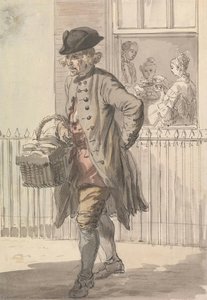
StatsLondon Cries: A Man with a Bottle

- 19.0 x 14.0 cm


 Read More
Giclée / Art Print
Museum-quality giclée or canvas print with fast production and flexible finish options. ( Buy Hand Made Painting Switch to Digital Image)




P118B $10

P118H $10

P118W $10

P438Z $10

P508JH $12

P508YH $12

P805H $10

P805Z $10

P919BZ $10

P919G $10

P919XJ $10

P959ZH $10

P968JZ $12

W106C $8

W218G $10

W218JH $8

W218Y $10

W307PJ $10

W316G $10

W316PJ $8

W316Y $10

W398PJ $8

W4111J $10

W500HY $15

W500JH $15

W692G $12

W849H $8

W940BG $15

W953PJ $8




Pick from our preset sizes that match the artwork's original proportions.

Type the width and the height you need, to fit your frame or your wall. A print can only be cut, never made bigger than the picture, so a size with a different shape loses a part of the image. We send you a digital mockup to approve before we print anything. The picture shown on this page does not show the real cut — only the mockup does.
Worldwide Delivery () in 2 weeks instead of standard 4/5 weeks. (6 November)

Free Worldwide Express Shipping

High-Quality Linen Canvas

Full Shipping Insurance

Customs Tax Refund Guarantee

True Color Matching Guarantee

100-Day Return Policy (Defects Only)

100% Money-Back Guarantee

Bulk Discount Offer
 Glass option is only available in size under 110 CM

London Cries: A Man with a Bottle
Giclée / Art Print
Reproduction Size
-


Total Price
$ 81
A Snapshot of London Life: Paul Sandby’s “London Cries”
Paul Sandby's "London Cries: A Man with a Bottle," painted in 1759, isn’t merely a depiction of a street scene; it’s a vibrant, almost theatrical window into the bustling heart of eighteenth-century London. This watercolor, now meticulously reproduced as a hand-painted artwork by OriginalUniqueArt, captures a moment of everyday commerce and perhaps, a touch of wry observation, offering a glimpse into the lives of ordinary people within the grand tapestry of the city.
The scene unfolds in a shadowed alleyway, dominated by a weathered brick wall – a common feature of London’s densely packed streets. A man, dressed in a simple brown coat and hat, stands center stage, holding a bottle and a small bag. His posture suggests a practiced routine, a familiar dance with the city's commerce. The details are remarkably precise for the era: the folds of his clothing, the worn texture of the brick, even the subtle shadows cast by the light – all speak to Sandby’s keen eye for observation and his commitment to realistic representation. The background hints at a tavern or public space, filled with figures engaged in conversation, further immersing the viewer within the scene.
A Master of Watercolor Technique
Sandby was a pioneer in watercolor painting, particularly known for his ability to capture light and atmosphere with remarkable subtlety. This work exemplifies his mastery of the medium. Notice how he uses washes of color – delicate blues and greens for the shadows, muted browns for the brickwork – to create depth and volume. The loose, expressive brushstrokes contribute to a sense of immediacy and spontaneity, as if Sandby were capturing the scene in real-time. He employed a technique known as ‘grisaille,’ using monochrome washes to establish the tonal values before adding color, ensuring accuracy and balance within the composition.
The choice of paper – slightly textured laid paper – is also significant. It provides an ideal surface for watercolor, allowing the pigment to flow freely while maintaining a certain toothiness that enhances the visual impact of the brushstrokes. The overall effect is one of luminous quality, with light dancing across the figures and surfaces.
Historical Context: London in Transition
"London Cries" offers a fascinating insight into the social and economic landscape of 18th-century London. The title itself refers to the practice of street vendors hawking their wares – bottles of ale, small bags of goods, and various other items – to passersby. These “criers” were an integral part of the city’s economy and daily life. Sandby's painting isn’t simply a portrait of a vendor; it’s a representation of a vital urban activity.
Painted during a period of significant social change, London was experiencing rapid growth and transformation. The city was becoming increasingly crowded and diverse, with new industries emerging and traditional trades evolving. Sandby's work reflects this dynamism, capturing the energy and complexity of a rapidly changing metropolis. The painting also provides a poignant reminder of the lives of ordinary people – often overlooked in grand historical narratives – who contributed to the vibrant pulse of the city.
Symbolism and Emotional Resonance
Beyond its documentary value, “London Cries” possesses a subtle emotional resonance. The man’s expression is ambiguous—is he weary, hopeful, or simply focused on his trade? The shadows and muted colors contribute to a sense of quiet melancholy, suggesting the hardships and uncertainties of urban life. Yet, there's also an undeniable charm in the scene – a testament to the resilience and adaptability of Londoners.
As a hand-painted reproduction by OriginalUniqueArt, this artwork retains Sandby’s original spirit while offering exceptional clarity and detail. It’s more than just a print; it’s a tangible connection to a pivotal moment in British art history—a captivating glimpse into the soul of London itself.
Questions & Answers
Who created "London Cries: A Man with a Bottle" and what style is it in?
Paul Sandby created "London Cries: A Man with a Bottle" within the Neoclassicism movement.
What technique was used for "London Cries: A Man with a Bottle" by Paul Sandby?
The medium of "London Cries: A Man with a Bottle" by Paul Sandby is acrylic on canvas. Reproductions aim to render the appearance of this technique.
What subjects appear in "London Cries: A Man with a Bottle" by Paul Sandby?
The themes present in "London Cries: A Man with a Bottle" by Paul Sandby include 18th century london, street performer scene, british portraiture, vintage print art, historical figure, urban life 1759, ink drawing style. Together they summarize the artwork's subject matter.
Artist Biography
The Father of Modern Landscape Painting
Paul Sandby stands as a pivotal figure in the history of British landscape painting, recognized not merely for his artistic skill but for establishing a new aesthetic tradition that profoundly impacted subsequent generations. Born in Nottingham to Thomas Sandby, a textile worker, Paul’s early life was marked by self-education and an innate fascination with observation—qualities that would prove instrumental in shaping his extraordinary career as both a mapmaker and painter. Unlike many artists of his time who pursued formal training, Sandby honed his craft independently, immersing himself in the natural world and meticulously documenting its beauty through watercolor.
His formative years instilled within him a deep appreciation for detail and accuracy, skills that would later translate seamlessly into his cartographic endeavors. His brother Thomas, also a draughtsman, fostered this artistic inclination, encouraging experimentation and fostering a collaborative spirit. Together, they established an academy in Nottingham, attracting aspiring artists eager to learn from their expertise. Their distinctive style—characterized by luminous washes of color and a masterful depiction of atmospheric perspective—became instantly recognizable and profoundly influential across the British Isles.
Topography and the Spirit of the Land
Sandby’s professional journey was uniquely shaped by his involvement with the military drawing department at the Tower of London. This role propelled him into a position that would expose him to the grandeur of Scotland during the Jacobite Rebellion. Tasked with creating topographical maps and sketches of Highland landscapes, he became a visual recorder of history, transforming from a mere illustrator into one of the foremost landscape artists of his era. This period of service allowed him to blend the precision of a cartographer with the soul of an artist, capturing the rugged majesty of the Scottish terrain with unprecedented clarity.
His body of work reflects a remarkable versatility, ranging from sweeping vistas to intimate urban snapshots. In his celebrated series London Cries, such as the poignant depiction of A Man with a Bottle, Sandby captured the rhythmic pulse of street life in the 18th century. He possessed a rare ability to find beauty in the mundane, documenting the characters and commerce of London with a charming realism that remains captivating to modern eyes. Whether he was painting the tranquil river scenes of Llangollen or the bustling energy of the Horse Fair on Bruntsfield Links, his work always maintained a sense of topographical truth paired with poetic light.
Legacy and Artistic Innovation
As a founding member of the Royal Academy, Sandby played a crucial role in elevating the status of watercolor painting. Before his influence, watercolor was often relegated to preparatory sketches or mere instructional tools; however, through his mastery of the medium, he helped establish it as a respected fine art form capable of profound expression. His use of aquatint engraving further allowed his detailed views to reach a wider audience, spreading the beauty of the British landscape throughout Europe.
The historical significance of Paul Sandby lies in his ability to bridge the gap between scientific documentation and romantic expression. His legacy is found in:
- The development of the English watercolor tradition: Establishing the technical foundations for future masters of the medium.
- Topographical excellence: Merging the accuracy of mapmaking with the emotive power of landscape art.
- Cultural documentation: Preserving the social fabric of 18th-century Britain through his detailed urban and rural observations.
Through his tireless dedication to observing the world, Sandby did more than just paint landscapes; he taught a nation how to see its own beauty.

Paul Sandby
1798 - 1863 , United Kingdom
Quick Facts
- Full Name: Paul Sandby RA
- Nationality: English
- Date Of Birth: 1798
- Date Of Death: 1863
- Place Of Birth: Nottingham, United Kingdom
- Notable Artworks:
- The Light Steps, Hastings
- Paul Sandby
- Artistic Movement Or Style: Landscape Painting
- Artists Who Influenced This Artist: ['Thomas Gainsborough']
- Artists Or Movements Influenced By This Artist: ['Romanticism']
Related Articles
Thomas Sandby: Pioneering Watercolourist & Topographer of Georgian England
Explore the life & art of Thomas Sandby (1721-1798), a pioneering English watercolourist and architect. Discover his innovations, role in founding the Royal Academy, and lasting legacy at OriginalUniqueArt.

Mastering Abstraction: The Top 25 Essential Artworks by Paul Klee
Explore 25 iconic Paul Klee masterpieces and his Bauhaus legacy. Discover the full collection online at OriginalUniqueArt.com.

Mastering Form: The 25 Greatest Paintings by Paul Cézanne
Explore 25 iconic Paul Cézanne masterpieces and his Post-Impressionist legacy. Discover the full collection online at OriginalUniqueArt.com.

25 Must-See Masterpieces at the British Museum: A Journey Through Human History
Explore 25 iconic treasures from the British Museum. Discover timeless masterpieces and museum-quality art on OriginalUniqueArt.com.

25 Must-See Masterpieces at the National Gallery, London
Explore 25 iconic masterpieces from the National Gallery, London. Discover timeless art legends on OriginalUniqueArt.com.