Preview
 Send
Send Share
Share
 Details
 Guide
Guide

 Download
 Similars
 X-Ray
X-Ray Diaporama
 Stats
StatsAugust Jaccaci

 Read More
The artwork displayed on this page is protected by copyright law, which means we cannot legally create or sell an identical reproduction. This protection is enforced under international agreements such as the Berne Convention and by national laws, including those outlined by the U.S. Copyright Law - Title 17.
As a respectful and legal alternative, we offer custom, hand-painted artworks inspired by the original. Our skilled and professional artists carefully study the original's style, mood, and artistic essence to create a new, unique piece that evokes the same feeling - while remaining an original creation in its own right.
This method fully complies with copyright regulations because it does not involve copying or duplicating the protected artwork. Instead, it is a creative reinterpretation - a new painting that is influenced by the original but not identical to it.
Hand Made Oil Reproduction
Hand-painted oil on canvas in your size and frame, made to order by our artists. ( Switch to Print Switch to Digital Image)




































Pick from our preset sizes that match the artwork's original proportions.

Type the width and the height you need, to fit your frame or your wall. This is hand-painted, so for a size with a different shape the artist can paint a bit more around the picture, or cut a bit — you choose. We send you a digital mockup to approve before the painting starts. The picture shown on this page does not show the real result — only the mockup does.
After order, OriginalUniqueArt.com team will email client for instructions and provide a mockup preview
Worldwide Delivery () in 3/4 weeks instead of standard 5 weeks. (26 October). No compromise on quality.

Free Worldwide Express Shipping

High-Quality Linen Canvas

Full Shipping Insurance

Customs Tax Refund Guarantee

True Color Matching Guarantee

100-Day Return Policy (Defects Only)

100% Money-Back Guarantee

Bulk Discount Offer
 Glass option is only available in size under 110 CM

August Jaccaci
Reproduction Medium
Reproduction Size
-


Total Price
$ 300
The Artist's Inspiration
Paul Manship was an American sculptor known for his elegant and refined works of art. Born on December 24, 1885, in St. Paul, Minnesota, Manship developed a passion for sculpture at a young age. He went on to study at the Art Students League in New York City and later in Rome, where he was inspired by Greek antiquity and classicism. His experiences and influences are reflected in his artwork, including August Jaccaci.The Painting's Significance
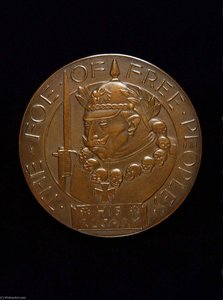
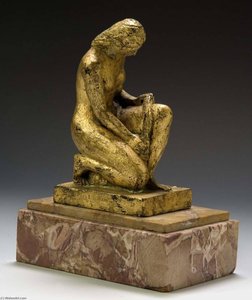
August Jaccaci is a remarkable example of Manship's ability to capture the essence of his subjects. The relief sculpture is a portrait of a man with a dignified expression, adorned with a suit and tie, and sporting a mustache and sideburns. The level of detail and texture achieved in this piece is a testament to Manship's skill as a sculptor. You can discover more about Paul Manship and his works on OriginalUniqueArt.com.Some of the key features of August Jaccaci include:
- Elegant composition: The sculpture's design is characterized by clean lines, balanced proportions, and a sense of harmony.
- Exceptional detail: Manship's attention to detail is evident in the intricate textures and expressions captured in the sculpture.
- Timeless appeal: Despite being created over 90 years ago, August Jaccaci remains a captivating work of art that continues to inspire audiences today.
Questions & Answers
What is the luminance of "August Jaccaci" by Paul Manship?
"August Jaccaci" by Paul Manship has a soft shadow luminance. Luminance describes how much light the colors appear to reflect.
How can I get a digital file of "August Jaccaci" by Paul Manship?
"August Jaccaci" is available as a high-resolution digital image download, purchased directly on its Digital Image page.
How do the colors of "August Jaccaci" relate to each other?
The colors of "August Jaccaci" by Paul Manship show a unified palette harmony. Harmony describes how the colors relate to each other.
Artist Biography
Early Life and Artistic Beginnings
Paul Howard Manship (December 25, 1885 – January 31, 1966) was born in St. Paul, Minnesota, the son of Charles H. and Mary Etta (Friend) Manship. His father, a clerk for the St. Paul gas company, instilled in him an appreciation for craftsmanship and precision—traits that would profoundly shape Manship’s artistic vision. Growing up in a family home at 304 Nelson Avenue, he developed a keen interest in art from a young age, enrolling in the St. Paul School of Art where he honed his foundational skills. This early exposure to artistic principles foreshadowed his lifelong dedication to sculpting and exploring the expressive potential of form. His formative years were marked by an unwavering commitment to mastering sculptural techniques—a pursuit that would ultimately define his career trajectory.Formal Training and Influences
Manship’s formal education solidified his artistic sensibilities, propelling him toward Philadelphia where he pursued studies at the Pennsylvania Academy of Fine Arts. There, he immersed himself in classical art history and anatomy—subjects that would become central to his sculptural practice. Notably, he studied with George Bridgman, whose anatomical drawings provided invaluable insight into human form, and modeled under Hermon Atkins MacNeil, fostering a deep understanding of sculptural modeling techniques. Recognizing the importance of broadening his artistic horizons, Manship traveled to Rome in 1909, securing a prestigious Rome Prize—a pivotal moment that exposed him to the grandeur of European art and cemented his fascination with Archaic sculpture. He was particularly captivated by classical sculpture of India, which would infuse his work with an enduring spirit of timeless beauty.Collaboration and Artistic Style
Manship’s artistic journey gained momentum through collaborations with fellow sculptors—most notably Solon Borglum, whom he assisted during the creation of Monument to Lincoln. This experience honed his technical skills and exposed him to innovative sculptural approaches. He also partnered with Gaston Lachaise and Leo Friedlander, establishing a dynamic creative environment that nurtured experimentation and stylistic evolution. Manship’s artistic style is characterized by a remarkable blend of classical influences and modernist sensibilities—a harmonious fusion reflected in his sculptures' flowing lines and simplified forms. Rejecting the Beaux-Arts movement’s rigid formalism, he championed linear compositions imbued with understated elegance, prioritizing clarity and expressive power.Major Commissions and Notable Works
Manship achieved international acclaim through monumental public commissions—most notably the Prometheus statue for Rockefeller Center in New York City—a towering testament to Art Deco’s ambition and grandeur. His sculptural prowess extended beyond architectural projects, encompassing memorials honoring veterans of both World Wars—the St. Mihiel American Cemetery and Memorial at Thiaucourt, France, and the military cemetery at Anzio, Italy—each imbued with profound symbolic resonance. Furthermore, he designed the modern rendition of New York City’s official seal, demonstrating his versatility as an artist and his ability to translate complex ideas into compelling visual representations.Legacy and Historical Significance
Paul Manship stands as a towering figure in American sculpture—a pioneer of Art Deco whose enduring influence continues to inspire artists today. His sculptures embody the spirit of classical art combined with modernist innovation, reflecting a profound engagement with artistic tradition while embracing stylistic experimentation. Recognized by the American Battle Monuments Commission for his monumental works commemorating wartime sacrifice, Manship’s legacy transcends mere aesthetic achievement; he represents an unwavering devotion to craftmanship and a steadfast belief in the transformative power of art—a testament to his enduring contribution to the visual arts.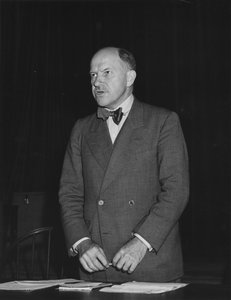
Paul Manship
1885 - 1966
Quick Facts
- Full Name: Paul Howard Manship
- Nationality: American
- Date Of Birth: 1885
- Date Of Death: 1966
- Place Of Birth: St. Paul, Minnesota
- Notable Artworks:
- Running Atalanta
- Kultur Medal
- August Jaccaci
- Artistic Movement Or Style: Art Deco sculpture
- Artists Who Influenced This Artist:
- George Bridgman
- Hermon Atkins MacNeil