Preview
 Send
Send Share
Share
 Details
 Guide
Guide

 Download
 Similars
 X-Ray
X-Ray Diaporama
 Q&A
Q&A Stats
StatsCemetery Building

- 19.0 x 13.0 cm


 Read More
Giclée / Art Print
Museum-quality giclée or canvas print with fast production and flexible finish options. ( Buy Hand Made Painting Switch to Digital Image)




P118B $10

P118H $10

P118W $10

P438Z $10

P508JH $12

P508YH $12

P805H $10

P805Z $10

P919BZ $10

P919G $10

P919XJ $10

P959ZH $10

P968JZ $12

W106C $8

W218G $10

W218JH $8

W218Y $10

W307PJ $10

W316G $10

W316PJ $8

W316Y $10

W398PJ $8

W4111J $10

W500HY $15

W500JH $15

W692G $12

W849H $8

W940BG $15

W953PJ $8




Pick from our preset sizes that match the artwork's original proportions.

Type the width and the height you need, to fit your frame or your wall. A print can only be cut, never made bigger than the picture, so a size with a different shape loses a part of the image. We send you a digital mockup to approve before we print anything. The picture shown on this page does not show the real cut — only the mockup does.
Worldwide Delivery () in 2 weeks instead of standard 4/5 weeks. (31 October)

Free Worldwide Express Shipping

High-Quality Linen Canvas

Full Shipping Insurance

Customs Tax Refund Guarantee

True Color Matching Guarantee

100-Day Return Policy (Defects Only)

100% Money-Back Guarantee

Bulk Discount Offer
 Glass option is only available in size under 110 CM

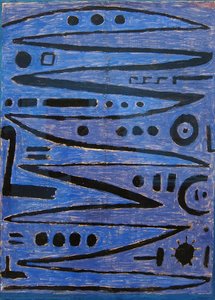
Cemetery Building
Giclée / Art Print
Reproduction Size
-


Total Price
$ 81
A Dreamscape in Pink and Purple: Paul Klee’s “Cemetery Building”
Paul Klee's "Cemetery Building," painted around 1913, isn’t merely a depiction of a graveyard; it’s an immersion into the artist’s uniquely subjective world – a realm where memory, mortality, and the very act of seeing intertwine. This watercolor masterpiece, now available as a meticulously hand-painted reproduction from OriginalUniqueArt.com, invites us to step beyond the literal and into a landscape of layered emotions and abstract forms. The painting immediately establishes an atmosphere of quiet contemplation through its muted palette dominated by soft pinks, hazy purples, and earthy greens, all blended with a delicate transparency that speaks volumes about Klee’s masterful use of watercolor technique. It's not a vibrant or dramatic scene; instead, it possesses a gentle melancholy, a feeling of something lost yet profoundly felt.Abstract Forms and Fragmented Reality
Klee’s style in “Cemetery Building” is a fascinating synthesis of Expressionism, Cubism, and Surrealism – elements he skillfully combined throughout his career. The building itself isn't rendered with precise detail but rather as a collection of simplified, angular shapes, reminiscent of architectural fragments viewed through a dream. These forms aren’t meant to represent a specific mausoleum or chapel; they are symbolic representations of memory and the passage of time. Notice how the tiered structure seems to dissolve into the surrounding landscape, blurring the boundaries between built environment and natural world. This deliberate fragmentation reflects Klee's interest in exploring the subjective experience of reality – how we perceive and interpret the world around us is often shaped by our own emotions and memories. The sketchy lines, more akin to gestures than defined outlines, further contribute to this sense of instability and fluidity, reinforcing the painting’s dreamlike quality.Technique and Materials: A Dance of Transparency
The beauty of “Cemetery Building” lies not just in its composition but also in Klee's extraordinary technique. He employed a layered approach with watercolor, building up washes of color that create a remarkable sense of depth and texture. The transparency is key – you can almost see the layers beneath, giving the painting an ethereal quality. This layering isn’t simply decorative; it mirrors the way memories often coalesce in our minds—fragments of experience interwoven with emotion and association. The granular surface, a result of this technique, adds to the painting's tactile appeal, inviting us to reach out and almost feel the cool dampness of the paper. The absence of strong contrast further enhances this effect, creating a soft, hazy atmosphere that encourages introspection.Symbolism of Loss and Remembrance
The setting within a cemetery is undeniably laden with symbolism. Cemeteries are places of remembrance, but also of loss – reminders of mortality and the ephemeral nature of life. Klee’s choice to depict a building within this context suggests an exploration of memory itself: how we preserve the past, how it shapes our present, and how it ultimately fades away. The muted colors and simplified forms contribute to a sense of quiet sadness, but also of acceptance – a recognition that time moves forward, and that loss is an inevitable part of the human experience. The painting isn’t morbid; rather, it offers a gentle meditation on the cyclical nature of life and death, inviting us to contemplate our own place within this grand scheme.Bringing “Cemetery Building” into Your Space
A hand-painted reproduction of Paul Klee's "Cemetery Building" from OriginalUniqueArt.com offers a unique opportunity to bring this evocative artwork into your home or office. The meticulous detail and vibrant colors faithfully capture the essence of Klee’s original vision, while the high-quality materials ensure that it will last for generations. This piece would be particularly well-suited for spaces where contemplation and reflection are valued – a study, a library, or even a bedroom. Its subtle melancholy and abstract beauty make it a timeless addition to any collection, sparking conversation and inviting viewers to delve into the depths of their own memories and emotions. Explore our selection today and discover how this extraordinary artwork can enrich your life.Questions & Answers
What is "Cemetery Building" made with?
The medium of "Cemetery Building" by Paul Klee is watercolor. Reproductions aim to render the appearance of this technique.
What are the dimensions of the original "Cemetery Building" by Paul Klee?
"Cemetery Building" measures 19 x 13 cm in its original form. Original dimensions are a useful reference when choosing a reproduction size.
Toward which tone does "Cemetery Building" lean?
"Cemetery Building" leans toward an ochre to sepia tone.
Artist Biography
A Life of Line and Lyricism
Born in Münchenbuchsee, Switzerland, on December 18, 1879, Paul Klee entered a world shaped by the rhythms of music. His father, Hans Wilhelm Klee, was a German music teacher, and his mother, Ida Marie, was a Swiss singer. This early immersion in sound provided a foundation for a visual language that often mirrored musical arrangement. While he initially pursued the violin with great talent, eventually deciding that modern music lacked the creative pull he craved, he turned his focus toward the Academy of Fine Arts in Munich. His studies there between 1898 and 1901 were marked by an early mastery of drawing, though he famously struggled with color during those first cold winters.
The transition from a draftsman to an abstract thinker was not immediate. Klee’s early years involved exploring the boundaries of Symbolism and Art Nouveau, often working in black and white or through experimental techniques like needle drawing on blackened glass. A significant shift occurred in 1914 during a visit to Tunisia. The intense light of North Africa allowed him to detach color from physical description, using it instead as an independent force. This period provided the necessary push toward abstraction, moving his work away from mere representation and toward a more personal, symbolic vocabulary.
The Bauhaus Years and Political Shadows
Klee’s career reached a period of intense theoretical and creative activity during his time at the Bauhaus. From 1920 to 1930, he joined the faculty of this influential school of design and architecture, working alongside figures like Wassily Kandinsky. It was here that much of his prolific output occurred, particularly small-scale watercolors and drawings on paper. His teaching allowed him to explore the relationship between color and form with scientific precision, a subject he documented extensively in his notebooks. These writings, which examined the mechanics of design, are now regarded as essential texts for understanding modern composition.
The stability of this era was abruptly interrupted by the rise of National Socialism. In 1933, Klee was dismissed from his position at the Academy of Fine Arts in Düsseldorf because the Nazi regime classified his work as “degenerate.” Forced to return to his native Bern, his later years were marked by a shift in tone. As political turmoil grew and his own health declined, his lines became heavier, turning into black bars, and his forms grew more generalized. The whimsicality of his earlier years gave way to a more somber, melancholic perspective, reflecting the gravity of the era.
A Lasting Visual Language
The breadth of Klee’s output is immense, totaling some 10,000 works that range from delicate sketches to larger, more structured compositions. His ability to blend influences from Cubism, Expressionism, and Surrealism resulted in a style that felt both childlike and deeply intellectual. He utilized a variety of media, including:
- Zinc-plate etchings
- Watercolor on gauze and paper
- Lithographs
- Charcoal and pencil drawings
His work remains a study in balance, where titles often provided the necessary context for his often cryptic imagery. Whether through the use of simple stick figures or complex, colorful grids, he sought to express the inner world of ideas rather than the surface of reality. He died on June 29, 1940, in Muralto, Switzerland, leaving behind a body of work that bridged the gap between the figurative and the abstract.

Paul Klee
1879 - 1940 , Switzerland
Quick Facts
- Artistic Movement Or Style:
- Expressionism
- Cubism
- Surrealism
- Artists Who Influenced This Artist:
- Pablo Picasso
- Georges Braque
- Robert Delaunay
- Vincent van Gogh
- Paul Cézanne
- Full Name: Paul Klee
- Nationality: German and Swiss
- Notable Artworks:
- Hammamet with Its Mosque
- Ships in the Dark
- Walpurgis Night
- The Protector
- Place Of Birth: Münchenbuchsee, Switzerland
- Date Of Birth: 1879
- Date Of Death: 1940
Related Articles

Ephemeral Visions: Exploring the Artistic Legacy & Contemporary Practice of Watercolor Painting
Explore the captivating world of watercolor painting! Discover its rich history, essential techniques, influential artists & collecting tips. A comprehensive guide for art enthusiasts from OriginalUniqueArt.

Paul Klee: A Poetics of Form and Color – Exploring the Inner Landscape of a Modern Master
Explore the captivating world of Paul Klee! Discover his innovative art, Bauhaus influence, & unique symbolic language. Expert analysis & high-quality reproductions at OriginalUniqueArt.

Ephemeral Visions: Exploring the History & Emotional Resonance of Watercolor Painting
Explore the captivating history of watercolor painting, from ancient techniques to modern masters like Kandinsky & Blake. Discover essential artists, collecting tips & the emotional power of this luminous medium. Expert insights for art enthusiasts.

Mastering Abstraction: The Top 25 Essential Artworks by Paul Klee
Explore 25 iconic Paul Klee masterpieces and his Bauhaus legacy. Discover the full collection online at OriginalUniqueArt.com.

Watercolor Wonders: 10 Masterpieces That Redefined Art History | OriginalUniqueArt
Journey through 10 legendary watercolor masterpieces by Sargent, Turner & Homer! Explore iconic landscapes, portraits & floral art that redefined history. Find museum-quality reproductions and curated decor ideas at OriginalUniqueArt.com.