Text size
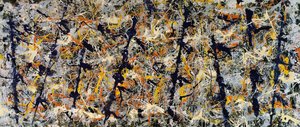
Galaxy by Jackson Pollock, oil on linen painted by hand

() ·

A painting made for you, by hand

Galaxy (Jackson Pollock) An oil painting, painted by hand for you alone

Oil painting, hand-painted for you

Hand-painted oil on canvas in your size and frame, made to order by our artists. ( Oil Edition )

Painted by hand in oil for you from $200 at 36 x 28 cm

Galaxy by Jackson Pollock, and what makes this piece singular

A cosmic dance of aluminum and oil paint, flung onto a floor-stretched canvas to create a swirling, energetic web of color and light.

Jackson Pollock: biography

American Abstract Expressionist known for rhythmic drip techniques and all-over compositions, using sticks and knives to fling liquid paint.

from $200 ·

Chapter 1

How large should it be?

Slide to change the size; the picture on the left shows the frame at its real width. The proportions of the original are kept.

Pick from our preset sizes that match the artwork's original proportions.

width
height

Type the width and the height you need, to fit your frame or your wall. This is hand-painted, so for a size with a different shape the artist can paint a bit more around the picture, or cut a bit — you choose. We send you a digital mockup to approve before the painting starts. The picture shown on this page does not show the real result — only the mockup does.

Standard
custom
CM
INCH

Chapter 2

How should it arrive?

Choose the edges of the stretched canvas

Choose your frame

Corner sample of the WhiteWrap canvas edge finish, stretched on solid wood bars
White $1
Corner sample of the BlurSideWrap canvas edge finish, stretched on solid wood bars
Blurside $1
Corner sample of the ExtendedWrap canvas edge finish, stretched on solid wood bars
Extended $1
Corner sample of the P118B picture frame: moulded polystyrene, 5 cm wide and 3 cm thick
P118B $10
Corner sample of the P118H picture frame: moulded polystyrene, 5 cm wide and 3 cm thick
P118H $10
Corner sample of the P118W picture frame: moulded polystyrene, 5 cm wide and 3 cm thick
P118W $10
Corner sample of the P438Z picture frame: moulded polystyrene, 5.5 cm wide and 3.5 cm thick
P438Z $10
Corner sample of the P508JH picture frame: moulded polystyrene, 7 cm wide and 3.5 cm thick
P508JH $12
Corner sample of the P508YH picture frame: moulded polystyrene, 7 cm wide and 3.5 cm thick
P508YH $12
Corner sample of the P805H picture frame: moulded polystyrene, 5 cm wide and 3.5 cm thick
P805H $10
Corner sample of the P805Z picture frame: moulded polystyrene, 5 cm wide and 3.5 cm thick
P805Z $10
Corner sample of the P919BZ picture frame: moulded polystyrene, 7 cm wide and 3.5 cm thick
P919BZ $10
Corner sample of the P919G picture frame: moulded polystyrene, 7 cm wide and 3.5 cm thick
P919G $10
Corner sample of the P919XJ picture frame: moulded polystyrene, 7 cm wide and 3.5 cm thick
P919XJ $10
Corner sample of the P959ZH picture frame: moulded polystyrene, 5 cm wide and 3 cm thick
P959ZH $10
Corner sample of the P968JZ picture frame: moulded polystyrene, 6 cm wide and 4 cm thick
P968JZ $12
Corner sample of the W106C picture frame: solid wood, 5 cm wide and 3 cm thick
W106C $8
Corner sample of the W218G picture frame: solid wood, 5 cm wide and 3 cm thick
W218G $10
Corner sample of the W218JH picture frame: solid wood, 5 cm wide and 3 cm thick
W218JH $8
Corner sample of the W218Y picture frame: solid wood, 5 cm wide and 3 cm thick
W218Y $10
Corner sample of the W307PJ picture frame: solid wood, 6 cm wide and 3 cm thick
W307PJ $10
Corner sample of the W316G picture frame: solid wood, 6 cm wide and 3 cm thick
W316G $10
Corner sample of the W316PJ picture frame: solid wood, 6 cm wide and 3 cm thick
W316PJ $8
Corner sample of the W316Y picture frame: solid wood, 6 cm wide and 3 cm thick
W316Y $10
Corner sample of the W398PJ picture frame: solid wood, 5 cm wide and 3 cm thick
W398PJ $8
Corner sample of the W4111J picture frame: solid wood, 6.5 cm wide and 3.5 cm thick
W4111J $10
Corner sample of the W500HY picture frame: solid wood, 7 cm wide and 5 cm thick
W500HY $15
Corner sample of the W500JH picture frame: solid wood, 7 cm wide and 5 cm thick
W500JH $15
Corner sample of the W692G picture frame: solid wood, 8 cm wide and 4 cm thick
W692G $12
Corner sample of the W849H picture frame: solid wood, 5 cm wide and 3 cm thick
W849H $8
Corner sample of the W940BG picture frame: solid wood, 7.5 cm wide and 4.5 cm thick
W940BG $15
Corner sample of the W953PJ picture frame: solid wood, 6 cm wide and 3.5 cm thick
W953PJ $8
Corner sample of the H24-GOLD picture frame: carved wood with gesso, 10 cm wide and 6 cm thick
H24-GOLD $30
Corner sample of the H24-SILVER picture frame: carved wood with gesso, 10 cm wide and 6 cm thick
H24-SILVER $30
Corner sample of the H36-GOLD picture frame: carved wood with gesso, 15 cm wide and 6.5 cm thick
H36-GOLD $45
Corner sample of the H36-SILVER picture frame: carved wood with gesso, 15 cm wide and 6.5 cm thick
H36-SILVER $45
Frame preview
Framed

Moulding: . Overall size with the frame: .

Chapter 3

Who paints it, and should anything change?

Examples of what can be changed: Replace face with customer photo; Add pet (e.g., replace cat with dog); Include hidden message in background; Change background landscape or elements.
After order, OriginalUniqueArt.com team will email client for instructions and provide a mockup preview

Chapter 4

Worldwide Delivery () in 3/4 weeks instead of standard 4/5 weeks. (6 December). No compromise on quality.

The finishing touches

A nameplate, as in a museum?

Engraved Bronze Plaque Details

This elegant plaque features the artist's name and the title of the artwork, finely engraved for a timeless presentation.

It is made from bronze with a refined, elegant finish. The text is precisely laser-engraved for a sharp and permanent result. Measuring 9x2 cm, the plaque is compact yet easy to read. It's built to be durable and scratch-resistant, offering a professional, museum-quality look. Mounting is simple thanks to the included adhesive backing.

Transparent Acrylic Plaque Details

The plaque includes essential engraved details such as the artist's name, the title of the artwork, the date it was created, the type of media used-like oil on canvas or watercolor-a brief description of the piece, and a QR code that links to the complete artwork information.

It is crafted from clear acrylic, offering a sleek, modern appearance. The text is UV-engraved in black to ensure strong visual contrast. With a size of 10x15 cm, it ensures optimal readability. It comes equipped with two metal hooks for secure wall mounting. The plaque is designed to be weather-resistant, making it suitable for various environments, and it includes interactive features that work seamlessly with smartphone scanning.

Black Acrylic Plaque Details

This elegant plaque includes engraved information such as the artist's name, the title of the artwork, the date it was created, the type of media used (like oil on canvas or watercolor), a short description of the artwork, and a QR code for quick access to more information.

The plaque itself is made from refined black acrylic with a premium finish. The text is laser-engraved in white for high contrast and readability. Its size is 10x15 cm, designed to be easy to read. It comes with two metal hooks for professional mounting. The design is sleek and fits any interior style. It is also weather-resistant and durable, with built-in digital integration for mobile compatibility.

A protective varnish?

When do you need it?

Chapter 5

Your painting, as you ordered it

Galaxy

Reproduction Medium

Reproduction Size

-

Elite Senior Artist

More detail, finesse, and extra production time

-

Reproduction Frame

-

-

For artworks or reproductions larger than 105 cm (approximately 41 inches) on any side, the frame will be shipped as a kit, disassembled. This method ensures safe delivery and prevents damage during transport.

Professional assembly required - this is not a DIY product.
The kit must be assembled and the canvas stretched by an experienced professional framer, using wood glue (not supplied), a canvas stretching plier and clamps to hold the bars square while the glue dries. Incorrect assembly or uneven canvas tension can permanently damage the artwork and is not covered by our warranty.

  • All solid wood bars are included, precisely cut to size.

  • Assembled with the screws provided, plus wood glue for the corner joints, which is not supplied and must be sourced by your framer.

  • Professional tools are required and not included: a canvas stretching plier (tensioner) and clamps to hold the bars square while the glue dries.

Important:
The corner joints require wood glue, the bars must be held with clamps until the glue is fully dry, and tightening the canvas on the assembled frame requires a canvas stretching plier. None of these are included in the kit. Please arrange an experienced professional framer before ordering this size.

Nameplate

-

-

Protective Varnish

Glossy Varnish (enhances colors, protects against light/moisture)

-

Customize My Artwork

Examples of what can be changed: Replace face with customer photo; Add pet (e.g., replace cat with dog); Include hidden message in background; Change background landscape or elements.

-

Urgent

Worldwide Delivery () in 3/4 weeks instead of standard 4/5 weeks. (6 December). No compromise on quality.

-

Express Shipping

Worldwide Delivery () in 4/5 weeks. (13 December).

Included

Total Price

$ 300

Total Price $ 300

Glass option is only available in size under 110 CM

Included with every order

  • Free Worldwide Express Shipping
  • High-Quality Linen Canvas
  • Full Shipping Insurance
  • Customs Tax Refund Guarantee
  • True Color Matching Guarantee
  • 100-day returns, money back
  • 100% Money-Back Guarantee
  • Bulk Discount Offer

The Creation of Galaxy by Jackson Pollock

In 1947, Jackson Pollock produced Galaxy, a work that has become a cornerstone of American abstract expressionism. This monumental canvas was exhibited at the Parsons Gallery in New York City, marking a significant moment in the postwar artistic landscape. The piece emerged from a period of intense experimentation, signaling a departure from the traditional conventions that had previously governed the medium.

To understand the origins of such a radical creation, one must look to the artist's early life. Jackson Pollock was born on January 28, 1912, in Cody, Wyoming. He was the youngest of five brothers, born to Stella May McClure and LeRoy Pollock. This background, rooted in the American West, preceded his eventual move to the urban energy of the coast, where his approach to the canvas would eventually undergo a profound transformation.

Composition and Visual Elements

The composition is defined by a complex arrangement of shapes and a diverse palette. You will notice a variety of colors working together, specifically different shades of yellow, red, orange, blue, and green. These hues interact to create a dynamic atmosphere that feels constantly in motion. The interplay of these tones provides a sense of depth within the layered surface.

Within this energetic field, several figures emerge. On the left side, a single figure is positioned near the edge. Moving toward the center, another figure occupies the middle of the composition. To the right, two more figures are located, completing a rhythmic distribution across the canvas. This placement guides the eye through the work, moving from the periphery toward the heart of the arrangement.

Technique and Artistic Materials

In "Galaxy," the artist moves away from the traditional easel to engage with the canvas on a different plane. He laid the fabric directly upon the floor, a choice that allowed him to stand over the work and approach it from all sides. This physical engagement transformed the act of painting into a performance, a method often referred to as action painting. Rather than using brushes to apply pigment, he eschewed them entirely, opting instead to pour and fling paint across the surface. Gravity and the momentum of his own movements dictated the placement of the medium, creating a rhythmic, spontaneous application of color.

The material composition of the work is equally significant. He combined traditional oil paints with aluminum paint, introducing a metallic sheen that catches the light in unexpected ways. This inclusion of aluminum adds a subtle industrial quality to the surface, contrasting the organic flow of the liquid with a more modern, technological texture. The resulting layers of pigment create a complex, tactile surface where the distinction between controlled gesture and chance becomes blurred.

Documented Interpretations and Symbolic Meaning

The swirling patterns of color within this work suggest a sense of cosmic imagery. Through its movement, the piece explores universal themes such as chaos, order, and transformation. There is a palpable tension here between the spontaneous application of pigment and a deeper, underlying structure that emerges from the layers of paint.

Observers have often seen the technique as a mirror to the subconscious mind's own process of generating imagery. This approach reflects a broader interest in psychoanalytic theory that was prevalent during the period. Rather than seeking intellectual contemplation, the work prioritizes emotion and intuition, allowing the physical act of creation to dictate its meaning.

The Legacy of Abstract Expressionism

This work embodies a radical departure from traditional artistic conventions. By moving away from the easel and the brush, the artist established a new aesthetic standard that defined the postwar era. The result is a piece that exemplifies the enduring legacy of abstract expressionism, capturing a moment when the boundaries of painting were being fundamentally redefined. It is a record of a physical presence, where the movement of the whole body dictates the placement of every pigment.

To encounter this piece is to experience a groundbreaking vision firsthand. The swirling patterns and energetic application of paint bring a touch of modernist dynamism into an interior space. It remains a significant part of the movement's history, reflecting the psychological and emotional turbulence of its time through a language of pure gesture. The work's influence helped irrevocably alter the course of art history, shifting the focus from representational imagery to the raw expression of intuition.

Related Works by Jackson Pollock

To understand the trajectory of this period, one might look toward Convergence. It shares a certain rhythmic energy, a sense of movement that feels both controlled and spontaneous. It is a piece that exists within the same dialogue of gesture and form that defines his most significant output.

There are other compositions from this era that offer a different perspective on his use of space. Number 5, 1948 and Number 1, 1949 are notable examples. These works demonstrate how he managed to command a vast surface, creating a sense of boundless space where no single point holds dominance. They reflect a similar preoccupation with the interplay between order and chance.

The Artist's Life and Training

To understand the energy within this canvas, one must look toward the restless beginnings of the artist. Born in Cody, United States, his early years were shaped by the nomadic existence of his father, a land surveyor. This constant movement through the American West provided a direct encounter with the natural world and the spiritual resonance of Native American art, impressions that settled into his subconscious long before he ever held a brush. Seeking a more formal structure for his burgeoning impulses, he eventually moved toward the urban energy of the coast, enrolling at Manual Arts High School in Los Angeles.

The true shaping of his hand occurred later in New York City. It was there, at the Art Students League, that he began a long and transformative period of study. From 1929 to 1942, he labored under the guidance of Thomas Hart Benton. While Benton emphasized rhythmic compositions and the narrative weight of American life, the young student was already beginning to drift toward his own, more abstract, internal truths. This period of study provided the foundation for the radical departure from tradition seen in his later years.

Questions & Answers

Is this Galaxy painted by hand or printed?

Painted by hand: a trained painter copies Galaxy in oil on linen canvas.

What size should I choose for Galaxy?

Sizes run from 35.5 x 28.1 cm ($200) to 247.1 x 195.6 cm ($1772); the table on this page lists the main steps and their prices.

How long does delivery take?

Delivery takes 4 to 5 weeks, with free worldwide express shipping; an urgent production option is offered on this page. You can return it within 100 days for a full refund, with no condition.

What medium did Jackson Pollock use for Galaxy?

Oil.

More about this painting

Preview AR preview Oil Edition Send
Details Fact sheet Add to favorites Download Similars X-Ray Diaporama Q&A Presentation Stats

In numbers

  • 29frames to choose from
  • standard sizes, in its own proportions
  • 5weeks to paint and deliver it
Jackson Pollock

Jackson Pollock

1912 - 1956, United States

Quick facts about Jackson Pollock

  • Artistic Movement Or Style: Abstract Expressionism
  • Artists Or Movements Influenced By This Artist:
    • Color Field painting
    • Abstract expressionism
  • Artists Who Influenced This Artist:
    • Thomas Hart Benton
    • José Clemente Orozco
    • David Alfaro Siqueiros
  • Full Name: Paul Jackson Pollock
  • Nationality: American
  • Notable Artworks:
    • Number 1, 1950 (Lavender Mist)
    • One: Number 31, 1950
    • Blue Poles: Number 11, 1952
    • Convergence
  • Place Of Birth: Cody, United States of America
  • Date Of Birth: 1912
  • Date Of Death: 1956

Quick Facts

  • Medium: Oil
  • Title: Galaxy

  • Year: 1947
  • Notable elements or techniques: Drip painting; Gravel embedding
  • Movement: Abstract Expressionism
  • Dimensions: 86.36 cm x 110.49 cm
  • Artist: Jackson Pollock

Quiz

There is only one correct answer for each question.

Question 1:
In what year was Jackson Pollock's "Galaxy" created?
Question 2:
Which technique is described as the defining characteristic of "Galaxy"?
Question 3:
What material did Pollock use to create a striking textural contrast in "Galaxy"?
Question 4:
Where did Pollock place his canvas to perform his "action painting" method?
Question 5:
Which critic recognized Pollock's masterful execution of a new aesthetic standard in "Galaxy"?