Preview
 Send
Send Share
Share
 Details
 Guide
Guide

 Download
 Similars
 X-Ray
X-Ray Diaporama
 Q&A
Q&A Stats
StatsFull Fathom Five


 Read More
Giclée / Art Print
Museum-quality giclée or canvas print with fast production and flexible finish options. ( Buy Hand Made Painting Switch to Digital Image)




P118B $10

P118H $10

P118W $10

P438Z $10

P508JH $12

P508YH $12

P805H $10

P805Z $10

P919BZ $10

P919G $10

P919XJ $10

P959ZH $10

P968JZ $12

W106C $8

W218G $10

W218JH $8

W218Y $10

W307PJ $10

W316G $10

W316PJ $8

W316Y $10

W398PJ $8

W4111J $10

W500HY $15

W500JH $15

W692G $12

W849H $8

W940BG $15

W953PJ $8




Pick from our preset sizes that match the artwork's original proportions.

Type the width and the height you need, to fit your frame or your wall. A print can only be cut, never made bigger than the picture, so a size with a different shape loses a part of the image. We send you a digital mockup to approve before we print anything. The picture shown on this page does not show the real cut — only the mockup does.
Worldwide Delivery () in 2 weeks instead of standard 4/5 weeks. (30 October)

Free Worldwide Express Shipping

High-Quality Linen Canvas

Full Shipping Insurance

Customs Tax Refund Guarantee

True Color Matching Guarantee

100-Day Return Policy (Defects Only)

100% Money-Back Guarantee

Bulk Discount Offer
 Glass option is only available in size under 110 CM

Full Fathom Five
Giclée / Art Print
Reproduction Size
-


Total Price
$ 81
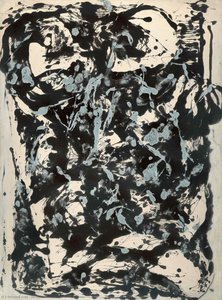
A Visceral Descent into Abstract Expressionism
In the annals of American art history, few works capture the raw, unbridled energy of a movement quite like Paul Jackson Pollock’s Full Fathom Five. Painted in 1947, this masterpiece serves as a pivotal moment in the trajectory of Abstract Expressionism, acting as a defiant assertion of spontaneity. It is far more than a mere arrangement of pigment on canvas; it is a visceral record of process itself. Through his groundbreaking exploration of new artistic methods, Pollock challenged the established conventions of previous generations, inviting the viewer into a world where the act of creation is just as significant as the final image.
The painting presents a dynamic and visually engaging scene, characterized by a deep blue background that serves as a stage for a chaotic yet rhythmic dance of color. Bold brushstrokes and unconventional color combinations—including vibrant shades of green, yellow, and red—intertwine to create a sense of movement that captures the viewer's attention instantly. The composition is a complex tapestry of shapes, ranging from circular to rectangular forms, which lend a profound depth to the work. This intricate layering allows for a detailed examination of Pollock's skillful technique, revealing a creative vision that thrives on the edge of controlled chaos.
The Revolution of Technique and Material
To understand Full Fathom Five, one must look toward the revolutionary "drip" technique that Pollock pioneered. Rejecting the traditional constraints of the easel and brush, he laid his canvases directly onto the studio floor, allowing gravity to dictate the flow of pigment. By pouring paint from cans and using sticks or brushes to splash liquid across the surface, he transformed the canvas into a seismograph of his own physical movements. This method was not merely about applying color; it was an intuitive attempt to bypass conscious control and embrace the beauty of chance, capturing a sense of energy that feels almost alive.
Adding to its extraordinary complexity is Pollock's use of material assemblage. Unlike traditional paintings that rely solely on oil or acrylic, Full Fathom Five incorporates a surprising array of non-paint elements. Nails, tacks, buttons, keys, coins, cigarette butts, and matches are embedded within the texture of the work. These objects act as textural agents, amplifying the painting's visual complexity and providing a tactile dimension that invites closer inspection. This layering of the mundane with the artistic creates a rich, multidimensional surface that resonates with both physical weight and emotional intensity.
Symbolism and Emotional Resonance
The title of the work itself provides a profound layer of symbolic depth, drawing upon the evocative imagery of William Shakespeare’s The Tempest. By referencing Ariel's description of death by shipwreck—where bones become coral and eyes become pearls—Pollock connects his abstract explorations to themes of mortality and transformation. This allusion suggests a deep contemplation on the cyclical nature of existence and the merging of organic matter with the artist's expressive force.
For the collector or interior designer, Full Fathom Five offers an unparalleled opportunity to introduce a piece of profound emotional impact into a space. It is a work that demands engagement, offering a thought-provoking experience that shifts with every angle of light and perspective. Whether viewed as a historical landmark of the American West's influence on modernism or as a striking centerpiece for contemporary decor, this reproduction brings the transformative power of action painting into the home, serving as a constant source of inspiration and intellectual stimulation.
Questions & Answers
What is "Full Fathom Five" made with, and in which style?
"Full Fathom Five" is made in mixed media, in the Abstract Expressionism style.
What is the dominant hue of "Full Fathom Five" by Paul Jackson Pollock?
"Full Fathom Five" leans toward a green to violet spectrum tone.
What is "Full Fathom Five" about?
"Full Fathom Five" by Paul Jackson Pollock depicts: drip painting, texture, color field, shakespeare, symbolism, american art, experimental art.
Artist Biography
Early Life and the Seeds of Innovation
Paul Jackson Pollock, born in Cody, Wyoming, in 1912, was a restless spirit from the outset. His early life was marked by frequent relocation as his father pursued work as a land surveyor across the vast landscapes of the American West. This itinerant existence instilled in young Pollock a deep connection to the natural world and an exposure to diverse cultures, particularly through encounters with Native American art during those surveying trips – impressions that would subtly permeate his artistic vision later in life. Though he never explicitly imitated Indigenous styles, the raw energy and spiritual resonance of these early experiences undoubtedly left their mark.
Pollock’s formal artistic training began at the Manual Arts High School in Los Angeles, followed by studies at the Art Students League of New York under the tutelage of Thomas Hart Benton. Benton, a prominent figure in the Regionalist movement, emphasized rhythmic composition and narrative themes rooted in American life. While Pollock initially absorbed these lessons, his inherent inclination leaned toward more abstract explorations. He was also profoundly impacted by Mexican muralists like José Clemente Orozco, whose powerful depictions of social struggle resonated deeply with him. These early influences laid a foundation, but it was the burgeoning world of Surrealism that truly unlocked Pollock’s artistic potential.
The Birth of Action Painting and a Revolutionary Technique
The 1930s saw Pollock experimenting with various techniques, seeking alternatives to traditional brushwork. He began pouring paint, exploring its fluidity and unpredictable nature. However, it was around 1947 that his artistic trajectory underwent a radical transformation. Abandoning the easel altogether, Pollock laid canvases directly on the floor, initiating what would become known as his “drip technique.” He then proceeded to drip, splash, and fling paint onto the canvas from above, orchestrating a dynamic dance between artist, medium, and surface.
This wasn’t merely about applying paint; it was about embodying the act of creation itself. Pollock's canvases became arenas for physical expression, capturing the immediacy of his gestures and emotions. The resulting paintings are characterized by their “all-over” composition – a lack of central focus that invites the viewer to explore the entire surface as a unified field of energy. Intricate networks of lines and colors intertwine, creating a visual complexity that is both captivating and challenging. He employed unconventional tools—sticks, knives, even syringes—to manipulate the paint in unpredictable ways, further emphasizing the spontaneous nature of his process.
This innovative approach positioned Pollock as a central figure in the burgeoning Abstract Expressionist movement, which emerged in post-World War II New York City. Abstract Expressionism prioritized spontaneous gesture, large scale, and non-representational imagery, reflecting a broader cultural shift away from traditional artistic conventions. His marriage to fellow artist Lee Krasner was also pivotal; she provided unwavering emotional support and actively encouraged his artistic development, recognizing the groundbreaking nature of his work.
Iconic Works and Lasting Legacy
Pollock’s most celebrated works—such as Number 1, 1950 (Lavender Mist), One: Number 31, 1950, Blue Poles: Number 11, 1952, and Convergence—are testaments to his revolutionary technique. These paintings are not simply images; they are records of a performance, imbued with the artist’s physical presence and emotional intensity. The dynamic energy that emanates from these canvases is palpable, drawing viewers into a world of pure abstraction.
His style transcends mere aesthetics; it's an exploration of process over product. Pollock sought to capture the immediacy of his actions and emotions on canvas, rejecting traditional notions of composition and representation. He delved into Jungian psychology, exploring archetypes and the subconscious in his art, seeking to tap into universal symbols and primal energies.
Pollock’s impact on the history of art is immeasurable. He fundamentally altered the way artists approached painting, breaking free from easel-based methods and embracing a more performative approach. His work helped solidify New York City's position as a global center for modern art, shifting the focus away from European dominance. His influence can be seen in the work of countless artists who followed, including those associated with Color Field painting and later forms of abstract expressionism.
Though initially met with mixed reviews—some critics dismissed his work as chaotic or lacking skill—Pollock’s reputation grew steadily after his untimely death in 1956 at the age of 44. Today, he is universally recognized as one of the most important and influential artists of the 20th century, a visionary who dared to challenge conventions and redefine the boundaries of artistic expression. His innovative techniques and expressive style continue to inspire and provoke, ensuring his enduring legacy for generations to come.

Paul Jackson Pollock
1912 - 1956 , United States of America
Quick Facts
- Full Name: Paul Jackson Pollock
- Nationality: American
- Date Of Birth: 1912
- Date Of Death: 1956
- Place Of Birth: Cody, United States of America
- Notable Artworks:
- Number 1, 1950 (Lavender Mist)
- One: Number 31, 1950
- Blue Poles: Number 11, 1952
- Convergence
- Artistic Movement Or Style: Abstract Expressionism
- Artists Who Influenced This Artist:
- José Clemente Orozco
- André Masson
- Max Ernst
- Thomas Hart Benton
- Artists Or Movements Influenced By This Artist:
- Color Field painting
- Abstract Expressionism
Related Articles

Top 25 Masterpieces by Christian Noiret: A Journey Through Abstract Texture and Light
Immerse yourself in the textured world of Christian Noiret. Explore our curated list of 25 iconic abstract masterpieces, celebrating light, color, and form. Find museum-quality art reproductions for your space. Discover all masterpieces on OriginalUniqueArt.com.

Top 25 Masterpieces by Christian Noiret: A Journey Through Abstract Texture and Light
Immerse yourself in the textured world of Christian Noiret. Explore our curated list of 25 iconic abstract masterpieces, celebrating light, color, and form. Find museum-quality art reproductions for your space. Discover all masterpieces on OriginalUniqueArt.com.

Deep Blue Magic: 10 Iconic Masterpieces Defined by Prussian Blue
Immerse yourself in the depth of Prussian blue. Explore 10 iconic masterpieces, from moody landscapes to classic oil paintings, through their stories and techniques. Find museum-quality art reproductions and decor inspiration at OriginalUniqueArt.com. Discover all masterpieces online.

Deep Blue Magic: 10 Iconic Masterpieces Defined by Prussian Blue
Immerse yourself in the depth of Prussian blue. Explore 10 iconic masterpieces, from Impressionist classics to moody modern gems. Discover the stories behind these timeless pigments and find museum-quality art reproductions for your decor. Explore the full collection on OriginalUniqueArt.com.

Top 25 Masterpieces by Christian Noiret: A Journey Through Abstract Texture and Light
Immerse yourself in the profound abstraction of Christian Noiret. Explore 25 iconic works defined by texture, light, and chromatic harmony. Find museum-quality art reproductions and curated decor inspiration for your space. Discover all masterpieces on OriginalUniqueArt.com.