Switch to Print
 Read More







































 For artworks or reproductions larger than 105 cm (approximately 41 inches) on any side, the frame will be shipped as a kit, disassembled. This method ensures safe delivery and prevents damage during transport.


A Portrait of Weariness: Decoding Gustave Doré’s Untitled Engraving
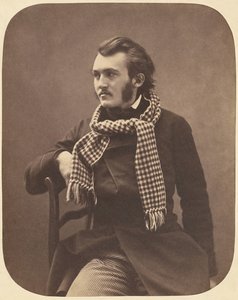
The artwork, simply titled “Untitled,” is a monochrome engraving by Paul Gustave Doré—a testament to the artist's unparalleled ability to convey profound emotion through meticulous line work. Executed sometime around 1846, this piece transcends mere visual representation; it invites contemplation on themes of sorrow and resilience within the framework of Victorian sensibilities. Examining its composition, technique, and symbolic resonance reveals a deeper understanding of Doré’s artistic vision and its enduring impact on art history.Composition and Technique: Mastering Line
Doré's masterful command of engraving is immediately apparent. The image centers around a solitary figure seated against a textured wall—a deliberate choice that maximizes visual impact while subtly communicating psychological depth. Lines dominate the artwork, forming not just outlines but also intricate textures and shading patterns. Hatching and cross-hatching techniques are skillfully deployed to build up tonal values, creating an illusion of three dimensions that captures the essence of realism. The artist’s precision is breathtaking; each line contributes to a palpable sense of atmosphere and emotion. This technique wasn't simply about reproducing what was seen; it was about sculpting feeling onto paper using the tools of printmaking.Historical Context: Victorian Melancholy
The engraving emerged during the Victorian era—a period characterized by moral seriousness, social reform, and an obsession with psychological realism. Doré’s work reflects this cultural preoccupation with introspection and emotional vulnerability. The subject matter itself – a portrait depicting a man burdened by sadness – aligns perfectly with the prevailing mood of the time. Artists like Doré sought to explore the darker recesses of human experience, confronting anxieties about mortality and societal pressures with unflinching honesty. This engraving speaks volumes about the Victorian fascination with portraying inner turmoil alongside outward appearances.Symbolism: Texture and Gesture
Beyond its formal elements, “Untitled” is laden with symbolic significance. The rough texture of the wall serves as a powerful metaphor for hardship and adversity—a visual representation of obstacles faced by the figure depicted. Similarly, the man’s slumped posture and downcast gaze convey a palpable sense of despair, mirroring the emotional landscape of Victorian society. Even the positioning of the figure against the wall contributes to this symbolic reading; it isolates him from the world, emphasizing his internal struggle. Doré's deliberate use of visual cues elevates the engraving beyond a simple depiction of a man into an emblem of human suffering and resilience.Emotional Impact: A Window Into Sorrow
Ultimately, “Untitled” succeeds in eliciting a profound emotional response from the viewer. The stark monochrome palette amplifies the melancholic mood, drawing attention to the subtle nuances of expression captured by Doré’s masterful line work. It's an artwork that lingers in the mind long after viewing—a reminder of the universality of human emotion and the enduring power of art to communicate profound psychological truths. Reproductions of this engraving offer a captivating glimpse into Victorian aesthetics and invite contemplation on themes of sorrow, introspection, and the complexities of the human condition.Questions & Answers
Where can I find a guide to "untitled (1846)"?
The guide to "untitled (1846)" is the artwork's Guide page - a printable factsheet showing the artwork with its caption, credit line and identity table (artist, dates, medium, original size, collection).
How do I discover artworks close to "untitled (1846)" by Paul Gustave Doré?
Artworks similar to "untitled (1846)" by Paul Gustave Doré are gathered on the artwork's Similars page.
What is "untitled (1846)" made with, and in which style?
"untitled (1846)" is made in acrylic on canvas, in the Romanticism style.
More about this painting
 Preview
 Send
Send Share
Share
 Details
 Guide
Guide

 Download
 Similars
 X-Ray
X-Ray Diaporama
 Q&A
Q&A Stats
Stats