Menu
Text size

() ·

A painting made for you, by hand

The Negro Scipio

Hand Made Oil Reproduction

Hand-painted oil on canvas in your size and frame, made to order by our artists. ( Switch to Print Switch to Digital Image)

Collectible Description

Delve into Cézanne's masterpiece 'The Negro Scipio,' capturing stillness and contemplation with masterful tonal modulation—a pivotal transition from Impressionism to Post-Impressionism housed in São Paulo Museum of Art.

Artist Biography

Post-Impressionist master Paul Cezanne bridged Impressionism and Cubism with Mont Sainte-Victoire. Explore his revolutionary works today.

from ·

Chapter 1

How large should it be?

Slide to change the size; the picture on the left shows the frame at its real width. The proportions of the original are kept.

Standard
custom
CM
INCH

Pick from our preset sizes that match the artwork's original proportions.

width
height

Type the width and the height you need, to fit your frame or your wall. This is hand-painted, so for a size with a different shape the artist can paint a bit more around the picture, or cut a bit — you choose. We send you a digital mockup to approve before the painting starts. The picture shown on this page does not show the real result — only the mockup does.

Chapter 2

How should it arrive?

Choose the edges of the stretched canvas

Choose your frame

Corner sample of the WhiteWrap canvas edge finish, stretched on solid wood bars
White $1
Corner sample of the BlurSideWrap canvas edge finish, stretched on solid wood bars
Blurside $1
Corner sample of the ExtendedWrap canvas edge finish, stretched on solid wood bars
Extended $1
Corner sample of the P118B picture frame: moulded polystyrene, 5 cm wide and 3 cm thick
P118B $10
Corner sample of the P118H picture frame: moulded polystyrene, 5 cm wide and 3 cm thick
P118H $10
Corner sample of the P118W picture frame: moulded polystyrene, 5 cm wide and 3 cm thick
P118W $10
Corner sample of the P438Z picture frame: moulded polystyrene, 5.5 cm wide and 3.5 cm thick
P438Z $10
Corner sample of the P508JH picture frame: moulded polystyrene, 7 cm wide and 3.5 cm thick
P508JH $12
Corner sample of the P508YH picture frame: moulded polystyrene, 7 cm wide and 3.5 cm thick
P508YH $12
Corner sample of the P805H picture frame: moulded polystyrene, 5 cm wide and 3.5 cm thick
P805H $10
Corner sample of the P805Z picture frame: moulded polystyrene, 5 cm wide and 3.5 cm thick
P805Z $10
Corner sample of the P919BZ picture frame: moulded polystyrene, 7 cm wide and 3.5 cm thick
P919BZ $10
Corner sample of the P919G picture frame: moulded polystyrene, 7 cm wide and 3.5 cm thick
P919G $10
Corner sample of the P919XJ picture frame: moulded polystyrene, 7 cm wide and 3.5 cm thick
P919XJ $10
Corner sample of the P959ZH picture frame: moulded polystyrene, 5 cm wide and 3 cm thick
P959ZH $10
Corner sample of the P968JZ picture frame: moulded polystyrene, 6 cm wide and 4 cm thick
P968JZ $12
Corner sample of the W106C picture frame: solid wood, 5 cm wide and 3 cm thick
W106C $8
Corner sample of the W218G picture frame: solid wood, 5 cm wide and 3 cm thick
W218G $10
Corner sample of the W218JH picture frame: solid wood, 5 cm wide and 3 cm thick
W218JH $8
Corner sample of the W218Y picture frame: solid wood, 5 cm wide and 3 cm thick
W218Y $10
Corner sample of the W307PJ picture frame: solid wood, 6 cm wide and 3 cm thick
W307PJ $10
Corner sample of the W316G picture frame: solid wood, 6 cm wide and 3 cm thick
W316G $10
Corner sample of the W316PJ picture frame: solid wood, 6 cm wide and 3 cm thick
W316PJ $8
Corner sample of the W316Y picture frame: solid wood, 6 cm wide and 3 cm thick
W316Y $10
Corner sample of the W398PJ picture frame: solid wood, 5 cm wide and 3 cm thick
W398PJ $8
Corner sample of the W4111J picture frame: solid wood, 6.5 cm wide and 3.5 cm thick
W4111J $10
Corner sample of the W500HY picture frame: solid wood, 7 cm wide and 5 cm thick
W500HY $15
Corner sample of the W500JH picture frame: solid wood, 7 cm wide and 5 cm thick
W500JH $15
Corner sample of the W692G picture frame: solid wood, 8 cm wide and 4 cm thick
W692G $12
Corner sample of the W849H picture frame: solid wood, 5 cm wide and 3 cm thick
W849H $8
Corner sample of the W940BG picture frame: solid wood, 7.5 cm wide and 4.5 cm thick
W940BG $15
Corner sample of the W953PJ picture frame: solid wood, 6 cm wide and 3.5 cm thick
W953PJ $8
Corner sample of the H24-GOLD picture frame: carved wood with gesso, 10 cm wide and 6 cm thick
H24-GOLD $30
Corner sample of the H24-SILVER picture frame: carved wood with gesso, 10 cm wide and 6 cm thick
H24-SILVER $30
Corner sample of the H36-GOLD picture frame: carved wood with gesso, 15 cm wide and 6.5 cm thick
H36-GOLD $45
Corner sample of the H36-SILVER picture frame: carved wood with gesso, 15 cm wide and 6.5 cm thick
H36-SILVER $45
Frame preview
Framed

Moulding: . Overall size with the frame: .

Chapter 3

Who paints it, and should anything change?

Examples of what can be changed: Replace face with customer photo; Add pet (e.g., replace cat with dog); Include hidden message in background; Change background landscape or elements.
After order, OriginalUniqueArt.com team will email client for instructions and provide a mockup preview

Worldwide Delivery () in 3/4 weeks instead of standard 5 weeks. (31 October). No compromise on quality.

Chapter 4

The finishing touches

A nameplate, as in a museum?

Engraved Bronze Plaque Details

This elegant plaque features the artist's name and the title of the artwork, finely engraved for a timeless presentation.

It is made from bronze with a refined, elegant finish. The text is precisely laser-engraved for a sharp and permanent result. Measuring 9x2 cm, the plaque is compact yet easy to read. It's built to be durable and scratch-resistant, offering a professional, museum-quality look. Mounting is simple thanks to the included adhesive backing.

Transparent Acrylic Plaque Details

The plaque includes essential engraved details such as the artist's name, the title of the artwork, the date it was created, the type of media used-like oil on canvas or watercolor-a brief description of the piece, and a QR code that links to the complete artwork information.

It is crafted from clear acrylic, offering a sleek, modern appearance. The text is UV-engraved in black to ensure strong visual contrast. With a size of 10x15 cm, it ensures optimal readability. It comes equipped with two metal hooks for secure wall mounting. The plaque is designed to be weather-resistant, making it suitable for various environments, and it includes interactive features that work seamlessly with smartphone scanning.

Black Acrylic Plaque Details

This elegant plaque includes engraved information such as the artist's name, the title of the artwork, the date it was created, the type of media used (like oil on canvas or watercolor), a short description of the artwork, and a QR code for quick access to more information.

The plaque itself is made from refined black acrylic with a premium finish. The text is laser-engraved in white for high contrast and readability. Its size is 10x15 cm, designed to be easy to read. It comes with two metal hooks for professional mounting. The design is sleek and fits any interior style. It is also weather-resistant and durable, with built-in digital integration for mobile compatibility.

A protective varnish?

When do you need it?

Chapter 5

Your painting, as you ordered it

The Negro Scipio

Reproduction Medium

Reproduction Size

-

Elite Senior Artist

More detail, finesse, and extra production time

-

Reproduction Frame

-

-

For artworks or reproductions larger than 105 cm (approximately 41 inches) on any side, the frame will be shipped as a kit, disassembled. This method ensures safe delivery and prevents damage during transport.

Professional assembly required - this is not a DIY product.
The kit must be assembled and the canvas stretched by an experienced professional framer, using wood glue (not supplied), a canvas stretching plier and clamps to hold the bars square while the glue dries. Incorrect assembly or uneven canvas tension can permanently damage the artwork and is not covered by our warranty.

  • All solid wood bars are included, precisely cut to size.

  • Assembled with the screws provided, plus wood glue for the corner joints, which is not supplied and must be sourced by your framer.

  • Professional tools are required and not included: a canvas stretching plier (tensioner) and clamps to hold the bars square while the glue dries.

Important:
The corner joints require wood glue, the bars must be held with clamps until the glue is fully dry, and tightening the canvas on the assembled frame requires a canvas stretching plier. None of these are included in the kit. Please arrange an experienced professional framer before ordering this size.

Nameplate

-

-

Protective Varnish

Glossy Varnish (enhances colors, protects against light/moisture)

-

Customize My Artwork

Examples of what can be changed: Replace face with customer photo; Add pet (e.g., replace cat with dog); Include hidden message in background; Change background landscape or elements.

-

Urgent

Worldwide Delivery () in 3/4 weeks instead of standard 5 weeks. (31 October). No compromise on quality.

-

Express Shipping

Worldwide Delivery () in 5 weeks. (7 November).

Included

Total Price

$ 300

Total Price $ 300

Glass option is only available in size under 110 CM

Included with every order

  • Free Worldwide Express Shipping
  • High-Quality Linen Canvas
  • Full Shipping Insurance
  • Customs Tax Refund Guarantee
  • True Color Matching Guarantee
  • 100-Day Return Policy (Defects Only)
  • 100% Money-Back Guarantee
  • Bulk Discount Offer

The Negro Scipio: Cézanne’s Quiet Contemplation

Paul Cézanne's *The Negro Scipio*, painted in 1867, stands as a cornerstone of Impressionism’s transition into Post-Impressionism—a testament to the artist’s unwavering dedication to capturing human emotion and form with remarkable simplicity. Currently residing at the Museu de Arte in São Paulo, Brazil, this canvas transcends mere representation; it embodies Cézanne's profound exploration of stillness and introspection within a carefully constructed domestic scene.
  • Artist: Paul Cézanne (1839-1906)
  • Year Painted: 1867
  • Dimensions: 107 x 103 cm
  • Location: Museu de Arte, São Paulo

Artistic Style and Context

The painting firmly establishes Cézanne within the Romantic movement’s legacy. Unlike Impressionists who prioritized fleeting moments of light and color, Cézanne sought to distill essence—to portray subjects with an unwavering focus on solidity and geometric precision. Influenced by artists like Gauguin and Seurat, he championed tonal modulation and simplified forms, rejecting the illusionistic techniques favored by his contemporaries. This stylistic choice reflects a broader intellectual preoccupation with capturing the inner life of individuals within their surroundings. Cézanne’s work during this period foreshadowed the radical innovations that would characterize Cubism decades later.

Composition and Details

The scene depicts a man seated in a chair, his head resting on his hand—a posture conveying profound repose and contemplation. The artist skillfully utilizes color to imbue the figure with subtle warmth, contrasting against the muted tones of the background. A second person is partially visible behind him, adding depth to the composition without detracting from the central subject’s stillness. The bed dominates the backdrop space, while a couch sits adjacent to it on the right side—creating an atmosphere of comfort and tranquility. Cézanne's meticulous brushstrokes contribute to the painting's textural richness, emphasizing the materiality of the objects depicted.

Significance and Influence

*The Negro Scipio* exemplifies Cézanne’s ability to convey emotion through understated visual elements. It wasn’t merely a depiction of a man; it was an embodiment of quiet dignity—a reflection on human experience rendered with remarkable sensitivity. Cézanne's pioneering approach profoundly impacted subsequent generations of artists, inspiring movements like Cubism and establishing him as one of the most influential figures in modern art history. His unwavering commitment to capturing form and substance continues to resonate today.

Other Works by Paul Cézanne

Cézanne’s artistic output extends beyond *The Negro Scipio*, encompassing masterpieces such as *Hortense Breast Feeding Paul* and *Paul Alexis Reading to Zola*. These paintings demonstrate his versatility in portraying human subjects and landscapes—each piece showcasing a distinctive stylistic signature. Exploring Cézanne's oeuvre offers invaluable insight into the genesis of modern art’s aesthetic principles.

Conclusion

Ultimately, *The Negro Scipio* remains an enduring symbol of Cézanne’s artistic vision—a poignant reminder that beauty can reside in simplicity and contemplation. Its presence at São Paulo Museum of Arte underscores the institution's dedication to preserving artworks that transcend temporal boundaries, capturing the essence of human emotion with unparalleled grace. For those seeking inspiration or contemplating a purchase, delving into Cézanne’s broader artistic legacy promises a journey into the heart of modern art.

Questions & Answers

Where can I see a preview of "The Negro Scipio"?

The Preview page of "The Negro Scipio" lets you preview the artwork before ordering.

What atmosphere would a reproduction of "The Negro Scipio" by Paul Cézanne bring to a room?

The calm atmosphere of "The Negro Scipio" by Paul Cézanne matches its recommended space: a living room.

Where can I buy a print of "The Negro Scipio" by Paul Cézanne?

A print of "The Negro Scipio" by Paul Cézanne can be ordered directly on its Fine Art Print page: a fine art print on cotton canvas or archival canvas paper.

More about this painting

Preview AR preview Switch to Print Switch to Digital Image Send
Details Guide Add to favorites Download Similars X-Ray Diaporama Q&A Stats

In numbers

  • 1867the year it was painted
  • 29frames to choose from
  • standard sizes, in its own proportions
  • 5weeks to paint and deliver it
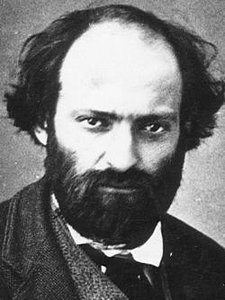
Paul Cézanne

Paul Cézanne

1839 - 1906, France

Quick facts about Paul Cézanne

  • Artistic Movement Or Style: Post-Impressionism
  • Artists Or Movements Influenced By This Artist:
    • Cubism
    • Fauvism
    • Pablo Picasso
    • Henri Matisse
  • Artists Who Influenced This Artist:
    • Paul Gauguin
    • Georges Seurat
  • Full Name: Paul Cézanne
  • Nationality: French
  • Notable Artworks:
    • The Pond at Jas de Bouffan
    • Portrait of Émile Zola
    • Mont Sainte-Victoire series
    • Bathers
  • Place Of Birth: Aix-en-Provence, France
  • Date Of Birth: 1839
  • Date Of Death: 1906

Artist Biography

The Architect of Form

Paul Cézanne was born in Aix-en-Provence, France, into a family with deep roots in the local banking industry. His father, Louis-Auguste Cézanne, helped found the Banque Cézanne et Cabassol, providing a level of financial stability that many of his contemporaries lacked. This security allowed Paul to move away from the legal studies his father had planned for him. Though he initially studied law at the University of Aix-en-Provence, he abandoned those studies in 1860 to focus entirely on painting. His early years were spent in the company of friends like Émile Zola, and together they shared a childhood of swimming and fishing along the banks of the Arc River.

The early works of Cézanne often carried the weight of Romanticism, utilizing dark palettes and heavy, expressive brushwork. He was influenced by the dramatic tonal contrasts found in the tradition of Eugène Delacroix. However, his approach began to shift as he moved toward Paris. He sought a way to move beyond the fleeting light captured by the Impressionists. Instead of merely recording a passing moment, he wanted to find the permanent structure within nature. He looked at a mountain or a piece of fruit and saw the underlying geometry—the cones, spheres, and cylinders that form the bones of the world.

A New Way of Seeing

Cézanne developed a technique characterized by small, repetitive, and constructive brushstrokes. He layered these patches of color to build up volume and texture, creating a sense of solidity. This method allowed him to explore spatial relationships without relying on traditional single-point perspective. In many of his compositions, objects appear independent within the space, often presented from multiple viewpoints at once. This rejection of classical perspective rules helped create a new pictorial language.

His subject matter was deeply tied to his surroundings in Provence. The Mont Sainte-Victoire became a recurring presence in his work, appearing in approximately eighty different paintings and watercolors over many years. He also found profound meaning in the simplest objects. His still lifes, featuring items like apples, jars, and cups, were not mere decorations but intense studies of light, shadow, and mass. Through these works, he demonstrated how color modulation could define shape without the need for traditional shading.

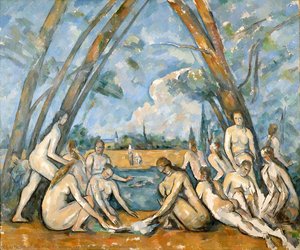
  • The Bathers (Les Grandes Baigneuses)
  • Mont Sainte-Victoire series
  • Still Life with Apples and a Pot of Primroses
  • Portrait of Émile Zola
  • The Card Players

A Lasting Influence

By the time of his death in 1906, Cézanne had fundamentally altered the direction of modern painting. His emphasis on geometric form and multiple perspectives provided a foundation for the Cubist movement. Artists such as Pablo Picasso and Georges Braque drew heavily from his analytical approach to nature. His use of bold, non-naturalistic color also left an impression on the Fauvists, including Henri Matisse. He moved art away from the imitation of reality toward a construction of visual experience based on perception and structure.

Quick Facts

  • Dimensions: 107 x 103 cm
  • Location: Museu de Arte, São Paulo
  • Notable elements or techniques: Thick brushstrokes
  • Title: The Negro Scipio
  • Movement: Romanticism
  • Influences: Georges Seurat

Art Quiz

There is only one correct answer for each question.

Question 1:
What artistic movement is Paul Cézanne’s ‘The Negro Scipio’ primarily associated with?
Question 2:
Where is ‘The Negro Scipio’ currently housed?
Question 3:
What technique did Cézanne employ in this painting to convey a sense of depth and texture?
Question 4:
Who is depicted in ‘The Negro Scipio’, and what is he doing?
Question 5:
‘The Negro Scipio’ is considered an important work because it...