Preview
 Send
Send Share
Share
 Details
 Guide
Guide

 Download
 Similars
 X-Ray
X-Ray Diaporama
 Q&A
Q&A Stats
StatsThe House with Cracked Walls

- 65.0 x 54.0 cm


 Read More
Giclée / Art Print
Museum-quality giclée or canvas print with fast production and flexible finish options. ( Buy Hand Made Painting Switch to Digital Image)




P118B $10

P118H $10

P118W $10

P438Z $10

P508JH $12

P508YH $12

P805H $10

P805Z $10

P919BZ $10

P919G $10

P919XJ $10

P959ZH $10

P968JZ $12

W106C $8

W218G $10

W218JH $8

W218Y $10

W307PJ $10

W316G $10

W316PJ $8

W316Y $10

W398PJ $8

W4111J $10

W500HY $15

W500JH $15

W692G $12

W849H $8

W940BG $15

W953PJ $8




Pick from our preset sizes that match the artwork's original proportions.

Type the width and the height you need, to fit your frame or your wall. A print can only be cut, never made bigger than the picture, so a size with a different shape loses a part of the image. We send you a digital mockup to approve before we print anything. The picture shown on this page does not show the real cut — only the mockup does.
Worldwide Delivery () in 2 weeks instead of standard 4/5 weeks. (6 November)

Free Worldwide Express Shipping

High-Quality Linen Canvas

Full Shipping Insurance

Customs Tax Refund Guarantee

True Color Matching Guarantee

100-Day Return Policy (Defects Only)

100% Money-Back Guarantee

Bulk Discount Offer
 Glass option is only available in size under 110 CM

The House with Cracked Walls
Giclée / Art Print
Reproduction Size
-


Total Price
$ 81
A Fractured Vision: Paul Cézanne’s “The House with Cracked Walls”
Paul Cézanne's "The House with Cracked Walls," painted in 1894, isn’t merely a depiction of a humble dwelling; it’s a profound meditation on the relationship between nature and human construction, a pivotal moment in the artist’s evolution towards Cubism. Housed within the Philadelphia Museum of Art, this oil-on-canvas work—measuring a modest 65 x 54 centimeters—immediately draws the eye with its stark simplicity and unsettling beauty. The scene presents a small stone or brick house, weathered and scarred by time and perhaps even neglect, set against a backdrop of rugged trees and an expansive, almost oppressive sky. A solitary figure stands near the structure, adding a layer of mystery and inviting us to contemplate the relationship between man and his environment. This painting represents a crucial step in Cézanne’s journey away from Impressionism's fleeting effects of light and color towards a more structured, geometric approach to representation—a shift that would fundamentally influence generations of artists to come.Post-Impressionist Innovation: Deconstructing Reality
Cézanne was a restless innovator, constantly pushing the boundaries of artistic convention. “The House with Cracked Walls” exemplifies this drive. He wasn’t interested in simply recording what he saw; instead, he sought to capture the *essence* of the subject—its underlying structure and form. This is evident in his deliberate manipulation of perspective, flattening space and reducing objects to their essential geometric components. The house itself isn't rendered with photographic accuracy but rather as a series of interlocking planes and angles, mirroring the solidity of the surrounding rocks. Notice how the lines of the building seem to converge towards a vanishing point that’s subtly shifted, creating an illusion of depth without relying on traditional linear perspective. This technique, heavily influenced by his studies of Japanese prints—which he greatly admired for their flattened compositions and emphasis on line—was revolutionary at the time. The cracked walls aren't just a detail; they become a visual metaphor for the fragility of human endeavors against the enduring power of nature.Symbolism and Emotional Resonance
Beyond its formal innovations, “The House with Cracked Walls” is rich in symbolic meaning. The isolated house, perched precariously on the edge of a rocky outcrop, evokes feelings of loneliness, vulnerability, and perhaps even abandonment. The red roof—a striking contrast against the muted tones of the stone—could symbolize warmth, shelter, or even warning – a beacon amidst the stark landscape. The solitary figure adds to this sense of isolation, suggesting contemplation or perhaps a yearning for connection. Cézanne himself often described his paintings as “studies,” emphasizing his desire to understand and capture the underlying principles governing the world around him. The painting’s emotional impact is one of quiet melancholy—a poignant reminder of the transient nature of human existence and the inevitable decay that awaits all structures, however sturdy they may seem.Cézanne's Legacy: A Bridge to Modern Art
Paul Cézanne’s influence on 20th-century art is immeasurable. He essentially laid the groundwork for Cubism, with his fragmented forms and multiple viewpoints paving the way for artists like Picasso and Braque. His exploration of color—using bold, non-naturalistic hues to define shapes and planes—also profoundly impacted subsequent movements. “The House with Cracked Walls” stands as a testament to Cézanne’s genius – a deceptively simple painting that encapsulates his revolutionary approach to art. It's a work that invites repeated viewing, revealing new layers of meaning and complexity with each encounter. Today, reproductions of this iconic piece offer a unique opportunity to bring the power and beauty of Cézanne’s vision into any space, serving as both a decorative element and a poignant reminder of the enduring legacy of one of art history's most influential figures. Explore high-quality hand-painted reproductions at OriginalUniqueArt.com and discover how this fractured vision can enrich your world.Questions & Answers
Can the image of "The House with Cracked Walls" by Paul Cézanne be freely reproduced?
"The House with Cracked Walls" by Paul Cézanne is in the public domain - its copyright has expired. This status governs how the image of the work may be reproduced.
Which reproduction size is suggested for "The House with Cracked Walls" by Paul Cézanne?
The recommended print size for "The House with Cracked Walls" by Paul Cézanne is medium.
Toward which tone does "The House with Cracked Walls" lean?
"The House with Cracked Walls" leans toward an ochre to sepia tone.
Artist Biography
The Architect of Form
Paul Cézanne was born in Aix-en-Provence, France, into a family with deep roots in the local banking industry. His father, Louis-Auguste Cézanne, helped found the Banque Cézanne et Cabassol, providing a level of financial stability that many of his contemporaries lacked. This security allowed Paul to move away from the legal studies his father had planned for him. Though he initially studied law at the University of Aix-en-Provence, he abandoned those studies in 1860 to focus entirely on painting. His early years were spent in the company of friends like Émile Zola, and together they shared a childhood of swimming and fishing along the banks of the Arc River.
The early works of Cézanne often carried the weight of Romanticism, utilizing dark palettes and heavy, expressive brushwork. He was influenced by the dramatic tonal contrasts found in the tradition of Eugène Delacroix. However, his approach began to shift as he moved toward Paris. He sought a way to move beyond the fleeting light captured by the Impressionists. Instead of merely recording a passing moment, he wanted to find the permanent structure within nature. He looked at a mountain or a piece of fruit and saw the underlying geometry—the cones, spheres, and cylinders that form the bones of the world.
A New Way of Seeing
Cézanne developed a technique characterized by small, repetitive, and constructive brushstrokes. He layered these patches of color to build up volume and texture, creating a sense of solidity. This method allowed him to explore spatial relationships without relying on traditional single-point perspective. In many of his compositions, objects appear independent within the space, often presented from multiple viewpoints at once. This rejection of classical perspective rules helped create a new pictorial language.
His subject matter was deeply tied to his surroundings in Provence. The Mont Sainte-Victoire became a recurring presence in his work, appearing in approximately eighty different paintings and watercolors over many years. He also found profound meaning in the simplest objects. His still lifes, featuring items like apples, jars, and cups, were not mere decorations but intense studies of light, shadow, and mass. Through these works, he demonstrated how color modulation could define shape without the need for traditional shading.
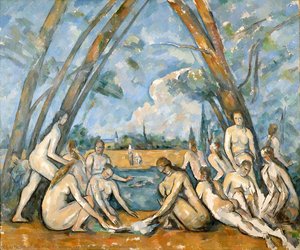
- The Bathers (Les Grandes Baigneuses)
- Mont Sainte-Victoire series
- Still Life with Apples and a Pot of Primroses
- Portrait of Émile Zola
- The Card Players
A Lasting Influence
By the time of his death in 1906, Cézanne had fundamentally altered the direction of modern painting. His emphasis on geometric form and multiple perspectives provided a foundation for the Cubist movement. Artists such as Pablo Picasso and Georges Braque drew heavily from his analytical approach to nature. His use of bold, non-naturalistic color also left an impression on the Fauvists, including Henri Matisse. He moved art away from the imitation of reality toward a construction of visual experience based on perception and structure.
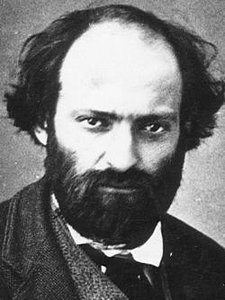
Paul Cézanne
1839 - 1906 , France
Quick Facts
- Artistic Movement Or Style: Post-Impressionism
- Artists Or Movements Influenced By This Artist:
- Cubism
- Fauvism
- Pablo Picasso
- Henri Matisse
- Artists Who Influenced This Artist:
- Paul Gauguin
- Georges Seurat
- Full Name: Paul Cézanne
- Nationality: French
- Notable Artworks:
- The Pond at Jas de Bouffan
- Portrait of Émile Zola
- Mont Sainte-Victoire series
- Bathers
- Place Of Birth: Aix-en-Provence, France
- Date Of Birth: 1839
- Date Of Death: 1906
Related Articles

Impressionism's Masterpieces: 10 Paintings That Defined a Movement | OriginalUniqueArt
Journey through Impressionism's heart with 10 iconic paintings by Monet, Renoir & Degas. Explore light, color & the stories behind these masterpieces. Find museum-quality art reproductions and elevate your home decor on OriginalUniqueArt.com.

Mastering Form: The 25 Greatest Paintings by Paul Cézanne
Explore 25 iconic Paul Cézanne masterpieces and his Post-Impressionist legacy. Discover the full collection online at OriginalUniqueArt.com.
Beyond Impressionism: Exploring Emotional Depth & Formal Innovation in Post-Impressionist Art
Explore the profound emotional depth & formal innovations of Post-Impressionism with our expert guide. Discover Cézanne, Van Gogh, Gauguin & more. Learn about art history, collecting, and investing in this pivotal movement.

Beyond Impressionism: Exploring the Emotional Depth of Post-Impressionist Painting
Explore the profound emotional depth & innovative techniques of Post-Impressionism with OriginalUniqueArt. Discover Cézanne, Van Gogh, Gauguin & more – and their lasting impact on modern art.

Mastering Abstraction: The Top 25 Essential Artworks by Paul Klee
Explore 25 iconic Paul Klee masterpieces and his Bauhaus legacy. Discover the full collection online at OriginalUniqueArt.com.