Preview
 Send
Send Share
Share
 Details
 Guide
Guide

 Download
 Similars
 X-Ray
X-Ray Diaporama
 Q&A
Q&A Stats
StatsFlowers in a Blue Vase


 Read More
Giclée / Art Print
Museum-quality giclée or canvas print with fast production and flexible finish options. ( Buy Hand Made Painting Switch to Digital Image)




P118B $10

P118H $10

P118W $10

P438Z $10

P508JH $12

P508YH $12

P805H $10

P805Z $10

P919BZ $10

P919G $10

P919XJ $10

P959ZH $10

P968JZ $12

W106C $8

W218G $10

W218JH $8

W218Y $10

W307PJ $10

W316G $10

W316PJ $8

W316Y $10

W398PJ $8

W4111J $10

W500HY $15

W500JH $15

W692G $12

W849H $8

W940BG $15

W953PJ $8




Pick from our preset sizes that match the artwork's original proportions.

Type the width and the height you need, to fit your frame or your wall. A print can only be cut, never made bigger than the picture, so a size with a different shape loses a part of the image. We send you a digital mockup to approve before we print anything. The picture shown on this page does not show the real cut — only the mockup does.
Worldwide Delivery () in 2 weeks instead of standard 4/5 weeks. (2 November)

Free Worldwide Express Shipping

High-Quality Linen Canvas

Full Shipping Insurance

Customs Tax Refund Guarantee

True Color Matching Guarantee

100-Day Return Policy (Defects Only)

100% Money-Back Guarantee

Bulk Discount Offer
 Glass option is only available in size under 110 CM

Flowers in a Blue Vase
Giclée / Art Print
Reproduction Size
-


Total Price
$ 81
The Painting and Its Artist
Paul Cézanne, a French painter, is renowned for his pivotal role in the transition from 19th-century Impressionism to early 20th-century Cubism. His work, characterized by repetitive brushstrokes and an emphasis on structure, laid the groundwork for avant-garde movements. "Flowers in a Blue Vase," created in 1875, is one of his notable works that exemplify his unique style.Artistic Style and Technique
This painting is a quintessential example of Post-Impressionism, a movement that emerged as a reaction against the naturalistic depiction of light and color in Impressionist art. Cézanne's use of planes of color and small brushstrokes creates complex fields, giving the painting a dynamic and expressive quality.Historical Context
In 1875, when "Flowers in a Blue Vase" was painted, Cézanne was still developing his style. His early works were influenced by Romanticism and Realism, but he soon moved towards a more innovative approach. This painting reflects his intense study of subjects and his emphasis on the underlying structure of objects.Reception and Legacy
Initially, Cézanne's work was met with incomprehension and ridicule. However, fellow artists like Camille Pissarro and art dealer Ambroise Vollard recognized his genius. The first solo exhibition of his works in 1895 at Vollard's gallery marked a turning point in his career. Both Henri Matisse and Pablo Picasso acknowledged Cézanne as "the father of us all."Current Location and Significance
"Flowers in a Blue Vase" is housed at the The State Hermitage Museum in Russia, a testament to its enduring importance. This painting, along with others by Cézanne, continues to inspire artists and art enthusiasts worldwide.Conclusion
"Cezanne's "Flowers in a Blue Vase" is a seminal work that bridges the gap between Impressionism and Cubism. Its innovative style and technique have influenced generations of artists. For those interested in exploring more of Cézanne's works, Paul Cézanne: Flowers in a Blue Vase and Paul Cézanne: Still Life with Curtain and Flowered Pitcher are available at OriginalUniqueArt. These hand-made oil painting reproductions offer a unique opportunity to own a piece of art history.- Post-Impressionism Art Movement: A predominantly French movement that developed roughly between 1886 and 1905, characterized by a reaction against Impressionists' concern for the naturalistic depiction of light and color. Learn more about Post-Impressionism.
- Paul Cézanne's Biography: A French painter who introduced new modes of representation and influenced avant-garde artistic movements. Read more about Paul Cézanne on Wikipedia.
- History of Art: The history of art focuses on objects made by humans for various purposes, with a primary emphasis on their aesthetic visual form. Explore the History of Art on Wikipedia.
This article provides an in-depth look at "Flowers in a Blue Vase" by Paul Cézanne, highlighting its significance within the Post-Impressionist movement and its enduring influence on modern art.
Questions & Answers
How do medium and movement combine in "Flowers in a Blue Vase"?
In "Flowers in a Blue Vase", the oil on canvas technique meets the Post-Impressionism movement.
What medium is "Flowers in a Blue Vase" by Paul Cézanne executed in?
The medium of "Flowers in a Blue Vase" by Paul Cézanne is oil on canvas. Reproductions aim to render the appearance of this technique.
Do the colors of "Flowers in a Blue Vase" appear strong or soft?
The colors in "Flowers in a Blue Vase" by Paul Cézanne have a vivid intensity.
Artist Biography
The Architect of Form
Paul Cézanne was born in Aix-en-Provence, France, into a family with deep roots in the local banking industry. His father, Louis-Auguste Cézanne, helped found the Banque Cézanne et Cabassol, providing a level of financial stability that many of his contemporaries lacked. This security allowed Paul to move away from the legal studies his father had planned for him. Though he initially studied law at the University of Aix-en-Provence, he abandoned those studies in 1860 to focus entirely on painting. His early years were spent in the company of friends like Émile Zola, and together they shared a childhood of swimming and fishing along the banks of the Arc River.
The early works of Cézanne often carried the weight of Romanticism, utilizing dark palettes and heavy, expressive brushwork. He was influenced by the dramatic tonal contrasts found in the tradition of Eugène Delacroix. However, his approach began to shift as he moved toward Paris. He sought a way to move beyond the fleeting light captured by the Impressionists. Instead of merely recording a passing moment, he wanted to find the permanent structure within nature. He looked at a mountain or a piece of fruit and saw the underlying geometry—the cones, spheres, and cylinders that form the bones of the world.
A New Way of Seeing
Cézanne developed a technique characterized by small, repetitive, and constructive brushstrokes. He layered these patches of color to build up volume and texture, creating a sense of solidity. This method allowed him to explore spatial relationships without relying on traditional single-point perspective. In many of his compositions, objects appear independent within the space, often presented from multiple viewpoints at once. This rejection of classical perspective rules helped create a new pictorial language.
His subject matter was deeply tied to his surroundings in Provence. The Mont Sainte-Victoire became a recurring presence in his work, appearing in approximately eighty different paintings and watercolors over many years. He also found profound meaning in the simplest objects. His still lifes, featuring items like apples, jars, and cups, were not mere decorations but intense studies of light, shadow, and mass. Through these works, he demonstrated how color modulation could define shape without the need for traditional shading.
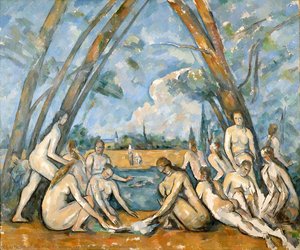
- The Bathers (Les Grandes Baigneuses)
- Mont Sainte-Victoire series
- Still Life with Apples and a Pot of Primroses
- Portrait of Émile Zola
- The Card Players
A Lasting Influence
By the time of his death in 1906, Cézanne had fundamentally altered the direction of modern painting. His emphasis on geometric form and multiple perspectives provided a foundation for the Cubist movement. Artists such as Pablo Picasso and Georges Braque drew heavily from his analytical approach to nature. His use of bold, non-naturalistic color also left an impression on the Fauvists, including Henri Matisse. He moved art away from the imitation of reality toward a construction of visual experience based on perception and structure.
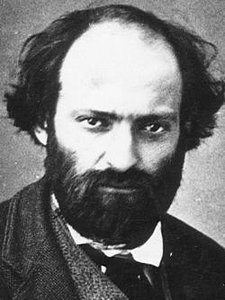
Paul Cézanne
1839 - 1906 , France
Quick Facts
- Artistic Movement Or Style: Post-Impressionism
- Artists Or Movements Influenced By This Artist:
- Cubism
- Fauvism
- Pablo Picasso
- Henri Matisse
- Artists Who Influenced This Artist:
- Paul Gauguin
- Georges Seurat
- Full Name: Paul Cézanne
- Nationality: French
- Notable Artworks:
- The Pond at Jas de Bouffan
- Portrait of Émile Zola
- Mont Sainte-Victoire series
- Bathers
- Place Of Birth: Aix-en-Provence, France
- Date Of Birth: 1839
- Date Of Death: 1906
Related Articles

Beyond Impressionism: Exploring the Emotional Depth of Post-Impressionist Painting
Explore the profound emotional depth & innovative techniques of Post-Impressionism with OriginalUniqueArt. Discover Cézanne, Van Gogh, Gauguin & more – and their lasting impact on modern art.

Mastering Abstraction: The Top 25 Essential Artworks by Paul Klee
Explore 25 iconic Paul Klee masterpieces and his Bauhaus legacy. Discover the full collection online at OriginalUniqueArt.com.
Beyond Impressionism: Exploring Emotional Depth & Formal Innovation in Post-Impressionist Art
Explore the profound emotional depth & formal innovations of Post-Impressionism with our expert guide. Discover Cézanne, Van Gogh, Gauguin & more. Learn about art history, collecting, and investing in this pivotal movement.

Mastering Form: The 25 Greatest Paintings by Paul Cézanne
Explore 25 iconic Paul Cézanne masterpieces and his Post-Impressionist legacy. Discover the full collection online at OriginalUniqueArt.com.

Impressionism's Masterpieces: 10 Paintings That Defined a Movement | OriginalUniqueArt
Journey through Impressionism's heart with 10 iconic paintings by Monet, Renoir & Degas. Explore light, color & the stories behind these masterpieces. Find museum-quality art reproductions and elevate your home decor on OriginalUniqueArt.com.