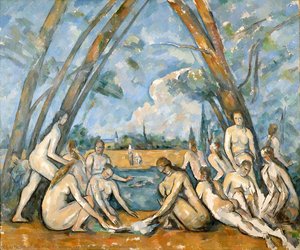
Preview
 Send
Send Share
Share
 Details
 Guide
Guide

 Download
 Similars
 X-Ray
X-Ray Diaporama
 Q&A
Q&A Stats
StatsBibemus. The Red Rock

- 91.0 x 66.0 cm


 Read More
Giclée / Art Print
Museum-quality giclée or canvas print with fast production and flexible finish options. ( Buy Hand Made Painting Switch to Digital Image)




P118B $10

P118H $10

P118W $10

P438Z $10

P508JH $12

P508YH $12

P805H $10

P805Z $10

P919BZ $10

P919G $10

P919XJ $10

P959ZH $10

P968JZ $12

W106C $8

W218G $10

W218JH $8

W218Y $10

W307PJ $10

W316G $10

W316PJ $8

W316Y $10

W398PJ $8

W4111J $10

W500HY $15

W500JH $15

W692G $12

W849H $8

W940BG $15

W953PJ $8




Pick from our preset sizes that match the artwork's original proportions.

Type the width and the height you need, to fit your frame or your wall. A print can only be cut, never made bigger than the picture, so a size with a different shape loses a part of the image. We send you a digital mockup to approve before we print anything. The picture shown on this page does not show the real cut — only the mockup does.
Worldwide Delivery () in 2 weeks instead of standard 4/5 weeks. (9 November)

Free Worldwide Express Shipping

High-Quality Linen Canvas

Full Shipping Insurance

Customs Tax Refund Guarantee

True Color Matching Guarantee

100-Day Return Policy (Defects Only)

100% Money-Back Guarantee

Bulk Discount Offer
 Glass option is only available in size under 110 CM

Bibemus. The Red Rock
Giclée / Art Print
Reproduction Size
-


Total Price
$ 81
Bibemus. The Red Rock
Paul Cézanne, a pioneering French Post-Impressionist artist, played a crucial role in transitioning from 19th-century Impressionism to 20th-century Cubism. His unique style and visual language have inspired numerous artists worldwide. One of his notable works is Bibémus: The Red Rock, created around 1897.Artistic Style and Influence
Cézanne's artistic journey was influenced by Romanticism and Realism, evident in his early works like the murals at Jas de Bouffan. However, he later developed a distinct style through scrutinizing Impressionist techniques. Bibémus: The Red Rock is considered one of his masterpieces, showcasing his mature artistic vision. He altered conventional approaches to perspective and broke established rules of academic art by emphasizing the underlying structure of objects in a composition and the formal qualities of art. Cézanne strived for a renewal of traditional design methods on the basis of the impressionistic colour space and colour modulation principles. His often repetitive, exploratory brushstrokes are highly characteristic and clearly recognizable. He used planes of colour and small brushstrokes that build up to form complex fields. The paintings convey Cézanne's intense study of his subjects.Composition and Technique
The painting depicts the deserted landscapes of the Bibémus quarries near Aix-en-Provence, a subject that inspired Cézanne multiple times between 1895 and 1904. The composition features a patch of trees painted with cross-hatched brushwork, standing out against the orange rocks and topped off with a blue sky. Notably, traditional perspective seems to have been abolished in this work, creating a sense of strangeness due to the intrusion of an abstract and geometric rock in the upper right corner. Cézanne’s meticulous attention to detail—particularly in capturing the textures of stone and foliage—is evident throughout the piece. The artist employed a technique known as “tormenta” – agitated brushstrokes – to convey the dynamism and energy of the natural environment. This method contrasts sharply with Impressionist renderings, prioritizing solidity and structure over fleeting impressions of light.Artistic Significance
Bibémus: The Red Rock is indicative of Cézanne's revival and established itself as a unique piece in his career. It influenced Georges Braque's Houses at L’Estaque (1908), which portrayed the same style with improved refinement. Picasso himself acknowledged Cézanne's profound impact on his artistic development, recognizing him as a pivotal figure in shaping Cubism. This painting continues to inspire artists worldwide due to its simplified shapes, almost complete loss of the third dimension, and masterful depiction of rock formations’ raw energy.Collection and Exhibition
Bibémus: The Red Rock is part of the Cone Collection owned by Dr. Claribel Cone and Miss Etta Cone of Baltimore, Maryland. It has been exhibited in various museums, including the Musée du Louvre in Paris.Relevance to OriginalUniqueArt.com
At OriginalUniqueArt.com, we offer high-quality, handmade oil painting reproductions of famous artworks like Bibémus: The Red Rock. Our skilled artists ensure that every detail is meticulously captured to provide an authentic experience for art enthusiasts. Explore our extensive collection and bring Cézanne’s vision into your home.Other Relevant Works by Cézanne
- Paul Cézanne: Landscape - Paul Cézanne: Bend in Forest Road - Paul Cézanne: In The WoodsQuestions & Answers
Where does "Bibemus. The Red Rock" stand among Paul Cézanne's recurring subjects?
Among Paul Cézanne's recorded themes - romanticism & realism, landscape observation, exploring spatial depth, breaking impressionist rules, influenced braque’s style, iconic cézanne landscape, foundation of modern art - "Bibemus. The Red Rock" brings its own focus on landscape, rocks, trees, sky, geometric, perspective, abstraction.
What are the author and date of "Bibemus. The Red Rock"?
Paul Cézanne made "Bibemus. The Red Rock" in 1897.
What luminance does "Bibemus. The Red Rock" by Paul Cézanne have?
The colors of "Bibemus. The Red Rock" show a gentle luminance luminance.
Artist Biography
The Architect of Form
Paul Cézanne was born in Aix-en-Provence, France, into a family with deep roots in the local banking industry. His father, Louis-Auguste Cézanne, helped found the Banque Cézanne et Cabassol, providing a level of financial stability that many of his contemporaries lacked. This security allowed Paul to move away from the legal studies his father had planned for him. Though he initially studied law at the University of Aix-en-Provence, he abandoned those studies in 1860 to focus entirely on painting. His early years were spent in the company of friends like Émile Zola, and together they shared a childhood of swimming and fishing along the banks of the Arc River.
The early works of Cézanne often carried the weight of Romanticism, utilizing dark palettes and heavy, expressive brushwork. He was influenced by the dramatic tonal contrasts found in the tradition of Eugène Delacroix. However, his approach began to shift as he moved toward Paris. He sought a way to move beyond the fleeting light captured by the Impressionists. Instead of merely recording a passing moment, he wanted to find the permanent structure within nature. He looked at a mountain or a piece of fruit and saw the underlying geometry—the cones, spheres, and cylinders that form the bones of the world.
A New Way of Seeing
Cézanne developed a technique characterized by small, repetitive, and constructive brushstrokes. He layered these patches of color to build up volume and texture, creating a sense of solidity. This method allowed him to explore spatial relationships without relying on traditional single-point perspective. In many of his compositions, objects appear independent within the space, often presented from multiple viewpoints at once. This rejection of classical perspective rules helped create a new pictorial language.
His subject matter was deeply tied to his surroundings in Provence. The Mont Sainte-Victoire became a recurring presence in his work, appearing in approximately eighty different paintings and watercolors over many years. He also found profound meaning in the simplest objects. His still lifes, featuring items like apples, jars, and cups, were not mere decorations but intense studies of light, shadow, and mass. Through these works, he demonstrated how color modulation could define shape without the need for traditional shading.
- The Bathers (Les Grandes Baigneuses)
- Mont Sainte-Victoire series
- Still Life with Apples and a Pot of Primroses
- Portrait of Émile Zola
- The Card Players
A Lasting Influence
By the time of his death in 1906, Cézanne had fundamentally altered the direction of modern painting. His emphasis on geometric form and multiple perspectives provided a foundation for the Cubist movement. Artists such as Pablo Picasso and Georges Braque drew heavily from his analytical approach to nature. His use of bold, non-naturalistic color also left an impression on the Fauvists, including Henri Matisse. He moved art away from the imitation of reality toward a construction of visual experience based on perception and structure.
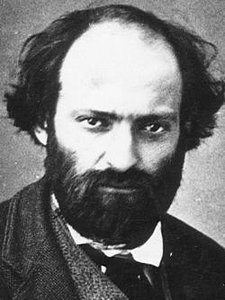
Paul Cézanne
1839 - 1906 , France
Quick Facts
- Artistic Movement Or Style: Post-Impressionism
- Artists Or Movements Influenced By This Artist:
- Cubism
- Fauvism
- Pablo Picasso
- Henri Matisse
- Artists Who Influenced This Artist:
- Paul Gauguin
- Georges Seurat
- Full Name: Paul Cézanne
- Nationality: French
- Notable Artworks:
- The Pond at Jas de Bouffan
- Portrait of Émile Zola
- Mont Sainte-Victoire series
- Bathers
- Place Of Birth: Aix-en-Provence, France
- Date Of Birth: 1839
- Date Of Death: 1906
Related Articles
Deconstructing Reality: Cubism's Revolutionary Impact on 20th-Century Art
Explore the revolutionary world of Cubism with OriginalUniqueArt. Discover Picasso & Braque's groundbreaking techniques, its philosophical roots, and lasting impact on modern art. Expert insights for collectors.

Mastering Abstraction: The Top 25 Essential Artworks by Paul Klee
Explore 25 iconic Paul Klee masterpieces and his Bauhaus legacy. Discover the full collection online at OriginalUniqueArt.com.

Crimson Threads of Narrative: Exploring Symbolism & Representation in Artworks Featuring the Red Dress
Explore the rich symbolism of the red dress in art history! From ancient power displays to iconic portraits like Cézanne’s 'Madame Cezanne', discover the cultural and artistic significance behind this captivating color. Expert analysis & insights.
Mastering Form: A Definitive Guide to the Structural Genius of Paul Cézanne
Explore the structural genius of Paul Cézanne. Discover how his mastery of geometric form and color bridged Impressionism and Cubism in this definitive guide for art enthusiasts and collectors.

Mastering Form: The 25 Greatest Paintings by Paul Cézanne
Explore 25 iconic Paul Cézanne masterpieces and his Post-Impressionist legacy. Discover the full collection online at OriginalUniqueArt.com.