Nude
Pencil
Other
Mannerism
Renaissance
32.0 x 20.0 cm
Galleria degli Uffizi
Hand Made Oil Reproduction
Hand-painted oil on canvas in your size and frame, made to order by our artists.
Pick from our preset sizes that match the artwork's original proportions.
You may enter your own dimensions to fit a specific frame or space. If your selected size does not match the original image's proportions, we will either crop the artwork or extend the painting with additional hand-painted elements. A digital mockup will be sent for your approval before production begins.

Please note that the on-screen preview does not reflect the actual cropping or extension. Only the mockup will accurately show the final composition.
While custom sizes are available, we recommend selecting a dimension from the predefined list to preserve the original proportions.
After order, OriginalUniqueArt.com team will email client for instructions and provide a mockup preview
Worldwide Delivery () in 3/4 weeks instead of standard 5 weeks. (21 July). No compromise on quality.
Free Worldwide Express Shipping
High-Quality Linen Canvas
Full Shipping Insurance
Customs Tax Refund Guarantee
True Color Matching Guarantee
60-Day Return Policy (Defects Only)
100% Money-Back Guarantee
Bulk Discount Offer
Nude
Reproduction Medium
Reproduction Size
-
Total Price
-
Artwork Description
An Intimate Encounter with the Renaissance Line
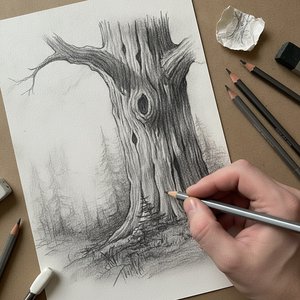
In the quiet, monochromatic depths of this exquisite study, we find ourselves transported to the heart of the Venetian Renaissance. This drawing, a masterful Nude by the esteemed Paris Bordone, serves as a profound window into the artist's preparatory process, capturing a moment of raw, anatomical exploration before the grand scale of oil on canvas. The figure, rendered with a delicate yet commanding presence, emerges from the paper through a sophisticated interplay of light and shadow. Her pose is one of dynamic grace; turned three-quarters toward the viewer, her body suggests a rhythmic movement that breathes life into the static medium. One arm reaches upward in an elegant arc, while the other extends forward in a gesture that feels both tender and ceremonial, as if she is caught in a fleeting moment of offering or quiet contemplation.
The technical prowess displayed in this work speaks to Bordone’s deep connection to the anatomical precision characteristic of his era. Utilizing the subtle textures of pencil on paper, the artist employs masterful hatching and cross-hatching to sculpt the female form. These fine, rhythmic lines do more than merely define boundaries; they create a palpable sense of volume and musculature, allowing the light to dance across the curves of the skin. The monochrome palette, far from being limiting, enhances the emotional gravity of the piece. By stripping away color, Bordone forces the eye to focus on the essential architecture of the human body, using deep blacks to anchor the shadows and soft, luminous grays to highlight the delicate contours of the flesh.
A Legacy of Mannerist Elegance
To understand this work is to understand the tension within the Venetian school during the sixteenth century. As a contemporary who navigated the shadow of the great Titian, Paris Bordone infused his work with a unique Mannerist complexity. While he inherited the lushness of the Venetian tradition, this particular study reveals a more cerebral, structural side of his genius. There is an inherent vulnerability in the subject's pose, yet it is balanced by a classical dignity that prevents the piece from feeling overly sentimental. The soft focus of the background creates a shallow depth of field, ensuring that the viewer’s gaze remains locked in an intimate dialogue with the central figure.
For the discerning collector or interior designer, this reproduction offers more than mere decoration; it provides a focal point of historical significance and intellectual depth. The piece possesses a timeless quality that allows it to integrate seamlessly into both classical and contemporary settings. Whether placed in a curated gallery space or used to anchor a sophisticated study, the drawing’s organic shapes and flowing lines evoke a sense of tranquility and refined taste. It is an invitation to slow down and appreciate the enduring beauty of the human form, captured through the lens of a master who sought to find extraordinary grace within the fundamental studies of life.
Artist Biography
Paris Bordone: A Venetian Master of Mannerist Complexity
Paris Bordone (1500 – 1571), born in Treviso, Italy, stands as a singular figure within the Venetian Renaissance—a painter who wrestled with the prevailing stylistic currents yet stubbornly clung to his own distinctive vision. While apprenticed briefly under Titian, arguably Venice’s most influential artist of the era, Bordone's relationship was reportedly fraught with tension, fostering an artistic independence that would ultimately define his oeuvre. This divergence from his mentor cemented his reputation as a master of Mannerist art, blending intricate compositional schemes with a palpable sense of provincial vitality—a juxtaposition that continues to fascinate scholars and collectors alike.Early Life and Artistic Training
Details surrounding Bordone’s formative years remain scarce, yet it is known he migrated to Venice by late adolescence. His apprenticeship with Titian proved pivotal, exposing him to the grandeur of Venetian painting techniques and fostering an understanding of monumental scale. However, accounts suggest a less harmonious partnership, highlighting Bordone's inclination towards experimentation and his refusal to fully embrace Titian’s polished aesthetic. Vasari famously described Bordone as “unhappy” under Titian’s tutelage, emphasizing his determination to forge his own path—a decision that would prove crucial to establishing his artistic identity.Notable Works and Artistic Style
Bordone's prolific output spanned several decades, producing a remarkable array of paintings encompassing religious iconography, mythological narratives, and intimate portraits. Among his most celebrated achievements are “The Fisherman Presenting the Ring to Doge Gradenigo” (1534-35), housed at the Accademia di Venezia—a monumental depiction imbued with dramatic lighting and psychological depth—and “Pentecost,” another altarpiece residing in the Hermitage Museum, showcasing Bordone’s masterful use of sfumato and vibrant color palettes. Furthermore, his interpretation of “Jupiter and Io” exemplifies his distinctive style, characterized by a captivating blend of elegance and sensualism. The “Baptism of Christ,” similarly demonstrates Bordone's ability to synthesize Mannerist intricacy with regional sensibilities—a hallmark of Venetian art during this period.- Key Characteristics: Bordone’s artistic style is distinguished by its complex compositions, asymmetrical arrangements, and subtle gradations of color—techniques borrowed heavily from Titian but refined through personal exploration.
- Color Palette: He favored warm hues—particularly reds and golds—creating a sense of opulent grandeur that contrasted sharply with the cooler tones prevalent in other Venetian artists’ works.
- Perspective & Depth: Bordone skillfully employed perspective to generate convincing spatial illusions, enhancing the dramatic impact of his paintings and conveying a profound understanding of visual perception.
Legacy and Influence
Despite facing challenges during his lifetime—including financial difficulties and limited recognition—Paris Bordone’s artistic legacy endured. His pioneering approach to Mannerist art established him as an innovator within Venice, influencing subsequent generations of painters. While overshadowed by Titian's fame, Bordone’s singular vision continues to inspire admiration for its boldness and psychological insight. His paintings remain treasured possessions in museums worldwide, serving as enduring reminders of the Venetian Renaissance’s artistic dynamism and demonstrating the power of individual creativity to transcend stylistic conventions.- Museum Collections: Bordone's works can be found prominently displayed at the Pinacoteca di Brera (Milan) and the Hermitage Museum (Saint Petersburg).
- Continuing Research: Scholars continue to investigate Bordone’s artistic techniques and explore connections between his oeuvre and broader trends in European art history.
Paris Bordone
1500 - 1570 , Italy
Quick Facts
- Artistic Movement Or Style: Mannerist
- Artists Who Influenced This Artist: Titian
- Date Of Birth: July 5, 1500
- Date Of Death: January 19, 1571
- Full Name: Paris Bordone
- Nationality: Italian
- Notable Artworks:
- Fisherman's Ring
- Pentecost
- Jupiter & Io
- Baptism of Christ
- Place Of Birth: Treviso, Italy

Glass option is only available in size under 110 CM