Preview
 Send
Send Share
Share
 Details
 Guide
Guide

 Download
 Similars
 X-Ray
X-Ray Diaporama
 Stats
StatsAnnunciation
 Acrylic On Canvas
- WallArt
- Renaissance Mannerism
 1555
1555 99.0 x 134.0 cm
 Pinacoteca Nazionale
 Read More
Hand Made Oil Reproduction
Hand-painted oil on canvas in your size and frame, made to order by our artists. ( Switch to Print Switch to Digital Image)




P118B $10

P118H $10

P118W $10

P438Z $10

P508JH $12

P508YH $12

P805H $10

P805Z $10

P919BZ $10

P919G $10

P919XJ $10

P959ZH $10

P968JZ $12

W106C $8

W218G $10

W218JH $8

W218Y $10

W307PJ $10

W316G $10

W316PJ $8

W316Y $10

W398PJ $8

W4111J $10

W500HY $15

W500JH $15

W692G $12

W849H $8

W940BG $15

W953PJ $8




Pick from our preset sizes that match the artwork's original proportions.

Type the width and the height you need, to fit your frame or your wall. This is hand-painted, so for a size with a different shape the artist can paint a bit more around the picture, or cut a bit — you choose. We send you a digital mockup to approve before the painting starts. The picture shown on this page does not show the real result — only the mockup does.
After order, OriginalUniqueArt.com team will email client for instructions and provide a mockup preview
Worldwide Delivery () in 3/4 weeks instead of standard 5 weeks. (28 October). No compromise on quality.

Free Worldwide Express Shipping

High-Quality Linen Canvas

Full Shipping Insurance

Customs Tax Refund Guarantee

True Color Matching Guarantee

100-Day Return Policy (Defects Only)

100% Money-Back Guarantee

Bulk Discount Offer
 Glass option is only available in size under 110 CM

Annunciation
Reproduction Medium
Reproduction Size
-


Total Price
$ 300
Annunciation by Paris Bordone: A Renaissance Reverie
The Annunciation by Paris Bordone stands as a testament to Venetian artistic prowess during the High Renaissance—a painting that transcends mere depiction, immersing viewers in a meticulously crafted tableau of faith and beauty. Executed in 1555, this oil on canvas masterpiece measuring 99 x 134 cm resides within the Pinacoteca Nazionale di Siena, Italy, offering visitors an unparalleled glimpse into the artistic sensibilities of its time.Composition and Perspective
Bordone’s genius lies not only in capturing a pivotal biblical narrative but also in orchestrating it with masterful compositional skill. The scene unfolds within a grand room adorned with arches and columns—a deliberate choice that establishes a palpable sense of solemnity and reverence, mirroring the spiritual significance of the event itself. Bordone employs linear perspective to create depth and realism, convincingly portraying architectural elements and figures alike. This technique was central to Renaissance artistic ideals, prioritizing accurate representation of the observable world alongside conveying emotion and narrative clarity.Symbolism Woven into Detail
Beyond its structural brilliance, “The Annunciation” is rich in symbolism—a hallmark of Renaissance art’s preoccupation with moral and theological themes. The lily held aloft by Gabriel embodies purity—a traditional emblem associated with Mary—underscoring her sanctity and divine grace. Simultaneously, the open book resting upon Mary's desk symbolizes her unwavering devotion to prayer and scholarly contemplation; it speaks to the importance of intellect alongside faith in shaping spiritual understanding. Furthermore, the stained glass window dominating the background introduces a vibrant splash of color, illuminating the scene with ethereal light and reinforcing the overarching theme of divine illumination. Above the window, a cherub—a creature symbolizing innocence and angelic guardianship—further amplifies this symbolic resonance.Artist’s Style and Technique
Paris Bordone's artistic style is firmly rooted in Mannerism, albeit tempered by Venetian Renaissance conventions. He skillfully blends intricate compositional schemes with subtle nuances of color and texture, creating an atmosphere imbued with quiet dignity. The muted earth tones—primarily ochre, umber, and Sienna—contribute to the painting’s somber yet dignified mood, reflecting the contemplative spirit of the era. Bordone's meticulous brushwork ensures that every detail is rendered with precision, capturing the textures of fabric, stone, and skin—a testament to his dedication to realism and artistic virtuosity.Historical Context and Legacy
Created during a period marked by papal patronage and burgeoning humanist thought, “The Annunciation” reflects the broader cultural landscape of Renaissance Italy. It exemplifies the desire to portray biblical narratives with intellectual rigor and emotional depth—a departure from earlier Gothic styles that prioritized expressive gesture over anatomical accuracy. Bordone’s work stands as an enduring symbol of Christian faith and artistic excellence, continuing to inspire admiration and scholarly study centuries after its creation. Its inclusion in the Pinacoteca Nazionale ensures that this masterpiece remains accessible to generations of art lovers eager to experience the sublime beauty of Renaissance artistry.- Explore more paintings by Paris Bordone on OriginalUniqueArt.com
- Visit Museo Santa Prassede in Rome, Italy, which houses some of the most exquisite artworks from the Renaissance period on OriginalUniqueArt.com
- Learn more about Luigi Carboni, an Italian painter known for his personal painting style, on OriginalUniqueArt.com
Handmade Oil Paintings Reproductions Available
Discover the captivating allure of owning a high-quality reproduction of “The Annunciation” by Paris Bordone—a tangible connection to artistic history and unparalleled visual splendor. OriginalUniqueArt.com offers meticulously crafted reproductions that faithfully capture the painting’s essence, allowing art enthusiasts worldwide to appreciate its beauty and significance.Questions & Answers
How popular is "Annunciation" within Renaissance Mannerism?
"Annunciation" by Paris Bordone is classified as iconic and belongs to the Renaissance Mannerism movement.
When was "Annunciation" created, and to which movement does it belong?
"Annunciation" was created in 1555 as a work of the Renaissance Mannerism movement. Date and movement anchor the artwork in art history.
In what year was "Annunciation" by Paris Bordone created?
"Annunciation" by Paris Bordone was created in 1555.
Artist Biography
The Venetian Maverick: The Life and Legacy of Paris Bordone
In the vibrant, sun-drenched landscape of the sixteenth-century Venetian Renaissance, few figures possess a spirit as fiercely independent as Paris Bordone. Born in Treviso around 1500, Bordone emerged from the shadow of the great masters to carve out a reputation defined by a unique tension between classical grace and a restless, Mannerist energy. While his contemporaries often sought the polished perfection of the High Renaissance, Bordone embraced a more complex, sometimes provocative aesthetic that blended the monumental scale of his era with a distinctively provincial vitality. His journey was one of constant negotiation between the established traditions of Venice and an unyielding desire to forge a personal visual language.
The foundation of Bordone’s technical prowess was laid during his formative years in Venice, most notably through his apprenticeship under the legendary Titian. This period was undoubtedly the crucible of his talent, exposing him to the rich textures, dramatic lighting, and atmospheric depth that define the Venetian school. However, the relationship between master and pupil was famously fraught with creative friction. Historical accounts, including those by Vasari, suggest a certain discordance between Bordone’s experimental impulses and Titian’s more refined aesthetic. Rather than being stifled by this tension, Bordone utilized it as a catalyst for growth, developing a style that moved away from pure imitation toward a more intricate and sometimes agitated compositional approach.
A Tapestry of Myth, Devotion, and Portraiture
Bordone’s prolific career is characterized by an extraordinary breadth of subject matter, ranging from the sacred to the profane. His ability to navigate religious iconography with the same vigor as mythological narratives allowed him to capture the diverse interests of the Venetian elite. In his religious works, such as the Pentecost housed in the Hermitage Museum, one observes a masterful command of sfumato and warm, emotive tones that invite deep spiritual contemplation. Yet, even within these devotional settings, a sense of Mannerist complexity often emerges through swirling drapery and crowded, dynamic arrangements.
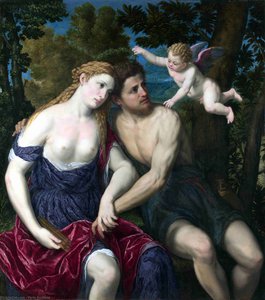
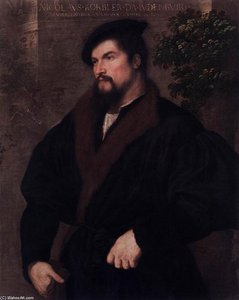
When turning his gaze toward the secular, Bordone achieved a level of narrative drama that remains captivating to modern viewers. His mythological paintings, such as Allegory with Lovers, showcase his talent for using vibrant colors and symbolic depth to weave complex tales of passion and fate. This mastery extended into the realm of portraiture, where he captured the dignity and social standing of his subjects with remarkable precision. A notable example is his 1540 Portrait of Thomas Stachel, currently residing in the Louvre; here, the artist utilizes an intricate composition to highlight the sitter's status, using the fine details of robes and heraldic letters to ground the subject in a tangible historical reality.
Historical Significance and Artistic Endurance
The enduring significance of Paris Bordone lies in his refusal to conform. He stands as a vital bridge between the balanced harmony of the early Renaissance and the more stylized, expressive complexities of the Mannerist period. While he may not have reached the universal heights of Titian, his work offers a necessary counterpoint—a more textured, experimental, and often more humanistic perspective on the Venetian world. His paintings serve as windows into a time of profound transition, where the stability of tradition was being challenged by a new, more restless artistic consciousness.
Today, Bordone’s legacy is preserved in some of the world's most prestigious institutions, inviting scholars and art lovers alike to rediscover his unique vision. His contributions can be summarized through several key artistic pillars:
- Stylistic Innovation: The successful integration of Titian-inspired grandeur with a more complex, Mannerist compositional structure.
- Versatility of Theme: An unparalleled ability to move seamlessly between the serene beauty of the Madonna with Sleeping Child and the dramatic intensity of historical allegories.
- Technical Mastery: A sophisticated use of light, color, and texture that brought a palpable sense of life and movement to the canvas.
- Cultural Impact: Representing the vibrant, often turbulent spirit of Treviso and Venice during one of the most transformative eras in Western art history.

Paris Bordone
1500 - 1570 , Italy
Quick Facts
- Full Name: Paris Bordone
- Nationality: Italian
- Date Of Birth: 1500
- Date Of Death: 1570
- Place Of Birth: Treviso, Italy
- Notable Artworks:
- Fisherman's Ring
- Pentecost
- Jupiter & Io
- Baptism of Christ
- Artistic Movement Or Style: Mannerist
- Artists Who Influenced This Artist: Titian
Related Articles
Divine Messengers: A Curated Guide to the Iconography of Angel Gabriel in Art History
Explore the profound beauty of Angel Gabriel in art history. From Renaissance masterpieces to Baroque splendor, our expert guide delves into the sacred iconography and timeless techniques of these divine messengers for the discerning art enthusiast.
Sacred Narratives Embodied: A Comprehensive Exploration of Religious Iconography in Art History
Explore the rich history of religious iconography in art! Discover symbolism, movements & masterpieces from Byzantine to Renaissance periods. Expert insights for collectors and enthusiasts at OriginalUniqueArt.
Divine Details: Decoding the Sacred Language of Religious Symbolism in Art History Masterpieces
Explore the profound power of religious symbolism in art history. From Renaissance masterpieces to sacred iconography, uncover the hidden meanings behind divine details in a deep dive into classical art excellence.

Sacred Narratives on Canvas: Exploring Religious Scenes & Their Enduring Influence
Explore the rich history of religious art from Giotto to the Renaissance masters with OriginalUniqueArt. Discover symbolism, techniques & enduring legacies. Museum-quality reproductions available.
Sacred Narratives on Canvas: Exploring Religious Painting Through History
Explore the rich history of religious painting with OriginalUniqueArt.com! Discover iconic artworks, symbolism & techniques from antiquity to the Renaissance. Enhance your art appreciation today.