Preview
 Send
Send Share
Share
 Details
 Guide
Guide

 Download
 Similars
 X-Ray
X-Ray Diaporama
 Stats
StatsUntitled (43)
 Oil On Canvas
- WallArt
- Naive Art/Primitivism
 1936
1936- Modern
 73.0 x 60.0 cm
 Read More
The artwork displayed on this page is protected by copyright law, which means we cannot legally create or sell an identical reproduction. This protection is enforced under international agreements such as the Berne Convention and by national laws, including those outlined by the U.S. Copyright Law - Title 17.
As a respectful and legal alternative, we offer custom, hand-painted artworks inspired by the original. Our skilled and professional artists carefully study the original's style, mood, and artistic essence to create a new, unique piece that evokes the same feeling - while remaining an original creation in its own right.
This method fully complies with copyright regulations because it does not involve copying or duplicating the protected artwork. Instead, it is a creative reinterpretation - a new painting that is influenced by the original but not identical to it.
Hand Made Oil Reproduction
Hand-painted oil on canvas in your size and frame, made to order by our artists. ( Switch to Print Switch to Digital Image)




P118B $10

P118H $10

P118W $10

P438Z $10

P508JH $12

P508YH $12

P805H $10

P805Z $10

P919BZ $10

P919G $10

P919XJ $10

P959ZH $10

P968JZ $12

W106C $8

W218G $10

W218JH $8

W218Y $10

W307PJ $10

W316G $10

W316PJ $8

W316Y $10

W398PJ $8

W4111J $10

W500HY $15

W500JH $15

W692G $12

W849H $8

W940BG $15

W953PJ $8




Pick from our preset sizes that match the artwork's original proportions.

Type the width and the height you need, to fit your frame or your wall. This is hand-painted, so for a size with a different shape the artist can paint a bit more around the picture, or cut a bit — you choose. We send you a digital mockup to approve before the painting starts. The picture shown on this page does not show the real result — only the mockup does.
After order, OriginalUniqueArt.com team will email client for instructions and provide a mockup preview
Worldwide Delivery () in 3/4 weeks instead of standard 5 weeks. (27 October). No compromise on quality.

Free Worldwide Express Shipping

High-Quality Linen Canvas

Full Shipping Insurance

Customs Tax Refund Guarantee

True Color Matching Guarantee

100-Day Return Policy (Defects Only)

100% Money-Back Guarantee

Bulk Discount Offer
 Glass option is only available in size under 110 CM

Untitled (43)
Reproduction Medium
Reproduction Size
-


Total Price
$ 300
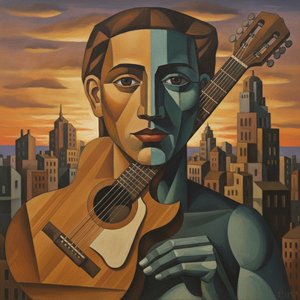
Pablo Picasso’s “Untitled (43)” – A Primitivist Echo of Trauma
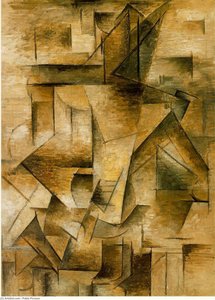
Pablo Picasso's "Untitled (43)," painted in 1936, is more than just a still life; it’s a poignant distillation of the anxieties and artistic explorations that defined his engagement with Naive Art during the tumultuous years leading up to World War II. This deceptively simple composition—a collection of everyday objects arranged on a table—bursts with an unsettling energy, revealing Picasso's masterful manipulation of form and color to convey a profound sense of unease and impending doom. The painting’s power resides not in grand narrative or overt symbolism, but in its carefully constructed ambiguity and the raw emotion it subtly evokes.
The scene itself is remarkably straightforward: a vase overflowing with vibrant flowers—primarily apples and oranges—a solitary wine glass, two bottles, and a humble cup dominate the canvas. A bowl rests at the bottom left corner, grounding the arrangement while simultaneously hinting at scarcity or perhaps even decay. Yet, Picasso doesn’t present this as a tranquil domestic tableau. The fruits are not arranged with serene grace; instead, they seem to jostle for space, their forms slightly distorted and overlapping in a dynamic interplay of shapes and colors. This deliberate disruption immediately signals that something is amiss beneath the surface of apparent simplicity.
The Language of Naive Art
Picasso’s choice to employ elements reminiscent of Naive Art—a style characterized by its directness, lack of formal training, and often childlike quality—is crucial to understanding the painting's impact. He deliberately eschews meticulous detail and realistic representation, opting for bold outlines, flattened perspective, and a vibrant, almost jarring use of color. This approach isn’t merely stylistic; it’s a conscious decision to bypass intellectual analysis and tap directly into primal emotions. Picasso was deeply influenced by artists like Paul Gauguin and Henri Matisse, who had explored the expressive potential of simplified forms and bold colors. He saw in Naive Art a purity of expression that he sought to emulate, using it as a vehicle for conveying his own anxieties about the world around him.
The painting’s monochromatic palette—primarily shades of gray, black, and white—further amplifies this sense of unease. The lack of color creates a stark, almost photographic quality, intensifying the drama of the scene and lending it an air of timelessness. It's as if Picasso is stripping away all distractions to reveal the raw essence of the objects themselves, transforming them into symbols of vulnerability and impending disaster.
Context within Picasso’s Oeuvre & Historical Resonance
"Untitled (43)" exists within a broader series of still life paintings created by Picasso during the 1930s. These works represent a significant shift in his artistic practice, as he actively sought to move away from the complexities of Cubism and explore more direct and emotionally charged forms of expression. The painting’s creation coincided with the escalating tensions leading up to World War II, and it's widely believed that the events surrounding the bombing of Guernica—a Basque town in Spain ravaged by Nazi German and Fascist Italian forces—served as a powerful catalyst for this shift.
The painting’s composition subtly mirrors the chaos and destruction wrought by the bombing. The fragmented forms, distorted perspectives, and unsettling color palette evoke the feeling of disorientation and trauma experienced by those who witnessed the event. While Picasso never explicitly referenced Guernica in "Untitled (43)," the painting undeniably carries a palpable sense of foreboding—a premonition of the horrors to come.
A Testament to Artistic Versatility
“Untitled (43)” stands as a testament to Pablo Picasso’s extraordinary artistic versatility and his willingness to experiment with diverse styles and techniques. It's a painting that rewards careful observation, inviting viewers to delve beneath its surface simplicity and uncover the complex emotions and historical context embedded within its seemingly straightforward composition. OriginalUniqueArt offers meticulously crafted hand-painted reproductions of this iconic work, allowing you to experience Picasso’s genius in stunning detail and bring this powerful image into your home or office.
Questions & Answers
Where and for what purpose is "Untitled (43)" recommended?
Use (statement) and space (living room) are the two recommendations recorded for "Untitled (43)" by Pablo Picasso.
From which country does the Naive Art/Primitivism work "Untitled (43)" come?
"Untitled (43)" connects the Naive Art/Primitivism movement with Spain through its creator's birthplace.
Who is the author of "Untitled (43)", and in which movement?
"Untitled (43)" was created by Pablo Picasso in the Naive Art/Primitivism style. Artist and movement identify the work's tradition.
Artist Biography
The boy from Málaga
A child's first words in Málaga were “piz, piz,” a small attempt at saying pencil. This early pull toward the lead and paper was nurtured by his father, José Ruiz y Blasco, who taught him the basics of figure drawing and oil painting. The boy learned to copy the masters and draw from plaster casts under a disciplined eye. As he grew, the family moved through A Coruña and Barcelona. These years were marked by the quiet weight of loss, particularly the death of his sister, Conchita, from diphtheria when she was only seven. Such shadows would later find their way into the heavy, blue-green tones of his early work.
By thirteen, he was already taking entrance exams for advanced classes in Barcelona, finishing in a week what took others a month. His hands moved with a precision that even his father noticed, once seeing him paint over an unfinished sketch of a pigeon with such accuracy that the instructor realized the student had surpassed him. He eventually moved to Paris, a city where he would spend much of his adult life, constantly shifting his focus from one way of seeing to another.
Shifting palettes and fractured forms
The early twentieth century saw his work move through distinct phases of color and mood. There was the Blue Period, where the canvases were filled with beggars, the blind, and the lonely, rendered in somber shades of blue. This gave way to the Rose Period, a time when pinks, oranges, and reds appeared, often featuring the figures of circus performers like harlequins and acrobats. These years showed a man reacting to his own life and the world around him through the temperature of his palette.
In 1907, the way he handled space changed fundamentally with Les Demoiselles d'Avignon. Influenced by African masks and Iberian sculpture, he began to break objects into geometric shapes. Alongside Georges Braque, he developed Cubism. This involved two main stages:
- Analytic Cubism: A method of fragmenting objects into muted, geometric pieces as if dissecting the form itself.
- Synthetic Cubism: An approach that brought in collage elements like newspaper clippings and fabric scraps to add texture and new layers.
A life of constant change
His work never settled into a single way of being. He explored Neoclassicism with large, monumental figures and later engaged with the imagery of Surrealism, using distorted perspectives to tap into the subconscious. The violence of the Spanish Civil War left its mark on his canvas in 1937 through Guernica. This large oil painting used a stark palette of black, white, and grey to show the suffering of a bombed town, featuring a gored horse, a bull, and screaming women. It remains a heavy, monochromatic response to the chaos of war.
In his later years, he continued to experiment with ceramics, sculpture, and printmaking. He even created large-scale public works, such as the 1967 steel sculpture in Chicago, which was inspired by the head of his Afghan Hound, Kabul. He died in Mougins, France, leaving behind a massive collection of work that spans over seventy-six years of experimentation.

Pablo Picasso
1881 - 1973 , Spain
Quick Facts
- Full Name: Pablo Diego José Ruiz Picasso
- Nationality: Spanish
- Date Of Birth: 1881
- Date Of Death: 1973
- Place Of Birth: Malaga, Spain
- Notable Artworks:
- Les Demoiselles d'Avignon
- Guernica
- The Old Guitarist
- La Vie
- Family of Saltimbanques
- Artistic Movement Or Style: Cubism, Surrealism
- Artists Who Influenced This Artist:
- Velázquez
- Goya
- Matisse
- Artists Or Movements Influenced By This Artist:
- Cubism
- Modern art
Related Articles
Cubism's Revolution: 10 Masterpieces That Redefined Modern Art | OriginalUniqueArt
Explore 10 Cubist masterpieces by Picasso, Braque & more! Delve into the history of this revolutionary art movement. Find museum-quality reproductions and elevate your home decor with OriginalUniqueArt. Discover all masterpieces on OriginalUniqueArt.com

The Untamed Vision: Exploring Naïve Art & Primitivism's Rejection of Convention
Explore the revolutionary world of Naïve Art & Primitivism! Discover how artists challenged academic traditions with raw emotion & unique styles. Learn about Picasso, Rousseau & more at OriginalUniqueArt.
Deconstructing Reality: A Comprehensive Exploration of Cubist Still Life
Explore the revolutionary world of Cubist Still Life with OriginalUniqueArt. Discover Picasso & Braque's groundbreaking techniques, its philosophical roots, and lasting impact on modern art. Expert insights for collectors.
Cubist Expression: 10 Masterpieces That Revolutionized Modern Art | OriginalUniqueArt
Explore 10 Cubist masterpieces by Picasso, Braque & more! Discover the stories behind these revolutionary paintings and their impact on modern art. Find museum-quality reproductions for your home at OriginalUniqueArt.com – where art comes to life.
Cubism Unveiled: How Picasso and Braque Redefined Reality Through Geometric Abstraction
Explore the revolutionary world of Cubism. Discover how masters Pablo Picasso and Georges Braque dismantled reality through geometric abstraction to redefine modern art history.