Switch to Print
 Read More







































 For artworks or reproductions larger than 105 cm (approximately 41 inches) on any side, the frame will be shipped as a kit, disassembled. This method ensures safe delivery and prevents damage during transport.


A Meditation in Color and Form
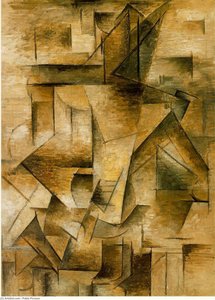
In the vast and ever-evolving tapestry of Pablo Picasso’s career, certain works emerge not merely as images, but as profound meditations on the human condition. Anciano sentado, or The Old Man Sitting, stands as a poignant testament to this ability. Captured during a period of intense creative metamorphosis, the painting presents us with a figure that transcends simple portraiture. The subject, an elderly man seated in a moment of quietude, is rendered through a lens that balances the weight of experience with a vibrant, almost rhythmic energy. As one gazes upon the canvas, there is an immediate sense of being invited into a private sanctuary of thought, where the boundaries between the sitter and the viewer begin to blur through the artist's masterful use of light and fragmented geometry.
The technique employed in this piece serves as a bridge between Picasso’s revolutionary Cubist foundations and his later, more spontaneous explorations. While the composition retains a certain fragmented perspective—dissecting the human form into overlapping planes that suggest movement even in stillness—it eschews the cold intellectualism of early analytical Cubism. Instead, we find a lush, expressive application of color. The palette is a captivating dance of earthy and vibrant tones; deep greens, warm reds, and sun-drenched yellows and oranges coalesce to create a palpable atmosphere. This chromatic richness does more than decorate the canvas; it breathes life into the sitter, imbuing the textured brushwork with a sense of vitality that contrasts beautifully with the subject's sedentary pose.
Symbolism and the Weight of Time
Beyond its formal brilliance, Anciano sentado carries a heavy emotional resonance, touching upon themes of mortality, solitude, and the enduring strength of the human spirit. The sitter’s gaze, often directed toward an unseen horizon, suggests a mind preoccupied with the passage of time and the accumulation of memories. There is a dignified vulnerability in his posture, a reflection of Picasso’s own reflections on aging and the cyclical nature of life during his later years in Paris. The hat, which partially obscures the face, adds a layer of mystery, turning the portrait into an archetype of the observer—a figure who has seen much and remains deeply connected to the world through silent contemplation.
< p>For the discerning collector or the interior designer, this artwork offers a unique opportunity to introduce a piece of art history that is both intellectually stimulating and aesthetically harmonious. The painting’s ability to anchor a room with its soulful presence makes it an ideal centerpiece for spaces dedicated to reflection, such as a private study, a sophisticated library, or a contemporary living area. A high-quality reproduction of this masterpiece allows the evocative power of Picasso's vision to inhabit modern environments, providing a window into a moment of eternal stillness and a celebration of the profound beauty found in the quietest corners of existence.Questions & Answers
What is the art-historical place of "Anciano sentado" by Pablo Picasso?
The art-historical classification of "Anciano sentado" by Pablo Picasso is Cubist Portrait, in the Modern period.
What mood and emotion come together in "Anciano sentado"?
In "Anciano sentado", a dramatic mood accompanies a reflective emotion.
Does "Anciano sentado" have an augmented reality preview?
The AR Preview page of "Anciano sentado" by Pablo Picasso uses augmented reality to show the artwork in your own space, on a compatible device.
More about this painting
 Preview
 Send
Send Share
Share
 Details
 Guide
Guide

 Download
 Similars
 X-Ray
X-Ray Diaporama
 Q&A
Q&A Stats
Stats