
 Preview
 Send
Send Share
Share
 Details
 Guide
Guide

 Download
 Similars
 X-Ray
X-Ray Diaporama
 Q&A
Q&A Stats
StatsSoldier

- 96.0 x 71.0 cm


 Read More
Giclée / Art Print
Museum-quality giclée or canvas print with fast production and flexible finish options. ( Buy Hand Made Painting Switch to Digital Image)




































Pick from our preset sizes that match the artwork's original proportions.

Type the width and the height you need, to fit your frame or your wall. A print can only be cut, never made bigger than the picture, so a size with a different shape loses a part of the image. We send you a digital mockup to approve before we print anything. The picture shown on this page does not show the real cut — only the mockup does.
Worldwide Delivery () in 2 weeks instead of standard 4/5 weeks. (1 November)

Free Worldwide Express Shipping

High-Quality Linen Canvas

Full Shipping Insurance

Customs Tax Refund Guarantee

True Color Matching Guarantee

100-Day Return Policy (Defects Only)

100% Money-Back Guarantee

Bulk Discount Offer
 Glass option is only available in size under 110 CM

Soldier
Giclée / Art Print
Reproduction Size
-


Total Price
$ 81
A Masterpiece of Light and Shadow
In the quiet, evocative depths of Nicolas Tournier’s Soldier, we encounter more than just a portrait; we enter a moment frozen in the dramatic tension of the 17th century. Painted in 1625, this oil on canvas is a profound testament to the power of the Caravaggisti movement, where the interplay of light and shadow—the celebrated technique of chiaroscuro—serves as the primary storyteller. The subject, a man of apparent distinction, emerges from an impenetrable darkness, his features sculpted by a soft, golden radiance that seems to catch him in a moment of profound introspection. This stark contrast between the luminous skin and the velvety, obsidian background creates a sense of theatricality, pulling the viewer into an intimate encounter with a figure who feels both physically present and hauntingly distant.
The technical mastery displayed in this work is nothing short of breathtaking. Tournier utilizes bold, expressive brushstrokes that lend a palpable texture to the canvas, particularly in the intricate rendering of the subject's feathered hat and the heavy, ornate folds of his clothing. Through the careful layering and scumbling of oil paints, the artist achieves a remarkable sense of volume and realism; one can almost feel the weight of the fabric and the delicate softness of the plume. The palette is intentionally muted, dominated by earthy tones that ground the painting in a gritty, visceral reality, ensuring that the focus remains entirely on the emotional gravity of the subject's gaze.
Symbolism and the Soul of the Baroque
Beyond its technical brilliance, Soldier serves as a window into the social hierarchies and psychological complexities of the Baroque era. The subject’s attire—the elaborate clothing and the commanding presence suggested by his feathered headpiece—points toward a person of military or noble status. Yet, there is no bravado here; instead, we find a contemplative expression that invites us to ponder the man behind the uniform. The painting captures a sense of quiet strength and perhaps even the weariness of conflict, suggesting that beneath the outward symbols of power lies a deeply human interiority. This duality between public persona and private thought is what gives the piece its enduring emotional resonance.
For the discerning collector or interior designer, this artwork offers an unparalleled opportunity to introduce a sense of historical weight and dramatic elegance into a space. Whether placed in a curated gallery setting or used as a focal point in a sophisticated study, the painting’s ability to command attention through its moody atmosphere is unmatched. Owning a high-quality reproduction of such a significant work allows one to preserve the legacy of Tournier’s skill, bringing the intense emotion and masterful light of the 1620s into a contemporary environment. It is not merely a decoration, but an invitation to engage with the profound mysteries of the human spirit captured in oil.
Questions & Answers
What historical period is "Soldier" by Nicolas Tournier from?
The historical period of "Soldier" by Nicolas Tournier is Early-Modern. This classification situates the work in art history.
What is the art-historical place of "Soldier" by Nicolas Tournier?
The art-historical classification of "Soldier" by Nicolas Tournier is Baroque, in the Early-Modern period.
Is "Soldier" by Nicolas Tournier a painting, a drawing or a print?
"Soldier" is a wall art piece.
Artist Biography
The Shadow and the Light: The Baroque Vision of Nicolas Tournier
In the dramatic landscape of the seventeenth century, few artists captured the profound tension between divine light and earthly shadow as effectively as Nicolas Tournier. Born in Montbéliard, France, around 1590, Tournier emerged during a transformative era when the artistic pulse of Europe was shifting toward the intense emotionalism of the Baroque. His work serves as a poignant bridge between the classical traditions of his French heritage and the revolutionary, high-contrast realism that was sweeping across the continent. To look upon a Tournier canvas is to enter a world where every brushstroke is heavy with the weight of spiritual significance and every shadow holds a secret waiting to be revealed.
The stylistic heartbeat of Tournier’s oeuvre is undeniably linked to the profound influence of Caravaggio. This Italian master’s technique of tenebrism—the use of extreme contrasts between light and dark to achieve a sense of drama and volume—became the cornerstone of Tournier's visual language. Through this lens, the artist did not merely paint scenes; he sculpted them out of darkness. His mastery of light allowed him to illuminate the textures of fabric, the weary lines of a saint’s face, and the visceral reality of religious martyrdom, pulling the viewer into an intimate, almost tactile encounter with the sacred.
A Devotion to the Divine and the Human
Tournier’s subject matter was deeply rooted in the religious fervor of his time. As a painter operating within the French Baroque tradition, he found his greatest inspiration in the profound narratives of Christian iconography. His compositions often centered on themes of sacrifice, penance, and divine intervention, most notably seen in masterpieces such as 'The Carrying of the Cross'. In these works, the artist avoids mere ornamentation, opting instead for a gritty, grounded realism that emphasizes the human suffering inherent in the divine struggle.
What distinguishes Tournier from his contemporaries was his ability to blend this intense religious gravity with a sophisticated sense of composition derived from the Roman School. His development as an artist saw him moving beyond simple imitation of Italian masters to create a uniquely French interpretation of Baroque drama. This evolution is characterized by:
- Emotional Resonance: A focus on the psychological depth of his figures, making the divine feel accessible and human.
- Chiaroscuro Mastery: The use of light not just as a tool for visibility, but as a narrative device to guide the eye toward moments of spiritual climax.
- Textural Realism: An incredible attention to detail in the rendering of skin, cloth, and stone, which lends an air of authenticity to his religious scenes.
Legacy and Historical Significance
The historical significance of Nicolas Tournier lies in his role as a vital contributor to the French Baroque movement. While often overshadowed by the later, more decorative flourishes of the Grand Siècle, Tournier provided a necessary foundation of realism and intensity. He helped cultivate an aesthetic that valued the raw, unvarnished truth of the human condition, paving the way for future generations of French painters to explore the complexities of light and shadow.
Today, his works remain essential studies for anyone seeking to understand the transition from the late Renaissance to the height of the Baroque. His ability to evoke piety through the medium of darkness ensures that his name remains etched in the annals of art history—not merely as a follower of Caravaggio, but as a master who harnessed the shadows to illuminate the very soul of his era.

Nicolas Tournier
1590 - 1639 , France
Quick Facts
- Full Name: Giuseppe Arcimboldo
- Nationality: Italian
- Date Of Birth: 1590
- Date Of Death: 1639
- Place Of Birth: Montbéliard, France
- Notable Artworks:
- The Four Seasons
- Akbar's Triumphal Entry
- Bacchus
- Judith with Holophernes
- Artistic Movement Or Style: Mannerism, Portraiture
- Artists Who Influenced This Artist:
- Andrea Mantegna
- Leonardo da Vinci
- Artists Or Movements Influenced By This Artist:
- Caravaggio
- Mannerism
Related Articles

The Enduring Legacy of Oil on Canvas: Technique, History & Contemporary Practice
Explore the rich history & enduring techniques of oil painting on canvas. Discover the science behind its longevity, conservation practices, and contemporary relevance. Expert insights for art enthusiasts.

The Soul of Impressionism: Why Oil on Canvas Captures Eternal Light and Timeless Emotion
Discover the enchanting alchemy of Impressionism. Explore how the mastery of oil on canvas, through glazing and impasto, captures eternal light and emotion. Perfect for lovers of Monet and Van Gogh seeking the profound depth of hand-painted fine art.

Oil on Canvas: A Historical & Technical Exploration of a Timeless Artistic Medium
Explore the rich history & enduring techniques of oil painting on canvas. Discover the science behind its longevity, conservation practices, and contemporary relevance. Expert insights for art enthusiasts.
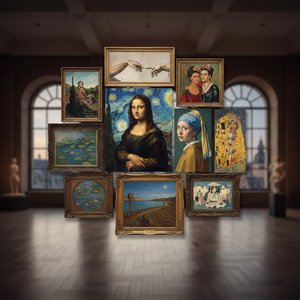
Oil on Canvas Masters: 10 Paintings That Redefined Art History |
Journey through art history with our guide to 10 legendary oil on canvas masterpieces! Explore iconic works by Van Gogh, Monet & Rembrandt. Find museum-quality reproductions and elevate your home decor at . Discover all masterpieces online.

The Enduring Legacy of Oil on Canvas: Technique, History & Aesthetic Impact
Explore the rich history & techniques of oil painting – from Renaissance masters to Impressionism. Discover pigments, layering methods, and why this timeless medium endures. Expert insights for artists & art enthusiasts.


