Preview
 Send
Send Share
Share
 Details

 Download
 Similars
 X-Ray
X-Ray Diaporama
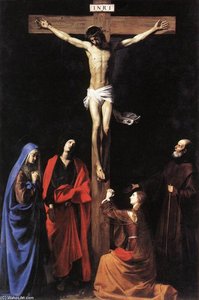
Crucifixion
 Oil On Canvas
- WallArt
- Baroque
 1635
1635 422.0 x 292.0 cm
 The Louvre
 Read More
Giclée / Art Print
Museum-quality giclée or canvas print with fast production and flexible finish options. ( Buy Hand Made Painting Buy Image)




P118B $10

P118H $10

P118W $10

P438Z $10

P508JH $12

P508YH $12

P805H $10

P805Z $10

P919BZ $10

P919G $10

P919XJ $10

P959ZH $10

P968JZ $12

W106C $8

W218G $10

W218JH $8

W218Y $10

W307PJ $10

W316G $10

W316PJ $8

W316Y $10

W398PJ $8

W4111J $10

W500HY $15

W500JH $15

W692G $12

W849H $8

W940BG $15

W953PJ $8




Pick from our preset sizes that match the artwork's original proportions.

You may enter your own dimensions to fit a specific frame or space. If your selected size does not match the original image's proportions, we will either crop the artwork or extend the image with a mirrored or solid-fill edge. A digital mockup will be sent for your approval before production begins.
Please note that the on-screen preview does not reflect the actual cropping or extension. Only the mockup will accurately show the final composition.
While custom sizes are available, we recommend selecting a dimension from the predefined list to preserve the original proportions.
Worldwide Delivery () in 2 weeks instead of standard 4/5 weeks. (12 August)

Free Worldwide Express Shipping

High-Quality Linen Canvas

Full Shipping Insurance

Customs Tax Refund Guarantee

True Color Matching Guarantee

60-Day Return Policy (Defects Only)

100% Money-Back Guarantee

Bulk Discount Offer
 Glass option is only available in size under 110 CM

Crucifixion
Giclée / Art Print
Reproduction Size
-


Total Price
$ 81
Collectible Description
Nicolas Tournier’s “Crucifixion” – A Baroque Masterpiece of Suffering and Grace
The year is 1635. Nestled within the hallowed halls of the Louvre Museum in Paris resides a painting that transcends mere representation, plunging the viewer into the heart of human sorrow and spiritual contemplation: Nicolas Tournier’s “Crucifixion.” More than just a depiction of Christ's final hours, this work is a testament to Tournier’s mastery of Baroque style, his profound understanding of light and shadow, and his ability to imbue religious subject matter with an intensely emotional resonance. It’s a scene both brutal in its realism and profoundly moving in its portrayal of sacrifice and redemption.
Tournier, a French painter born in Montbéliard and deeply influenced by the Caravaggio he encountered during his time in Rome, presents us with a strikingly direct and unflinching image. The composition is immediately arresting – a vertical emphasis drawing our gaze directly to the central figure of Christ on the cross. He’s not idealized or romanticized; instead, Tournier renders him with a palpable sense of agony, his body contorted under the weight of the ordeal. The stark contrast between the dark, almost oppressive background and the illuminated foreground creates an immediate dramatic effect, forcing the viewer to confront the gravity of the event.
A Symphony of Light and Shadow – Technique and Style
Tournier’s technical skill is immediately evident in his masterful manipulation of light. He employs a technique known as “chiaroscuro,” dramatically contrasting areas of intense brightness with deep shadows, a hallmark of Caravaggio's style. This isn’t merely an aesthetic choice; it serves to heighten the emotional impact of the scene, emphasizing Christ’s suffering and drawing attention to key details – the wounds on his body, the texture of his clothing, and the rough-hewn wood of the cross itself. The brushstrokes are visible yet controlled, contributing to a sense of immediacy and realism.
The painting is executed in oil on canvas, utilizing layering and glazing techniques to build up depth and luminosity. Notice how Tournier subtly renders the folds of Christ’s garments, creating a tactile quality that invites us to almost feel the weight of his burden. The figures surrounding him – including the Virgin Mary, St. John, and other mourners – are depicted with varying degrees of detail, reflecting their importance within the narrative. The overall effect is one of intense realism blended seamlessly with a heightened sense of drama and spiritual significance.
Symbolism and Historical Context
“Crucifixion” is rich in symbolic meaning. The cross itself represents sacrifice, redemption, and the promise of salvation – central tenets of Christian theology. The figures gathered around the scene—the Virgin Mary, grieving with profound sorrow; St. John, offering comfort; and other mourners—represent the human response to Christ’s death: grief, compassion, and faith. The inclusion of these figures underscores the universal nature of suffering and the hope offered through Christian belief.
Painted in 1635 during a period of intense religious fervor within Europe, “Crucifixion” reflects the Counter-Reformation’s emphasis on emotional engagement with religious art. The Catholic Church actively sought to inspire piety and devotion through works that powerfully conveyed the drama and significance of biblical narratives. Tournier's painting perfectly embodies this goal, inviting viewers to contemplate the profound implications of Christ’s sacrifice and to connect with the spiritual message at its core.
A Timeless Masterpiece – Emotional Resonance
Despite being over three centuries old, “Crucifixion” continues to resonate deeply with audiences today. It's not a comfortable painting; it confronts us with the harsh realities of suffering and death. Yet, within that darkness lies an undeniable sense of hope and grace. Tournier’s masterful use of light, shadow, and composition creates a powerfully moving experience, prompting reflection on themes of faith, sacrifice, and redemption. It remains a poignant reminder of humanity's capacity for both cruelty and compassion, and the enduring power of spiritual belief.
Artist Biography
The Shadow and the Light: The Baroque Vision of Nicolas Tournier
In the dramatic landscape of the seventeenth century, few artists captured the profound tension between divine light and earthly shadow as effectively as Nicolas Tournier. Born in Montbéliard, France, around 1590, Tournier emerged during a transformative era when the artistic pulse of Europe was shifting toward the intense emotionalism of the Baroque. His work serves as a poignant bridge between the classical traditions of his French heritage and the revolutionary, high-contrast realism that was sweeping across the continent. To look upon a Tournier canvas is to enter a world where every brushstroke is heavy with the weight of spiritual significance and every shadow holds a secret waiting to be revealed.
The stylistic heartbeat of Tournier’s oeuvre is undeniably linked to the profound influence of Caravaggio. This Italian master’s technique of tenebrism—the use of extreme contrasts between light and dark to achieve a sense of drama and volume—became the cornerstone of Tournier's visual language. Through this lens, the artist did not merely paint scenes; he sculpted them out of darkness. His mastery of light allowed him to illuminate the textures of fabric, the weary lines of a saint’s face, and the visceral reality of religious martyrdom, pulling the viewer into an intimate, almost tactile encounter with the sacred.
A Devotion to the Divine and the Human
Tournier’s subject matter was deeply rooted in the religious fervor of his time. As a painter operating within the French Baroque tradition, he found his greatest inspiration in the profound narratives of Christian iconography. His compositions often centered on themes of sacrifice, penance, and divine intervention, most notably seen in masterpieces such as 'The Carrying of the Cross'. In these works, the artist avoids mere ornamentation, opting instead for a gritty, grounded realism that emphasizes the human suffering inherent in the divine struggle.
What distinguishes Tournier from his contemporaries was his ability to blend this intense religious gravity with a sophisticated sense of composition derived from the Roman School. His development as an artist saw him moving beyond simple imitation of Italian masters to create a uniquely French interpretation of Baroque drama. This evolution is characterized by:
- Emotional Resonance: A focus on the psychological depth of his figures, making the divine feel accessible and human.
- Chiaroscuro Mastery: The use of light not just as a tool for visibility, but as a narrative device to guide the eye toward moments of spiritual climax.
- Textural Realism: An incredible attention to detail in the rendering of skin, cloth, and stone, which lends an air of authenticity to his religious scenes.
Legacy and Historical Significance
The historical significance of Nicolas Tournier lies in his role as a vital contributor to the French Baroque movement. While often overshadowed by the later, more decorative flourishes of the Grand Siècle, Tournier provided a necessary foundation of realism and intensity. He helped cultivate an aesthetic that valued the raw, unvarnished truth of the human condition, paving the way for future generations of French painters to explore the complexities of light and shadow.
Today, his works remain essential studies for anyone seeking to understand the transition from the late Renaissance to the height of the Baroque. His ability to evoke piety through the medium of darkness ensures that his name remains etched in the annals of art history—not merely as a follower of Caravaggio, but as a master who harnessed the shadows to illuminate the very soul of his era.

nicolas tournier
1590 - 1639 , France
Quick Facts
- Artistic Movement Or Style: Mannerism, Portraiture
- Artists Or Movements Influenced By This Artist:
- Caravaggio
- Mannerism
- Artists Who Influenced This Artist:
- Andrea Mantegna
- Leonardo da Vinci
- Date Of Birth: 5 April 1527
- Date Of Death: 11 July 1593
- Full Name: Giuseppe Arcimboldo
- Nationality: Italian
- Notable Artworks:
- The Four Seasons
- Akbar's Triumphal Entry
- Bacchus
- Judith with Holophernes
- Place Of Birth: Milan, Italy
Related Articles

The Enduring Legacy of Oil on Canvas: Technique, History & Aesthetic Impact
Explore the rich history & techniques of oil painting – from Renaissance masters to Impressionism. Discover pigments, layering methods, and why this timeless medium endures. Expert insights for artists & art enthusiasts.

Oil on Canvas: A Historical & Technical Exploration of a Timeless Artistic Medium
Explore the rich history & enduring techniques of oil painting on canvas. Discover the science behind its longevity, conservation practices, and contemporary relevance. Expert insights for art enthusiasts.

The Enduring Power of Painting: A Historical & Contemporary Exploration of Form and Emotion
Explore the rich history & enduring techniques of oil painting with OriginalUniqueArt. Discover masterpieces, learn about art collecting, and find authentic handmade reproductions crafted by skilled artists.

The Enduring Legacy of Oil on Canvas: Technique, History & Contemporary Practice
Explore the rich history & enduring techniques of oil painting on canvas. Discover the science behind its longevity, conservation practices, and contemporary relevance. Expert insights for art enthusiasts.
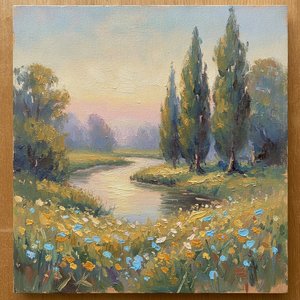
The Timeless Charm of Oil on Board: Reimagining Texture and Light through the Impressionist Lens
Discover the profound intimacy of oil on panel. Explore how Impressionist masters used rigid supports to capture light, texture, and impasto depth through exquisite, handmade oil reproductions for discerning collectors.