
 Preview
 Send
Send Share
Share
 Details
 Guide
Guide

 Download
 Similars
 X-Ray
X-Ray Diaporama
 Q&A
Q&A Stats
StatsTorn Out in the Spring. Triptych part 2


 Read More
The artwork displayed on this page is protected by copyright law, which means we cannot legally create or sell an identical reproduction. This protection is enforced under international agreements such as the Berne Convention and by national laws, including those outlined by the U.S. Copyright Law - Title 17.
This method fully complies with copyright regulations because it does not involve copying or duplicating the protected artwork. Instead, it is a creative reinterpretation - a new painting that is influenced by the original but not identical to it.
Giclée / Art Print
Museum-quality giclée or canvas print with fast production and flexible finish options. ( Buy Hand Made Painting Switch to Digital Image)




P118B $10

P118H $10

P118W $10

P438Z $10

P508JH $12

P508YH $12

P805H $10

P805Z $10

P919BZ $10

P919G $10

P919XJ $10

P959ZH $10

P968JZ $12

W106C $8

W218G $10

W218JH $8

W218Y $10

W307PJ $10

W316G $10

W316PJ $8

W316Y $10

W398PJ $8

W4111J $10

W500HY $15

W500JH $15

W692G $12

W849H $8

W940BG $15

W953PJ $8




Pick from our preset sizes that match the artwork's original proportions.

Type the width and the height you need, to fit your frame or your wall. A print can only be cut, never made bigger than the picture, so a size with a different shape loses a part of the image. We send you a digital mockup to approve before we print anything. The picture shown on this page does not show the real cut — only the mockup does.
Worldwide Delivery () in 2 weeks instead of standard 4/5 weeks. (11 November)

Free Worldwide Express Shipping

High-Quality Linen Canvas

Full Shipping Insurance

Customs Tax Refund Guarantee

True Color Matching Guarantee

100-Day Return Policy (Defects Only)

100% Money-Back Guarantee

Bulk Discount Offer
 Glass option is only available in size under 110 CM

Torn Out in the Spring. Triptych part 2
Giclée / Art Print
Reproduction Size
-


Total Price
$ 81
A Fragmented Spring – Unveiling Mikhail Ardashnikov’s “Torn Out in the Spring”
Mikhail Ardashnikov's "Torn Out in the Spring," part of a larger triptych, is not merely a cityscape; it’s an immersive journey into the layered narratives of memory, myth, and the enduring pulse of Russian cultural heritage. Created in 2019, this work immediately draws the eye with its vibrant palette and dynamic composition, yet it's the subtle complexities beneath the surface that truly captivate. Ardashnikov, a St. Petersburg-based artist deeply rooted in historical research and a fascination with archetypal symbols, has crafted a scene brimming with both recognizable urban life and potent, almost dreamlike imagery.
The painting depicts a bustling city street, rendered with a confident, slightly abstracted style reminiscent of early 20th-century Russian realist painters. Buildings rise in the background, their forms echoing architectural traditions while simultaneously possessing an otherworldly quality. A prominent clock tower dominates the scene, its hands frozen at a specific moment – perhaps signifying a suspended time, a captured memory. Scattered throughout are details that hint at a deeper symbolic resonance: birds soaring above, dogs patrolling the streets, and figures engaged in everyday activities. These elements aren’t simply decorative; they contribute to a complex tapestry of meaning.
The Language of Symbolism – Myth and Memory
Ardashnikov's work is profoundly influenced by Russian folklore and historical narratives. The triptych as a whole, and “Torn Out in the Spring” specifically, can be interpreted through the lens of the *Skazka* tradition—Russian fairy tales that often blend reality with magic and symbolism. The presence of birds, frequently associated with freedom and spiritual insight in Russian art, suggests a yearning for transcendence within the confines of urban life. Similarly, the dogs, traditionally guardians and symbols of loyalty, might represent the enduring connection to ancestral roots amidst the rapid changes of modernity.
The title itself, “Torn Out in the Spring,” evokes a sense of disruption and revelation. Spring is a time of rebirth and renewal, but "torn out" implies something lost or fragmented—a memory unearthed, a truth exposed. This duality reflects Ardashnikov’s broader exploration of how personal experience intersects with collective history. The painting feels like a visual excavation, as if the artist is carefully piecing together fragments of the past to reveal a hidden narrative.
Technique and Material – A Layered Approach
Ardashnikov employs a mixed technique, combining elements of oil paint with other materials on paper. This layering creates a rich textural surface, inviting close inspection. The brushstrokes are visible, lending a sense of immediacy and spontaneity to the work while simultaneously contributing to its overall depth. The use of color is particularly striking – bold blues and greens contrast with warmer earth tones, creating a dynamic visual tension. It’s clear that Ardashnikov isn't simply replicating reality; he’s actively shaping it through his artistic choices.
Emotional Resonance – A Window into the Soul
"Torn Out in the Spring" is more than just a depiction of a city street; it’s an invitation to contemplate the nature of time, memory, and identity. The painting possesses a quiet intensity, drawing the viewer into its world with a subtle yet powerful emotional pull. There's a sense of melancholy interwoven with hope, suggesting that even in the midst of urban chaos, there remains a connection to something deeper—to our past, our heritage, and our own inner landscapes. Reproductions of this piece offer a remarkable opportunity to bring this evocative atmosphere into any space, serving as both a conversation starter and a source of contemplative beauty.
Questions & Answers
How does the style of "Torn Out in the Spring. Triptych part 2" relate to its creator's era?
"Torn Out in the Spring. Triptych part 2" belongs to the Contemporary Symbolism movement, and its creator worked in the Contemporary era.
Who is the author of "Torn Out in the Spring. Triptych part 2", and in which movement?
Behind "Torn Out in the Spring. Triptych part 2" stand Mikhail Ardashnikov and the Contemporary Symbolism movement.
At what age did Mikhail Ardashnikov make "Torn Out in the Spring. Triptych part 2"?
Mikhail Ardashnikov made "Torn Out in the Spring. Triptych part 2" at the age of 56. The artist was born in 1963 and the work is dated 2019.
Artist Biography
The Tapestry of Memory and Myth
Mikhail Ardashnikov is a St. Petersburg-based artist whose work serves as a profound meditation on the interconnectedness of existence, weaving together the threads of historical research with a fascination for archetypal symbols. His creative journey is deeply rooted in a rich literary upbringing; by the age of eleven, he had already traversed much of the classical Russian literary canon, finding particular resonance in the works of Chekhov and Esenin. This early immersion in storytelling, supplemented by summers spent lost in the fantastical worlds of Tolkien and Astrid Lindgren, laid the foundation for an artistic vision that seeks to explore the architecture of dreams and the various modes of human perception.
Ardashnikov’s practice is characterized by a meticulous and labor-intensive approach, where each canvas becomes a complex landscape of meaning. His technique often employs a bold, textural method, utilizing thick impasto brushstrokes that grant a physical presence to his subjects. By skillfully blending acrylic paints with mixed media elements—including what appear to be pigment powders—he achieves an otherworldly luminescence that breathes life into his compositions. This layering of color and texture allows him to create depth and dynamism, mirroring the explosive energy found in his most celebrated themes.
Symbolism and the Cosmic Vision
The essence of Ardashnikov’s oeuvre lies in its ability to translate abstract spiritual concepts into visceral visual experiences. In works such as “Explosion of Cultural Vibrations,” he utilizes a vibrant palette of yellows and oranges to depict a central, piercing eye within a colossal circle. This motif acts as a window into ancient cosmological beliefs, where the sun represents consciousness and divine presence. Through the use of circular forms, he invokes themes of wholeness, eternity, and the cyclical nature of time, inviting viewers to contemplate their own inner landscapes alongside a vast, cosmic vision.
Beyond the celestial, his work often engages with the tangible yet mythologized aspects of Russian heritage. In pieces like “Torn Out in the Spring,” part of a larger triptych, he presents a fragmented cityscape that functions as an immersive journey through memory and myth. His paintings can be interpreted through the lens of the Skazka tradition—the Russian fairy tale—where reality and magic are inextricably linked. Within these urban scenes, everyday elements such as birds and dogs are elevated to symbolic status, representing spiritual insight and loyalty, respectively, creating a complex tapestry that resonates with both historical narrative and dreamlike imagery.
Recognition and Artistic Legacy
Though Ardashnikov’s process is demanding and results in a relatively infrequent output of new works, the impact of his creations has been significant within the art community. His ability to capture the profound complexities of the subconscious has garnered admiration from critics and collectors alike. A notable milestone in his international recognition occurred in 2020, when the globally renowned artist KAWS acquired one of his works during a digital exhibition for Art Brut Global.
Ardashnikov’s contribution to contemporary art is defined by his unique ability to bridge the gap between the historical and the surreal. His work stands as a testament to the power of symbolism to communicate universal truths, navigating the delicate boundary between the documented past and the infinite possibilities of the human imagination.

Mikhail Ardashnikov
1963 - , Russia
Quick Facts
- Artistic Movement Or Style: Surrealism and archetypal symbolism
- Full Name: Mikhail Ardashnikov
- Nationality: Russian
- Notable Artworks:
- Explosion of Cultural Vibrations
- Torn Out in the Spring
- Place Of Birth: Moscow, Russia
- Date Of Birth: 1963
Related Articles
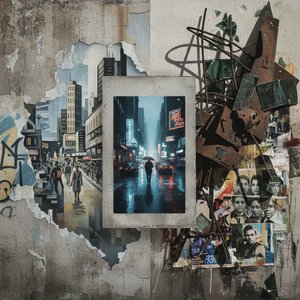
Concrete Visions: Exploring Representations of Urban Life in Modern & Contemporary Art
Explore the evolution of cityscape painting from Realism to contemporary art. Discover key artists & invest in timeless urban visions with OriginalUniqueArt's expert guidance and museum-quality reproductions.

Unmasking Chaos: The 25 Most Powerful Masterpieces by Francis Bacon
Explore 25 iconic Francis Bacon masterpieces. Uncover the raw emotion behind his most famous works. Discover all masterpieces on OriginalUniqueArt.com.
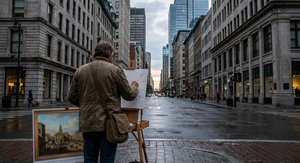
Urban Visions: A Historical & Artistic Exploration of the Cityscape in Painting
Explore the evolution of cityscape painting from historical maps to Impressionist masterpieces. Discover artists like Caillebotte & Utrillo. Find museum-quality reproductions at OriginalUniqueArt.

Concrete Visions: Exploring the Urban Landscape in Painting – From Realism to Contemporary Art
Explore the evolution of cityscape painting from Realism to contemporary art with OriginalUniqueArt. Discover key artists & invest in timeless urban visions. Expert guidance, museum-quality reproductions.
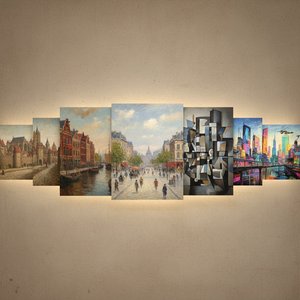
Urban Visions: A Historical & Artistic Exploration of the Cityscape in Painting
Explore the evolution of cityscape painting from historical maps to Impressionist masterpieces. Discover artists like Caillebotte, Utrillo & Matsumoto Shunsuke. Find museum-quality reproductions at OriginalUniqueArt.

