Preview
 Send
Send Share
Share
 Details
 Guide
Guide

 Download
 Similars
 X-Ray
X-Ray Diaporama
 Q&A
Q&A Stats
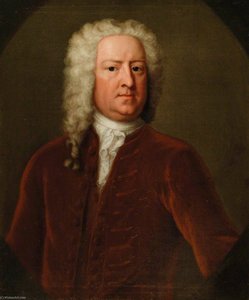
StatsGeneral Philip Honywood ( )

- 74.0 x 60.0 cm


 Read More
Giclée / Art Print
Museum-quality giclée or canvas print with fast production and flexible finish options. ( Buy Hand Made Painting Switch to Digital Image)




P118B $10

P118H $10

P118W $10

P438Z $10

P508JH $12

P508YH $12

P805H $10

P805Z $10

P919BZ $10

P919G $10

P919XJ $10

P959ZH $10

P968JZ $12

W106C $8

W218G $10

W218JH $8

W218Y $10

W307PJ $10

W316G $10

W316PJ $8

W316Y $10

W398PJ $8

W4111J $10

W500HY $15

W500JH $15

W692G $12

W849H $8

W940BG $15

W953PJ $8




Pick from our preset sizes that match the artwork's original proportions.

Type the width and the height you need, to fit your frame or your wall. A print can only be cut, never made bigger than the picture, so a size with a different shape loses a part of the image. We send you a digital mockup to approve before we print anything. The picture shown on this page does not show the real cut — only the mockup does.
Worldwide Delivery () in 2 weeks instead of standard 4/5 weeks. (4 November)

Free Worldwide Express Shipping

High-Quality Linen Canvas

Full Shipping Insurance

Customs Tax Refund Guarantee

True Color Matching Guarantee

100-Day Return Policy (Defects Only)

100% Money-Back Guarantee

Bulk Discount Offer
 Glass option is only available in size under 110 CM

General Philip Honywood ( )
Giclée / Art Print
Reproduction Size
-


Total Price
$ 81
General Philip Honywood ( ) – A Portrait of Power and Grace
Michael Dahl’s “General Philip Honywood” stands as a testament to the grandeur of 18th-century English portraiture, capturing not merely likeness but also embodying the spirit of aristocratic authority. Painted circa 1700, this artwork exemplifies Baroque aesthetics—characterized by dramatic lighting, opulent drapery, and meticulous detail—reflecting the artistic sensibilities prevalent during Dahl’s prolific period. The painting's commission underscores Honywood’s prominent position within the British Army and signifies a desire to commemorate his distinguished service.Subject Matter and Composition
The portrait depicts General Philip Honywood in a commanding pose, seated confidently amidst richly embroidered robes. His gaze directs outwards, conveying assurance and self-assurance—traits considered essential for portraying individuals of high status. The inclusion of a sword prominently displayed symbolizes military prowess and reinforces Honywood’s role as a warrior leader. Dahl skillfully utilizes pyramidal composition to create stability and balance, drawing the viewer's eye upwards towards Honywood’s face and highlighting his regal bearing.Technique and Artistic Style
Dahl’s masterful technique—primarily oil on canvas—allowed for exceptional tonal range and textural richness. He employed chiaroscuro – dramatic contrasts between light and dark – to sculpt Honywood's form, emphasizing musculature and creating a sense of depth. The artist meticulously rendered fabrics with painstaking accuracy, capturing the subtle sheen and folds of drapery using glazing techniques. Dahl’s attention to detail extends beyond mere representation; he strives to convey an inner psychological state—confidence and dignity—through nuanced facial expressions and posture.Historical Context and Symbolism
“General Philip Honywood” was created during a period marked by significant political upheaval in England, as the Stuart monarchy faced challenges from parliamentary forces. Portraits like this served as visual declarations of power and prestige, reinforcing social hierarchies and commemorating achievements within the military realm. The red bow tie—a fashionable accessory at the time—adds a touch of elegance to Honywood’s attire and subtly symbolizes nobility and distinction. Dahl's work reflects the broader artistic trends of the Baroque era, which sought to inspire awe and convey grandeur through elaborate visual narratives.Emotional Impact and Legacy
More than just a depiction of an individual, “General Philip Honywood” embodies the ideals of aristocratic virtue—strength, honor, and responsibility. Dahl’s ability to capture Honywood's inner character elevates the portrait beyond mere likeness, transforming it into a symbol of leadership and accomplishment. Today, reproductions of this masterpiece continue to captivate audiences with their timeless beauty and masterful execution, serving as enduring reminders of the artistic achievements of Michael Dahl and the splendor of 18th-century England.Questions & Answers
Can I order an oil reproduction of "General Philip Honywood ( )"?
You can order a hand-painted reproduction of "General Philip Honywood ( )" by Michael Dahl directly on its Hand-Painted Reproduction page: a hand-painted oil reproduction on linen canvas, made to order.
What does "General Philip Honywood ( )" share with the rest of Michael Dahl's output?
"General Philip Honywood ( )" shares with Michael Dahl's other works its Baroque style and the recorded themes: italian baroque, aristocratic dignity, royal portraiture, religious symbolism, dahl’s legacy.
Are the colors of "General Philip Honywood ( )" by Michael Dahl saturated or muted?
"General Philip Honywood ( )" by Michael Dahl is recorded with a muted saturation.
Artist Biography
A Life Bridging Worlds: The Artistic Journey of Michael Dahl
Michael Dahl, a name resonating with the elegance and refinement of 18th-century portraiture, was a Swedish artist who indelibly marked his presence on the English art scene. Born in Stockholm around 1659 – sources vary slightly between 1658 and 1659 – Dahl’s trajectory wasn't one confined by national borders but rather defined by an ambitious pursuit of artistic mastery that led him across Europe and ultimately established him as a leading portraitist in England. His story is one of familial sacrifice, rigorous training, religious conversion born of opportunity, and the skillful navigation of diverse cultural landscapes. The dedication of his mother, Catarina Dahl, to nurturing his talent laid the foundation for a career that would see him paint royalty, nobility, and leave behind a legacy of exquisite paintings celebrated for their aristocratic grace.From Swedish Foundations to Italian Influences
Dahl’s artistic education began in Sweden under Martin Hannibal in 1674, who had been brought from Italy by David Klöcker Ehrenstrahl to establish a portrait academy. This initial training provided him with foundational skills before he transitioned to study directly with Ehrenstrahl himself, indicating his promise as a student. However, Dahl’s ambition extended beyond the Swedish capital. In 1682, he embarked on an extensive educational journey across Europe, armed with a passport that allowed travel and a thirst for artistic knowledge. His arrival in London proved pivotal; he came under the tutelage of Robert White, a skilled engraver and painter, assisting him with engraving projects – including a portrait of King Charles XI of Sweden. This experience was crucial, providing practical skills and an introduction to the English art world. Yet, it was his encounter with Godfrey Kneller that truly shaped his understanding of the market. Kneller imparted not only technical expertise but also the pragmatism required to cater to public demand – a stark contrast to Ehrenstrahl’s more court-focused approach. Dahl's travels continued to Paris and then Rome, where a significant turning point occurred.Rome, Conversion, and Patronage
The exiled Queen Christina of Sweden played a transformative role in Dahl’s career during his time in Rome. Recognizing the importance of access to influential circles and papal patronage, Dahl converted to Roman Catholicism at her urging. This decision opened doors that would otherwise have remained closed, allowing him to paint portraits of the Queen herself and present his work to Pope Innocent XI, who bestowed upon him a gold medal – a testament to his burgeoning talent. The conversion, while perhaps strategically motivated, underscores Dahl’s willingness to adapt and navigate complex social and religious landscapes in pursuit of artistic advancement. It was in Rome that he honed his skills further, absorbing the Baroque aesthetic that would become characteristic of his mature work.A Master of English Portraiture
Upon returning to England, Michael Dahl swiftly established himself as a highly sought-after portraitist. He became renowned for his elegant and refined style, capturing not merely the likeness but also the status and personality of his aristocratic sitters. His portraits are distinguished by rich colors, meticulous attention to detail in textures, and an overall sense of grandeur. He painted numerous prominent figures, including Queen Anne, Prince George of Denmark, and a constellation of members from the English nobility. Notable works include striking portraits of Sir William Carew, John Churchill (1st Duke of Marlborough), and Sir Robert Walpole. Perhaps one of his most impressive achievements is the triple portrait of the 2nd Earl of Burlington, the 1st Duke of Kingston upon Hull, and the 3rd Baron Berkeley of Stratton – a masterful display of his skill in group portraiture, showcasing his ability to balance individual characterization with compositional harmony.Legacy and Historical Significance
Dahl’s artistic style was a compelling synthesis of Swedish, Italian, and English influences. He absorbed the technical foundations from Hannibal and Ehrenstrahl, learned market savvy from Kneller, and benefited immensely from the patronage system he encountered in Rome. His work embodies the Baroque aesthetic prevalent during his time but infused with a uniquely refined sensibility. He influenced subsequent generations of portrait painters with his elegant style and technical proficiency, leaving an enduring mark on English portraiture. Beyond his artistic contributions, Michael Dahl’s success as a Swedish artist flourishing primarily in England highlights the international nature of artistic exchange during the Baroque period. He skillfully navigated different cultural contexts, establishing himself as a leading portraitist whose legacy continues to be admired today. His portraits offer invaluable insights into the lives and appearances of the English aristocracy during the early 18th century, serving as both historical documents and enduring works of art.
Michael Dahl
1658 - 1743 , Sweden
Quick Facts
- Full Name: Michael Dahl
- Nationality: Swedish
- Date Of Birth: 1658
- Date Of Death: 1743
- Place Of Birth: Stockholm, Sweden
- Notable Artworks:
- Portrait of Queen Anne
- Sir William Carew
- John Churchill portrait
- Artistic Movement Or Style: Baroque
- Artists Who Influenced This Artist:
- Martin Hannibal
- David Ehrenstrahl
- Godfrey Kneller
- Artists Or Movements Influenced By This Artist: 18th-century portraiture
Related Articles

Baroque Classicism: The Grandeur of Order and Drama in 17th-Century Art History
Explore the profound elegance of Baroque Classicism. Discover how 17th-century masters synthesized dramatic emotion with classical order through the lens of the Counter-Reformation and the works of legends like Carlo Maratta and Andrea Sacchi.

The Visceral Stage: Exploring Dramatic Narratives & Emotional Intensity in Baroque Art
Explore the dramatic world of Baroque art! Discover iconic masters like Caravaggio & Rembrandt, their techniques, and the movement's lasting impact. Expert insights for collectors & enthusiasts at OriginalUniqueArt.

Baroque Drama: Bringing Opulence & Emotion into Contemporary Interiors
Explore the opulent world of Baroque interior design! Discover key elements, modern applications & how to bring dramatic elegance into your home with OriginalUniqueArt.com's authentic reproductions.

Baroque Masterpieces: 10 Paintings That Defined an Era |
Journey through the drama & grandeur of Baroque art! Explore 10 masterpieces by Caravaggio, Rembrandt, Rubens & more. Discover stunning oil paintings, rich colors & timeless stories. Find museum-quality reproductions at .

The Dramatic Flourish: Exploring the Baroque Movement's Enduring Legacy in Art History
Explore the dramatic world of Baroque art! Discover iconic artists like Caravaggio & Rubens, defining techniques, and its lasting impact on art history. Expert insights for collectors & enthusiasts at OriginalUniqueArt.