Preview
 Send
Send Share
Share
 Details
 Guide
Guide

 Download
 Similars
 X-Ray
X-Ray Diaporama
 Stats
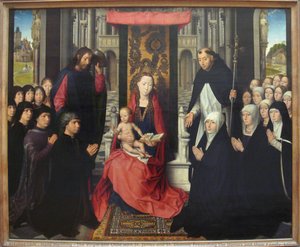
StatsThe Donne Triptych, center panel


 Read More
The artwork displayed on this page is protected by copyright law, which means we cannot legally create or sell an identical reproduction. This protection is enforced under international agreements such as the Berne Convention and by national laws, including those outlined by the U.S. Copyright Law - Title 17.
This method fully complies with copyright regulations because it does not involve copying or duplicating the protected artwork. Instead, it is a creative reinterpretation - a new painting that is influenced by the original but not identical to it.
Giclée / Art Print
Museum-quality giclée or canvas print with fast production and flexible finish options. ( Buy Hand Made Painting Switch to Digital Image)




P118B $10

P118H $10

P118W $10

P438Z $10

P508JH $12

P508YH $12

P805H $10

P805Z $10

P919BZ $10

P919G $10

P919XJ $10

P959ZH $10

P968JZ $12

W106C $8

W218G $10

W218JH $8

W218Y $10

W307PJ $10

W316G $10

W316PJ $8

W316Y $10

W398PJ $8

W4111J $10

W500HY $15

W500JH $15

W692G $12

W849H $8

W940BG $15

W953PJ $8




Pick from our preset sizes that match the artwork's original proportions.

Type the width and the height you need, to fit your frame or your wall. A print can only be cut, never made bigger than the picture, so a size with a different shape loses a part of the image. We send you a digital mockup to approve before we print anything. The picture shown on this page does not show the real cut — only the mockup does.
Worldwide Delivery () in 2 weeks instead of standard 4/5 weeks. (23 October)

Free Worldwide Express Shipping

High-Quality Linen Canvas

Full Shipping Insurance

Customs Tax Refund Guarantee

True Color Matching Guarantee

100-Day Return Policy (Defects Only)

100% Money-Back Guarantee

Bulk Discount Offer
 Glass option is only available in size under 110 CM

The Donne Triptych, center panel
Giclée / Art Print
Reproduction Size
-


Total Price
$ 81
A Window into Fifteenth-Century Devotion: Hans Memling’s *The Donne Triptych* (Center Panel)
Hans Memling's center panel of The Donne Triptych is not merely a painting; it’s a meticulously crafted portal into the spiritual and social world of fifteenth-century Bruges. Completed around 1478, this exquisite work offers an intimate glimpse into the piety and aspirations of Sir John Donne, a courtier in the service of Edward IV of England, and his family. The scene unfolds with a quiet reverence, depicting Donne kneeling in humble adoration before the Virgin Mary and the Christ Child, accompanied by his wife Elizabeth Hastings and their daughter. The composition isn’t grand or theatrical; instead, it possesses an understated elegance that draws the viewer into a moment of deeply personal devotion.
Flemish Precision and Symbolic Richness
Memling, having honed his skills under Rogier van der Weyden, masterfully blends realism with spiritual depth. The figures are rendered with astonishing detail – observe the delicate folds of their garments, the subtle blush on Lady Donne’s cheeks, and the individualized features that hint at personality. This meticulous attention to detail is characteristic of Early Netherlandish painting, a style renowned for its precise observation of the natural world and its symbolic language. Saints Catherine and Barbara flank the family, acting as intercessors and adding layers of meaning. Saint Catherine, with her wheel, represents intellectual pursuits and martyrdom, while Saint Barbara, often depicted with a tower, symbolizes protection and divine wisdom. The inclusion of these saints wasn’t arbitrary; they were likely chosen for their personal significance to Sir John Donne or his family.
A Reflection of Status and Faith
Beyond its religious subject matter, The Donne Triptych also functions as a subtle display of status and allegiance. Both Sir John and Lady Donne wear the livery collars of Edward IV, adorned with suns and roses – emblems of the House of York. This detail isn’t simply decorative; it's a clear statement of their political loyalty during a period of intense conflict in England known as the Wars of the Roses. The painting, therefore, becomes a visual testament to their position within the royal court and their commitment to the reigning dynasty. The clock suspended above the scene is also noteworthy, perhaps symbolizing the passage of time and the importance of seizing every moment for spiritual contemplation. Even the book held by one of the figures hints at learning and intellectual pursuits.
Emotional Resonance and Lasting Appeal
What truly sets this work apart is its emotional resonance. Memling doesn’t overwhelm us with dramatic gestures or exaggerated expressions; instead, he conveys a sense of quiet contemplation and sincere faith. The gazes of the figures are directed towards the Virgin and Child, creating a palpable connection between the earthly realm and the divine. The soft lighting and harmonious color palette further enhance this atmosphere of serenity and reverence. For those seeking to bring a touch of timeless beauty and spiritual depth into their homes, a reproduction of The Donne Triptych offers more than just aesthetic appeal; it provides a window into a bygone era, inviting contemplation and inspiring a sense of peace.
Questions & Answers
What is the recommended print size for "The Donne Triptych, center panel" by Memling, Hans?
A large reproduction is suggested for "The Donne Triptych, center panel" by Memling, Hans. Size can be adjusted while keeping the proportions.
How many people view "The Donne Triptych, center panel"?
A Stats page exists for "The Donne Triptych, center panel". It charts the monthly visits of the artwork and of the artist's other works, with country and language breakdowns.
Is "The Donne Triptych, center panel" by Memling, Hans a bright or a dark artwork?
The perceived brightness of "The Donne Triptych, center panel" by Memling, Hans is shadow. It can be matched to the light of the intended space.
Artist Biography
Hans Memling: The Bruges Master of Detail and Patronage
Hans Memling (c. 1430 – August 11, 1494), born in Seligenstadt, Germany, stands as a pivotal figure in Early Netherlandish painting—a movement characterized by exquisite realism, meticulous observation of nature, and profound spiritual contemplation. Though his formative years were spent primarily within the Rhineland’s artistic milieu, Memling's trajectory ultimately led him to Bruges, Belgium, where he established himself as one of the foremost artists of his time and cultivated a prolific workshop that disseminated his distinctive style across Europe.- Early Life & Apprenticeship: Precise biographical details surrounding Memling’s birth remain elusive, yet scholarly consensus suggests he emerged from Mainz around 1430. His artistic education commenced under the tutelage of Rogier van der Weyden, a titan of Flemish painting whose mastery of oil paint and sculptural modeling profoundly shaped Memling's technique. This apprenticeship instilled in him an unwavering dedication to detail—a hallmark that would define his oeuvre.
- Bruges & The Workshop: By 1465, Memling secured citizenship in Bruges, a burgeoning commercial hub and artistic epicenter. Recognizing the potential for collaborative creativity, he founded a workshop staffed by numerous assistants, fostering an environment of innovation and stylistic consistency. This workshop became renowned for producing stunning reproductions of masterpieces—a testament to Memling’s skill as both artist and pedagogue.
A Style Defined by Precision & Patronage
Memling's artistic style is instantly recognizable: characterized by luminous color palettes, delicately rendered drapery folds, and an astonishing level of anatomical accuracy. He meticulously studied human anatomy—drawing inspiration from classical sculpture—to achieve unparalleled realism in his portraits and religious scenes alike. Unlike many contemporaries who favored expressive brushstrokes, Memling prioritized meticulous observation and painstaking execution, resulting in images imbued with serene beauty and profound spiritual depth.- Religious Commissions: Memling’s reputation soared thanks to lucrative commissions from wealthy patrons—primarily clergymen and aristocratic families—who sought depictions of saints and biblical narratives that resonated with piety and prestige. Notable examples include “The Last Judgment” at St John's Hospital in Bruges, a monumental fresco showcasing Memling’s masterful compositional skills and dramatic use of color.
- Portraiture: Memling excelled as a portraitist, capturing the likenesses of prominent figures with remarkable sensitivity and psychological insight. His portraits—such as “Portrait of a Man with an Arrow”—demonstrate his ability to convey character through subtle gestures and facial expressions—a skill that cemented his place among the greatest artists of his era.
Influence & Legacy
Memling’s artistic legacy extends far beyond his own lifetime. His workshop produced a vast array of paintings—many bearing stylistic similarities to his original works—that propagated Memling's distinctive aesthetic across Flanders and beyond. Furthermore, Memling’s meticulous technique served as an inspiration for subsequent generations of artists—particularly Quentin Massys, who established the Antwerp School—solidifying Memling’s position as a cornerstone of Flemish Renaissance art.Rediscovery & Enduring Popularity
Memling's artistic achievements were largely forgotten until the 19th century when scholars rediscovered his paintings and championed his genius. Today, Memling’s works—particularly “The Last Judgment”—continue to captivate audiences worldwide, serving as enduring symbols of artistic excellence and spiritual contemplation. His meticulous attention to detail and profound understanding of human psychology remain remarkably relevant in our contemporary appreciation of art history.
Memling, Hans
Germany
Quick Facts
- Artistic Movement Or Style: Early Netherlandish Painting
- Artists Or Movements Influenced By This Artist: ['Flemish Primitive']
- Artists Who Influenced This Artist: ['Rogier van der Weyden']
- Date Of Birth: c. 1430
- Date Of Death: 11 august 1494
- Full Name: Hans Memling
- Nationality: German-Flemish
- Notable Artworks:
- St Johns Hospital
- The Last Judgement
- Scenes from the Passion
- Place Of Birth: Seligenstadt, Germany
Related Articles
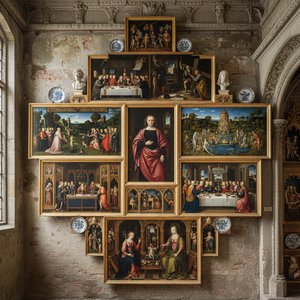
Early Netherlandish Masters: 10 Paintings That Revolutionized Art & Decor
Journey into the Early Netherlandish Renaissance! Explore 10 iconic paintings by Jan van Eyck, Rogier van der Weyden & more. Discover stunning detail, symbolism, and oil painting techniques. Find museum-quality art reproductions for your home at OriginalUniqueArt.com.
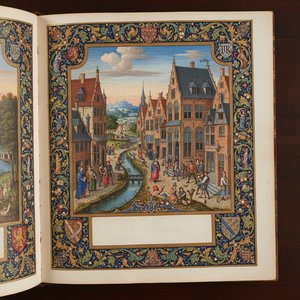
Illuminating Realism: Early Netherlandish Painting (15th-16th Centuries)
Explore the captivating world of Early Netherlandish painting! Discover Jan van Eyck, Hans Memling & more. Uncover symbolism, techniques & the legacy of these Flemish masters. A comprehensive guide for art enthusiasts.

Early Netherlandish Masters: 10 Paintings That Revolutionized Art & Decor
Journey into the world of Early Netherlandish painting! Explore 10 masterpieces by Jan van Eyck, Rogier van der Weyden & more. Discover stunning detail, symbolism & Renaissance art for your home decor. Find museum-quality reproductions on OriginalUniqueArt.com

Sacred Narratives on Canvas: Exploring Devotional Imagery Across Art History
Explore the rich history of devotional art! Discover iconic masterpieces, symbolism & techniques from antiquity to the Renaissance. Expert insights for collectors & enthusiasts at OriginalUniqueArt.

Illuminating Realism: Early Netherlandish Painting (15th-16th Centuries)
Explore the captivating world of Early Netherlandish painting (15th-16th centuries). Discover Jan van Eyck, Hans Memling & more. Uncover revolutionary techniques and hidden symbolism in this definitive guide.