Symbolism
Redemptive Death (Max Klinger)
Max Klinger (1857–1920) made Redemptive Death. It belongs to the Symbolism movement.

 Preview

 Hand Made Oil Painting
 Send
 Share
 Fact sheet


 Download
 Similars
 X-Ray
 Diaporama
 Q&A

 Stats
Redemptive Death, in brief
- Title
- Redemptive Death
- Artist
- Max Klinger (1857–1920)
- Artist born in
- Leipzig, Germany
- Movement
- Symbolism
- Subject
- grief and mourning, death & mortality, classical imagery, monochrome art, symbolic scene, renaissance influence
High-resolution images of Redemptive Death
Max Klinger, Redemptive Death. Public domain.
Questions on Redemptive Death, answered
What subjects appear in "Redemptive Death" by Max Klinger?
The subjects of "Redemptive Death" are grief and mourning, death & mortality, classical imagery, monochrome art, symbolic scene, renaissance influence, emotional depth.
Is "Redemptive Death" free of copyright?
"Redemptive Death" by Max Klinger is in the public domain - its copyright has expired. This status governs how the image of the work may be reproduced.
Who created "Redemptive Death"?
"Redemptive Death" was created by Max Klinger. The information on this page describes Max Klinger's original work.
What art movement does "Redemptive Death" by Max Klinger belong to?
"Redemptive Death" by Max Klinger belongs to the Symbolism movement. This movement provides the stylistic context of the work.
What stage of Max Klinger's development does "Redemptive Death" represent?
"Redemptive Death" belongs to the Mature Period of Max Klinger's career. This classification relates the work to the artist's development.
Is "Redemptive Death" by Max Klinger in the public domain, and why?
The copyright status of "Redemptive Death" - in the public domain - its copyright has expired - follows from the artist's death in 1920.
What does "Redemptive Death" share with the rest of Max Klinger's output?
Within Max Klinger's output, "Redemptive Death" sits in the Symbolism style, alongside the themes of renaissance & baroque echoes, classical grief narrative, symbolist psychological depth, german morality & loss, critique of bourgeois values, exploring human suffering, bridge to social commentary, key symbolist engraving".
How does the subject of "Redemptive Death" relate to Max Klinger's usual themes?
Max Klinger's recurring themes include renaissance & baroque echoes, classical grief narrative, symbolist psychological depth, german morality & loss, critique of bourgeois values, exploring human suffering, bridge to social commentary, key symbolist engraving"; "Redemptive Death" focuses on grief and mourning, death & mortality, classical imagery, monochrome art, symbolic scene, renaissance influence, emotional depth.
About the artist, Max Klinger

1857–1920, Germany
Max Klinger
The Shadowed World of Max Klinger: A Pioneer of Symbolism Max Klinger, born in Leipzig in 1857, emerged as a pivotal figure bridging the gap between Realism and the burgeoning world of Symbolism. His artistic journey wasn’t one of immediate recognition but rather a gradual unfolding of a unique vision—a descent into the psychological depths that would profoundly influence modern art. Klinger's early training at the Academy of Fine Arts in Karlsruhe, under Karl Gussow, provided him with a solid foundation in traditional techniques, yet it was his fascination with the etchings of artists like Menzel and Goya that truly ignited his imagination. These masters demonstrated the power of printmaking to convey not merely visual representation but also narrative complexity and emotional intensity—qualities Klinger would masterfully employ throughout his career.
Also by Max Klinger
 The death peeing
 The Isle of the Dead
 Presa
 Y sin embargo!
Essays around Redemptive Death
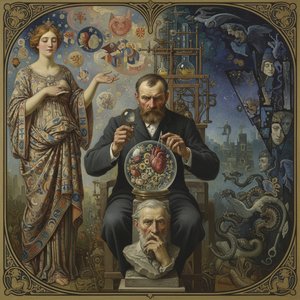 Max Klinger: Symbolism, Science & the Subconscious – A German Master's LegacyExplore the captivating world of Max Klinger, a pivotal German Symbolist artist. Discover his groundbreaking prints, psychological themes, …
 Beyond Reality: Exploring Symbolism's Influence on Modern Art & Psychological ExpressionExplore the captivating world of Symbolism! Discover key artists, psychological themes & its lasting impact on modern art. Expert insights …
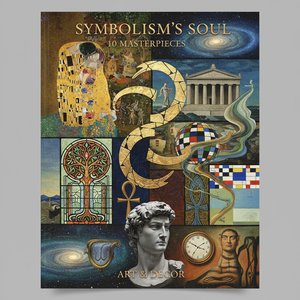 Symbolism's Soul: 10 Masterpieces That Transformed Art & DecorDelve into the dreamlike world of Symbolism with 10 iconic masterpieces by Moreau, Munch & Redon. Explore the movement’s emotional depth an…