
 Preview
 Send
Send Share
Share
 Details
 Guide
Guide

 Download
 Similars
 X-Ray
X-Ray Diaporama
 Q&A
Q&A Stats
Statsuntitled (2301)


 Read More
Get a print-ready file that goes far beyond the web preview. Every digital image we sell comes from a high-resolution master in our stock database — usually 5,000 to 15,000 pixels wide — so you can print large, crop tightly, or reproduce fine detail with confidence.
No file leaves our studio untouched. A digital expert checks the colors against the original painting and corrects them if needed, then improves clarity and detail with professional retouching tools — always staying faithful to the artist's brushwork and style. The result is an image that looks like the painting, not like a filtered scan.
You approve before you're done: our expert sends the image by e-mail within 72 hours for your review. Not satisfied? Ask for improvements or corrections, or request a refund if the quality falls short.
This is the quality relied on by publishers, design studios, galleries and print shops.
Digital Image
Download a high-resolution file for personal display, printing, and creative projects. ( Switch to Print Buy Hand Made Painting)
Included in Every Digital Image Order
Expert Digital Delivery, Guaranteed
When you choose OriginalUniqueArt.com, you're not just getting an image - you're receiving a professionally enhanced digital artwork, crafted with precision and backed by a satisfaction guarantee. Here's everything that comes with your order, automatically:

Fast Email Delivery
Your high-resolution digital image file will be emailed to you within 72 hours of ordering - ready for immediate use.

AI-Enhanced Digital File
Your artwork is professionally optimized using advanced AI tools and manual editing, ensuring maximum detail, clarity, and color accuracy.

Free Lifetime Re-Delivery
Accidentally deleted or lost your file? No worries - we'll resend it to you anytime, free of charge.

No Import Fees - Ever
Enjoy your artwork instantly with zero customs, duties, or delivery fees - digital downloads are always tax-free.

Color Accuracy Guarantee
We ensure your digital image reflects the original colors as closely as possible using professional tools and color management.

100-Day Satisfaction Guarantee
If you're not satisfied with your digital image, we'll revise it or refund 100% within 100 days - no questions asked.

100% Money-Back Guarantee
Not satisfied? Get a full refund within 100 days of receiving your digital file - no questions asked.

Bulk Order Discounts
Buy 3 images, save 10% - Buy 5, save 15% - Buy 10+, save 20%. Great for creative projects, galleries, and agencies.
A Dreamscape Rendered in Stone and Shadow
Max Ernst’s “untitled (2301)” stands as a cornerstone of Surrealist art, embodying the movement's fascination with subconscious imagery and challenging conventional perceptions of reality. Created around 1921, this enigmatic collage—a testament to Ernst’s innovative approach—captures the spirit of Dada and Surrealism’s rebellious quest for artistic expression beyond rational constraints.
Style and Technique: Collage as Chance Encounter
Ernst pioneered collage, elevating it from mere assemblage to a deliberate exploration of juxtaposition. He meticulously crafted this artwork by combining photographic reproductions with pencil sketches mounted on paperboard—a technique he termed “the chance encounter of two distant realities.” This method reflects Ernst’s belief that art should transcend logic and tap into the realm of dreams and irrational associations, mirroring the core tenets of Surrealism.
Historical Context: Dada's Legacy
Emerging from the disillusionment following World War I, Dada rejected artistic conventions and embraced absurdity as a form of protest. Ernst’s involvement with the Cologne Dada group solidified his commitment to challenging societal norms and disrupting established aesthetic hierarchies. “untitled (2301)” embodies this spirit, reflecting Dada's rejection of reason and embracing spontaneity—a deliberate defiance against the perceived orderliness of bourgeois culture.
Symbolism: Organic Forms and Mechanical Hybridity
The artwork’s visual language is rife with symbolic references. Ernst employs earthy tones and muted colors to create an atmosphere of mystery, punctuated by splashes of red and blue that inject tension into the composition. Dominating the scene are sculptures and statues—some rendered in stone or other materials—representing a blend of organic forms and mechanical elements. The central figure embodies this duality, symbolizing humanity’s relationship with technology and nature.
Emotional Impact: A Journey Into the Unconscious
"untitled (2301)" compels viewers to confront unsettling juxtapositions and ambiguous imagery—inviting contemplation on themes of anxiety, transformation, and the subconscious mind. Ernst's masterful manipulation of texture and color contributes to the artwork’s emotional resonance, transporting the audience into a dreamlike space where logic yields to intuition. It serves as an enduring reminder that art can provoke profound introspection and illuminate hidden dimensions of human experience.
For exquisite reproductions of “untitled (2301)” and other masterpieces by Max Ernst, explore OriginalUniqueArt.com. Discover more about Ernst’s artistic journey on Artists Database and delve into his influence on Yves Tanguy & Urs Fischer at Artists Database. Learn more about Max Ernst’s life and work on Artist Database or visit his Wikipedia page.
Questions & Answers
What is the format of "untitled (2301)"?
"untitled (2301)" by Max Ernst is a landscape composition. The proportions are worth checking before choosing a print size.
Which artist and which style stand behind "untitled (2301)"?
Max Ernst created "untitled (2301)" within the Surrealist Art movement.
What does "untitled (2301)" by Max Ernst depict?
The subjects of "untitled (2301)" are collage, sculpture, fantasy, dreamlike, botanical, symbolism, juxtaposition.
Artist Biography
The Life and Origins of Max Ernst
Max Ernst entered the world on April 2, 1891, in Brühl, Germany. He grew up in a middle-class Catholic family as the third of nine children. His upbringing was shaped by the quiet, disciplined atmosphere of his home, where his father, Philipp, worked as a teacher of the deaf. Philipp was also an amateur painter, and it was through him that the boy first encountered the tools and the practice of making art.
By 1909, while he was a student at the University of Bonn, Max Ernst began to paint. This early period of his life was marked by a growing interest in the visual world, though his path would eventually expand far beyond the canvas. He became a man of many mediums, working as a painter, sculptor, printmaker, graphic artist, and poet. His early years were less about finding a single direction and more about a restless curiosity regarding how one might represent the world and the mind.
Academic Pursuits and Early Artistic Influences
Ernst’s path toward art was shaped by a deep curiosity about the human mind and the structures of thought. While at the University of Bonn, he did not focus solely on the brush and canvas. Instead, he spent his time studying philosophy, art history, literature, psychology, and psychiatry. These subjects provided him with a framework for understanding the world that went far beyond simple aesthetics. He was interested in the underlying reasons for existence, seeking to understand the mechanics of the psyche and the history of human expression. This intellectual foundation would later allow him to move past traditional representation and explore the more hidden, irrational layers of experience.
His early years were marked by a growing connection to the artistic community in Germany. In 1911, he became part of the Die Rheinischen Expressionisten group. This period of his life was defined by a search for a new visual language. A significant turning point occurred in 1912 when he visited the Sonderbund exhibition in Cologne. Seeing the works of Pablo Picasso, Vincent van Gogh, and Paul Gauguin changed his perspective. These artists offered him a way to break away from established norms. He found himself drawn to their approaches, which helped set him on a course toward the radical experimentation that would define his career.
The Impact of World War I
The outbreak of the Great War fundamentally fractured the trajectory of Ernst's life. He was drafted into service, spending four years as a soldier on the front lines. Serving as an artillerist, he faced the brutal realities of both the Eastern and Western Fronts. The experience was more than a mere interruption of his studies; it was a profound psychological shock. The chaos and destruction he witnessed left him deeply shaken, fostering a lasting skepticism toward the modern world and its established orders.
The trauma of the conflict was so absolute that it seemed to erase his former self. In his own autobiography, he wrote of this internal death with startling clarity, stating that Max Ernst died on the 1st of August, 1914. This sense of loss and the disillusionment that followed would eventually drive him toward the radical, anti-rationalist expressions of the movements that followed.
Dadaism and the Cologne Group
The chaos of the Great War left Ernst with a deep skepticism toward the structures of the modern world. By 1919, this disillusionment found a voice in Cologne, where he joined forces with Hans Arp and Johannes Theodor Baargeld to found the Cologne Dada group. This was a period of intense, restless creation. Alongside his new companions, he helped launch short-lived magazines like Der Strom and die Schammade, using the printed word to push against the boundaries of what art was allowed to be. It was a time of radical shifts, both in his creative output and his private life, as he married Luise Straus, an art history student, in 1919.
During these years, Ernst began to move away from traditional painting, finding a new language in the art of assembly. He produced his first collages in 1919, working with pieces of imagery to create something entirely different from the original parts. One notable early example from this period is Fiat modes, a portfolio of lithographs that demonstrated his growing interest in these fragmented compositions. These experiments were not merely stylistic choices; they were a way to navigate a world that no longer felt coherent or rational.
The Surrealist Movement in Paris
By 1922, the restless energy that had fueled his Dadaist years found a new home when Ernst moved to France. He settled into the intellectual circles of Paris, finding a sense of belonging among the Surrealists. He became part of a close-knit group led by André Breton, a circle that sought to map the strange, unmapped territories of the human mind. This was a time of intense collaboration and shared purpose, where the boundaries of what art could represent were being pushed into the realm of dreams and the unconscious.
His presence in this circle was marked by a deep engagement with the written word and the visual image. He collaborated with Paul Éluard on the magazine Littérature, a project that helped define the movement's reach. These years were characterized by a constant search for new ways to visualize the irrational. In 1924, his curiosity took him far beyond the streets of Paris when he traveled to Indo-China, an experience that added further layers to his expanding worldview.
- Oedipus Rex
- Celebes
Innovative Techniques and Artistic Methods
Ernst was a restless experimenter who sought to bypass the control of the conscious mind. He often looked to the accidental to find his imagery. This led him to develop frottage, a method where he placed paper over textured surfaces and rubbed them with pencil or charcoal. This simple act of rubbing allowed unexpected shapes to emerge from the grain of wood or the ridges of a leaf. He expanded on this idea with grattage, a process where he scraped paint across the canvas to reveal the textures of objects placed underneath. These methods allowed him to create landscapes that felt both organic and strange.
His interest in the irrational also led him to decalcomania. By pressing paint from one surface to another, he achieved dreamlike distortions and layered effects that felt as though they had surfaced from a dream. He was also a master of collage, carefully assembling disparate elements—such as scientific illustrations or magazine clippings—into compositions that challenged how we perceive reality. He did not merely paint a scene; he built it from fragments of the world around him.
- The Elephant Celebes (1921)
- Europe after the Rain II (1942)
- The Robing of the Bride (1940)
The Symbolism of Birds and Loplop
A strange, personal fixation with birds followed Ernst throughout his life. This was not a mere interest in nature, but a deep-seated preoccupation that emerged from a childhood memory. He recalled a moment when his favorite pet bird died at the exact time his younger sister was born. This coincidence seemed to fuse the idea of life and death within his mind, turning birds into symbols that carried both omen and mystery. He often viewed them as creatures that could bridge the gap between the human experience and the supernatural.
This fascination eventually took a physical, almost psychological form through a bird-like Freudian alter ego he called Loplop. This character was more than a recurring motif; it was a guide through the landscapes of his mind. Loplop first made a formal appearance in his 1929 collage novel, La Femme 100 Têtes. In that work, the bird acted as a narrator, leading the reader through a series of assembled images and fragmented realities. Through Loplop, Ernst found a way to personify the irrational impulses of the subconscious, giving a face—or a beak—to the parts of himself that defied logic.
- Forest and Dove
Exile and Life in the United States
The shadows of the Second World War eventually reached even the artist's sanctuary in France. In 1938, the political climate turned sharply against him, and he was interned in Camp des Milles near Aix-en-Provence. This period of confinement was a heavy weight, especially as the Nazi regime designated him an undesirable foreigner. The uncertainty of his situation grew as the war intensified, forcing a decision to leave the life he had built in Europe behind.
A path to safety opened through the help of Peggy Guggenheim. In 1941, he fled to New York, arriving in a city that was becoming a refuge for many of his contemporaries. This move was more than a change of scenery; it was a total displacement. He and Guggenheim married in 1942, finding a sense of stability in each other amidst the chaos of the era. While in the United States, he continued to experiment with his methods, finding new ways to translate the textures of the subconscious onto canvas.
- Napoleón en el desierto (1941)
- Day and Night (1941)
- Europe after the Rain II (1942)
Later Years and Final Works
After years of living in the United States, Ernst returned to Paris in 1953. This homecoming marked a period of significant recognition for his lifelong experimentation. In 1954, he was awarded the Grand Prize for Painting at the 27th Venice Biennale. His presence in the art world remained steady as he continued to explore the boundaries of his medium well into his later years.
His curiosity often led him toward materials that felt both fragile and permanent. In 1966, he created a glass chess game named Immortel. This work reflected his ability to find magic in the physical properties of objects, much like the textures he had spent decades uncovering through rubbing and scraping. He remained active in his creative pursuits until his death in Paris on April 1, 1976.
Where to See His Works Today
Finding the traces of Max Ernst's restless imagination requires a trip through several major cultural hubs. In Venice, the Peggy Guggenheim Collection holds pieces that reflect his deep connection to the Surrealist circle. His presence is also felt in the halls of the Metropolitan Museum of Art, where his experiments with texture and form are preserved for those studying the shifts of the early twentieth century.
Travelers can also encounter his work in Edinburgh at the National Galleries of Scotland. The collection there offers a chance to see his vision up close. Other significant holdings can be found in the Staatsgalerie Stuttgart and the Tel Aviv Museum of Art, ensuring his influence remains accessible across different continents. These institutions keep his physical legacy alive, allowing us to see the actual surfaces he scraped and rubbed to find his imagery.
- The Entire City (about 1936)
- Europe after the Rain II (1942)
- The Robing of the Bride (1940)
- Oedipus Rex (1922)
- The Elephant Celebes (1921)
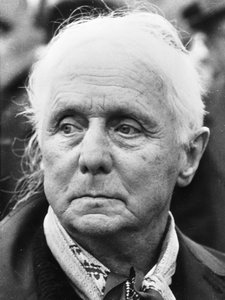
Max Ernst
1891 - 1976 , Germany
Quick Facts
- Artistic Movement Or Style:
- Dada
- Surrealism
- Artists Or Movements Influenced By This Artist: ['Surrealism']
- Artists Who Influenced This Artist:
- Pablo Picasso
- Vincent van Gogh
- Paul Gauguin
- Full Name: Maximilian Maria Ernst
- Nationality: German
- Notable Artworks:
- The Entire City
- Euclides
- Of This Men Shall Know Nothing
- Forest and Dove
- Place Of Birth: Brühl, Germany
- Date Of Birth: 1891
- Date Of Death: 1976