
 Preview
 Send
Send Share
Share
 Details
 Guide
Guide

 Download
 Similars
 X-Ray
X-Ray Diaporama
 Q&A
Q&A Stats
StatsPieta or Revolution by Night


 Read More
Get a print-ready file that goes far beyond the web preview. Every digital image we sell comes from a high-resolution master in our stock database — usually 5,000 to 15,000 pixels wide — so you can print large, crop tightly, or reproduce fine detail with confidence.
No file leaves our studio untouched. A digital expert checks the colors against the original painting and corrects them if needed, then improves clarity and detail with professional retouching tools — always staying faithful to the artist's brushwork and style. The result is an image that looks like the painting, not like a filtered scan.
You approve before you're done: our expert sends the image by e-mail within 72 hours for your review. Not satisfied? Ask for improvements or corrections, or request a refund if the quality falls short.
This is the quality relied on by publishers, design studios, galleries and print shops.
Digital Image
Download a high-resolution file for personal display, printing, and creative projects. ( Switch to Print Buy Hand Made Painting)
Included in Every Digital Image Order
Expert Digital Delivery, Guaranteed
When you choose OriginalUniqueArt.com, you're not just getting an image - you're receiving a professionally enhanced digital artwork, crafted with precision and backed by a satisfaction guarantee. Here's everything that comes with your order, automatically:

Fast Email Delivery
Your high-resolution digital image file will be emailed to you within 72 hours of ordering - ready for immediate use.

AI-Enhanced Digital File
Your artwork is professionally optimized using advanced AI tools and manual editing, ensuring maximum detail, clarity, and color accuracy.

Free Lifetime Re-Delivery
Accidentally deleted or lost your file? No worries - we'll resend it to you anytime, free of charge.

No Import Fees - Ever
Enjoy your artwork instantly with zero customs, duties, or delivery fees - digital downloads are always tax-free.

Color Accuracy Guarantee
We ensure your digital image reflects the original colors as closely as possible using professional tools and color management.

100-Day Satisfaction Guarantee
If you're not satisfied with your digital image, we'll revise it or refund 100% within 100 days - no questions asked.

100% Money-Back Guarantee
Not satisfied? Get a full refund within 100 days of receiving your digital file - no questions asked.

Bulk Order Discounts
Buy 3 images, save 10% - Buy 5, save 15% - Buy 10+, save 20%. Great for creative projects, galleries, and agencies.
A Haunting Echo of Transformation
In the shadowy corridors of early twentieth-century modernism, few works possess the unsettling magnetism of Max Ernst’s Pieta or Revolution by Night. This profound masterpiece serves as a visceral bridge between the chaotic rebellion of Dadaism and the dreamlike explorations of Surrealism. At first glance, the viewer is confronted with a stark, somber tableau: a man in formal attire cradling a lifeless figure, an arrangement that deliberately evokes the sacred gravity of Michelangelo’s iconic Pietà. Yet, Ernst strips away the comfort of religious solace, replacing divine grace with a profound sense of existential dread. The painting does not merely depict grief; it captures the very atmosphere of a world on the precipice of collapse, making it an essential piece for those who appreciate art that challenges the boundaries of the subconscious.
The technical execution of the work is a masterclass in atmospheric tension. Utilizing oil on canvas, Ernst employs a sophisticated layering of textures and deliberate distortions that force the eye to wander through a landscape of uncertainty. His palette is intentionally somber, dominated by dark, heavy tones that evoke the stillness of night and the weight of impending doom. Through his masterful manipulation of light and shadow, the artist creates a sense of depth that feels both physically present and psychologically distant. For the discerning collector or interior designer, this technique offers a captivating focal point—a work that does not simply hang on a wall but commands the very air of a room, inviting deep contemplation and adding a layer of intellectual sophistication to any curated space.
Symbolism and the Weight of History
Beyond its striking visual presence, Pieta or Revolution by Night is a dense tapestry of symbolic meaning. The figures within the composition are far from mere archetypes; they are deeply personal and political. Many historians interpret the painting as a reflection of Ernst’s turbulent relationship with his father, casting the elder figure as a surrogate for the Virgin Mary and himself as the fallen Christ. This intimate psychological struggle is set against the broader, more terrifying backdrop of a Europe gripped by the escalating tensions leading toward World War II. The man's formal attire—symbolizing societal order and authority—stands in jarring contrast to the vulnerability of the deceased figure, representing the fragility of civilization itself in the face of radical upheaval.
To possess a reproduction of this work is to hold a fragment of history’s most transformative era. It is an invitation to engage with the spirit of Dada—a movement that rejected logic and embraced the irrational as a response to the horrors of modern warfare. The painting resonates with anyone drawn to the beauty found in complexity and the strength found in vulnerability. Whether serving as a conversation starter in a contemporary gallery or providing a soulful, moody anchor in a classic study, this artwork remains a timeless testament to the power of art to mirror the soul's most profound transformations.
Questions & Answers
What color saturation does "Pieta or Revolution by Night" by Max Ernst have?
"Pieta or Revolution by Night" by Max Ernst is recorded with a balanced soft saturation.
What emotion does the Surrealist Expression work "Pieta or Revolution by Night" convey?
Within the Surrealist Expression movement, "Pieta or Revolution by Night" is recorded with a dramatic tone.
Who is the author of "Pieta or Revolution by Night", and in which movement?
Max Ernst created "Pieta or Revolution by Night" within the Surrealist Expression movement.
Artist Biography
A Life Immersed in the Surreal
Max Ernst, born Maximilian Maria Ernst on April 1st, 1891, in Brühl, Germany, was a restless spirit destined to become one of the most pivotal figures in 20th-century art. His journey wasn’t one of conventional artistic training; rather, it was a self-directed exploration fueled by philosophical inquiry, psychological fascination, and a profound disillusionment with societal norms. Ernst's father, a teacher of the deaf and an amateur painter, instilled in him both a sensitivity to the world and a rebellious streak against established authority. This early duality would become a defining characteristic of his artistic vision.
Ernst’s academic pursuits at the University of Bonn – encompassing philosophy, art history, literature, psychology, and psychiatry – were not merely diversions but foundational elements that deeply informed his later work. He wasn't simply interested in *how* to paint; he was grappling with *why*. This intellectual curiosity led him to encounter the groundbreaking works of Picasso, Van Gogh, and Gauguin at the Sonderbund exhibition in Cologne in 1912, a moment that irrevocably altered his artistic trajectory. The seeds of modernism had been sown.
Dada’s Disruption and the Birth of Surrealist Visions
The cataclysm of World War I proved to be a watershed moment for Ernst. His experiences as a soldier on both the Eastern and Western fronts left him profoundly shaken, fostering a deep skepticism towards established order and a yearning for new modes of expression. This disillusionment found fertile ground in the burgeoning Dada movement, which he embraced wholeheartedly after returning to Cologne in 1918. Alongside Hans Arp – a lifelong friend and collaborator – Ernst became a central figure in the Cologne Dada group, rejecting traditional artistic conventions and embracing absurdity, chance, and anti-rationality.
However, Dada was merely a stepping stone. In the early 1920s, Ernst migrated to Paris and joined the ranks of the Surrealists, led by André Breton. This marked a shift towards exploring the realm of dreams, the unconscious mind, and the irrational. Influenced by the psychoanalytic theories of Sigmund Freud, Ernst sought to unlock the hidden depths of human experience through his art. He wasn’t interested in depicting reality as it appeared but rather in revealing the underlying psychological forces that shaped it.
Pioneering Techniques: Frottage, Grattage, and Collage
Ernst's artistic innovation extended beyond subject matter; he was a relentless experimenter with technique. He didn’t simply adopt existing methods—he invented new ones. Perhaps his most famous contribution is frottage, a process of rubbing pencil or charcoal over textured surfaces to create unexpected and evocative images. This technique, born from a moment of boredom while observing wood grain, allowed Ernst to tap into the subconscious and generate forms that defied conscious control. Closely related was grattage, where paint is scraped across canvas revealing underlying layers.
He also masterfully employed collage, assembling disparate elements – images from magazines, scientific illustrations, photographs – into surreal compositions that challenged conventional notions of representation. These techniques weren’t merely stylistic choices; they were integral to his exploration of the unconscious and his desire to disrupt traditional artistic boundaries. His paintings often feature recurring symbolic imagery: birds (particularly his alter ego Loplop), desolate landscapes, unsettling juxtapositions, and a pervasive sense of mystery.
A Legacy of Innovation and Influence
The outbreak of World War II forced Ernst to flee Europe, finding refuge in the United States. He continued to paint and experiment with new techniques throughout his exile, eventually returning to France after the war where he remained active until his death on April 1st, 1976, in Paris. His influence on subsequent generations of artists is immeasurable.
Max Ernst’s contributions to Dada and Surrealism were nothing short of groundbreaking. He challenged artistic norms, delved into the depths of the subconscious mind, and invented innovative techniques that continue to inspire artists today. He wasn't merely a painter; he was an explorer, a provocateur, and a visionary who expanded the boundaries of art itself. His work remains a testament to the power of imagination, the allure of the irrational, and the enduring quest to understand the complexities of the human psyche.
- Major Works: The Entire City, Euclides, Of This Men Shall Know Nothing, Forest and Dove
- Influences: Pablo Picasso, Vincent van Gogh, Paul Gauguin, Sigmund Freud, Giorgio de Chirico
- Movements: Dada, Surrealism
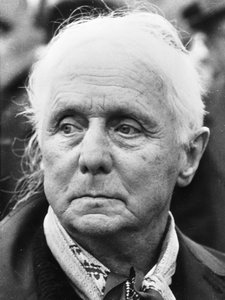
Max Ernst
1891 - 1976 , Germany
Quick Facts
- Artistic Movement Or Style:
- Dada
- Surrealism
- Artists Or Movements Influenced By This Artist:
- Karl Otto Gotz
- Salvador Dali
- Manuel Cargaleiro
- Artists Who Influenced This Artist:
- Pablo Picasso
- Vincent van Gogh
- Paul Gauguin
- Sigmund Freud
- Giorgio de Chirico
- Full Name: Maximilian Maria Ernst
- Nationality: German
- Notable Artworks:
- The Entire City
- Euclides
- Of This Men Shall Know Nothing
- Forest and Dove
- Place Of Birth: Brühl, Germany
- Date Of Birth: 1891
- Date Of Death: 1976