Preview
 Send
Send Share
Share
 Details
 Guide
Guide

 Download
 Similars
 X-Ray
X-Ray Diaporama
 Stats
StatsChrist in Glory
 Oil On Canvas
- WallArt
- Baroque
 1660
1660- Renaissance
 220.0 x 253.0 cm
 Museo del Prado
 Read More
Giclée / Art Print
Museum-quality giclée or canvas print with fast production and flexible finish options. ( Buy Hand Made Painting Switch to Digital Image)




P118B $10

P118H $10

P118W $10

P438Z $10

P508JH $12

P508YH $12

P805H $10

P805Z $10

P919BZ $10

P919G $10

P919XJ $10

P959ZH $10

P968JZ $12

W106C $8

W218G $10

W218JH $8

W218Y $10

W307PJ $10

W316G $10

W316PJ $8

W316Y $10

W398PJ $8

W4111J $10

W500HY $15

W500JH $15

W692G $12

W849H $8

W940BG $15

W953PJ $8




Pick from our preset sizes that match the artwork's original proportions.

Type the width and the height you need, to fit your frame or your wall. A print can only be cut, never made bigger than the picture, so a size with a different shape loses a part of the image. We send you a digital mockup to approve before we print anything. The picture shown on this page does not show the real cut — only the mockup does.
Worldwide Delivery () in 2 weeks instead of standard 4/5 weeks. (28 October)

Free Worldwide Express Shipping

High-Quality Linen Canvas

Full Shipping Insurance

Customs Tax Refund Guarantee

True Color Matching Guarantee

100-Day Return Policy (Defects Only)

100% Money-Back Guarantee

Bulk Discount Offer
 Glass option is only available in size under 110 CM

Christ in Glory
Giclée / Art Print
Reproduction Size
-


Total Price
$ 81
A Triumph of Baroque Faith: Exploring Mattia Preti’s ‘Christ in Glory’
Mattia Preti, a Calabrian Knight of the Baroque, stands as an emblem of artistic dynamism and fervent devotion during his era. Born in Taverna, Calabria, on February 24, 1613, his journey was marked by absorbing diverse influences—primarily from Caravaggio—resulting in a uniquely expressive style characterized by dramatic chiaroscuro and meticulous realism that would define his oeuvre. Before 1630, he joined his brother Gregorio in Rome, immersing himself in the vibrant artistic landscape of the city and studying the masters who shaped Baroque aesthetics: Caravaggio, Guercino – figures whose mastery of light and shadow profoundly impacted Preti’s approach to painting.The Painting's Dramatic Narrative
“Christ in Glory,” completed around 1660, depicts Jesus Christ enthroned amidst a celestial chorus of angels. The composition is meticulously crafted, reflecting the Baroque preoccupation with conveying spiritual grandeur and emotional intensity. Preti skillfully employs chiaroscuro—the masterful manipulation of light and dark—to sculpt the figures, creating palpable depth and highlighting the divine majesty of Christ’s presence. Angels ascend from various positions around Jesus, their gestures conveying reverence and proclaiming his glory. This visual language aims to transport the viewer into a realm of transcendent beauty and spiritual contemplation.Technical Virtuosity: Preti's Baroque Style
Preti’s technique is rooted in Caravaggist principles—a commitment to naturalistic representation achieved through painstaking observation and anatomical accuracy. He utilized oil paint on canvas, applying thin glazes over underlayers to build up color gradually and achieve luminous effects. The artist’s meticulous attention to detail extends beyond the depiction of figures; he meticulously rendered architectural elements and drapery folds, demonstrating an unparalleled command of artistic craftmanship. This dedication to realism distinguishes Preti's work from earlier Mannerist styles, solidifying his position as a pivotal figure in Baroque art history.Symbolism and Spiritual Significance
The painting transcends mere visual representation; it embodies profound theological symbolism. Christ’s throne signifies divine sovereignty and righteousness, while the angels serve as messengers of God's grace and proclaim Jesus’s divinity. The radiant light emanating from Christ symbolizes divine illumination and spiritual enlightenment—a central theme in Christian iconography. “Christ in Glory” encapsulates the Baroque belief that art could elevate the soul to contemplation of the sacred, fostering a deep connection between humanity and God.A Legacy Enduring Through Reproduction
Today, reproductions of “Christ in Glory” continue to inspire admiration for Preti’s artistic genius and his masterful portrayal of faith and majesty. OriginalUniqueArt.com offers exceptional quality prints that allow collectors and interior designers alike to experience the beauty and emotional power of this iconic Baroque masterpiece—a testament to Preti's enduring influence on Western art history.Questions & Answers
What technique was used for "Christ in Glory" by Mattia Preti?
The medium of "Christ in Glory" by Mattia Preti is oil on canvas. Reproductions aim to render the appearance of this technique.
How was "Christ in Glory" made, and how big is it?
The medium of "Christ in Glory" by Mattia Preti is oil on canvas, and its recorded dimensions are 220 x 253 cm.
Where is the square format of "Christ in Glory" recommended to be displayed?
Format (square) and recommended space (living room) are the two placement facts recorded for "Christ in Glory" by Mattia Preti.
Artist Biography
A Calabrian Knight of the Baroque
Mattia Preti, known as Il Cavalier Calabrese – the Calabrian Knight – stands as a pivotal figure in 17th-century Italian Baroque painting. Born in Taverna, Calabria, on February 24, 1613, his artistic journey was one of dynamic evolution, absorbing diverse influences and culminating in a uniquely expressive style that left an indelible mark on the art world, particularly in Malta where he would spend much of his later life. Preti’s early training began under Giovanni Battista Caracciolo, a painter deeply rooted in the Caravaggist movement. This foundational exposure instilled within him a profound understanding of dramatic chiaroscuro – the intense interplay of light and shadow – and a commitment to realistic depiction that would remain hallmarks of his work throughout his career. Before 1630, he joined his brother Gregorio in Rome, immersing himself in the artistic ferment of the city and studying the masters who defined the era: Caravaggio, Guercino, Rubens, Guido Reni, and Giovanni Lanfranco. This period was crucial, shaping not only his technical skills but also his aesthetic sensibilities.Forging a Dynamic Style
Preti’s artistic development wasn't merely imitation; it was a synthesis of influences, skillfully woven into a style distinctly his own. While initially steeped in Caravaggism, he gradually moved beyond its strict confines, embracing the dynamism and emotional intensity that characterized the High Baroque. His time in Naples further refined this evolution, exposing him to the vibrant work of Luca Giordano. This period saw Preti’s canvases swell with energetic movement, complex compositions, and a heightened sense of drama. He masterfully employed dramatic contrasts of light and shadow, inherited from Caravaggio, not simply as a technical device but as a means of intensifying emotional impact and guiding the viewer's eye. His figures are imbued with palpable emotion, conveyed through expressive faces and dynamic body language. This ability to evoke powerful feelings – piety, anguish, ecstasy – became a defining characteristic of his oeuvre. He wasn’t content merely to depict scenes; he sought to *animate* them, breathing life into biblical narratives and religious iconography.Commissions and Masterpieces Across Italy
Mattia Preti's talent quickly garnered recognition, leading to a series of significant commissions throughout Italy. Early in his career, he created impressive fresco cycles for Roman churches like Sant’Andrea della Valle and San Carlo ai Catinari, demonstrating an aptitude for large-scale decorative painting. His work at the church of San Biagio in Modena showcased his ability to adapt his style to different architectural settings. However, some of his most ambitious – though sadly lost – works were the frescoes he painted on seven city gates in Naples depicting the Virgin or saints delivering people from the plague. Though only sketches remain today, they testify to the scale and impact of these monumental creations. These commissions weren’t simply about fulfilling a patron's request; they were opportunities for Preti to engage with the religious and cultural life of the communities he served, imbuing his art with meaning and purpose.The Maltese Zenith: St. John’s Co-Cathedral
It was in Malta, however, that Mattia Preti reached the pinnacle of his artistic achievement. Appointed a Knight of the Order of St. John in 1660, he embarked on a transformative project: the complete redecoration of the interior of St. John’s Co-Cathedral in Valletta. This undertaking – arguably his most significant legacy – involved an astonishing series of paintings depicting the life and martyrdom of Saint John the Baptist. The sheer scale of the project is breathtaking; Preti essentially created a visual narrative that enveloped the viewer, immersing them in the story of the saint. The opulent Baroque setting provided the perfect canvas for his dramatic style, and the resulting artwork cemented his reputation as one of Europe’s leading painters. His work at St. John's wasn't merely decorative; it was an act of devotion, a testament to his faith, and a powerful expression of the Order’s religious identity.A Lasting Legacy
Mattia Preti continued to receive commissions from across Europe following his success in Malta, solidifying his position as a leading figure in Italian Baroque art. He died in 1699, leaving behind a rich artistic legacy that continues to inspire and captivate audiences today. His masterful use of light and shadow, dynamic compositions, and ability to convey intense emotion remain hallmarks of his style. His contributions are preserved in museums such as the Capodimonte Museum in Naples, and through reproductions made available by platforms like OriginalUniqueArt.com, ensuring that his art continues to reach new generations. The enduring impact of Preti’s work is perhaps most vividly felt within the walls of St. John's Co-Cathedral, a breathtaking testament to his artistic genius and unwavering dedication to the Baroque aesthetic. Il Cavalier Calabrese truly earned his title, not only as a knight but as a master painter who illuminated the world with his vision.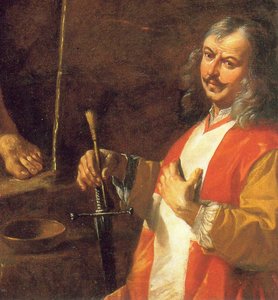
Mattia Preti
1613 - 1699 , Italy
Quick Facts
- Full Name: Mattia Preti
- Nationality: Italian
- Date Of Birth: 1613
- Date Of Death: 1699
- Place Of Birth: Taverna, Italy
- Notable Artworks:
- Tribute Money
- Absalom's Feast
- St John Reproaching Herod
- Artistic Movement Or Style: Baroque
- Artists Who Influenced This Artist:
- Caravaggio
- Guercino
- Rubens
- Reni
- Lanfranco
- Giordano
- Artists Or Movements Influenced By This Artist:
- Stringa
- Mola
Related Articles

Giclée Prints: Archival Quality & Aesthetic Nuances for the Discerning Collector
Explore the world of giclée prints with OriginalUniqueArt. Learn about archival quality, aesthetic nuances & investment potential. Expert guidance for discerning art collectors seeking museum-quality reproductions and lasting value.

The Enduring Legacy of Fine Art Prints: Technique, History & Aesthetic Impact
Explore the rich history & techniques of fine art prints. Discover investment potential, assess authenticity, and learn how to preserve your collection with expert guidance. Trusted insights for discerning collectors.

The Visceral Stage: Exploring Dramatic Narratives & Emotional Intensity in Baroque Art
Explore the dramatic world of Baroque art! Discover iconic masters like Caravaggio & Rembrandt, their techniques, and the movement's lasting impact. Expert insights for collectors & enthusiasts at OriginalUniqueArt.

The Dramatic Flourish: Exploring the Baroque Movement's Enduring Legacy in Art History
Explore the dramatic world of Baroque art! Discover iconic artists like Caravaggio & Rubens, defining techniques, and its lasting impact on art history. Expert insights for collectors & enthusiasts at OriginalUniqueArt.

Baroque Drama: Bringing Opulence & Emotion into Contemporary Interiors
Explore the opulent world of Baroque interior design! Discover key elements, modern applications & how to bring dramatic elegance into your home with OriginalUniqueArt.com's authentic reproductions.