Text size

() ·

A painting made for you, by hand

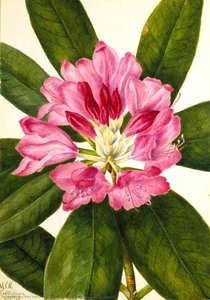
Prickly Currant (Ribes lacustre)

Hand Made Oil Reproduction

Hand-painted oil on canvas in your size and frame, made to order by our artists. ( Switch to Print Switch to Digital Image)

Collectible Description

Admire Mary Vaux Walcott's 'Prickly Currant,' a delicate 1919 watercolor showcasing the beauty of nature. Part of the Smithsonian collection, it’s botanical art at its finest.

Artist Biography

Mary Vaux Walcott (1860-1940) was the "Audubon of Botany," renowned for her exquisite watercolor wildflower paintings and contributions to naturalism. Explore her detailed botanical art!

from ·

Chapter 1

How large should it be?

Slide to change the size; the picture on the left shows the frame at its real width. The proportions of the original are kept.

Standard
custom
CM
INCH

Pick from our preset sizes that match the artwork's original proportions.

width
height

Type the width and the height you need, to fit your frame or your wall. This is hand-painted, so for a size with a different shape the artist can paint a bit more around the picture, or cut a bit — you choose. We send you a digital mockup to approve before the painting starts. The picture shown on this page does not show the real result — only the mockup does.

Chapter 2

How should it arrive?

Choose the edges of the stretched canvas

Choose your frame

Corner sample of the WhiteWrap canvas edge finish, stretched on solid wood bars
White $1
Corner sample of the BlurSideWrap canvas edge finish, stretched on solid wood bars
Blurside $1
Corner sample of the ExtendedWrap canvas edge finish, stretched on solid wood bars
Extended $1
Corner sample of the P118B picture frame: moulded polystyrene, 5 cm wide and 3 cm thick
P118B $10
Corner sample of the P118H picture frame: moulded polystyrene, 5 cm wide and 3 cm thick
P118H $10
Corner sample of the P118W picture frame: moulded polystyrene, 5 cm wide and 3 cm thick
P118W $10
Corner sample of the P438Z picture frame: moulded polystyrene, 5.5 cm wide and 3.5 cm thick
P438Z $10
Corner sample of the P508JH picture frame: moulded polystyrene, 7 cm wide and 3.5 cm thick
P508JH $12
Corner sample of the P508YH picture frame: moulded polystyrene, 7 cm wide and 3.5 cm thick
P508YH $12
Corner sample of the P805H picture frame: moulded polystyrene, 5 cm wide and 3.5 cm thick
P805H $10
Corner sample of the P805Z picture frame: moulded polystyrene, 5 cm wide and 3.5 cm thick
P805Z $10
Corner sample of the P919BZ picture frame: moulded polystyrene, 7 cm wide and 3.5 cm thick
P919BZ $10
Corner sample of the P919G picture frame: moulded polystyrene, 7 cm wide and 3.5 cm thick
P919G $10
Corner sample of the P919XJ picture frame: moulded polystyrene, 7 cm wide and 3.5 cm thick
P919XJ $10
Corner sample of the P959ZH picture frame: moulded polystyrene, 5 cm wide and 3 cm thick
P959ZH $10
Corner sample of the P968JZ picture frame: moulded polystyrene, 6 cm wide and 4 cm thick
P968JZ $12
Corner sample of the W106C picture frame: solid wood, 5 cm wide and 3 cm thick
W106C $8
Corner sample of the W218G picture frame: solid wood, 5 cm wide and 3 cm thick
W218G $10
Corner sample of the W218JH picture frame: solid wood, 5 cm wide and 3 cm thick
W218JH $8
Corner sample of the W218Y picture frame: solid wood, 5 cm wide and 3 cm thick
W218Y $10
Corner sample of the W307PJ picture frame: solid wood, 6 cm wide and 3 cm thick
W307PJ $10
Corner sample of the W316G picture frame: solid wood, 6 cm wide and 3 cm thick
W316G $10
Corner sample of the W316PJ picture frame: solid wood, 6 cm wide and 3 cm thick
W316PJ $8
Corner sample of the W316Y picture frame: solid wood, 6 cm wide and 3 cm thick
W316Y $10
Corner sample of the W398PJ picture frame: solid wood, 5 cm wide and 3 cm thick
W398PJ $8
Corner sample of the W4111J picture frame: solid wood, 6.5 cm wide and 3.5 cm thick
W4111J $10
Corner sample of the W500HY picture frame: solid wood, 7 cm wide and 5 cm thick
W500HY $15
Corner sample of the W500JH picture frame: solid wood, 7 cm wide and 5 cm thick
W500JH $15
Corner sample of the W692G picture frame: solid wood, 8 cm wide and 4 cm thick
W692G $12
Corner sample of the W849H picture frame: solid wood, 5 cm wide and 3 cm thick
W849H $8
Corner sample of the W940BG picture frame: solid wood, 7.5 cm wide and 4.5 cm thick
W940BG $15
Corner sample of the W953PJ picture frame: solid wood, 6 cm wide and 3.5 cm thick
W953PJ $8
Corner sample of the H24-GOLD picture frame: carved wood with gesso, 10 cm wide and 6 cm thick
H24-GOLD $30
Corner sample of the H24-SILVER picture frame: carved wood with gesso, 10 cm wide and 6 cm thick
H24-SILVER $30
Corner sample of the H36-GOLD picture frame: carved wood with gesso, 15 cm wide and 6.5 cm thick
H36-GOLD $45
Corner sample of the H36-SILVER picture frame: carved wood with gesso, 15 cm wide and 6.5 cm thick
H36-SILVER $45
Frame preview
Framed

Moulding: . Overall size with the frame: .

Chapter 3

Who paints it, and should anything change?

Examples of what can be changed: Replace face with customer photo; Add pet (e.g., replace cat with dog); Include hidden message in background; Change background landscape or elements.
After order, OriginalUniqueArt.com team will email client for instructions and provide a mockup preview

Worldwide Delivery () in 3/4 weeks instead of standard 5 weeks. (8 November). No compromise on quality.

Chapter 4

The finishing touches

A nameplate, as in a museum?

Engraved Bronze Plaque Details

This elegant plaque features the artist's name and the title of the artwork, finely engraved for a timeless presentation.

It is made from bronze with a refined, elegant finish. The text is precisely laser-engraved for a sharp and permanent result. Measuring 9x2 cm, the plaque is compact yet easy to read. It's built to be durable and scratch-resistant, offering a professional, museum-quality look. Mounting is simple thanks to the included adhesive backing.

Transparent Acrylic Plaque Details

The plaque includes essential engraved details such as the artist's name, the title of the artwork, the date it was created, the type of media used-like oil on canvas or watercolor-a brief description of the piece, and a QR code that links to the complete artwork information.

It is crafted from clear acrylic, offering a sleek, modern appearance. The text is UV-engraved in black to ensure strong visual contrast. With a size of 10x15 cm, it ensures optimal readability. It comes equipped with two metal hooks for secure wall mounting. The plaque is designed to be weather-resistant, making it suitable for various environments, and it includes interactive features that work seamlessly with smartphone scanning.

Black Acrylic Plaque Details

This elegant plaque includes engraved information such as the artist's name, the title of the artwork, the date it was created, the type of media used (like oil on canvas or watercolor), a short description of the artwork, and a QR code for quick access to more information.

The plaque itself is made from refined black acrylic with a premium finish. The text is laser-engraved in white for high contrast and readability. Its size is 10x15 cm, designed to be easy to read. It comes with two metal hooks for professional mounting. The design is sleek and fits any interior style. It is also weather-resistant and durable, with built-in digital integration for mobile compatibility.

A protective varnish?

When do you need it?

Chapter 5

Your painting, as you ordered it

Prickly Currant (Ribes lacustre)

Reproduction Medium

Reproduction Size

-

Elite Senior Artist

More detail, finesse, and extra production time

-

Reproduction Frame

-

-

For artworks or reproductions larger than 105 cm (approximately 41 inches) on any side, the frame will be shipped as a kit, disassembled. This method ensures safe delivery and prevents damage during transport.

Professional assembly required - this is not a DIY product.
The kit must be assembled and the canvas stretched by an experienced professional framer, using wood glue (not supplied), a canvas stretching plier and clamps to hold the bars square while the glue dries. Incorrect assembly or uneven canvas tension can permanently damage the artwork and is not covered by our warranty.

  • All solid wood bars are included, precisely cut to size.

  • Assembled with the screws provided, plus wood glue for the corner joints, which is not supplied and must be sourced by your framer.

  • Professional tools are required and not included: a canvas stretching plier (tensioner) and clamps to hold the bars square while the glue dries.

Important:
The corner joints require wood glue, the bars must be held with clamps until the glue is fully dry, and tightening the canvas on the assembled frame requires a canvas stretching plier. None of these are included in the kit. Please arrange an experienced professional framer before ordering this size.

Nameplate

-

-

Protective Varnish

Glossy Varnish (enhances colors, protects against light/moisture)

-

Customize My Artwork

Examples of what can be changed: Replace face with customer photo; Add pet (e.g., replace cat with dog); Include hidden message in background; Change background landscape or elements.

-

Urgent

Worldwide Delivery () in 3/4 weeks instead of standard 5 weeks. (8 November). No compromise on quality.

-

Express Shipping

Worldwide Delivery () in 5 weeks. (15 November).

Included

Total Price

$ 300

Total Price $ 300

Glass option is only available in size under 110 CM

Included with every order

  • Free Worldwide Express Shipping
  • High-Quality Linen Canvas
  • Full Shipping Insurance
  • Customs Tax Refund Guarantee
  • True Color Matching Guarantee
  • 100-Day Return Policy (Defects Only)
  • 100% Money-Back Guarantee
  • Bulk Discount Offer

Prickly Currant (Ribes lacustre): A Botanical Masterpiece

Mary Vaux Walcott's "Prickly Currant (Ribes lacustre)," painted in 1919, is a captivating watercolor study that exemplifies the artist’s meticulous observation of the natural world. Housed within the Smithsonian American Art Museum, this piece measures 25 x 18 cm and offers a close-up view of the plant's intricate details, showcasing the vibrant colors and delicate textures characteristic of wild flora.

The Artist's Style and Technique

Walcott’s artistic style is defined by her remarkable attention to detail and her ability to capture the essence of botanical subjects. She was renowned as "the Audubon of Botany," a testament to her skill in documenting North American wildflowers with scientific accuracy and aesthetic beauty. Her preferred medium, watercolor, allowed for a delicate and subtle rendering of forms, perfectly suited for depicting the intricate details of plants and flowers. The “Prickly Currant” demonstrates this mastery; the painting’s soft edges and blended colors are achieved through layering washes of color and precise brushstrokes, creating a sense of depth and volume.

Botanical Accuracy and Historical Context

This artwork is more than just a beautiful image; it's a valuable contribution to botanical science. During the late 19th and early 20th centuries, detailed botanical illustrations were crucial for scientific documentation and identification. Walcott’s work aligns with this tradition, providing an accurate representation of *Ribes lacustre*, also known as prickly currant or bristly black currant. Her dedication to accuracy stemmed from her extensive fieldwork in the Canadian Rockies, where she meticulously observed and documented plant life alongside her husband, paleontologist Charles Doolittle Walcott. The Smithsonian’s publication of her illustrations across five volumes, "North American Wild Flowers," further cemented her legacy as a significant contributor to botanical knowledge.

Symbolism and Emotional Impact

While primarily a scientific study, “Prickly Currant” evokes a sense of quiet beauty and appreciation for the natural world. The vibrant red berries against the lush green leaves create a visually striking contrast, symbolizing resilience and vitality. Walcott’s skill in capturing the plant's delicate structure invites viewers to pause and appreciate the intricate details often overlooked in everyday life. The painting resonates with a feeling of tranquility and reverence for nature, reflecting the artist’s deep connection to the wilderness.

Other Notable Works by Mary Vaux Walcott

Explore more of Mary Vaux Walcott's botanical artistry through these additional works:

  • Northern Bedstraw (Galium boreale)
  • Jacob's Ladder (Polemonium viscosum)
  • Siberian Onion (Allium sibericum)

These pieces, along with "Prickly Currant," can be found on OriginalUniqueArt.com, offering handmade oil painting reproductions of these remarkable artworks.

Questions & Answers

How big is the original "Prickly Currant (Ribes lacustre)"?

"Prickly Currant (Ribes lacustre)" measures 25 x 18 cm in its original form. Original dimensions are a useful reference when choosing a reproduction size.

At what size is "Prickly Currant (Ribes lacustre)" suggested for a living room?

In a living room, "Prickly Currant (Ribes lacustre)" is suggested at a medium print size.

What feeling do the colors of "Prickly Currant (Ribes lacustre)" by Mary Vaux Walcott create?

The pastels palette of "Prickly Currant (Ribes lacustre)" by Mary Vaux Walcott goes together with its tranquil emotional tone. Color is one of the ways a work conveys feeling.

More about this painting

Preview AR preview Switch to Print Switch to Digital Image Send
Details Guide Add to favorites Download Similars X-Ray Diaporama Q&A Stats

In numbers

  • 1919the year it was painted
  • 29frames to choose from
  • standard sizes, in its own proportions
  • 5weeks to paint and deliver it
Mary Vaux Walcott

Mary Vaux Walcott

1860 - 1940, United States of America

Quick facts about Mary Vaux Walcott

  • Full Name: Mary Vaux Walcott
  • Nationality: American
  • Date Of Birth: 1860
  • Date Of Death: 1940
  • Place Of Birth: Philadelphia, United States of America
  • Notable Artworks:
    • Autumn Leaves
    • Gaillardia aristata
    • Rosa bourgeauiana
    • Dendromecon rigidum
    • Fremontodendron mexicanum
  • Artistic Movement Or Style: Botanical Illustration

Artist Biography

A Life Blossoming in Watercolor: The World of Mary Vaux Walcott

Born into the refined world of Philadelphia’s Quaker society in 1860, Mary Morris Vaux seemed destined for a life of quiet domesticity. Yet, from an early age, a vibrant artistic spirit stirred within her, ignited by a simple gift – a set of watercolor paints at the tender age of eight. These weren't merely tools for recreation; they were keys unlocking a lifelong passion for capturing the delicate beauty of the natural world, particularly wildflowers. Little could anyone have predicted that this early inclination would blossom into a remarkable career, earning her the affectionate title “the Audubon of Botany.” Her story is not simply one of artistic talent, but also of resilience, scientific curiosity, and a pioneering spirit that defied societal expectations. The weight of familial responsibility fell upon young Mary after her mother’s death in 1880, compelling her to dedicate herself to caring for her father and two younger brothers. This devotion didn't extinguish her creative flame; rather, it fueled a deep connection with the landscapes they explored during their annual summer expeditions to the Canadian Rockies.

The Allure of the Rockies: Nature as Muse and Subject

These journeys were transformative. The rugged grandeur of the Canadian Rockies became Mary’s artistic laboratory. Alongside her brothers, she didn't merely observe the landscape; she meticulously documented it – studying mineralogy, charting glacial movements through drawings and photographs, and immersing herself in the intricate details of alpine flora. This wasn’t passive observation but active engagement with the scientific underpinnings of nature. It was during these expeditions that Mary began to hone her skills as a botanical illustrator, initially at the request of botanists eager for accurate depictions of rare species. Her approach was revolutionary for its time: she rendered plants to scale, showcasing their delicate structures and vibrant colors with unparalleled precision. Unlike many floral paintings of the era, which often romanticized or stylized their subjects, Walcott’s work prioritized scientific accuracy alongside artistic expression. The vastness of the landscape also fostered a spirit of adventure; in 1900, she became the first woman recorded to summit Mount Stephen, a feat that underscored her physical courage and unwavering determination.

A Partnership Forged in Science and Art

Mary’s life took another significant turn in 1914 when she married Charles Doolittle Walcott, then Secretary of the Smithsonian Institution and a renowned paleontologist. This union wasn't merely a personal connection; it was a meeting of minds deeply committed to scientific exploration. Their marriage fostered a unique partnership where art and science intertwined seamlessly. They continued their annual expeditions to the Rockies, with Charles pursuing his geological research while Mary dedicated herself to her botanical paintings. These weren’t separate endeavors but complementary pursuits, each enriching the other. The Smithsonian Institution became a crucial platform for showcasing Mary's work, culminating in the publication of *North American Wild Flowers* in 1925 – a monumental five-volume collection featuring over 400 of her meticulously crafted illustrations. This publication cemented her reputation as a leading botanical artist and earned her the enduring moniker “the Audubon of Botany,” acknowledging the parallel between her detailed floral studies and John James Audubon’s iconic depictions of birds.

Legacy in Bloom: A Lasting Contribution to Art and Science

Mary Vaux Walcott's influence extends far beyond the beauty of her paintings. Her work represents a unique synthesis of artistic skill, scientific observation, and adventurous spirit. She wasn’t simply documenting flowers; she was capturing their essence, revealing their intricate structures, and celebrating their vital role in the natural world. Her illustrations continue to be valued by both art enthusiasts and botanists alike, serving as invaluable resources for identifying and studying North American flora. Beyond her artistic achievements, Walcott also demonstrated a commitment to public service, serving on the federal Board of Indian Commissioners from 1927 to 1932 and actively advocating for improved conditions on Native American reservations. Upon her death in 1940, she bequeathed a substantial sum to the Smithsonian Institution, ensuring that future generations would benefit from scientific research and publication. A mountain peak in Jasper National Park, Mount Mary Vaux, stands as a lasting tribute to her adventurous spirit and enduring legacy. Her story serves as an inspiration, demonstrating how passion, dedication, and a deep connection with nature can blossom into a life of remarkable achievement.

Key Achievements & Recognition

  • Pioneering Botanical Illustration: Renowned for her scientifically accurate and artistically exquisite watercolor paintings of wildflowers.
  • “The Audubon of Botany”: Affectionately known by this title, recognizing the significance of her work in botanical art.
  • *North American Wild Flowers* (1925): Publication of a five-volume collection showcasing over 400 of her illustrations, solidifying her reputation.
  • First Woman to Summit Mount Stephen: A testament to her adventurous spirit and physical endurance.
  • Contributions to Glacial Geology: Documented glacial recession in the Canadian Rockies alongside her brothers, providing valuable data for climate change studies.
  • Philanthropic Legacy: Bequeathed a significant sum to the Smithsonian Institution to support scientific research.

Quick Facts

  • Title: Prickly Currant (Ribes lacustre)
  • Dimensions: 25 x 18 cm
  • Year: 1919
  • Medium: Watercolor painting
  • Artist: Mary Vaux Walcott

Art Quiz

There is only one correct answer for each question.

Question 1:
What is the common name of the plant depicted in 'Prickly Currant (Ribes lacustre)'?
Question 2:
In what year was the watercolor painting 'Prickly Currant (Ribes lacustre)' created?
Question 3:
Which museum currently houses the artwork 'Prickly Currant (Ribes lacustre)'?
Question 4:
What artistic technique is most prominently used in the creation of 'Prickly Currant (Ribes lacustre)'?