Send
Send Share
Share
 Details
 Guide
Guide

 Download
 Similars
 Diaporama
 Stats
StatsPrint sample
 Giclée Print
- Digital
- Orientalist Movement
 1905
1905 39.0 x 25.0 cm
 Palazzo Fortuny
 Read More
Giclée / Art Print
Museum-quality giclée or canvas print with fast production and flexible finish options. ( Buy Hand Made Painting Switch to Digital Image)




































Pick from our preset sizes that match the artwork's original proportions.

Type the width and the height you need, to fit your frame or your wall. A print can only be cut, never made bigger than the picture, so a size with a different shape loses a part of the image. We send you a digital mockup to approve before we print anything. The picture shown on this page does not show the real cut — only the mockup does.
Worldwide Delivery () in 2 weeks instead of standard 4/5 weeks. (22 October)

Free Worldwide Express Shipping

High-Quality Linen Canvas

Full Shipping Insurance

Customs Tax Refund Guarantee

True Color Matching Guarantee

100-Day Return Policy (Defects Only)

100% Money-Back Guarantee

Bulk Discount Offer
 Glass option is only available in size under 110 CM

Print sample
Giclée / Art Print
Reproduction Size
-


Total Price
$ 81
Mariano Fortuny: A Venetian Innovator Shaping Art Deco Elegance
Mariano Fortuny y Marsal (1871-1949), born in Reus, Spain, stands as a singular figure in the artistic landscape of the early 20th century—a designer who seamlessly blended painting, textile artistry, and theatrical innovation to forge an unparalleled aesthetic vision. His legacy extends far beyond mere decorative embellishment; Fortuny fundamentally altered perceptions of color, texture, and spatial illusion, profoundly influencing movements like Art Deco and establishing him as a pioneer of modern design.
- Early Life & Inspiration: Fortuny’s formative years were marked by profound loss—the untimely death of his father instilled in him an early appreciation for artistic expression and fueled his determination to pursue creative endeavors. Exposure to textiles during his mother's influence ignited a lifelong fascination with weaving techniques and patterns, shaping the core of his artistic practice.
- Artistic Talents & Inventive Genius: Fortuny possessed extraordinary versatility, mastering painting, photography, sculpting, architecture, etching, and theatrical stage lighting. However, it was his groundbreaking inventions—over twenty patented between 1901 and 1934—that truly cemented his reputation as a visionary inventor. Notably, he developed the fortuny cyclorama dome, a revolutionary structure utilizing indirect lighting to create an immersive experience akin to traveling through space.
- The Fortuny Cyclorama Dome: This ingenious device dramatically transformed theatrical productions by simulating panoramic vistas and enhancing visual depth. Fortuny’s treatise “Eclairage scenique” meticulously documented his discovery of reflecting light off different surfaces, fundamentally altering stage lighting practices and elevating the dramatic impact of performances.
- Orientalist Influences & Artistic Style: Fortuny's artistic style was deeply rooted in Orientalism—a fascination with Eastern cultures that captivated European artists during the Belle Époque. He drew inspiration from Moroccan motifs and techniques, incorporating vibrant colors and intricate patterns into his paintings and textiles. His canvases depict evocative landscapes imbued with symbolic references to spirituality and exotic beauty.
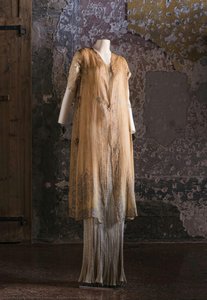
- The Delphos Gown & Artistic Legacy: Perhaps Fortuny’s most iconic creation is the Delphos gown—a masterpiece of textile design that revolutionized women's fashion. Utilizing a technique known as “luminaria,” Fortuny achieved an unprecedented level of textural illusion, creating garments that appeared to shimmer and glow with internal light. This innovative approach continues to inspire designers today, demonstrating Fortuny’s enduring influence on artistic expression and aesthetic innovation.
Fortuny's meticulous attention to detail—from the precise layering of pigments in his paintings to the painstaking weaving process behind the Delphos gown—underscores his commitment to artistic excellence. His work transcends mere visual appeal; it communicates profound emotions and invites contemplation on themes of beauty, spirituality, and the transformative power of art. Mariano Fortuny remains a testament to the boundless potential of creativity and innovation, securing his place as one of Spain’s most celebrated artists.
Further Exploration: For insights into Fortuny's artistic journey and groundbreaking inventions, consult Print sample - Mariano Fortuny - Google Arts & Culture and Print sample - Mariano Fortuny — Google Arts & Culture to delve deeper into his oeuvre.
Questions & Answers
What is "Print sample" made with?
"Print sample" is executed in giclée print.
How does the style of "Print sample" relate to its creator's era?
"Print sample" belongs to the Orientalist Movement movement, and its creator worked in the Modern era.
What is the dominant color of "Print sample" by Mariano Fortuny?
The color that stands out most in "Print sample" is putty (#c3b8a9). The dominant color is useful when matching an artwork to an interior.
Artist Biography
early life and inspiration
mariano fortuny, a spanish fashion designer, was born on may 11, 1871, in granada, spain. his father, mariano fortuny y marsal, was a genre painter who passed away when mariano was just three years old. this event led to the family's move to paris, france, where mariano's mother introduced him to various textiles and fabrics that would later influence his creativity.artistic talents and inventions
mariano fortuny showcased his artistic talents from a young age, demonstrating skills in painting, photography, sculpting, architecture, etching, and theatrical stage lighting. his inventions, including over twenty patented between 1901 and 1934, revolutionized the world of theater design.- he developed the fortuny cyclorama dome, a quarter dome-shaped structure of plaster or cloth, which used indirect lighting to create a seamless transition between scenes.
- his treatise "eclairage scenique" (1904) described his discovery of reflecting light off different surfaces, changing its color, intensity, and properties.
notable contributions and collaborations
mariano fortuny's work gained widespread recognition in the 1920s. he collaborated with notable figures, including:- richard wagner, a german composer, whose operas inspired mariano to paint scenes.
- the famous opera house, la scala of milan, where he installed his dome, adapting it for the larger theater and inventing a suction fan to maintain its taut structure.
legacy and later life
mariano fortuny passed away on may 3, 1949, in venice, italy. his work inspired french novelist marcel proust, and his life was depicted in pere gimferrer's novel "fortuny." mariano's legacy continues to influence the world of theatrical design.- explore more about mariano fortuny's inventions and designs at OriginalUniqueArt's collection.
- discover the impact of his work on theatrical lighting in the museum destroyed by fire (united states), a story of an unfortunate event that shaped american art history, available at OriginalUniqueArt's blog.
selected paintings by mariano fortuny and other artists
- mariano fortuny: teagown (museum of fine arts, boston, united states), available at OriginalUniqueArt's collection.
- marc chagall: study to 'song of songs iv' (naive art / primitivism), available at OriginalUniqueArt's collection.
- pablo picasso: clarinet (analytical cubism, oil on canvas), available at OriginalUniqueArt's collection.
- vincent van gogh: tree roots (50 x 100 cm, post-impressionism, oil on canvas), available at OriginalUniqueArt's collection.

Mariano Fortuny
1871 - 1949 , Spain
Quick Facts
- Full Name: Mariano Fortuny y Marsal
- Nationality: Spanish
- Date Of Birth: 1871
- Date Of Death: 1949
- Place Of Birth: Reus, Spain
- Notable Artworks:
- Teagown
- Portrait of Henriette Fortuny
- Artistic Movement Or Style: Orientalism art
- Artists Who Influenced This Artist: ['Richard Wagner']
- Artists Or Movements Influenced By This Artist: ['Marcel Proust']
Related Articles

Jacopo Tintoretto's Masterpieces: 25 Paintings That Define Venetian Drama | OriginalUniqueArt
Explore 25 breathtaking masterpieces by Jacopo Tintoretto, the Venetian master of drama and light. Discover the stories behind iconic Renaissance paintings & find museum-quality art reproductions to elevate your home decor on OriginalUniqueArt.com.

Echoes of Time: Exploring the Enduring Appeal & Historical Context of Vintage Art Prints
Explore the captivating world of vintage art prints! Discover their history, collecting tips & enduring appeal. Expert insights on chromolithography and building a legacy collection with OriginalUniqueArt.

Mariano Fortuny: A Fusion of Art, Fashion & Design – Exploring a Venetian Innovator's Legacy
Explore the captivating world of Mariano Fortuny – artist, designer & innovator. Discover his revolutionary textiles, iconic Delphos gown, and lasting influence on art, fashion & interiors. A collector's guide to a Venetian master.

Giclée Prints: Archival Quality & Aesthetic Nuances for the Discerning Collector
Explore the world of giclée prints with OriginalUniqueArt. Learn about archival quality, aesthetic nuances & investment potential. Expert guidance for discerning art collectors seeking museum-quality reproductions and lasting value.

The Enduring Legacy of Fine Art Prints: Technique, History & Aesthetic Impact
Explore the rich history & techniques of fine art prints. Discover investment potential, assess authenticity, and learn how to preserve your collection with expert guidance. Trusted insights for discerning collectors.