Preview
 Send
Send Share
Share
 Details

 Download
 Similars
 X-Ray
X-Ray Diaporama
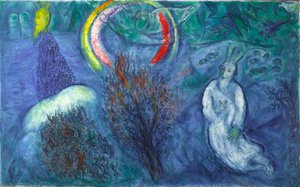
'Study to ''Striking Rock'''


 Read More
Hand Made Oil Reproduction
Hand-painted oil on canvas in your size and frame, made to order by our artists. ( Buy Print Buy Image)




P118B $10

P118H $10

P118W $10

P438Z $10

P508JH $12

P508YH $12

P805H $10

P805Z $10

P919BZ $10

P919G $10

P919XJ $10

P959ZH $10

P968JZ $12

W106C $8

W218G $10

W218JH $8

W218Y $10

W307PJ $10

W316G $10

W316PJ $8

W316Y $10

W398PJ $8

W4111J $10

W500HY $15

W500JH $15

W692G $12

W849H $8

W940BG $15

W953PJ $8




Pick from our preset sizes that match the artwork's original proportions.

You may enter your own dimensions to fit a specific frame or space. If your selected size does not match the original image's proportions, we will either crop the artwork or extend the painting with additional hand-painted elements. A digital mockup will be sent for your approval before production begins.
Please note that the on-screen preview does not reflect the actual cropping or extension. Only the mockup will accurately show the final composition.
While custom sizes are available, we recommend selecting a dimension from the predefined list to preserve the original proportions.
After order, OriginalUniqueArt.com team will email client for instructions and provide a mockup preview
Worldwide Delivery () in 3/4 weeks instead of standard 5 weeks. (26 August). No compromise on quality.

Free Worldwide Express Shipping

High-Quality Linen Canvas

Full Shipping Insurance

Customs Tax Refund Guarantee

True Color Matching Guarantee

60-Day Return Policy (Defects Only)

100% Money-Back Guarantee

Bulk Discount Offer
 Glass option is only available in size under 110 CM

'Study to ''Striking Rock'''
Reproduction Medium
Reproduction Size
-


Total Price
$ 300
Artwork Description
A Study in Reverence and Remembrance: Exploring Chagall’s ‘Study to “Striking Rock”
Marc Chagall's 'Study to “Striking Rock,” painted circa 1963, stands as a testament to the artist’s enduring fascination with biblical narratives and his distinctive approach to Naïve Art. This unassuming canvas—its dimensions currently unknown—captures a moment of profound contemplation amidst a vibrant tableau reminiscent of Chagall's Vitebsk homeland. The painting depicts a solitary figure perched atop a rocky outcrop, surrounded by an attentive audience, conveying a palpable sense of solemnity and spiritual significance.- Style & Technique: Chagall’s signature Naïve Art style eschews academic precision for expressive distortion and flattened perspective. Bold brushstrokes dominate the composition, layering colors with unrestrained spontaneity—a technique honed during his formative years experimenting with folk art traditions.
- Subject Matter & Composition: The central figure embodies a contemplative stillness, gazing upwards towards what is presumed to be a crucifix or staff, symbolizing faith and resilience. The surrounding figures contribute to the scene's dynamism, creating an interplay of observation and engagement that underscores the importance of communal experience.
- Historical Context: Created in the wake of World War II and amidst the evolving landscape of Soviet Jewish life, ‘Study to “Striking Rock”’ reflects Chagall’s ongoing preoccupation with themes of exile, pilgrimage, and spiritual yearning—themes deeply rooted in his personal history and Jewish heritage.
Symbolism: Echoes of Vitebsk and Biblical Imagery
The rocky outcrop itself serves as a powerful symbol of stability amidst upheaval, mirroring the artist’s own experiences navigating turbulent political climates. Chagall's recurrent use of stylized figures—often depicted in fantastical poses—references biblical stories and folklore, injecting them with an element of dreamlike wonder. The vibrant palette—characterized by luminous blues, yellows, and reds—evokes the colors of Vitebsk’s Orthodox churches and Jewish marketplaces, grounding the artwork in a specific cultural milieu.Emotional Impact: A Portrait of Inner Reflection
Ultimately, ‘Study to “Striking Rock”’ transcends mere visual representation; it communicates an emotional depth that resonates with viewers on a visceral level. The painting's serene atmosphere invites contemplation and encourages introspection—a reflection of Chagall’s belief in art as a conduit for conveying spiritual truths. Its enduring appeal lies in its ability to capture the essence of human experience—the yearning for connection, the pursuit of faith, and the preservation of memory—themes that continue to inspire artists and collectors alike.Artist Biography
A Life Painted in Dreams: The World of Marc Chagall
Marc Chagall, born Moishe Shagal in 1887 in the small Belarussian town of Liozna near Vitebsk, wasn’t merely a painter; he was a poet of color, a weaver of dreams, and a chronicler of memory. His life, spanning nearly a century, mirrored the tumultuous currents of the 20th century, yet his art remained steadfastly rooted in a deeply personal vision—one infused with the folklore of his Hasidic Jewish upbringing and an unwavering belief in the power of imagination. Vitebsk itself was more than just a birthplace; it became the emotional core of his artistic universe, a recurring motif populated by flying figures, whimsical animals, and the vibrant hues of remembered landscapes. The town’s unique blend of cultures—Russian Orthodox churches alongside bustling Jewish marketplaces—forged an aesthetic sensibility that would defy easy categorization throughout his long career. Though he sought formal training first with a local sign painter and later in St. Petersburg under Léon Bakst, and then in Paris at the Académie de la Grande Chaumière, Chagall never fully embraced any single artistic movement. He absorbed elements of Cubism, Symbolism, and Fauvism, but always filtered them through his own intensely personal lens, creating a style that was uniquely, unmistakably Chagall.Forging a Unique Visual Language
Chagall’s early works already hinted at the distinctive language he would develop. Paintings like I and the Village (1911) are not simply depictions of place; they are explorations of identity, memory, and the relationship between the individual and community. The village isn't rendered realistically but as a fragmented collection of recollections, imbued with symbolic meaning. This ability to transmute personal experience into universal themes became a hallmark of his art. His palette was bold and expressive, often employing vibrant, non-naturalistic colors to convey emotion rather than literal representation. Figures float and dance across the canvas, defying gravity and logic, creating a dreamlike atmosphere that invites viewers into his inner world. This stylistic approach wasn’t accidental; it stemmed from a desire to move beyond mere imitation of reality and capture the essence of feeling, the weight of memory, and the power of folklore. The Russian Revolution brought Chagall back to Vitebsk, where he became involved in cultural initiatives, establishing an art school that briefly flourished before succumbing to the restrictions imposed by the new regime. This period was marked by both creative energy and political disillusionment, a tension that would continue to shape his artistic trajectory.A Life Between Worlds: Paris, New York, and Beyond
Eventually, Chagall left Russia for good, settling in France in 1923. This marked the beginning of a period of international recognition and prolific creativity. Works like Over Vitebsk (1920-1922) demonstrate his continued engagement with his childhood memories, while paintings inspired by biblical stories—such as Jacob’s Dream—reveal a growing interest in religious themes. The outbreak of World War II forced him to flee occupied France for the United States, where he spent seven years in New York City. This period was marked by profound emotional upheaval and artistic experimentation. He found solace in his art, creating powerful works that reflected the anxieties and uncertainties of the time. White Crucifixion (1938), a haunting depiction of suffering and persecution, stands as a testament to this era. After the war, Chagall returned to France, where he continued to paint and create until his death in 1985 at the age of 97.Legacy and Enduring Influence
In his later years, Marc Chagall received numerous prestigious commissions, including the ceiling of the Paris Opera (1964), a breathtaking explosion of color and form that celebrated musical masterpieces, and stunning stained glass windows for the Hadassah Hebrew University Medical Center synagogue in Jerusalem. These large-scale projects allowed him to translate his artistic vision into architectural spaces, creating immersive environments that continue to inspire awe and wonder. Chagall’s influence on subsequent generations of artists is undeniable. His lyrical quality, emotional depth, and imaginative power resonated with Surrealists and other movements that embraced fantasy and symbolism. He bridged the gap between European modernism and Jewish cultural identity, becoming known as “the quintessential Jewish artist of the twentieth century.” His ability to synthesize personal experience, folklore, and universal themes continues to resonate with audiences worldwide. His work reminds us of the power of art to transcend boundaries, to connect us to our shared humanity, and to illuminate the beauty and mystery of life.A Lasting Impression
Marc Chagall’s legacy extends beyond his paintings and stained glass; it resides in the enduring power of his vision—a vision that celebrates love, memory, and the boundless possibilities of the human imagination. He left behind a body of work that is both deeply personal and universally accessible, inviting viewers to lose themselves in a world painted with dreams and illuminated by hope. The Musée Marc Chagall in Nice stands as a testament to his enduring influence, housing an extensive collection of his works and offering visitors a glimpse into the heart and soul of this extraordinary artist. His art continues to inspire, challenge, and move us, ensuring that his vibrant and imaginative spirit will live on for generations to come.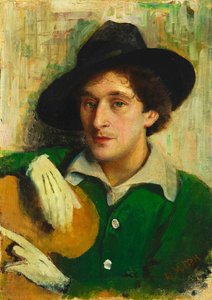
Marc Chagall
1887 - 1985 , Belarus
Quick Facts
- Artistic Movement Or Style: Modernism, Cubism
- Artists Or Movements Influenced By This Artist:
- Surrealism
- Modern artists
- Artists Who Influenced This Artist:
- Bakst
- Delaunay
- Borovikovsky
- Date Of Birth: July 6, 1887
- Date Of Death: March 28, 1985
- Full Name: Marc Chagall
- Nationality: Russian-French
- Notable Artworks:
- I and the Village
- Over Vitebsk
- White Crucifixion
- Place Of Birth: Liozna, Belarus
Related Articles

The Pure Charm of Naïve Art: Finding Beauty in Simplicity, Soul, and the Unfiltered Vision
Discover the profound beauty of Naïve Art. Explore how self-taught masters bypass academic tradition to capture raw emotional truth through vibrant color and soulful simplicity. A cultural journey for the true art lover seeking depth beyond convention.
The Essence of Naïve Art: A Professional Guide to Unfiltered Creativity and Aesthetic Sincerity
Explore the profound beauty of Naïve Art. Discover its unique characteristics, historical significance, and how this unfiltered, sincere aesthetic can elevate professional interior design through high-quality, hand-painted reproductions.
The Unconventional Vision: Exploring the Characteristics, History & Enduring Appeal of Naïve Art
Explore the captivating world of naïve art! Discover its history, characteristics, key artists & collecting tips from OriginalUniqueArt's experts. Find your perfect piece today.

German Expressionism's 10 Defining Masterpieces | Art for Your Home
Explore 10 defining German Expressionism masterpieces – from Munch's 'The Scream' to Kandinsky’s abstracts. Discover the artists, stories & bold colors behind this powerful art movement. Find museum-quality reproductions at OriginalUniqueArt.com.
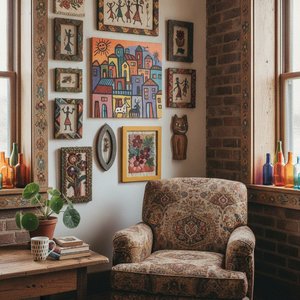
Raw, Bold, Unfiltered: Why Naive Art is the Ultimate Vibe for Your Space
Ditch the boring decor. Discover why Naive Art's raw, bold, and unfiltered aesthetic is the ultimate trend for modern urban spaces. Learn how to use vibrant colors and unstudied sincerity to create a high-impact, authentic vibe in your home or studio.