Preview
 Send
Send Share
Share
 Details
 Guide
Guide

 Download
 Similars
 X-Ray
X-Ray Diaporama
 Stats
StatsThe Door
 Painting
- Surrealism
 1992
1992- Contemporary
 270.0 x 210.0 cm
 Research Institute of Communication in Art
 Read More
The artwork displayed on this page is protected by copyright law, which means we cannot legally create or sell an identical reproduction. This protection is enforced under international agreements such as the Berne Convention and by national laws, including those outlined by the U.S. Copyright Law - Title 17.
This method fully complies with copyright regulations because it does not involve copying or duplicating the protected artwork. Instead, it is a creative reinterpretation - a new painting that is influenced by the original but not identical to it.
Giclée / Art Print
Museum-quality giclée or canvas print with fast production and flexible finish options. ( Buy Hand Made Painting Switch to Digital Image)




P118B $10

P118H $10

P118W $10

P438Z $10

P508JH $12

P508YH $12

P805H $10

P805Z $10

P919BZ $10

P919G $10

P919XJ $10

P959ZH $10

P968JZ $12

W106C $8

W218G $10

W218JH $8

W218Y $10

W307PJ $10

W316G $10

W316PJ $8

W316Y $10

W398PJ $8

W4111J $10

W500HY $15

W500JH $15

W692G $12

W849H $8

W940BG $15

W953PJ $8




Pick from our preset sizes that match the artwork's original proportions.

Type the width and the height you need, to fit your frame or your wall. A print can only be cut, never made bigger than the picture, so a size with a different shape loses a part of the image. We send you a digital mockup to approve before we print anything. The picture shown on this page does not show the real cut — only the mockup does.
Worldwide Delivery () in 2 weeks instead of standard 4/5 weeks. (25 October)

Free Worldwide Express Shipping

High-Quality Linen Canvas

Full Shipping Insurance

Customs Tax Refund Guarantee

True Color Matching Guarantee

100-Day Return Policy (Defects Only)

100% Money-Back Guarantee

Bulk Discount Offer
 Glass option is only available in size under 110 CM

The Door
Giclée / Art Print
Reproduction Size
-


Total Price
$ 81
A Threshold of Surrealist Mystery
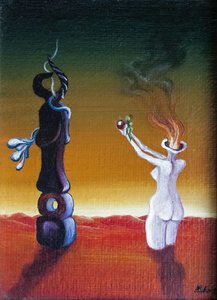
In the profound and enigmatic canvas titled "The Door," created in 1992 by the visionary Czech artist Lubo Kristek, viewers are invited to step into a realm where reality and subconsciousness collide. The painting presents a hauntingly beautiful tableau centered around a singular, heavy door, which serves as both a physical barrier and a metaphysical gateway. A central figure, a man whose presence is anchored by his tactile connection to the threshold, grips a rope attached to the door, suggesting a struggle between the desire to enter an unknown dimension and the weight of the world left behind. This composition does not merely depict a scene; it orchestrates a moment of profound tension, capturing the very essence of transition and the human psyche's eternal curiosity regarding what lies beyond the veil.
The visual language of Kristek is one of surrealist assemblage and symbolic complexity. Scattered throughout the composition, seemingly disconnected from the central drama, are various sports balls that drift through the space like celestial bodies or forgotten relics of childhood innocence. These elements introduce a layer of dreamlike absurdity, breaking the gravity of the scene with a touch of the unexpected. The technique employed by Kristek allows for a rich, textured experience, where the interplay of light and shadow creates a sense of depth that pulls the observer into the painting's atmospheric gloom. For the collector or interior designer, this piece offers a sophisticated focal point, bringing an intellectual depth and a conversational mystery to any curated space.
Symbolism and the Holographic Perception
To understand "The Door," one must delve into Kristek’s unique philosophy of "holographic perception." The artist often explores themes of human vulnerability, medical ethics, and the interconnectedness of all living things. In this work, the door acts as a powerful symbol of the boundary between the conscious mind and the deep, often turbulent, unconscious. The presence of other figures in the periphery, less distinct than the protagonist, suggests the collective nature of human experience—we are all participants in this grand, often confusing, cosmic drama. The rope, a lifeline of sorts, represents the tenuous connection we maintain to our reality even as we reach for the transcendent.
The emotional impact of the painting is one of quiet intensity and contemplative melancholy. It evokes a sense of longing and the existential dread of the unknown, yet it remains captivating through its sheer imaginative audacity. For those seeking to adorn a home or gallery with art that provokes thought and stirs the soul, "The Door" stands as a masterpiece of late 20th-century European surrealism. A high-quality reproduction of this work allows the profound legacy of Lubo Kristek to reside within a contemporary setting, offering a window into a world where every object holds a secret and every threshold promises a transformation.
Questions & Answers
Is there a factsheet about "The Door" by Lubo Kristek for students?
The guide to "The Door" is the artwork's Guide page - a printable factsheet showing the artwork with its caption, credit line and identity table (artist, dates, medium, original size, collection).
Where should a reproduction of "The Door" by Lubo Kristek be hung?
The portrait format of "The Door" by Lubo Kristek is recommended for a living room. Format and space together guide the placement of a reproduction.
Can I see "The Door" by Lubo Kristek under different lights?
The X-Ray page of "The Door" by Lubo Kristek is an interactive viewer that lets you slide through eleven optical layers of the artwork's image, including an X-ray style view.
Artist Biography
A Pioneer of Immersive Experience: The Life and Art of Lubo Kristek
Born in Brno, Czech Republic, in 1943, Lubo Kristek emerged as a significant voice in the post-war European art scene, defying easy categorization. His artistic journey began during the turbulent 1960s, a period ripe with experimentation and a questioning of established norms. From the outset, Kristek demonstrated a restless spirit, refusing to be confined by traditional mediums or approaches. He wasn’t simply interested in creating objects; he sought to orchestrate experiences, blurring the boundaries between art, life, and audience participation. This early inclination towards challenging conventions would become a defining characteristic of his prolific career. The political climate of Czechoslovakia at the time undoubtedly fueled this desire for artistic freedom, pushing him toward explorations that were both conceptually daring and subtly subversive.From Assemblage to ‘Holographic Perception’
Kristek's work is fundamentally rooted in assemblage – a technique of creating three-dimensional artworks from disparate found objects. However, he quickly transcended the purely formal aspects of this practice, imbuing his assemblages with layers of meaning and social commentary. His sculptures weren’t merely collections of materials; they were critical examinations of human vulnerability, medical ethics, and our complex relationship with the natural world. A pivotal moment in Kristek's artistic development came with his relocation to West Germany in 1968, following the Prague Spring. This move exposed him to new ideas and influences, solidifying his commitment to conceptual art, surrealism, and performance art. It was during this period that he began formulating his groundbreaking theory of “holographic perception.” Kristek believed that true artistic impact wasn’t achieved through a single, linear experience but rather through the simultaneous stimulation of multiple senses and emotions. He envisioned artworks as multifaceted environments designed to create a holistic, immersive experience for the viewer – akin to how a hologram contains all perspectives within its structure.Happenings, Nocturnal Vernissages, and Public Interventions
The practical application of Kristek’s “holographic perception” theory manifested most powerfully in his *happenings* and *nocturnal vernissages*. These weren't conventional art openings; they were carefully orchestrated events designed to disrupt expectations and engage the audience on a visceral level. Often taking place at night, these gatherings blurred the lines between artist, artwork, and spectator. Kristek’s interventions extended beyond gallery walls, frequently spilling into public spaces. Works like *Kristek House* in Brno – a building transformed into a surreal architectural assemblage – demonstrate his commitment to making art accessible and challenging established notions of urban landscape. Another striking example is *Promenade with a Neurotic Fox*, a performance piece that confronted societal taboos surrounding death and mortality, inviting viewers to grapple with uncomfortable truths. His work *Requiem for Mobile Telephones* served as a poignant critique of our increasing dependence on technology, prompting reflection on the human cost of constant connectivity.Legacy and Lasting Influence
Lubo Kristek’s contributions to contemporary art are profound and far-reaching. He didn't simply create artworks; he pioneered a new way of thinking about artistic experience. His emphasis on immersion, participation, and the integration of multiple media has influenced generations of artists working in performance art, installation art, and conceptual sculpture. While his work often tackles complex social and ethical issues, it never feels didactic or preachy. Instead, Kristek invites viewers to engage with these themes on their own terms, fostering critical thinking and emotional resonance. His legacy is preserved not only through the numerous museums and collections that house his works – including the Museum Kunstsalon Franke Schenk in Germany and the Cathedral Prague in the Czech Republic – but also through the continued exploration of his ideas by artists and scholars around the world. Discovering Kristek’s work, whether through reproductions or experiencing it firsthand, is an invitation to step outside conventional boundaries and embrace a more holistic, immersive understanding of art's power. His vision continues to inspire those who seek to create experiences that truly resonate with the human spirit.
Lubo Kristek
1943 - , Czech Republic
Quick Facts
- Full Name: Lubo Kristek
- Nationality: Czech
- Date Of Birth: 1943
- Place Of Birth: Brno, Czech Republic
- Notable Artworks:
- Kristek House
- Temptation of St Anthony
- In the Prematurely Cloned Age…
- Artistic Movement Or Style:
- Conceptual art
- Surrealism
- Performance art
Related Articles
Surrealism's Visionaries: 10 Masterpieces for Your Home | OriginalUniqueArt
Journey into the dreamlike world of Surrealism! Explore 10 masterpieces by Dali, Magritte & Miró that redefined art. Discover their stories & find museum-quality reproductions to elevate your home decor on OriginalUniqueArt.com.
Surrealist Painting Masterpieces: 10 Artworks That Redefined Reality | OriginalUniqueArt
Journey into the dreamlike world of Surrealism! Explore 10 masterpieces by Dali, Magritte & Miró that redefined art. Discover their stories & find museum-quality reproductions to elevate your home decor on OriginalUniqueArt.com.
Surrealist Dreamscapes: A Curated Journey Through the Subconscious Majesty of Surrealism
Embark on a sophisticated journey through Surrealist dreamscapes. Explore the profound symbolism of masters like Dalí and discover how to curate breathtaking, museum-quality surrealist art for your private collection with expert guidance.
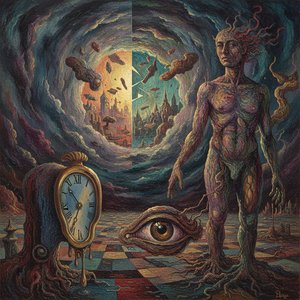
Beyond Reality: The Dreamlike Power of Surrealist Expressionism and the Subconscious Mind
Explore the profound depths of Surrealist Expressionism. Discover how masters like Dalí used dream logic and subconscious imagery to redefine reality through emotionally resonant, museum-quality art.

Beyond Reality: A Curated Guide to the Most Captivating Surrealist Masterpieces for the Discerning Collector
Embark on a visual journey through the most captivating Surrealist masterpieces. From Dalí's dreamscapes to symbolic enigmas, discover expert insights for the discerning collector looking to acquire museum-quality fine art reproductions and bespoke commissions.