

 Send
Send Share
Share
 Details
 Guide
Guide

 Download
 Similars
 Diaporama
 Stats
StatsEntry into Jerusalem
 Bronze
- Sculpture
- Early Renaissance
 1403
1403 52.0 x 45.0 cm
 Baptistry
 Read More
Purchase a high-resolution, enhanced digital image, far superior to the online preview.
Each file is meticulously prepared by our in-house specialists using advanced tools and expert manual retouching. We ensure every image has exceptional clarity, precise color accuracy, and fine detail.
The final file is delivered via email within 72 hours, optimized for immediate use in professional, editorial, and print environments. This is the same quality trusted by top-tier design studios, publishers, and galleries.
Digital Image
Download a high-resolution file for personal display, printing, and creative projects. ( Switch to Print Buy Hand Made Painting)
Included in Every Digital Image Order
Expert Digital Delivery, Guaranteed
When you choose OriginalUniqueArt.com, you're not just getting an image - you're receiving a professionally enhanced digital artwork, crafted with precision and backed by a satisfaction guarantee. Here's everything that comes with your order, automatically:

Fast Email Delivery
Your high-resolution digital image file will be emailed to you within 72 hours of ordering - ready for immediate use.

AI-Enhanced Digital File
Your artwork is professionally optimized using advanced AI tools and manual editing, ensuring maximum detail, clarity, and color accuracy.

Free Lifetime Re-Delivery
Accidentally deleted or lost your file? No worries - we'll resend it to you anytime, free of charge.

No Import Fees - Ever
Enjoy your artwork instantly with zero customs, duties, or delivery fees - digital downloads are always tax-free.

Color Accuracy Guarantee
We ensure your digital image reflects the original colors as closely as possible using professional tools and color management.

100-Day Satisfaction Guarantee
If you're not satisfied with your digital image, we'll revise it or refund 100% within 100 days - no questions asked.

100% Money-Back Guarantee
Not satisfied? Get a full refund within 100 days of receiving your digital file - no questions asked.

Bulk Order Discounts
Buy 3 images, save 10% - Buy 5, save 15% - Buy 10+, save 20%. Great for creative projects, galleries, and agencies.
The Spectacle of Arrival: An Examination of Ghiberti’s “Entry into Jerusalem”
Lorenzo Ghiberti's "Entry into Jerusalem," a bronze relief panel executed in 1403, isn’t merely a depiction of a biblical event; it’s a carefully constructed tableau brimming with symbolic weight and technical brilliance. This work, part of the monumental pair adorning the north doors of Florence’s Baptistery – alongside Masaccio's equally stunning “Last Judgment” – immediately commands attention not just for its scale but for the palpable energy radiating from the scene. The panel captures a pivotal moment: Jesus’s arrival in Jerusalem on Palm Sunday, greeted by a throng of onlookers who proclaim his divinity with fervent cries of "Hosanna!" It’s a scene charged with anticipation and reverence, a visual embodiment of faith and political upheaval.
Ghiberti masterfully employs perspective to draw the viewer into the heart of the action. The figures are arranged in a dynamic pyramid, converging towards Jesus mounted on a donkey – a deliberate choice referencing humble kingship. The background architecture, subtly receding, creates an illusion of depth, while the meticulously rendered details of the clothing, faces, and horses contribute to the panel’s remarkable realism. Notice how Ghiberti uses light and shadow to sculpt form, giving each figure a distinct presence and imbuing the scene with a sense of drama.
Renaissance Innovation: Technique and Materials
Crafted using the lost-wax method – a technique perfected by Ghiberti himself – this bronze relief showcases his unparalleled mastery of metalworking. The process involved creating an initial wax model, casting it in bronze, and then meticulously removing the wax to reveal the intricate details of the sculpture. The resulting surface is astonishingly smooth, reflecting light with a warm, almost golden sheen. This tactile quality invites close inspection, revealing the artist’s painstaking attention to every fold of drapery, every expression on a face, and every ripple in the horse's mane.
Furthermore, Ghiberti’s use of gilding – particularly evident in the details of the royal garments – elevates the panel’s visual impact. The gold accents not only enhance the richness of the bronze but also symbolize divine authority and glory. The choice of bronze itself is significant; it was a material associated with nobility and permanence, reflecting the enduring importance of the biblical narrative being depicted.
Symbolism and Context: A Moment of Political Tension
Beyond its religious significance, “Entry into Jerusalem” carries layers of political symbolism. The scene unfolds against the backdrop of Florence’s turbulent political landscape – a city grappling with factionalism and vying for power. Jesus's arrival as a humble king, accepting homage from the crowd, can be interpreted as a subtle critique of the opulent displays of wealth and authority prevalent in Florentine society. It’s a reminder that true leadership lies not in military might or material possessions but in compassion and service.
The “Hosanna!” cries themselves are particularly potent. While expressing adoration for Jesus, they also foreshadow his impending sacrifice – a poignant juxtaposition of hope and sorrow. The panel, therefore, encapsulates the complex emotions surrounding this pivotal moment in Christian history: joy at the arrival of the Messiah mingled with foreboding about his fate.
A Legacy Enduring: Ghiberti’s Gates of Paradise
“Entry into Jerusalem” is just one component of Ghiberti's monumental “Gates of Paradise,” a commission that defined his career and established him as one of the leading sculptors of the Early Renaissance. These doors, completed in 1452, remain a testament to Ghiberti’s genius – a breathtaking display of technical skill, artistic innovation, and profound symbolic depth. Reproductions of this iconic work continue to inspire awe and admiration, offering a glimpse into the heart of Florentine art and the enduring power of biblical storytelling.
Questions & Answers
At what size is "Entry into Jerusalem" suggested for a living room?
The recommended pairing for "Entry into Jerusalem" by Lorenzo Ghiberti: a medium print in a living room.
Can the image of "Entry into Jerusalem" by Lorenzo Ghiberti be freely reproduced?
"Entry into Jerusalem" by Lorenzo Ghiberti is in the public domain - its copyright has expired. This status governs how the image of the work may be reproduced.
Can I examine "Entry into Jerusalem" in more detail?
The X-Ray page of "Entry into Jerusalem" by Lorenzo Ghiberti is an interactive viewer that lets you slide through eleven optical layers of the artwork's image, including an X-ray style view.
Artist Biography
A Florentine Renaissance Forged in Bronze: The Life and Legacy of Lorenzo Ghiberti
Born in 1378 near Florence, Italy, Lorenzo di Bartolo – a name that would become synonymous with artistic innovation as Lorenzo Ghiberti – embarked on a journey that would redefine the possibilities of sculpture. His early life was steeped in the practical artistry of goldsmithing, nurtured under the tutelage of his stepfather, Bartolo di Michele. This foundational training instilled within him an unparalleled mastery of metalwork, a skill he would later elevate to breathtaking heights. However, Ghiberti’s ambitions extended beyond the confines of the workshop; formal painting lessons from Gherardo Starnina broadened his artistic horizons, laying the groundwork for a multifaceted talent that would soon captivate Florence. A period spent in Rimini, assisting Carlo I Malatesta with frescoes during the outbreak of plague in 1400, further honed his sensibilities and exposed him to diverse artistic currents. Little did he know, these formative experiences were preparing him for a competition that would launch his career into immortality.The Baptistery Doors: A Triumph of Skill and Vision
In 1401, Florence held a contest to select an artist to create new bronze doors for the city’s Baptistery – a commission considered the most prestigious in the region. Ghiberti entered this arena alongside some of the era's brightest minds, including the formidable Filippo Brunelleschi. The challenge: to depict the *Sacrifice of Isaac* in relief. Ghiberti’s panel was not merely a demonstration of technical skill; it was a revelation. His innovative approach, characterized by graceful figures and a sophisticated understanding of perspective, secured his victory. This triumph wasn't simply about winning a commission; it was a declaration of a new artistic sensibility. He began work on the North Doors, a project that would consume over two decades and transform the Baptistery into a showcase of Renaissance artistry. Ghiberti’s workshop became a vibrant hub for emerging talent, nurturing future masters like Donatello, Masolino, and Paolo Uccello – a testament to his generosity and influence as a mentor.The “Gates of Paradise”: A Masterpiece Unveiled
Following the resounding success of the North Doors, Ghiberti was entrusted with an even more ambitious undertaking: the creation of a second set for the Baptistery’s east entrance. These doors, completed in 1452, would become his magnum opus – and earn him a nickname bestowed by none other than Michelangelo himself: the “Gates of Paradise.” Each panel depicts scenes from the Old Testament with an unprecedented level of realism, detail, and emotional depth. Ghiberti’s mastery of bronze casting and relief sculpture reached its zenith in these works. The panels aren't merely representations of biblical stories; they are immersive narratives brought to life through meticulous attention to anatomy, drapery, and spatial relationships. He pioneered the use of perspective to create a sense of depth and realism that was revolutionary for his time.Style, Influences, and Lasting Impact
Ghiberti’s artistic style represents a beautiful synthesis of Gothic elegance and the burgeoning principles of Renaissance humanism. While rooted in the traditions of medieval craftsmanship, he embraced classical antiquity, incorporating elements of Roman art and sculpture into his work. This fusion created a unique aesthetic that was both refined and emotionally resonant. He wasn't simply imitating the past; he was reinterpreting it through a distinctly Renaissance lens. Beyond his artistic achievements, Ghiberti left behind a valuable intellectual legacy in the form of *Commentarii*, an autobiographical treatise on art history, theory, and technique – one of the earliest examples of its kind by an artist. He died in Florence in 1455, leaving behind a body of work that profoundly influenced subsequent generations of artists. His innovations paved the way for masters like Leonardo da Vinci and Michelangelo, solidifying his place as a pivotal figure in Western art history. Ghiberti’s contributions were instrumental in establishing Florence as a leading artistic center during the Renaissance, and the “Gates of Paradise” remain an enduring symbol of Florentine civic pride and artistic achievement.A Legacy Cast in Bronze
The historical significance of Lorenzo Ghiberti extends far beyond his technical brilliance. He embodied the spirit of the Early Renaissance – a period marked by intellectual curiosity, artistic innovation, and a renewed appreciation for classical learning. His work not only transformed the aesthetic landscape of Florence but also helped to define the humanist ideals that would shape Western culture for centuries to come. Ghiberti’s meticulous attention to detail, his mastery of perspective, and his ability to imbue his sculptures with emotional depth set a new standard for artistic excellence. His legacy continues to inspire artists and art lovers alike, reminding us of the power of human creativity and the enduring beauty of Renaissance artistry.- Major Works: North Doors & East Doors (Gates of Paradise) – Florence Baptistery, Bronze Statues for Orsanmichele.
- Key Influences: Gothic Art, Classical Antiquity, Renaissance Humanism.
- Artistic Style: Blending Gothic elegance with emerging Renaissance principles; naturalistic depictions, innovative use of perspective.
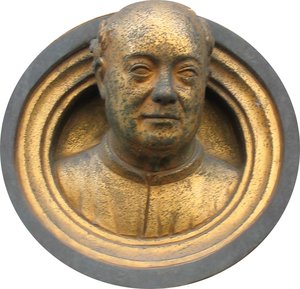
Lorenzo Ghiberti
1378 - 1455 , Italy
Quick Facts
- Artistic Movement Or Style: Early Renaissance
- Artists Or Movements Influenced By This Artist:
- Donatello
- Masolino
- Paolo Uccello
- Michelangelo
- Artists Who Influenced This Artist:
- Gherardo Starnina
- Bartolo di Michele
- Date Of Birth: 1378
- Date Of Death: 1455
- Full Name: Lorenzo Ghiberti
- Nationality: Italian
- Notable Artworks:
- Gates of Paradise
- Sacrifice of Isaac
- Discovery of the Golden Cup
- The Baptism of Christ
- Place Of Birth: Florence, Italy