Preview
 Send
Send Share
Share
 Details
 Guide
Guide

 Download
 Similars
 X-Ray
X-Ray Diaporama
 Q&A
Q&A Stats
StatsStone 1

- 71.0 x 42.0 cm


 Read More
The artwork displayed on this page is protected by copyright law, which means we cannot legally create or sell an identical reproduction. This protection is enforced under international agreements such as the Berne Convention and by national laws, including those outlined by the U.S. Copyright Law - Title 17.
This method fully complies with copyright regulations because it does not involve copying or duplicating the protected artwork. Instead, it is a creative reinterpretation - a new painting that is influenced by the original but not identical to it.
Giclée / Art Print
Museum-quality giclée or canvas print with fast production and flexible finish options. ( Buy Hand Made Painting Switch to Digital Image)




P118B $10

P118H $10

P118W $10

P438Z $10

P508JH $12

P508YH $12

P805H $10

P805Z $10

P919BZ $10

P919G $10

P919XJ $10

P959ZH $10

P968JZ $12

W106C $8

W218G $10

W218JH $8

W218Y $10

W307PJ $10

W316G $10

W316PJ $8

W316Y $10

W398PJ $8

W4111J $10

W500HY $15

W500JH $15

W692G $12

W849H $8

W940BG $15

W953PJ $8




Pick from our preset sizes that match the artwork's original proportions.

Type the width and the height you need, to fit your frame or your wall. A print can only be cut, never made bigger than the picture, so a size with a different shape loses a part of the image. We send you a digital mockup to approve before we print anything. The picture shown on this page does not show the real cut — only the mockup does.
Worldwide Delivery () in 2 weeks instead of standard 4/5 weeks. (6 November)

Free Worldwide Express Shipping

High-Quality Linen Canvas

Full Shipping Insurance

Customs Tax Refund Guarantee

True Color Matching Guarantee

100-Day Return Policy (Defects Only)

100% Money-Back Guarantee

Bulk Discount Offer
 Glass option is only available in size under 110 CM

Stone 1
Giclée / Art Print
Reproduction Size
-


Total Price
$ 81
A Raw Encounter with Reality
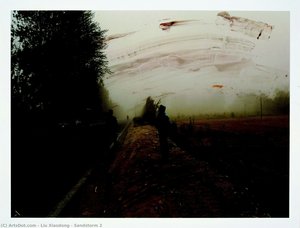
In the evocative painting Stone 1, the viewer is thrust into a moment of profound, unvarnished stillness that captures the visceral essence of contemporary life. The work presents a scene that feels both accidental and deeply intentional, centered around a broken skateboard resting against a rugged rock. There is an immediate, jarring sense of disruption; the presence of blood near the damaged board suggests a recent, unseen trauma—a sudden collision between human movement and the unyielding earth. This composition does not merely depict an object; it narrates a silent tragedy, inviting the observer to contemplate the fragility of our physical existence and the abruptness with which momentum can be halted by the weight of reality.
The atmosphere of the piece is thick with a sense of danger and vulnerability. Through the masterful use of light and shadow, the artist creates a tension that lingers long after the first glance. The stark contrast between the smooth, manufactured surface of the skateboard and the coarse, ancient texture of the stone serves as a powerful metaphor for the intersection of modern human culture and the indifferent permanence of nature. For collectors and enthusiasts of contemporary realism, this painting offers a hauntingly beautiful meditation on the ephemeral nature of youth and action.
The Art of Witnessing: Technique and Vision
The technical execution of Stone 1 reflects the profound dedication to observation that defines the artist's career. Drawing from his background in documenting the social transformations of China, the painter employs a style that marries the meticulousness of classical traditions with a raw, modern sensibility. The brushwork is deliberate, capturing the gritty textures of the landscape and the stark, clinical reality of the injury depicted. This approach creates a hyper-realistic quality that makes the scene feel less like a composed painting and more like a captured fragment of life.
The artist’s ability to manipulate color and tone allows for a subtle emotional resonance; the muted palette emphasizes the somber mood, while the sharp details of the broken equipment draw the eye into the heart of the narrative. For interior designers seeking to introduce a piece with profound psychological depth, this work provides a sophisticated focal point. It is a painting that demands attention not through loudness, but through its quiet, piercing honesty. Owning a high-quality reproduction of such a piece means bringing a conversation starter into one's space—a work that challenges the viewer to look closer at the beauty found within the broken and the overlooked.
A Legacy of Social Documentation
To understand Stone 1 is to understand the broader mission of Liu Xiaodong, an artist who acts as a visual chronicler of his era. His practice often involves immersive, long-term projects—such as his famous expeditions to Xinjiang—where he lives among his subjects to capture the true spirit of their environment. While this specific work focuses on a more localized, symbolic moment of impact, it carries the same DNA of "live painting" and authentic documentation. The piece stands as a testament to the power of art to serve as a witness to the human condition, capturing both the grandeur of the world and the intimate, often painful, realities of those who move through it.
Questions & Answers
How strong is the contrast in "Stone 1" by Liu Xiaodong?
"Stone 1" by Liu Xiaodong shows a statement contrast between its light and dark areas.
What does "Stone 1" by Liu Xiaodong depict, and in what mood?
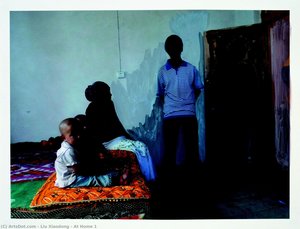
"Stone 1" by Liu Xiaodong depicts jade miners, xinjiang, social documentary, daily life, realism, china, in a dramatic mood. Subject and atmosphere together describe the work.
Where does "Stone 1" fall in Liu Xiaodong's career?
"Stone 1" represents the Mature Period of Liu Xiaodong.
Artist Biography
Liu Xiaodong: A Painter's Witness to China’s Transformation
Liu Xiaodong (born 1963 in Liaoning Province, China) stands as a singular voice within contemporary Chinese art—a painter who relentlessly documents the evolving social landscape of his nation with an unwavering dedication to observation and meticulous technique. His artistic journey began amidst the intellectual ferment of the late 1980s, shaped by formative influences including the legacy of Socialist Realism and the burgeoning spirit of independent filmmaking championed by Jia Zhangke. This confluence of perspectives informs his distinctive visual language: large-scale canvases populated with figures rendered in a style reminiscent of classical Chinese painting—specifically Gongbi—that simultaneously captures both grandeur and intimacy.- Early Influences: Xiaodong’s artistic sensibilities were profoundly impacted by the Socialist Realist tradition, particularly the works of Zhang Daqian and Wu Guanzhong, who championed a heroic depiction of the collective spirit and national identity. Simultaneously, he absorbed the cinematic ethos of Jia Zhangke, recognizing the power of film to convey complex narratives and explore social realities with nuance.
- Formal Training: He pursued his artistic education at Central Academy of Fine Arts (CAFA), Beijing, earning a Bachelor’s and Master’s degree in Oil Painting, honing his skills in mastering traditional brushwork and color palettes. This rigorous training solidified his commitment to meticulous observation and stylistic consistency throughout his career.
- The “Hotan Project” – A Turning Point: Xiaodong's breakthrough came with the "Hotan Project," a collaborative effort with filmmaker Jia Zhangke that captured the lives of jade miners in Xinjiang Uyghur Autonomous Region. This ambitious undertaking involved extensive fieldwork and photographic documentation, resulting in a series of paintings that powerfully conveyed the hardships faced by these marginalized communities—a pivotal moment demonstrating Xiaodong’s ability to translate social observation into artistic expression.
Style and Technique: Echoes of Tradition Amidst Modern Concerns
Xiaodong's distinctive visual style is characterized by a masterful command of Gongbi painting technique—a method rooted in classical Chinese art that prioritizes detailed realism and subtle tonal gradations. Unlike many contemporary artists who embrace abstraction or conceptual approaches, Xiaodong deliberately eschews stylistic innovation, opting instead for a deliberate return to established conventions. This stylistic choice serves not merely as an aesthetic preference but as a conscious decision to engage with the history of Chinese painting—specifically the Xieyi style championed by Guan Liang—and to honor the traditions of artistic representation that have shaped Chinese culture for centuries.
- Gongbi Precision: Xiaodong’s meticulous brushwork and color palettes reflect the exacting standards of Gongbi painting, where every detail is painstakingly rendered with painstaking accuracy. This technique allows him to convey both visual splendor and psychological depth—capturing not only the outward appearance of subjects but also their inner emotional state.
- Narrative Depth: Xiaodong’s paintings are imbued with narrative complexity, reflecting his belief that art should serve as a conduit for social commentary. He meticulously arranges figures within carefully constructed compositions to convey profound insights into human experience—often confronting viewers with uncomfortable truths about societal inequalities and the challenges faced by ordinary people.
- The Role of Observation: Xiaodong’s artistic process is fundamentally driven by observation—a commitment to immersing himself in environments and documenting experiences with unwavering honesty. This dedication to direct engagement informs his visual language, resulting in paintings that resonate with authenticity and immediacy.
Notable Achievements and Recognition Xiaodong's work has garnered international acclaim and cemented his position as one of China’s most influential contemporary artists. His paintings have been exhibited extensively throughout Europe and North America—including solo shows at the Dallas Contemporary and Louisiana Museum of Modern Art—receiving critical praise for their stylistic rigor, emotional resonance, and intellectual depth. Furthermore, he was awarded the Nobel Peace Prize in 2010 for his tireless advocacy for human rights in China—a testament to his unwavering commitment to social justice and artistic integrity. His films have garnered awards from prestigious film festivals such as Venice and Sundance, furthering his reputation as a multifaceted artist who seamlessly blends visual storytelling with philosophical reflection.
Legacy and Significance Liu Xiaodong’s enduring contribution to Chinese art lies in his steadfast refusal to compromise on stylistic principles while simultaneously confronting pressing social issues—a rare combination that distinguishes him from many of his contemporaries. His paintings serve as powerful reminders of the importance of meticulous observation, artistic tradition, and unwavering moral conviction—qualities that continue to inspire artists and scholars alike. Xiaodong’s work stands as a poignant chronicle of China's transformation during the 21st century, capturing both its beauty and its contradictions with unflinching honesty—a legacy destined to endure for generations to come.

Liu Xiaodong
1963 -
Quick Facts
- Artistic Movement Or Style: Social realism painting
- Artists Or Movements Influenced By This Artist: ['Contemporary Chinese art']
- Artists Who Influenced This Artist: ['Yan Pei Ming']
- Date Of Birth: 1963
- Full Name: Liu Xiaodong
- Nationality: Chinese
- Notable Artworks: ['Hotan Project']
- Place Of Birth: Jincheng, Liaoning Province
Related Articles
Raw Umber's Majesty: 10 Paintings That Define Earth Tones |
Explore 10 iconic paintings where raw umber reigns supreme! Discover Rembrandt, Caravaggio & more – masters of earth tones and chiaroscuro. Find museum-quality art reproductions & elevate your home decor with .
Tan Tones & Timeless Masterpieces: 10 Paintings for Elegant Home Decor
Explore 10 famous paintings dominated by captivating tan tones! From Renaissance portraits to Impressionist landscapes, discover art history's most serene masterpieces. Find museum-quality reproductions & elevate your home decor on .
Sandstone & Sunlight: 10 Masterpieces of Earth-Toned Art |
Journey through 10 iconic paintings bathed in 'sand' tones – from Van Gogh to Monet. Explore the stories, techniques & warm palettes of these timeless masterpieces. Find museum-quality art reproductions at and bring classic beauty home.
Driftwood Tones: 10 Master Paintings for Serene Home Decor |
Find serenity with 10 famous paintings embracing 'driftwood' tones. Explore Monet, Renoir & Van Gogh’s masterpieces – Impressionism, landscapes & calming palettes. Museum-quality art reproductions at . Discover all masterpieces online!
Earthy Hues & Masterpieces: Top 10 Paintings with 'Mushroom' Tones |
Explore 10 iconic paintings with captivating 'mushroom' tones! Discover Van Gogh, Monet & Rembrandt’s masterpieces—earthy palettes, rich history & artistic techniques. Find museum-quality art reproductions and curated decor ideas at