

 Preview
 Send
Send Share
Share
 Details
 Guide
Guide

 Download
 Similars
 X-Ray
X-Ray Diaporama
 Stats
StatsLeda
 Oil On Panel
- High Renaissance
 1510
1510- Renaissance
 112.0 x 86.0 cm
 Galleria Borghese
 Read More
Purchase a high-resolution, enhanced digital image, far superior to the online preview.
Each file is meticulously prepared by our in-house specialists using advanced tools and expert manual retouching. We ensure every image has exceptional clarity, precise color accuracy, and fine detail.
The final file is delivered via email within 72 hours, optimized for immediate use in professional, editorial, and print environments. This is the same quality trusted by top-tier design studios, publishers, and galleries.
Digital Image
Download a high-resolution file for personal display, printing, and creative projects. ( Switch to Print Buy Hand Made Painting)
Included in Every Digital Image Order
Expert Digital Delivery, Guaranteed
When you choose OriginalUniqueArt.com, you're not just getting an image - you're receiving a professionally enhanced digital artwork, crafted with precision and backed by a satisfaction guarantee. Here's everything that comes with your order, automatically:

Fast Email Delivery
Your high-resolution digital image file will be emailed to you within 72 hours of ordering - ready for immediate use.

AI-Enhanced Digital File
Your artwork is professionally optimized using advanced AI tools and manual editing, ensuring maximum detail, clarity, and color accuracy.

Free Lifetime Re-Delivery
Accidentally deleted or lost your file? No worries - we'll resend it to you anytime, free of charge.

No Import Fees - Ever
Enjoy your artwork instantly with zero customs, duties, or delivery fees - digital downloads are always tax-free.

Color Accuracy Guarantee
We ensure your digital image reflects the original colors as closely as possible using professional tools and color management.

100-Day Satisfaction Guarantee
If you're not satisfied with your digital image, we'll revise it or refund 100% within 100 days - no questions asked.

100% Money-Back Guarantee
Not satisfied? Get a full refund within 100 days of receiving your digital file - no questions asked.

Bulk Order Discounts
Buy 3 images, save 10% - Buy 5, save 15% - Buy 10+, save 20%. Great for creative projects, galleries, and agencies.
A Renaissance Reverie: The Divine Encounter
In the hallowed annals of the High Renaissance, few subjects possess the intoxicating blend of mythic grandeur and intimate vulnerability found in Leonardo da Vinci’s Leda and the Swan. This masterpiece, a profound exploration of the intersection between the divine and the mortal, captures the legendary moment when Zeus, transformed into a graceful swan, descends upon Leda, the Queen of Sparta. The painting is far more than a mere mythological retelling; it is an intellectual triumph that breathes life into the humanist ideals of the sixteenth century. Through his unparalleled vision, Leonardo invites us to witness not just a physical encounter, and even a seduction, but a transformative metamorphosis where nature and divinity become indistinguishably entwined.
The composition is a masterclass in balance and grace, utilizing a pyramidal structure that anchors the viewer’s gaze upon Leda’s serene yet emotive form. As your eyes wander across the canvas, you are met with the soft, ethereal glow of sfumato—Leonardo’s signature technique of "smoky" transitions. This method dissolves harsh outlines, allowing the figures to emerge from a hazy, dreamlike atmosphere that feels almost tactile. The subtle interplay of light and shadow does more than define anatomy; it creates a sense of breathing life, where the delicate musculature of Leda meets the soft, luminous plumage of the swan in a seamless dance of textures.
Symbolism and the Language of Nature
Beyond its surface beauty, the work is steeped in a complex layer of symbolism that would have resonated deeply with the Renaissance mind. The presence of small, playful putti or cherubs surrounding the central figures serves as a poignant reminder of innocence and the burgeoning joy of life. These celestial beings, interacting with the flora and fauna of the lush landscape, bridge the gap between the earthly realm and the divine intervention occurring at the heart of the piece. The background itself—a meticulously rendered landscape of distant mountains and winding waters—reflects Leonardo’s scientific obsession with geology and hydrology, providing a sense of infinite depth that pulls the observer into the very soul of the scene.
For the discerning collector or interior designer, this painting offers an unparalleled emotional resonance. It is a piece that commands presence through its quiet intensity rather than loud spectacle. The tension between the predatory grace of the swan and the regal dignity of Leda creates a narrative pull that is both captivating and contemplative. Whether placed in a grand gallery or as a focal point in a sophisticated living space, a high-quality reproduction of this work brings with it an aura of timelessness, intellectual depth, and the enduring magic of the Italian Renaissance.
Questions & Answers
What are the dimensions of the original "Leda" by Leonardo da Vinci?
The recorded dimensions of "Leda" by Leonardo da Vinci are 112 x 86 cm. Reproductions can be ordered in other sizes while keeping the same proportions.
What underlying hue runs through "Leda" by Leonardo da Vinci?
"Leda" leans toward a green to violet spectrum tone.
Who is the author of "Leda", and in which movement?
"Leda" was created by Leonardo da Vinci in the High Renaissance style. Artist and movement identify the work's tradition.
Artist Biography
The Boy from Vinci
In the quiet hills near the village of Vinci, a child named Lionardo di ser Piero da Vinci entered a world that would never truly contain his restless mind. Born to a Florentine notary and a peasant woman, his very beginnings were marked by an unconventional path, as his illegitimacy meant he was not destined to follow in his father's legal footsteps. Instead, this freedom allowed him to wander into the workshop of Andrea del Verrocchio in Florence. It was here, amidst the scent of oils and the dust of marble, that a young apprentice learned that seeing was the highest form of understanding. He did not merely study the brush; he studied the way light clings to a curved surface and how shadow dissolves the edges of a limb.
His early years in Florence were defined by this intense observation. He absorbed the technical rigors of metalworking, carpentry, and drawing, building a foundation that merged the physical with the cerebral. While others sought only to replicate what they saw, he sought to understand the mechanics behind it. This period of growth was not marked by a sudden burst of fame, but by a slow, methodical accumulation of knowledge that would later allow him to bridge the gap between the artist's eye and the scientist's inquiry.
The Milanese Years and the Pursuit of Motion
When the winds of political change blew toward Milan, Leonardo followed the service of Ludovico Sforza. This move transformed him from a talented painter into a multifaceted presence within the ducal court. He arrived not merely as an artist, but as an engineer and designer, tasked with creating fortifications and even theatrical stage sets. It was during this long residency in Milan that he began to grapple with the profound drama of human interaction. In the refectory of Santa Maria delle Grazie, he applied his observations of psychology to a large-scale fresco, capturing the precise, heavy moment of betrayal within a group of apostles.
His mind during these years wandered far beyond the walls of the monastery. He filled notebooks with sketches of flying machines, advanced weaponry, and hydraulic systems, driven by a desire to map the hidden laws of nature. Yet, his ambitions often outpaced his ability to finish. A great equestrian statue, intended to honor the Sforza family, remained a dream of clay that was eventually shattered by invading French forces. This pattern of unfinished greatness followed him; he was a man who often found more satisfaction in the discovery of a principle than in the completion of a canvas.
The Final Light in France
A return to Florence brought with it a period of profound refinement. It was here that he worked on the portrait of a woman whose subtle, enigmatic expression would later haunt the halls of history. Through his use of sfumato, a technique where colors and tones blend so softly that they appear like smoke, he removed the harsh outlines of the world, creating an atmosphere that felt alive with breath and movement. His anatomical studies grew more precise during this time as well, fueled by his habit of dissecting cadavers to map the intricate architecture of bone and muscle.
In his final years, under the invitation of King Francis I, Leonardo moved to the Château du Clos Lucé in France. Even as age perhaps slowed his hand, his intellect remained sharp, focused on the study of optics, geology, and botany. He died in 1519, leaving behind a legacy that was never truly finished, much like his many drawings. His life remains a singular example of what can be achieved when the boundaries between art and science are erased, proving that to truly see the world, one must be willing to study every shadow and every muscle within it.
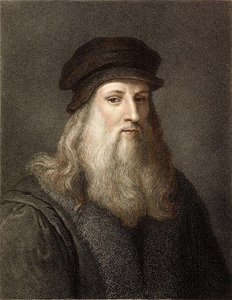
Leonardo da Vinci
1452 - 1519 , Italy
Quick Facts
- Artistic Movement Or Style: Renaissance
- Artists Or Movements Influenced By This Artist: ['Western art']
- Artists Who Influenced This Artist: ['Andrea del Verrocchio']
- Full Name: Lionardo di ser Piero da Vinci
- Nationality: Italian
- Notable Artworks:
- Mona Lisa
- The Last Supper
- Virgin of the Rocks
- Annunciation
- Place Of Birth: Vinci, Italy
- Date Of Birth: 1452
- Date Of Death: 1519