
 Preview
 Send
Send Share
Share
 Details
 Guide
Guide

 Download
 Similars
 X-Ray
X-Ray Diaporama
 Q&A
Q&A Stats
StatsCodex Trivulzianus 2162, p. 5.

- 20.0 x 14.0 cm


 Read More
Get a print-ready file that goes far beyond the web preview. Every digital image we sell comes from a high-resolution master in our stock database — usually 5,000 to 15,000 pixels wide — so you can print large, crop tightly, or reproduce fine detail with confidence.
No file leaves our studio untouched. A digital expert checks the colors against the original painting and corrects them if needed, then improves clarity and detail with professional retouching tools — always staying faithful to the artist's brushwork and style. The result is an image that looks like the painting, not like a filtered scan.
You approve before you're done: our expert sends the image by e-mail within 72 hours for your review. Not satisfied? Ask for improvements or corrections, or request a refund if the quality falls short.
This is the quality relied on by publishers, design studios, galleries and print shops.
Digital Image
Download a high-resolution file for personal display, printing, and creative projects. ( Switch to Print Buy Hand Made Painting)
Included in Every Digital Image Order
Expert Digital Delivery, Guaranteed
When you choose OriginalUniqueArt.com, you're not just getting an image - you're receiving a professionally enhanced digital artwork, crafted with precision and backed by a satisfaction guarantee. Here's everything that comes with your order, automatically:

Fast Email Delivery
Your high-resolution digital image file will be emailed to you within 72 hours of ordering - ready for immediate use.

AI-Enhanced Digital File
Your artwork is professionally optimized using advanced AI tools and manual editing, ensuring maximum detail, clarity, and color accuracy.

Free Lifetime Re-Delivery
Accidentally deleted or lost your file? No worries - we'll resend it to you anytime, free of charge.

No Import Fees - Ever
Enjoy your artwork instantly with zero customs, duties, or delivery fees - digital downloads are always tax-free.

Color Accuracy Guarantee
We ensure your digital image reflects the original colors as closely as possible using professional tools and color management.

100-Day Satisfaction Guarantee
If you're not satisfied with your digital image, we'll revise it or refund 100% within 100 days - no questions asked.

100% Money-Back Guarantee
Not satisfied? Get a full refund within 100 days of receiving your digital file - no questions asked.

Bulk Order Discounts
Buy 3 images, save 10% - Buy 5, save 15% - Buy 10+, save 20%. Great for creative projects, galleries, and agencies.
A Blueprint for Perfection: The Architectural Vision of Da Vinci
In the quiet intimacy of Codex Trivulzianus 2162, p. 5, we encounter a side of Leonardo da Vinci that transcends the boundaries of fine art to touch the very essence of scientific inquiry. This unassuming sketch, rendered with the delicate precision of pencil or ink on paper, serves as a profound window into the artist's architectural explorations during his Florentine period. Rather than a finished masterpiece intended for public display, this work reveals the raw, intellectual pulse of a mind obsessed with the underlying principles of nature and spatial harmony. It is a glimpse into a world where the line between a draughtsman’s study and an engineer’s blueprint dissolves, offering a captivating look at how Da Vinci envisioned the built environment.
The composition itself is a masterclass in geometric dialogue, presenting a simple yet elegantly conceived room where a doorway frames a secondary space. This intentional layering creates a rhythmic movement between interior and exterior, mirroring the Renaissance fascination with proportion and the mathematical order of the cosmos. Within the larger chamber, the placement of a chair and a bench near one another suggests a thoughtful consideration for both functionality and human comfort. The subtle inclusion of a bowl on a surface adds a touch of domestic tranquility, grounding the architectural rigor in the warmth of human experience—a hallmark of the humanist ideals that permeated Da Vinci’s era.
The Intersection of Art, Science, and Technique
Technically, the drawing is a testament to Leonardo's unparalleled mastery of draughtsmanship. Through the meticulous use of varying line weights and delicate shading, he breathes life into two-dimensional surfaces, conveying a palpable sense of depth and perspective. This precise execution was not merely an aesthetic choice but a direct extension of his broader scientific investigations into optics and anatomy. Every stroke reflects the discipline honed during his apprenticeship under Andrea del Verrocchio, demonstrating how the observation of light and shadow is fundamental to understanding physical space.
For the modern collector or interior designer, this piece offers more than just historical value; it provides a profound emotional resonance. There is a meditative quality in the way the smaller room reveals a sink and toilet situated close together, highlighting a primitive yet sophisticated approach to domestic utility. To possess a reproduction of such a work is to invite the spirit of Renaissance inquiry into one's space—a reminder that true beauty is found in the meticulous observation of detail and the pursuit of structural perfection. It stands as an enduring symbol of the interconnectedness of art and science, making it an inspiring centerpiece for any collection dedicated to the heights of human intellect.
Questions & Answers
What national origin stands behind the Renaissance Architecture of "Codex Trivulzianus 2162, p. 5."?
"Codex Trivulzianus 2162, p. 5." connects the Renaissance Architecture movement with Italy through its creator's birthplace.
Is "Codex Trivulzianus 2162, p. 5." by Leonardo da Vinci a light or a dark artwork?
"Codex Trivulzianus 2162, p. 5." by Leonardo da Vinci is recorded as brilliant, with a bright balance luminance.
Which artist is "Codex Trivulzianus 2162, p. 5." attributed to?
"Codex Trivulzianus 2162, p. 5." is attributed to Leonardo da Vinci.
Artist Biography
The Boy from Vinci
In the quiet hills near the village of Vinci, a child named Lionardo di ser Piero da Vinci entered a world that would never truly contain his restless mind. Born to a Florentine notary and a peasant woman, his very beginnings were marked by an unconventional path, as his illegitimacy meant he was not destined to follow in his father's legal footsteps. Instead, this freedom allowed him to wander into the workshop of Andrea del Verrocchio in Florence. It was here, amidst the scent of oils and the dust of marble, that a young apprentice learned that seeing was the highest form of understanding. He did not merely study the brush; he studied the way light clings to a curved surface and how shadow dissolves the edges of a limb.
His early years in Florence were defined by this intense observation. He absorbed the technical rigors of metalworking, carpentry, and drawing, building a foundation that merged the physical with the cerebral. While others sought only to replicate what they saw, he sought to understand the mechanics behind it. This period of growth was not marked by a sudden burst of fame, but by a slow, methodical accumulation of knowledge that would later allow him to bridge the gap between the artist's eye and the scientist's inquiry.
The Milanese Years and the Pursuit of Motion
When the winds of political change blew toward Milan, Leonardo followed the service of Ludovico Sforza. This move transformed him from a talented painter into a multifaceted presence within the ducal court. He arrived not merely as an artist, but as an engineer and designer, tasked with creating fortifications and even theatrical stage sets. It was during this long residency in Milan that he began to grapple with the profound drama of human interaction. In the refectory of Santa Maria delle Grazie, he applied his observations of psychology to a large-scale fresco, capturing the precise, heavy moment of betrayal within a group of apostles.
His mind during these years wandered far beyond the walls of the monastery. He filled notebooks with sketches of flying machines, advanced weaponry, and hydraulic systems, driven by a desire to map the hidden laws of nature. Yet, his ambitions often outpaced his ability to finish. A great equestrian statue, intended to honor the Sforza family, remained a dream of clay that was eventually shattered by invading French forces. This pattern of unfinished greatness followed him; he was a man who often found more satisfaction in the discovery of a principle than in the completion of a canvas.
The Final Light in France
A return to Florence brought with it a period of profound refinement. It was here that he worked on the portrait of a woman whose subtle, enigmatic expression would later haunt the halls of history. Through his use of sfumato, a technique where colors and tones blend so softly that they appear like smoke, he removed the harsh outlines of the world, creating an atmosphere that felt alive with breath and movement. His anatomical studies grew more precise during this time as well, fueled by his habit of dissecting cadavers to map the intricate architecture of bone and muscle.
In his final years, under the invitation of King Francis I, Leonardo moved to the Château du Clos Lucé in France. Even as age perhaps slowed his hand, his intellect remained sharp, focused on the study of optics, geology, and botany. He died in 1519, leaving behind a legacy that was never truly finished, much like his many drawings. His life remains a singular example of what can be achieved when the boundaries between art and science are erased, proving that to truly see the world, one must be willing to study every shadow and every muscle within it.
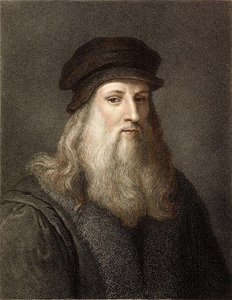
Leonardo da Vinci
1452 - 1519 , Italy
Quick Facts
- Artistic Movement Or Style: Renaissance
- Artists Or Movements Influenced By This Artist: ['Western art']
- Artists Who Influenced This Artist: ['Andrea del Verrocchio']
- Full Name: Lionardo di ser Piero da Vinci
- Nationality: Italian
- Notable Artworks:
- Mona Lisa
- The Last Supper
- Virgin of the Rocks
- Annunciation
- Place Of Birth: Vinci, Italy
- Date Of Birth: 1452
- Date Of Death: 1519