

 Preview
 Send
Send Share
Share
 Details
 Guide
Guide

 Download
 Similars
 X-Ray
X-Ray Diaporama
 Stats
StatsCannon foundry


 Read More
Purchase a high-resolution, enhanced digital image, far superior to the online preview.
Each file is meticulously prepared by our in-house specialists using advanced tools and expert manual retouching. We ensure every image has exceptional clarity, precise color accuracy, and fine detail.
The final file is delivered via email within 72 hours, optimized for immediate use in professional, editorial, and print environments. This is the same quality trusted by top-tier design studios, publishers, and galleries.
Digital Image
Download a high-resolution file for personal display, printing, and creative projects. ( Switch to Print Buy Hand Made Painting)
Included in Every Digital Image Order
Expert Digital Delivery, Guaranteed
When you choose OriginalUniqueArt.com, you're not just getting an image - you're receiving a professionally enhanced digital artwork, crafted with precision and backed by a satisfaction guarantee. Here's everything that comes with your order, automatically:

Fast Email Delivery
Your high-resolution digital image file will be emailed to you within 72 hours of ordering - ready for immediate use.

AI-Enhanced Digital File
Your artwork is professionally optimized using advanced AI tools and manual editing, ensuring maximum detail, clarity, and color accuracy.

Free Lifetime Re-Delivery
Accidentally deleted or lost your file? No worries - we'll resend it to you anytime, free of charge.

No Import Fees - Ever
Enjoy your artwork instantly with zero customs, duties, or delivery fees - digital downloads are always tax-free.

Color Accuracy Guarantee
We ensure your digital image reflects the original colors as closely as possible using professional tools and color management.

100-Day Satisfaction Guarantee
If you're not satisfied with your digital image, we'll revise it or refund 100% within 100 days - no questions asked.

100% Money-Back Guarantee
Not satisfied? Get a full refund within 100 days of receiving your digital file - no questions asked.

Bulk Order Discounts
Buy 3 images, save 10% - Buy 5, save 15% - Buy 10+, save 20%. Great for creative projects, galleries, and agencies.
Cannon Foundry: A Glimpse into Renaissance Engineering
- Subject: The artwork depicts a bustling cannon foundry during the late 15th century, meticulously capturing the manufacturing process of cannons in the Renaissance era.
Historical Context and Technological Significance
- Created in 1487 by Leonardo da Vinci, this pen drawing offers invaluable insight into a period when cannon technology was rapidly evolving. Foundries were essential hubs for producing these vital weapons of war, demanding skilled craftsmanship and efficient production methods.
- Da Vinci's work isn’t just an artistic rendering; it serves as a historical document showcasing the technological advancements and manufacturing processes prevalent during the Renaissance. It reflects the era's focus on military innovation and engineering prowess.
Artistic Technique and Detailed Observation
- Da Vinci masterfully employs pen and ink to create a detailed scene filled with at least nine individuals engaged in various tasks related to cannon assembly and inspection. The central focus is a large, multi-barreled cannon surrounded by tools like hammers and scissors.
- The drawing demonstrates Da Vinci's exceptional skill in capturing intricate details through precise hatching and cross-hatching techniques. This creates tonal variations and texture, bringing the bustling workshop environment to life with remarkable realism.
- While perspective isn’t perfectly mathematically consistent, it effectively conveys depth and scale, reflecting the era’s understanding of spatial representation.
Symbolism and Emotional Impact
- The "Cannon Foundry" symbolizes human ingenuity and the advancement of military technology during a pivotal period in history. It represents the intersection of art, engineering, and science—hallmarks of Da Vinci’s genius.
- The scene evokes a sense of focused activity and industriousness, highlighting the labor-intensive nature of weapon production while also conveying the scale and complexity involved. The overall mood is one of purposeful endeavor and technical precision.
Legacy and Modern Relevance
- Currently housed at the Royal Library in Windsor, United Kingdom, this drawing continues to inspire art enthusiasts and historians alike. It provides a unique window into the past, demonstrating Da Vinci's artistic skill and his deep interest in engineering and science.
- The "Cannon Foundry" stands as a testament to Leonardo da Vinci’s enduring legacy—a polymath whose work seamlessly blended artistry with scientific inquiry, leaving an indelible mark on history and inspiring generations of innovators.
Questions & Answers
Is "Cannon foundry" by Leonardo da Vinci in the public domain?
"Cannon foundry" by Leonardo da Vinci is in the public domain - its copyright has expired. This status governs how the image of the work may be reproduced.
What color palette is used in "Cannon foundry" by Leonardo da Vinci?
"Cannon foundry" by Leonardo da Vinci uses a neutrals color palette. The palette summarizes the work's overall color character.
Is "Cannon foundry" by Leonardo da Vinci among the sought-after Early Renaissance artworks?
Within the Early Renaissance movement, "Cannon foundry" has a recognized popularity level.
Artist Biography
The Boy from Vinci
In the quiet hills near the village of Vinci, a child named Lionardo di ser Piero da Vinci entered a world that would never truly contain his restless mind. Born to a Florentine notary and a peasant woman, his very beginnings were marked by an unconventional path, as his illegitimacy meant he was not destined to follow in his father's legal footsteps. Instead, this freedom allowed him to wander into the workshop of Andrea del Verrocchio in Florence. It was here, amidst the scent of oils and the dust of marble, that a young apprentice learned that seeing was the highest form of understanding. He did not merely study the brush; he studied the way light clings to a curved surface and how shadow dissolves the edges of a limb.
His early years in Florence were defined by this intense observation. He absorbed the technical rigors of metalworking, carpentry, and drawing, building a foundation that merged the physical with the cerebral. While others sought only to replicate what they saw, he sought to understand the mechanics behind it. This period of growth was not marked by a sudden burst of fame, but by a slow, methodical accumulation of knowledge that would later allow him to bridge the gap between the artist's eye and the scientist's inquiry.
The Milanese Years and the Pursuit of Motion
When the winds of political change blew toward Milan, Leonardo followed the service of Ludovico Sforza. This move transformed him from a talented painter into a multifaceted presence within the ducal court. He arrived not merely as an artist, but as an engineer and designer, tasked with creating fortifications and even theatrical stage sets. It was during this long residency in Milan that he began to grapple with the profound drama of human interaction. In the refectory of Santa Maria delle Grazie, he applied his observations of psychology to a large-scale fresco, capturing the precise, heavy moment of betrayal within a group of apostles.
His mind during these years wandered far beyond the walls of the monastery. He filled notebooks with sketches of flying machines, advanced weaponry, and hydraulic systems, driven by a desire to map the hidden laws of nature. Yet, his ambitions often outpaced his ability to finish. A great equestrian statue, intended to honor the Sforza family, remained a dream of clay that was eventually shattered by invading French forces. This pattern of unfinished greatness followed him; he was a man who often found more satisfaction in the discovery of a principle than in the completion of a canvas.
The Final Light in France
A return to Florence brought with it a period of profound refinement. It was here that he worked on the portrait of a woman whose subtle, enigmatic expression would later haunt the halls of history. Through his use of sfumato, a technique where colors and tones blend so softly that they appear like smoke, he removed the harsh outlines of the world, creating an atmosphere that felt alive with breath and movement. His anatomical studies grew more precise during this time as well, fueled by his habit of dissecting cadavers to map the intricate architecture of bone and muscle.
In his final years, under the invitation of King Francis I, Leonardo moved to the Château du Clos Lucé in France. Even as age perhaps slowed his hand, his intellect remained sharp, focused on the study of optics, geology, and botany. He died in 1519, leaving behind a legacy that was never truly finished, much like his many drawings. His life remains a singular example of what can be achieved when the boundaries between art and science are erased, proving that to truly see the world, one must be willing to study every shadow and every muscle within it.
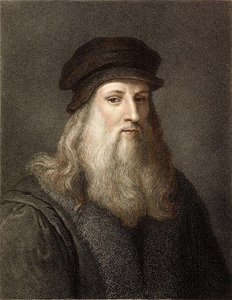
Leonardo da Vinci
1452 - 1519 , Italy
Quick Facts
- Artistic Movement Or Style: Renaissance
- Artists Or Movements Influenced By This Artist: ['Western art']
- Artists Who Influenced This Artist: ['Andrea del Verrocchio']
- Full Name: Lionardo di ser Piero da Vinci
- Nationality: Italian
- Notable Artworks:
- Mona Lisa
- The Last Supper
- Virgin of the Rocks
- Annunciation
- Place Of Birth: Vinci, Italy
- Date Of Birth: 1452
- Date Of Death: 1519