Text size

() ·

A painting made for you, by hand

Figures in a Loggia

Hand Made Oil Reproduction

Hand-painted oil on canvas in your size and frame, made to order by our artists. ( Switch to Print Switch to Digital Image)

Collectible Description

Discover 'Figures in a Loggia' by Leonaert Bramer (1660). A stunning 17th-century Dutch drawing showcasing intricate detail & historical narrative. Explore this masterpiece!

Artist Biography

Discover Leonaert Bramer (1596-1674), Dutch master of nocturnal scenes & Italianate history paintings. Explore his unique Baroque style and intriguing life!

from ·

Chapter 1

How large should it be?

Slide to change the size; the picture on the left shows the frame at its real width. The proportions of the original are kept.

Standard
custom
CM
INCH

Pick from our preset sizes that match the artwork's original proportions.

width
height

Type the width and the height you need, to fit your frame or your wall. This is hand-painted, so for a size with a different shape the artist can paint a bit more around the picture, or cut a bit — you choose. We send you a digital mockup to approve before the painting starts. The picture shown on this page does not show the real result — only the mockup does.

Chapter 2

How should it arrive?

Choose the edges of the stretched canvas

Choose your frame

Corner sample of the WhiteWrap canvas edge finish, stretched on solid wood bars
White $1
Corner sample of the BlurSideWrap canvas edge finish, stretched on solid wood bars
Blurside $1
Corner sample of the ExtendedWrap canvas edge finish, stretched on solid wood bars
Extended $1
Corner sample of the P118B picture frame: moulded polystyrene, 5 cm wide and 3 cm thick
P118B $10
Corner sample of the P118H picture frame: moulded polystyrene, 5 cm wide and 3 cm thick
P118H $10
Corner sample of the P118W picture frame: moulded polystyrene, 5 cm wide and 3 cm thick
P118W $10
Corner sample of the P438Z picture frame: moulded polystyrene, 5.5 cm wide and 3.5 cm thick
P438Z $10
Corner sample of the P508JH picture frame: moulded polystyrene, 7 cm wide and 3.5 cm thick
P508JH $12
Corner sample of the P508YH picture frame: moulded polystyrene, 7 cm wide and 3.5 cm thick
P508YH $12
Corner sample of the P805H picture frame: moulded polystyrene, 5 cm wide and 3.5 cm thick
P805H $10
Corner sample of the P805Z picture frame: moulded polystyrene, 5 cm wide and 3.5 cm thick
P805Z $10
Corner sample of the P919BZ picture frame: moulded polystyrene, 7 cm wide and 3.5 cm thick
P919BZ $10
Corner sample of the P919G picture frame: moulded polystyrene, 7 cm wide and 3.5 cm thick
P919G $10
Corner sample of the P919XJ picture frame: moulded polystyrene, 7 cm wide and 3.5 cm thick
P919XJ $10
Corner sample of the P959ZH picture frame: moulded polystyrene, 5 cm wide and 3 cm thick
P959ZH $10
Corner sample of the P968JZ picture frame: moulded polystyrene, 6 cm wide and 4 cm thick
P968JZ $12
Corner sample of the W106C picture frame: solid wood, 5 cm wide and 3 cm thick
W106C $8
Corner sample of the W218G picture frame: solid wood, 5 cm wide and 3 cm thick
W218G $10
Corner sample of the W218JH picture frame: solid wood, 5 cm wide and 3 cm thick
W218JH $8
Corner sample of the W218Y picture frame: solid wood, 5 cm wide and 3 cm thick
W218Y $10
Corner sample of the W307PJ picture frame: solid wood, 6 cm wide and 3 cm thick
W307PJ $10
Corner sample of the W316G picture frame: solid wood, 6 cm wide and 3 cm thick
W316G $10
Corner sample of the W316PJ picture frame: solid wood, 6 cm wide and 3 cm thick
W316PJ $8
Corner sample of the W316Y picture frame: solid wood, 6 cm wide and 3 cm thick
W316Y $10
Corner sample of the W398PJ picture frame: solid wood, 5 cm wide and 3 cm thick
W398PJ $8
Corner sample of the W4111J picture frame: solid wood, 6.5 cm wide and 3.5 cm thick
W4111J $10
Corner sample of the W500HY picture frame: solid wood, 7 cm wide and 5 cm thick
W500HY $15
Corner sample of the W500JH picture frame: solid wood, 7 cm wide and 5 cm thick
W500JH $15
Corner sample of the W692G picture frame: solid wood, 8 cm wide and 4 cm thick
W692G $12
Corner sample of the W849H picture frame: solid wood, 5 cm wide and 3 cm thick
W849H $8
Corner sample of the W940BG picture frame: solid wood, 7.5 cm wide and 4.5 cm thick
W940BG $15
Corner sample of the W953PJ picture frame: solid wood, 6 cm wide and 3.5 cm thick
W953PJ $8
Corner sample of the H24-GOLD picture frame: carved wood with gesso, 10 cm wide and 6 cm thick
H24-GOLD $30
Corner sample of the H24-SILVER picture frame: carved wood with gesso, 10 cm wide and 6 cm thick
H24-SILVER $30
Corner sample of the H36-GOLD picture frame: carved wood with gesso, 15 cm wide and 6.5 cm thick
H36-GOLD $45
Corner sample of the H36-SILVER picture frame: carved wood with gesso, 15 cm wide and 6.5 cm thick
H36-SILVER $45
Frame preview
Framed

Moulding: . Overall size with the frame: .

Chapter 3

Who paints it, and should anything change?

Examples of what can be changed: Replace face with customer photo; Add pet (e.g., replace cat with dog); Include hidden message in background; Change background landscape or elements.
After order, OriginalUniqueArt.com team will email client for instructions and provide a mockup preview

Worldwide Delivery () in 3/4 weeks instead of standard 5 weeks. (3 November). No compromise on quality.

Chapter 4

The finishing touches

A nameplate, as in a museum?

Engraved Bronze Plaque Details

This elegant plaque features the artist's name and the title of the artwork, finely engraved for a timeless presentation.

It is made from bronze with a refined, elegant finish. The text is precisely laser-engraved for a sharp and permanent result. Measuring 9x2 cm, the plaque is compact yet easy to read. It's built to be durable and scratch-resistant, offering a professional, museum-quality look. Mounting is simple thanks to the included adhesive backing.

Transparent Acrylic Plaque Details

The plaque includes essential engraved details such as the artist's name, the title of the artwork, the date it was created, the type of media used-like oil on canvas or watercolor-a brief description of the piece, and a QR code that links to the complete artwork information.

It is crafted from clear acrylic, offering a sleek, modern appearance. The text is UV-engraved in black to ensure strong visual contrast. With a size of 10x15 cm, it ensures optimal readability. It comes equipped with two metal hooks for secure wall mounting. The plaque is designed to be weather-resistant, making it suitable for various environments, and it includes interactive features that work seamlessly with smartphone scanning.

Black Acrylic Plaque Details

This elegant plaque includes engraved information such as the artist's name, the title of the artwork, the date it was created, the type of media used (like oil on canvas or watercolor), a short description of the artwork, and a QR code for quick access to more information.

The plaque itself is made from refined black acrylic with a premium finish. The text is laser-engraved in white for high contrast and readability. Its size is 10x15 cm, designed to be easy to read. It comes with two metal hooks for professional mounting. The design is sleek and fits any interior style. It is also weather-resistant and durable, with built-in digital integration for mobile compatibility.

A protective varnish?

When do you need it?

Chapter 5

Your painting, as you ordered it

Figures in a Loggia

Reproduction Medium

Reproduction Size

-

Elite Senior Artist

More detail, finesse, and extra production time

-

Reproduction Frame

-

-

For artworks or reproductions larger than 105 cm (approximately 41 inches) on any side, the frame will be shipped as a kit, disassembled. This method ensures safe delivery and prevents damage during transport.

Professional assembly required - this is not a DIY product.
The kit must be assembled and the canvas stretched by an experienced professional framer, using wood glue (not supplied), a canvas stretching plier and clamps to hold the bars square while the glue dries. Incorrect assembly or uneven canvas tension can permanently damage the artwork and is not covered by our warranty.

  • All solid wood bars are included, precisely cut to size.

  • Assembled with the screws provided, plus wood glue for the corner joints, which is not supplied and must be sourced by your framer.

  • Professional tools are required and not included: a canvas stretching plier (tensioner) and clamps to hold the bars square while the glue dries.

Important:
The corner joints require wood glue, the bars must be held with clamps until the glue is fully dry, and tightening the canvas on the assembled frame requires a canvas stretching plier. None of these are included in the kit. Please arrange an experienced professional framer before ordering this size.

Nameplate

-

-

Protective Varnish

Glossy Varnish (enhances colors, protects against light/moisture)

-

Customize My Artwork

Examples of what can be changed: Replace face with customer photo; Add pet (e.g., replace cat with dog); Include hidden message in background; Change background landscape or elements.

-

Urgent

Worldwide Delivery () in 3/4 weeks instead of standard 5 weeks. (3 November). No compromise on quality.

-

Express Shipping

Worldwide Delivery () in 5 weeks. (10 November).

Included

Total Price

$ 350

Total Price $ 350

Glass option is only available in size under 110 CM

Included with every order

  • Free Worldwide Express Shipping
  • High-Quality Linen Canvas
  • Full Shipping Insurance
  • Customs Tax Refund Guarantee
  • True Color Matching Guarantee
  • 100-Day Return Policy (Defects Only)
  • 100% Money-Back Guarantee
  • Bulk Discount Offer

A Window into the Dutch Golden Age

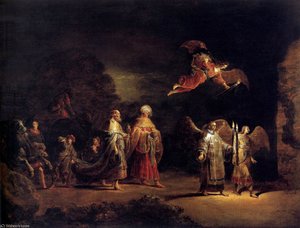
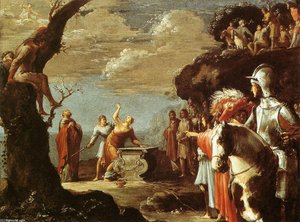
In the delicate interplay of light and shadow captured within Figures in a Loggia, we find ourselves transported to the year 1660, standing amidst the quiet elegance of a seventeenth-century courtyard. This masterful drawing by Leonaert Bramer is far more than a mere sketch; it is a meticulously composed narrative that invites the viewer to linger within its architectural embrace. The scene unfolds with a sophisticated complexity, where strong vertical lines and a commanding central column serve as both structural anchors and guides for the wandering eye. As we gaze upon this monochromatic world, we are drawn into a social tapestry of men, women, and children, each figure caught in a moment of quietude or subtle interaction. There is an undeniable sense of historical documentation here, a frozen fragment of life where the boundaries between the viewer and the past begin to dissolve.

The technical prowess displayed in this work speaks to the height of Dutch Golden Age draftsmanship. Utilizing the precise medium of graphite on paper, Bramer employs a rhythmic use of hatching and cross-hatching to breathe volume into the figures and texture into the surrounding stone and foliage. This meticulous approach creates a profound sense of depth, allowing the architectural elements of the loggia to recede into a soft, atmospheric distance while pulling the foreground subjects toward us with startling clarity. The lighting, though subtle in its black and white palette, is masterfully implied through varying densities of shade, lending a sculptural quality to the human forms and an evocative mood to the entire composition.

The Artistry of Atmosphere and Narrative

To understand this piece is to understand the soul of Leonaert Bramer, an artist often celebrated as the "Leonardo della Notte." While he was renowned for his dramatic nocturnal scenes, Figures in a Loggia showcases his ability to command the daylight with equal grace. The composition functions like a stage set, where the architecture provides the frame for a silent drama of social customs and daily rituals. Within this courtyard, we witness the subtle nuances of human expression—a conversation paused, a child’s curiosity, the poised stillness of an observer. These elements weave together to create a sense of "quiet observation," making the artwork an ideal centerpiece for those who appreciate art that rewards deep, contemplative study.

For the discerning collector or interior designer, this reproduction offers a timeless elegance that transcends modern trends. The monochromatic palette and classical subject matter provide a sophisticated anchor for a variety of decor styles, from traditional manor aesthetics to contemporary minimalist galleries. It possesses a rare emotional resonance; it does not shout for attention but rather commands respect through its intricate detail and historical weight. Owning a piece of this caliber is an opportunity to bring the intellectual rigor and aesthetic beauty of the Dutch Baroque era into a modern living space, offering a permanent window into a vanished, yet exquisitely rendered, world.

Questions & Answers

How can I get a print of "Figures in a Loggia" by Leonaert Bramer?

A print of "Figures in a Loggia" by Leonaert Bramer can be ordered directly on its Fine Art Print page: a fine art print on cotton canvas or archival canvas paper.

What space is suggested for "Figures in a Loggia" by Leonaert Bramer?

"Figures in a Loggia" by Leonaert Bramer is recommended for a living room. This suggestion is based on the work's subject, colors and mood.

Did "Figures in a Loggia" stay in its artist's homeland?

No - the artwork is kept abroad. Leonaert Bramer was born in Netherlands, and the original "Figures in a Loggia" is held in a museum in United Kingdom.

More about this painting

Preview AR preview Switch to Print Switch to Digital Image Send
Details Guide Add to favorites Download Similars X-Ray Diaporama Q&A Stats

In numbers

  • 1660the year it was painted
  • 29frames to choose from
  • standard sizes, in its own proportions
  • 5weeks to paint and deliver it
Leonaert Bramer

Leonaert Bramer

1596 - 1674, Netherlands

Quick facts about Leonaert Bramer

  • Artistic Movement Or Style: Baroque
  • Artists Or Movements Influenced By This Artist: ['Johannes Vermeer']
  • Artists Who Influenced This Artist:
    • Adam Elsheimer
    • Agostino Tassi
  • Date Of Birth: 1596
  • Date Of Death: 1674
  • Full Name: Leonaert Bramer
  • Nationality: Dutch
  • Notable Artworks:
    • St Peter’s Denial
    • Pashur Smiting Jeremiah
    • The Judgment of Solomon
  • Place Of Birth: Delft, Netherlands

Artist Biography

A Life Illuminated: The World of Leonaert Bramer

Leonaert Bramer, a name resonating with the echoes of 17th-century Delft, was more than just a painter; he was an adventurer, innovator, and a pivotal figure in the Dutch Golden Age. Born in 1596, his life unfolded as a compelling narrative woven with extensive travel, artistic experimentation, and deep engagement within the vibrant cultural tapestry of his time. Bramer’s legacy isn't simply defined by the canvases he filled but by the unique perspective he brought to them – a penchant for dramatic nocturnal scenes infused with exotic details that set him apart from many of his contemporaries. He wasn’t merely depicting reality; he was crafting worlds steeped in atmosphere and intrigue, earning him the evocative moniker “Leonardo della Notte” or "Leonardo of the Night" during his sojourn in Italy.

From Delft to Rome: A Journey of Artistic Formation

Bramer's artistic journey began with a bold departure from his native Delft at the tender age of eighteen, embarking on a grand tour that would shape his aesthetic sensibilities. This wasn’t a leisurely exploration but an immersive apprenticeship in the heart of European art centers. Passing through cities like Atrecht, Amiens, and Paris, he eventually arrived in Rome in 1616, a crucible for artistic ambition. There, he joined the ranks of the *Bentvueghels*, a society of Northern artists who adopted satirical nicknames and engaged in lively intellectual discourse. Bramer became known as “Nestelghat” (Fidget), hinting at a restless energy that permeated both his life and art. His time in Italy wasn’t without its clashes; accounts detail a physical altercation with the renowned Claude Lorraine, demonstrating a passionate spirit unafraid of confrontation. However, it was within this dynamic environment that Bramer honed his skills, mastering fresco painting – a technique relatively uncommon in Northern Europe – while absorbing the influence of masters like Adam Elsheimer and Agostino Tassi. He traveled extensively throughout Italy, visiting Mantua and Venice, each location adding another layer to his developing style.

Return to Delft: Patronage, Innovation, and Artistic Versatility

Returning to Delft in 1628, Bramer seamlessly integrated into the local art scene, joining the Guild of Saint Luke in 1629. He quickly garnered patronage from prominent figures, including members of the House of Orange and influential local officials, securing a stable foundation for his artistic endeavors. But Bramer was no one-dimensional artist; he embraced diverse creative pursuits beyond painting. He designed intricate patterns for tapestry firms, creating works that adorned homes across the Netherlands. Furthermore, he undertook ambitious mural projects, employing illusionistic techniques to transform interior spaces into immersive environments. Sadly, many of these frescos were lost over time due to the harsh Dutch climate, but their existence testifies to Bramer’s remarkable versatility and willingness to push artistic boundaries. His unique style, characterized by a nervous energy and masterful depiction of light reflection, consistently favored Italianate themes over the more conventional Dutch landscapes or still lifes, marking him as an individualist within his milieu.

A Mentor's Touch: Bramer’s Influence and Lasting Legacy

Bramer’s influence extended beyond his own artistic output. He is believed to have played a crucial role in the early career of Johannes Vermeer, defending the young artist when his future mother-in-law attempted to prevent his marriage. This act suggests a close relationship, leading many scholars to speculate that Bramer may have served as Vermeer’s teacher – though concrete evidence remains elusive. His intellectual curiosity was further demonstrated through the creation of the “Album Bramer” (1642-1654), a collection of drawings offering invaluable insights into the art collections and artistic practices prevalent in Delft during his time. Leonaert Bramer passed away in Delft before February 10, 1674, leaving behind a body of work that continues to captivate and intrigue. While his fame waned for a period after his death, recent scholarship has sparked renewed interest in his life and art, solidifying his position as an important – and often overlooked – figure in Dutch artistic history. He remains a testament to the power of individual vision and the enduring allure of a life lived in pursuit of artistic excellence.

Quick Facts

  • Year: 1660
  • Movement: Dutch Golden Age
  • Medium: Graphite on Paper
  • Dimensions: 315 x 395 cm
  • Subject or theme: Outdoor Scene; Figures in Architectural Setting
  • Influences: Italian Baroque

Art Quiz

There is only one correct answer for each question.

Question 1:
What artistic movement is Leonaert Bramer’s “Figures in a Loggia” primarily associated with?
Question 2:
The image description mentions "strong vertical lines" – what is the primary purpose of these lines in the composition?
Question 3:
What technique did Bramer employ to achieve the rich texture and detailed rendering seen in the drawing?
Question 4:
The description suggests that “Figures in a Loggia” reflects “contemporary social customs and activities.” What might these activities refer to?
Question 5:
Why is Leonaert Bramer considered "Leonardo della Notte"?