Read More


 For artworks or reproductions larger than 105 cm (approximately 41 inches) on any side, the frame will be shipped as a kit, disassembled. This method ensures safe delivery and prevents damage during transport.


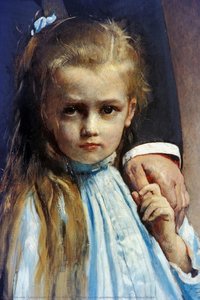
More about this painting
Text size

() ·
A painting made for you, by hand
Hand Made Oil Reproduction
Hand-painted oil on canvas in your size and frame, made to order by our artists. ( Switch to Print Switch to Digital Image)
Artist Biography
Léon Bonnat (1833-1922): French Realist painter famed for portraits & religious scenes influenced by Spanish masters. Professor at École des Beaux-Arts, mentor to Sargent & Toulouse-Lautrec.
from ·
Chapter 1
How large should it be?
Slide to change the size; the picture on the left shows the frame at its real width. The proportions of the original are kept.
Standard
custom
CM
INCH
Pick from our preset sizes that match the artwork's original proportions.
Loading sizes...

width
height
Type the width and the height you need, to fit your frame or your wall. This is hand-painted, so for a size with a different shape the artist can paint a bit more around the picture, or cut a bit — you choose. We send you a digital mockup to approve before the painting starts. The picture shown on this page does not show the real result — only the mockup does.
Chapter 2
How should it arrive?
Choose the edges of the stretched canvas
Choose your frame

White $1

Blurside $1

Extended $1

P118B $10

P118H $10

P118W $10

P438Z $10

P508JH $12

P508YH $12

P805H $10

P805Z $10

P919BZ $10

P919G $10

P919XJ $10

P959ZH $10

P968JZ $12

W106C $8

W218G $10

W218JH $8

W218Y $10

W307PJ $10

W316G $10

W316PJ $8

W316Y $10

W398PJ $8

W4111J $10

W500HY $15

W500JH $15

W692G $12

W849H $8

W940BG $15

W953PJ $8

H24-GOLD $30

H24-SILVER $30

H36-GOLD $45

H36-SILVER $45
Framed
Moulding: . Overall size with the frame: .
Chapter 3
Who paints it, and should anything change?
Examples of what can be changed: Replace face with customer photo; Add pet (e.g., replace cat with dog); Include hidden message in background; Change background landscape or elements.
After order, OriginalUniqueArt.com team will email client for instructions and provide a mockup preview
After order, OriginalUniqueArt.com team will email client for instructions and provide a mockup preview
Worldwide Delivery () in 3/4 weeks instead of standard 5 weeks. (11 November). No compromise on quality.
Chapter 4
The finishing touches
A nameplate, as in a museum?
Engraved Bronze Plaque Details
This elegant plaque features the artist's name and the title of the artwork, finely engraved for a timeless presentation.
It is made from bronze with a refined, elegant finish. The text is precisely laser-engraved for a sharp and permanent result. Measuring 9x2 cm, the plaque is compact yet easy to read. It's built to be durable and scratch-resistant, offering a professional, museum-quality look. Mounting is simple thanks to the included adhesive backing.
Transparent Acrylic Plaque Details
The plaque includes essential engraved details such as the artist's name, the title of the artwork, the date it was created, the type of media used-like oil on canvas or watercolor-a brief description of the piece, and a QR code that links to the complete artwork information.
It is crafted from clear acrylic, offering a sleek, modern appearance. The text is UV-engraved in black to ensure strong visual contrast. With a size of 10x15 cm, it ensures optimal readability. It comes equipped with two metal hooks for secure wall mounting. The plaque is designed to be weather-resistant, making it suitable for various environments, and it includes interactive features that work seamlessly with smartphone scanning.
Black Acrylic Plaque Details
This elegant plaque includes engraved information such as the artist's name, the title of the artwork, the date it was created, the type of media used (like oil on canvas or watercolor), a short description of the artwork, and a QR code for quick access to more information.
The plaque itself is made from refined black acrylic with a premium finish. The text is laser-engraved in white for high contrast and readability. Its size is 10x15 cm, designed to be easy to read. It comes with two metal hooks for professional mounting. The design is sleek and fits any interior style. It is also weather-resistant and durable, with built-in digital integration for mobile compatibility.
A protective varnish?
When do you need it?
Chapter 5
Your painting, as you ordered it
Job
Reproduction Medium
Reproduction Size
-
Elite Senior Artist
More detail, finesse, and extra production time
-
Reproduction Frame
-
-
For artworks or reproductions larger than 105 cm (approximately 41 inches) on any side, the frame will be shipped as a kit, disassembled. This method ensures safe delivery and prevents damage during transport.
Professional assembly required - this is not a DIY product.
The kit must be assembled and the canvas stretched by an experienced professional framer, using wood glue (not supplied), a canvas stretching plier and clamps to hold the bars square while the glue dries. Incorrect assembly or uneven canvas tension can permanently damage the artwork and is not covered by our warranty.
All solid wood bars are included, precisely cut to size.
Assembled with the screws provided, plus wood glue for the corner joints, which is not supplied and must be sourced by your framer.
Professional tools are required and not included: a canvas stretching plier (tensioner) and clamps to hold the bars square while the glue dries.
Important:
The corner joints require wood glue, the bars must be held with clamps until the glue is fully dry, and tightening the canvas on the assembled frame requires a canvas stretching plier. None of these are included in the kit. Please arrange an experienced professional framer before ordering this size.
Nameplate
-
-
Protective Varnish
Glossy Varnish (enhances colors, protects against light/moisture)
-
Customize My Artwork
Examples of what can be changed: Replace face with customer photo; Add pet (e.g., replace cat with dog); Include hidden message in background; Change background landscape or elements.
-
Urgent
Worldwide Delivery () in 3/4 weeks instead of standard 5 weeks. (11 November). No compromise on quality.
-
Express Shipping
Worldwide Delivery () in 5 weeks. (18 November).
Included
Total Price
$ 300
Glass option is only available in size under 110 CM
Included with every order
- Free Worldwide Express Shipping
- High-Quality Linen Canvas
- Full Shipping Insurance
- Customs Tax Refund Guarantee
- True Color Matching Guarantee
- 100-Day Return Policy (Defects Only)
- 100% Money-Back Guarantee
- Bulk Discount Offer
 Preview
 Send
Send Share
Share
 Details
 Guide
Guide

 Download
 Similars
 X-Ray
X-Ray Diaporama
 Q&A
Q&A Stats
StatsIn numbers
- 1888the year it was painted
- 29frames to choose from
- standard sizes, in its own proportions
- 5weeks to paint and deliver it
About the original


Léon Joseph Florentin Bonnat
1833 - 1922
Quick facts about Léon Joseph Florentin Bonnat
- Name: Léon Joseph Florentin Bonnat
- Movement: Realism, Academic art
- Birth_Date: 1833
- Death_Date: 1922
- Influenced:
- John Singer Sargent
- Henri de Toulouse-Lautrec
- Birth_Place: Bayonne, France
- Nationality: French
- Date Of Birth: 1833
- Date Of Death: 1922
- Influenced_By:
- Velázquez
- Jusepe de Ribera
- Titian
- Van Dyck
- Notable_Works:
- Jacob Wrestling with the Angel
- Job
- Christ on the Cross
Artist Biography
Léon Joseph Florentin Bonnat: Life and Legacy
Early Life and Artistic Beginnings
Léon Joseph Florentin Bonnat was born in Bayonne, France, in 1833 and passed away in 1922. His early life took an interesting turn when his family moved to Madrid in 1846, where his father established a bookshop. This relocation proved pivotal for the young Bonnat’s artistic development. While assisting in the shop, he diligently copied engravings of works by Old Masters, fostering a deep passion for drawing and laying the foundation for his future career. He received formal training under Madrazo in Madrid before returning to Paris.Training and Influences
In Paris, Bonnat sought further refinement of his skills, studying under prominent history painters Paul Delaroche and Léon Cogniet. Despite several attempts, he was not immediately accepted into the prestigious École des Beaux-Arts through the Prix de Rome competition. However, a scholarship from Bayonne enabled him to spend three years in Rome (1858–60), an experience that profoundly shaped his artistic vision. During this period, he forged friendships with fellow artists like Edgar Degas, Gustave Moreau, and sculptor Henri Chapu. Bonnat’s style was heavily influenced by the Spanish masters – particularly Velázquez and Jusepe de Ribera – as well as artists like Titian and Van Dyck, whose works he meticulously studied in the Prado Museum.Artistic Development and Style
Bonnat quickly established himself as a leading portraitist in Paris, consistently receiving commissions. His portraits reflect the influence of his admired Spanish predecessors, characterized by realism, dramatic lighting, and psychological depth. He also explored religious themes and genre paintings depicting Italian peasants, and occasionally ventured into Orientalist scenes. Bonnat’s work is marked by a stark naturalism and a lack of excessive surface finish, qualities praised by critics like Théophile Gautier, who contrasted him favorably with the more polished style of Bouguereau.Major Achievements and Recognition
Bonnat achieved significant recognition throughout his career. He received a Medal of Honor in Paris in 1869 and was appointed Grand Officer of the Légion d'honneur. In 1882, he became a professor at the École des Beaux-Arts, where he mentored numerous aspiring artists, including John Singer Sargent, Toulouse-Lautrec, and Gustave Caillebotte. He eventually succeeded Paul Dubois as director of the École in 1905. Bonnat’s teaching philosophy emphasized simplicity, overall effect, and rigorous drawing skills. His most important works include religious paintings such as *Christ on the Cross*, *Job*, and *St Vincent taking the place of two galley slaves*.Historical Significance and Legacy
Bonnat occupied a unique position within the art world of his time, bridging the gap between academic painting and the emerging Impressionist movement. He was a member of the Institute, holding administrative power over the Academy and École des Beaux-Arts. Despite this affiliation with traditional institutions, he supported independent artists like Edgar Degas, Auguste Rodin, and even defended Gustave Courbet’s submissions to the Salon. In a testament to his gratitude for early support, Bonnat founded the Musée Bonnat in his hometown of Bayonne, housing an exceptional collection of Old Master drawings alongside his own works. His legacy endures through his paintings, his influential teaching career, and the museum he established, preserving artistic heritage for future generations.Notable Works
- Jacob Wrestling with the Angel
- Job
- Christ on the Cross
- Portrait of Prince Viacheslav Tenishev
- Pasteur and his granddaughter Camille Vallery-Radot
Related Articles

Léon Bonnat: Realism, Academic Mastery & the Depths of Portraiture
Explore the life & work of Léon Bonnat, a leading French Realist painter renowned for his masterful portraits and Spanish Baroque influence. Discover his academic legacy & pursuit of psychological depth in 19th-century art.
Explore artworks organized by themes, styles, and characteristics.