

 Preview
 Send
Send Share
Share
 Details

 Download
 Similars
 X-Ray
X-Ray Diaporama
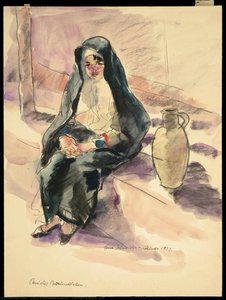
Mud Construction in the High Atlas, Morocco
 Watercolor
- WallArt
 1930
1930- Modern
 67.0 x 53.0 cm
 Leo Baeck Institute
 Read More
Hand Made Oil Reproduction
Hand-painted oil on canvas in your size and frame, made to order by our artists. ( Buy Print Buy Image)




P118B $10

P118H $10

P118W $10

P438Z $10

P508JH $12

P508YH $12

P805H $10

P805Z $10

P919BZ $10

P919G $10

P919XJ $10

P959ZH $10

P968JZ $12

W106C $8

W218G $10

W218JH $8

W218Y $10

W307PJ $10

W316G $10

W316PJ $8

W316Y $10

W398PJ $8

W4111J $10

W500HY $15

W500JH $15

W692G $12

W849H $8

W940BG $15

W953PJ $8




Pick from our preset sizes that match the artwork's original proportions.

You may enter your own dimensions to fit a specific frame or space. If your selected size does not match the original image's proportions, we will either crop the artwork or extend the painting with additional hand-painted elements. A digital mockup will be sent for your approval before production begins.
Please note that the on-screen preview does not reflect the actual cropping or extension. Only the mockup will accurately show the final composition.
While custom sizes are available, we recommend selecting a dimension from the predefined list to preserve the original proportions.
After order, OriginalUniqueArt.com team will email client for instructions and provide a mockup preview
Worldwide Delivery () in 3/4 weeks instead of standard 5 weeks. (22 August). No compromise on quality.

Free Worldwide Express Shipping

High-Quality Linen Canvas

Full Shipping Insurance

Customs Tax Refund Guarantee

True Color Matching Guarantee

60-Day Return Policy (Defects Only)

100% Money-Back Guarantee

Bulk Discount Offer
 Glass option is only available in size under 110 CM

Mud Construction in the High Atlas, Morocco
Reproduction Medium
Reproduction Size
-


Total Price
$ 300
Artwork Description
A Window into the High Atlas: The Soul of Morocco
In her evocative watercolor, Mud Construction in the High Atlas, Morocco, Lene Schneider-Kainer invites the viewer to step through a portal of time and geography. Created in 1930, this delicate masterpiece captures more than just a landscape; it captures a way of life. The scene unfolds within a remote Moroccan village, where the architecture itself seems to emerge organically from the rugged, rocky terrain. Through soft washes of color and fluid brushstrokes, Schneider-Kainer depicts a community in repose, with women gathered near mud-brick dwellings, their presence weaving a tapestry of human connection against the vast, silent backdrop of the mountains. The painting breathes with the warmth of a shared afternoon, offering a glimpse into a world where the boundaries between man, architecture, and earth are beautifully blurred.
The technique employed here is a testament to the artist's mastery of the watercolor medium. Schneider-Kainer utilizes the transparency of the pigment to create a sense of light and atmosphere that feels both ethereal and grounded. There is a rhythmic quality to her application of color, where the earthy ochres and dusty browns of the mud constructions are balanced by the subtle, atmospheric tones of the surrounding landscape. This fluidity allows the viewer's eye to wander through the village, noticing the small, intimate details—the posture of a seated figure, the texture of a sun-baked wall—without ever losing sight of the grander, sweeping vista. For the collector or interior designer, this piece offers a sophisticated interplay of light and earth tones, making it an exquisite focal point for spaces that value organic textures and serene, worldly aesthetics.
A Legacy of Travel and Cultural Encounter
To understand the emotional depth of this work, one must consider the life of Lene Schneider-Kainer herself. As a Jewish-Austrian artist trained in the prestigious studios of Vienna, Munich, and Berlin, her perspective was shaped by an extraordinary breadth of cultural exposure. Her travels were not merely journeys of leisure but artistic expeditions aimed at documenting the profound beauty of distant lands. In this particular work, we see the culmination of that curiosity. The painting serves as a historical document of a traditional way of life, preserved through the sensitive lens of an artist who sought to find the universal pulse of humanity within specific cultural landscapes.
The symbolism within the piece lies in its celebration of community and resilience. The "mud construction" mentioned in the title is not merely a technical description of the buildings; it serves as a metaphor for the strength found in simplicity and the enduring nature of tradition. There is a profound sense of peace in the way the figures inhabit their environment, suggesting a harmonious existence with the natural world. For those seeking to adorn their homes with art that inspires contemplation and empathy, this reproduction offers a rare opportunity to possess a fragment of history—a piece that resonates with the timeless themes of belonging, memory, and the enduring beauty of the human spirit.
Artist Biography
A Life of Color and Displacement: The Odyssey of Lene Schneider-Kainer
Lene Schneider-Kainer was far more than a mere observer of the world; she was a chronicler of its most fleeting and beautiful moments. Born in 1885 to the esteemed Viennese painter Sigmund Schneider, her very existence was steeped in the rich, intellectual atmosphere of fin-de-siècle Austria. Her early years were defined by a rigorous artistic education that spanned the great cultural hubs of Europe—Vienna, Munich, Amsterdam, and Berlin. This diverse training allowed her to cultivate a versatile technique, one that could pivot from the delicate, translucent layers of watercolor to the more robust, expressive strokes of oil painting. In 1917, she stepped into the light of the international art scene with her solo debut at the Galerie Gurlitt in Berlin, establishing herself not just as an heiress to a painterly tradition, but as a formidable creative force in her own right.
The 1920s marked a period of profound personal and professional expansion. Following her marriage to the Munich-based artist Ludwig Kainer, Lene became part of an elite circle of European intellectuals, rubbing shoulders with luminaries such as Arnold Schönberg and Else Lasker-ƒSchƖler. It was during this era that she truly found her voice as a storyteller. Her work often danced on the edge of the sensual and the profound, particularly in her celebrated illustrations for Hetärengespräche (Dialogues of Courtesans). Through these works, she captured the nuanced emotions and subtle eroticism of human connection, using line and color to breathe life into literary themes. Her talent was not limited to the canvas; she also emerged as a sophisticated fashion designer, proving that her aesthetic vision could transcend the boundaries of fine art into the realm of lived experience.
Tracing the Silk Road: The Artist as Explorer
Perhaps the most breathtaking chapter of Schneider-Kainer’s life began in 1926. Commissioned by the Berliner Tageblatt, she embarked on an extraordinary journalistic and artistic expedition to retrace the legendary route of Marco Polo. Alongside the poet Bernhard Kellermann, she traversed the vast landscapes of the Middle East and Asia, journeying through Iran, Ladakh, India, Thailand, Vietnam, and China. This was not merely a trip of leisure, but a mission of documentation. As she moved through these diverse cultures, her sketchbook became a repository for the soul of the East. She captured the vibrant hues of Moroccan villages, the serene dignity of Persian mothers, and the quiet intensity of life in the High Atlas mountains.
Her work from this period serves as a poignant visual diary of a world on the brink of massive historical change. While much of her photographic record was tragically lost to time, her watercolors and drawings remain as enduring witnesses to her travels. These pieces possess a unique, ethnographic intimacy; they do not merely depict foreign landscapes but attempt to capture the warmth, the communal spirit, and the delicate textures of the lives she encountered. In these works, we see an artist using her brush to bridge the gap between the familiar comforts of Europe and the exotic, often overwhelming, beauty of the Orient.
Resilience Amidst the Shadows of History
The twentieth century, however, was a period of profound upheaval, and as a Jewish-Austrian artist, Schneider-Kainer’s life was irrevocably fractured by the rise of Nazism. The stability of her European existence dissolved as she was forced into a series of migrations that would define her later years. Settling briefly in Mallorca and Ibiza, she eventually found herself fleeing the escalating horrors of the Spanish Civil War to seek refuge in New York. In the bustling landscape of America, she demonstrated her remarkable adaptability, pivoting once again to find success as an illustrator of children’s books, proving that her ability to enchant an audience remained undiminished by displacement.
The final act of her life took place far from the vibrant streets of Vienna or the mystical paths of the Silk Road. In 1954, she relocated to Cochabamba, Bolivia, living under the name Elena Eleska. Even in this period of relative seclusion, her legacy of industriousness continued as she assisted her son in establishing a textile factory. When she passed away in 1971, she left behind a body of work that serves as a testament to human resilience. Her oeuvre is a mosaic of cultural encounters, a collection of memories that refuse to be erased by the tides of war and exile. To look upon a Schneider-Kainer painting is to witness a life lived with eyes wide open, capturing the ephemeral beauty of a world that was constantly shifting beneath her feet.

lene schneider-kainer
1885 - 1971 , Austria
Quick Facts
- Artistic Movement Or Style: Illustration, Watercolor
- Artists Or Movements Influenced By This Artist: ['Secessionists']
- Artists Who Influenced This Artist: ['Sigmund Schneider']
- Date Of Birth: May 16, 1885
- Date Of Death: June 15, 1971
- Full Name: Lene Schneider-Kainer
- Nationality: Austrian
- Notable Artworks:
- Lukian: Hetärengespräche
- Banaras
- Place Of Birth: Vienna, Austria
Related Articles

Watercolor Wonders: 10 Masterpieces That Redefined Art History | OriginalUniqueArt
Journey through 10 legendary watercolor masterpieces by Sargent, Turner & Homer! Explore iconic landscapes, portraits & floral art that redefined history. Find museum-quality reproductions and curated decor ideas at OriginalUniqueArt.com.

Ephemeral Visions: Exploring the Artistic Legacy & Contemporary Practice of Watercolor Painting
Explore the captivating world of watercolor painting! Discover its rich history, essential techniques, influential artists & collecting tips. A comprehensive guide for art enthusiasts from OriginalUniqueArt.

Ephemeral Visions: Exploring the History & Emotional Resonance of Watercolor Painting
Explore the captivating history of watercolor painting, from ancient techniques to modern masters like Kandinsky & Blake. Discover essential artists, collecting tips & the emotional power of this luminous medium. Expert insights for art enthusiasts.

Ephemeral Visions: Exploring the Artistic Legacy & Nuances of Watercolor Painting
Explore the captivating world of watercolor painting! Discover its rich history, essential techniques, influential artists & collecting tips from art experts. A comprehensive guide for enthusiasts.

The Enduring Appeal of Watercolor: History, Techniques & Contemporary Practice
Explore the captivating world of watercolor painting! Discover its rich history, essential techniques, influential artists, and collecting tips. A comprehensive guide for art enthusiasts.


![[Portrait of an Asian Man]](/media/artworks/images-thumb/f1/b1/f1b15f5c40effc88a7b7888cfcb1e185.jpg)


![[Sailboats, Amsterdam]](/media/artworks/images-thumb/1e/d6/1ed6687766d5d7cdbe8dc0109236704b.jpg)


![[Child in a Wooden Cart]](/media/artworks/images-thumb/96/0d/960d8a8578936bdef0dd07e653e4ddbb.jpg)



