
 Preview
 Send
Send Share
Share
 Details
 Guide
Guide

 Download
 Similars
 X-Ray
X-Ray Diaporama
 Q&A
Q&A Stats
StatsHeaven and Earth

- 128.0 x 768.0 cm


 Read More
The artwork displayed on this page is protected by copyright law, which means we cannot legally create or sell an identical reproduction. This protection is enforced under international agreements such as the Berne Convention and by national laws, including those outlined by the U.S. Copyright Law - Title 17.
This method fully complies with copyright regulations because it does not involve copying or duplicating the protected artwork. Instead, it is a creative reinterpretation - a new painting that is influenced by the original but not identical to it.
Giclée / Art Print
Museum-quality giclée or canvas print with fast production and flexible finish options. ( Buy Hand Made Painting Switch to Digital Image)




P118B $10

P118H $10

P118W $10

P438Z $10

P508JH $12

P508YH $12

P805H $10

P805Z $10

P919BZ $10

P919G $10

P919XJ $10

P959ZH $10

P968JZ $12

W106C $8

W218G $10

W218JH $8

W218Y $10

W307PJ $10

W316G $10

W316PJ $8

W316Y $10

W398PJ $8

W4111J $10

W500HY $15

W500JH $15

W692G $12

W849H $8

W940BG $15

W953PJ $8




Pick from our preset sizes that match the artwork's original proportions.

Type the width and the height you need, to fit your frame or your wall. A print can only be cut, never made bigger than the picture, so a size with a different shape loses a part of the image. We send you a digital mockup to approve before we print anything. The picture shown on this page does not show the real cut — only the mockup does.
Worldwide Delivery () in 2 weeks instead of standard 4/5 weeks. (4 November)

Free Worldwide Express Shipping

High-Quality Linen Canvas

Full Shipping Insurance

Customs Tax Refund Guarantee

True Color Matching Guarantee

100-Day Return Policy (Defects Only)

100% Money-Back Guarantee

Bulk Discount Offer
 Glass option is only available in size under 110 CM

Heaven and Earth
Giclée / Art Print
Reproduction Size
-


Total Price
$ 81
Lee Bul’s Heaven & Earth: A Reflection on History and Idealism
Lee Bul's "Heaven & Earth," created in 2007, isn’t merely a painting; it’s an immersive meditation on Korea’s past and its enduring fascination with mythic landscapes. The artist herself described the work as “a reflection on the transparence of the building of the Fondation Cartier,” grounding her exploration in architectural context—specifically Jean Nouvel's design for the museum itself, which utilizes glass walls to maximize natural light and create a sense of openness. This deliberate choice speaks volumes about Bul’s artistic sensibility: she seeks to capture not just visual beauty but also the intangible essence of place and memory.- Subject Matter & Composition: The centerpiece is a monumental stone structure resembling a dome, dominating the canvas with its sheer scale. Surrounding it are two vases positioned strategically at the upper left corner and another vase situated towards the lower right—elements that subtly echo classical architectural principles. A bowl occupies the central-left area, anchoring the composition and inviting contemplation.
- Technique & Material: Bul employs a masterful blend of painting and sculptural elements. The stone structure is rendered with meticulous detail, utilizing textured paint to convey its solidity and grandeur. However, it’s juxtaposed against an expanse of snowy mountain ridges—represented in stark white—creating a dramatic contrast that emphasizes the monumental scale of the piece.
- Historical Context: The title itself draws inspiration from Baekdusan (Mount Taebaek), Korea's holiest mountain and a cornerstone of Korean national mythology. Historically, Baekdusan has been viewed as a gateway to paradise—a realm of divine beauty and spiritual significance—and its misty peaks have captivated artists for centuries. Bul’s work acknowledges this tradition while simultaneously questioning it.
Symbolism & Conceptual Depth
The artist deliberately uses symbolism to convey complex ideas about history, ideology, and the elusive nature of ideal visions. The dark ink encircling the stone structure represents the oppressive forces that have shaped Korean history—specifically, the authoritarian rule of Park Chung Hee in the 1970s. Bul references Bruno Taut’s Alpine Architektur, a visionary project conceived to rebuild Europe after World War II, highlighting the tension between utopian aspirations and their inevitable disillusionment. The inclusion of torture imagery underscores Bul's preoccupation with trauma—a recurring theme throughout her oeuvre—and serves as a reminder that even idealized landscapes can conceal darker realities.- The Tub Bath: Perhaps the most striking visual element is the oversized bathtub filled with dark ink, symbolizing the void of experience and the confrontation with uncomfortable truths.
- Torture Imagery: Bul’s deliberate use of torture imagery serves as a commentary on repression and censorship—themes that resonate deeply within Korean history and culture.
- References to Mythology & Architecture: The artist's invocation of Baekdusan mythology and Bruno Taut’s architectural vision underscores her commitment to exploring the intersection between art, history, and philosophical inquiry.
Emotional Impact & Artistic Legacy
“Heaven & Earth” transcends mere visual representation; it aims to evoke a profound emotional response in the viewer—a feeling of awe mingled with melancholy. Bul’s masterful manipulation of texture, color, and composition creates an atmosphere of solemn grandeur, prompting reflection on Korea's past and its enduring fascination with mythic landscapes. The artwork stands as testament to Bul’s artistic vision—one that prioritizes conceptual depth alongside aesthetic beauty—solidifying her position as a pivotal figure in contemporary Korean art. Its exploration of trauma and idealism continues to inspire artists and collectors alike, ensuring its place within the canon of modern art.Questions & Answers
Is "Heaven and Earth" by Lee Bul a portrait, landscape or square composition?
"Heaven and Earth" by Lee Bul is a landscape composition. The proportions are worth checking before choosing a print size.
Is "Heaven and Earth" free of copyright?
"Heaven and Earth" by Lee Bul is still protected by copyright. This status governs how the image of the work may be reproduced.
When was "Heaven and Earth" created, and to which movement does it belong?
"Heaven and Earth" by Lee Bul is dated 2007 and belongs to Contemporary Realism.
Artist Biography
A Life Shaped by Transition: The Early Years of Lee Bul
Lee Bul, born in 1964 in Yeongju, South Korea, is an artist whose work resonates deeply with the complexities of a nation undergoing profound transformation. Her upbringing was inextricably linked to the political turbulence of the Park Chung Hee era, a period of military dictatorship that cast a long shadow over Korean society. The activism of her parents, and the resulting instability of frequent relocations, instilled in young Lee Bul a keen awareness of societal constraints and the fragility of utopian ideals – themes that would become central to her artistic explorations. This early exposure to political dissent wasn’t merely biographical detail; it was formative, shaping her perspective on power, control, and the human desire for liberation. She pursued formal training at Hongik University, earning a BFA in sculpture in 1987, but quickly found herself drawn beyond the confines of traditional academic norms, seeking greater creative freedom to express the anxieties and aspirations of a rapidly modernizing Korea. The late 1980s were a pivotal moment for South Korea, marked by democratic reforms and an explosion of economic growth. This dynamic environment fueled Lee Bul’s artistic development, prompting her to reflect on societal shifts and envision possible futures – both hopeful and dystopian.Transcending Boundaries: Artistic Style and Key Themes
Lee Bul defies easy categorization. Her practice is fundamentally interdisciplinary, seamlessly blending performance, sculpture, installation, architecture, printmaking, and media art into a cohesive and compelling whole. This refusal to adhere to conventional boundaries allows her to explore complex ideas with nuance and depth. At the heart of her work lies a fascination with the tension between utopian aspirations and their potential for dystopian outcomes. She doesn’t simply present visions of ideal societies; she dissects them, revealing the inherent flaws and contradictions that often lead to failure. This critical examination extends to our relationship with technology, which Lee Bul views as both a source of promise and a potential threat to human identity. Her sculptures frequently incorporate cyborg imagery, exploring the anxieties surrounding technological advancement and the pursuit of perfection – questioning what it means to be human in an increasingly artificial world. Memory and history are also crucial elements in her artistic vocabulary, particularly as they relate to Korean history. She engages with historical narratives, examining trauma, loss, and the enduring legacies of political events. Architecture serves not merely as a backdrop but as a recurring motif, representing societal ideals, tracking changing values, and challenging our perception of space itself.Landmark Creations: Major Works and Achievements
Lee Bul’s artistic journey has been marked by a series of groundbreaking works that have garnered international acclaim. Majestic Splendor (1991), an early series of sculptures, immediately established her as a force to be reckoned with, exploring themes of beauty, decay, and the ephemeral nature of existence. Sorry for Suffering (1990), a provocative performance piece involving soft sculpture and public interventions, boldly challenged societal norms and delved into questions of identity and suffering. The Cyborgs and Anagrams Series further solidified her reputation, presenting unsettling yet captivating hybrids of machine and organic forms that reflected anxieties about technological progress. However, perhaps one of her most ambitious and enduring projects is the REAL DMZ PROJECT, a long-term exploration of the Demilitarized Zone (DMZ) between North and South Korea. This project envisions a future where this heavily fortified border becomes a site for artistic collaboration and ecological restoration – a powerful symbol of hope and reconciliation. More recently, her commission for The Genesis Facade Commission: Lee Bul, Long Tail Halo (2024), adorning the facade of the Metropolitan Museum of Art in New York City, demonstrates her continued relevance and influence on the global art stage. Her participation in prestigious events like the Venice Biennale and Whitney Biennial, alongside numerous international museum exhibitions, underscores her significant contribution to contemporary art.A Legacy of Innovation: Historical Significance
Lee Bul is widely recognized as a leading figure in contemporary Korean art, playing a pivotal role in bringing Korean artistic perspectives to a global audience. Her interdisciplinary approach and willingness to tackle complex themes have profoundly influenced a generation of artists working across various mediums. She has challenged conventional notions of art and its relationship to social and political issues, prompting critical dialogue and inspiring new forms of creative expression.- Her work resonates with audiences worldwide because it addresses universal concerns about progress, identity, and the future.
- She skillfully navigates the space between optimism and skepticism, offering a nuanced perspective on the human condition.
- Lee Bul’s art is not merely aesthetically pleasing; it is intellectually stimulating and emotionally resonant.

Lee Bul
1964 - , South Korea
Quick Facts
- Artistic Movement Or Style: Interdisciplinary, Installation
- Artists Or Movements Influenced By This Artist: Contemporary artists
- Date Of Birth: 1964
- Full Name: Lee Bul
- Nationality: South Korean
- Notable Artworks:
- Majestic Splendor
- Sorry for Suffering
- Via Negativa II
- REAL DMZ PROJECT
- Long Tail Halo
- Place Of Birth: Yeongju, South Korea
Related Articles

Bronze Age to Modern Masters: 10 Sculptures That Redefined Art | OriginalUniqueArt
Journey through art history with 10 legendary bronze sculptures – from Michelangelo's David to Rodin’s Thinker. Explore the stories, techniques & timeless beauty of these masterpieces. Find museum-quality reproductions & elevate your home decor on OriginalUniqueArt.com.

Bronze Sculptures That Defined Art History | OriginalUniqueArt
Journey through art history with our Top 10 bronze sculptures! Explore masterpieces by Rodin, Michelangelo & more. Discover stories behind iconic statues and find museum-quality reproductions for your home decor at OriginalUniqueArt.com.

The Enduring Form: Exploring Themes & Techniques in Sculpture Across Historical Periods
Explore the rich history of sculpture from ancient masterpieces to contemporary innovations. Discover key techniques, influential artists & investment potential for discerning art collectors.

The Enduring Form: Sculpture Across History, Technique & Emotional Resonance
Explore the rich history of sculpture with OriginalUniqueArt. Discover key techniques, influential artists & investment potential for discerning collectors. Expert insights into valuing and collecting timeless masterpieces.
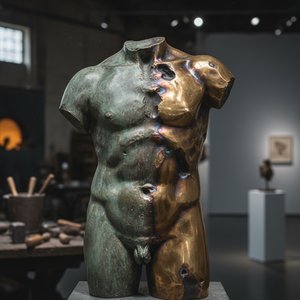
The Enduring Legacy of Bronze Sculpture: History, Techniques & Contemporary Interpretations
Explore the rich history & enduring appeal of bronze sculpture. Learn about casting techniques, iconic artists, collecting tips, & contemporary interpretations. Expert insights for discerning art collectors.


