Menu
Text size

() ·

A painting made for you, by hand

Minerva Dressing

Hand Made Oil Reproduction

Hand-painted oil on canvas in your size and frame, made to order by our artists. ( Switch to Print Switch to Digital Image)

Collectible Description

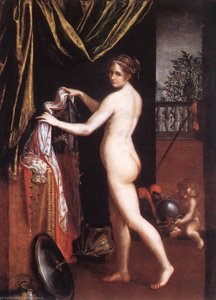
Lavinia Fontana's 'Minerva Dressing' (1613) captures the Roman goddess in a moment of serene preparation, showcasing Baroque drama and female artistry. Explore this masterpiece!

Artist Biography

Pioneering Italian painter Lavinia Fontana (1552-1614) defied norms! Renowned for portraits & groundbreaking female nudes, she balanced artistry with family.

from ·

Chapter 1

How large should it be?

Slide to change the size; the picture on the left shows the frame at its real width. The proportions of the original are kept.

Standard
custom
CM
INCH

Pick from our preset sizes that match the artwork's original proportions.

width
height

Type the width and the height you need, to fit your frame or your wall. This is hand-painted, so for a size with a different shape the artist can paint a bit more around the picture, or cut a bit — you choose. We send you a digital mockup to approve before the painting starts. The picture shown on this page does not show the real result — only the mockup does.

Chapter 2

How should it arrive?

Choose the edges of the stretched canvas

Choose your frame

Corner sample of the WhiteWrap canvas edge finish, stretched on solid wood bars
White $1
Corner sample of the BlurSideWrap canvas edge finish, stretched on solid wood bars
Blurside $1
Corner sample of the ExtendedWrap canvas edge finish, stretched on solid wood bars
Extended $1
Corner sample of the P118B picture frame: moulded polystyrene, 5 cm wide and 3 cm thick
P118B $10
Corner sample of the P118H picture frame: moulded polystyrene, 5 cm wide and 3 cm thick
P118H $10
Corner sample of the P118W picture frame: moulded polystyrene, 5 cm wide and 3 cm thick
P118W $10
Corner sample of the P438Z picture frame: moulded polystyrene, 5.5 cm wide and 3.5 cm thick
P438Z $10
Corner sample of the P508JH picture frame: moulded polystyrene, 7 cm wide and 3.5 cm thick
P508JH $12
Corner sample of the P508YH picture frame: moulded polystyrene, 7 cm wide and 3.5 cm thick
P508YH $12
Corner sample of the P805H picture frame: moulded polystyrene, 5 cm wide and 3.5 cm thick
P805H $10
Corner sample of the P805Z picture frame: moulded polystyrene, 5 cm wide and 3.5 cm thick
P805Z $10
Corner sample of the P919BZ picture frame: moulded polystyrene, 7 cm wide and 3.5 cm thick
P919BZ $10
Corner sample of the P919G picture frame: moulded polystyrene, 7 cm wide and 3.5 cm thick
P919G $10
Corner sample of the P919XJ picture frame: moulded polystyrene, 7 cm wide and 3.5 cm thick
P919XJ $10
Corner sample of the P959ZH picture frame: moulded polystyrene, 5 cm wide and 3 cm thick
P959ZH $10
Corner sample of the P968JZ picture frame: moulded polystyrene, 6 cm wide and 4 cm thick
P968JZ $12
Corner sample of the W106C picture frame: solid wood, 5 cm wide and 3 cm thick
W106C $8
Corner sample of the W218G picture frame: solid wood, 5 cm wide and 3 cm thick
W218G $10
Corner sample of the W218JH picture frame: solid wood, 5 cm wide and 3 cm thick
W218JH $8
Corner sample of the W218Y picture frame: solid wood, 5 cm wide and 3 cm thick
W218Y $10
Corner sample of the W307PJ picture frame: solid wood, 6 cm wide and 3 cm thick
W307PJ $10
Corner sample of the W316G picture frame: solid wood, 6 cm wide and 3 cm thick
W316G $10
Corner sample of the W316PJ picture frame: solid wood, 6 cm wide and 3 cm thick
W316PJ $8
Corner sample of the W316Y picture frame: solid wood, 6 cm wide and 3 cm thick
W316Y $10
Corner sample of the W398PJ picture frame: solid wood, 5 cm wide and 3 cm thick
W398PJ $8
Corner sample of the W4111J picture frame: solid wood, 6.5 cm wide and 3.5 cm thick
W4111J $10
Corner sample of the W500HY picture frame: solid wood, 7 cm wide and 5 cm thick
W500HY $15
Corner sample of the W500JH picture frame: solid wood, 7 cm wide and 5 cm thick
W500JH $15
Corner sample of the W692G picture frame: solid wood, 8 cm wide and 4 cm thick
W692G $12
Corner sample of the W849H picture frame: solid wood, 5 cm wide and 3 cm thick
W849H $8
Corner sample of the W940BG picture frame: solid wood, 7.5 cm wide and 4.5 cm thick
W940BG $15
Corner sample of the W953PJ picture frame: solid wood, 6 cm wide and 3.5 cm thick
W953PJ $8
Corner sample of the H24-GOLD picture frame: carved wood with gesso, 10 cm wide and 6 cm thick
H24-GOLD $30
Corner sample of the H24-SILVER picture frame: carved wood with gesso, 10 cm wide and 6 cm thick
H24-SILVER $30
Corner sample of the H36-GOLD picture frame: carved wood with gesso, 15 cm wide and 6.5 cm thick
H36-GOLD $45
Corner sample of the H36-SILVER picture frame: carved wood with gesso, 15 cm wide and 6.5 cm thick
H36-SILVER $45
Frame preview
Framed

Moulding: . Overall size with the frame: .

Chapter 3

Who paints it, and should anything change?

Examples of what can be changed: Replace face with customer photo; Add pet (e.g., replace cat with dog); Include hidden message in background; Change background landscape or elements.
After order, OriginalUniqueArt.com team will email client for instructions and provide a mockup preview

Worldwide Delivery () in 3/4 weeks instead of standard 5 weeks. (30 October). No compromise on quality.

Chapter 4

The finishing touches

A nameplate, as in a museum?

Engraved Bronze Plaque Details

This elegant plaque features the artist's name and the title of the artwork, finely engraved for a timeless presentation.

It is made from bronze with a refined, elegant finish. The text is precisely laser-engraved for a sharp and permanent result. Measuring 9x2 cm, the plaque is compact yet easy to read. It's built to be durable and scratch-resistant, offering a professional, museum-quality look. Mounting is simple thanks to the included adhesive backing.

Transparent Acrylic Plaque Details

The plaque includes essential engraved details such as the artist's name, the title of the artwork, the date it was created, the type of media used-like oil on canvas or watercolor-a brief description of the piece, and a QR code that links to the complete artwork information.

It is crafted from clear acrylic, offering a sleek, modern appearance. The text is UV-engraved in black to ensure strong visual contrast. With a size of 10x15 cm, it ensures optimal readability. It comes equipped with two metal hooks for secure wall mounting. The plaque is designed to be weather-resistant, making it suitable for various environments, and it includes interactive features that work seamlessly with smartphone scanning.

Black Acrylic Plaque Details

This elegant plaque includes engraved information such as the artist's name, the title of the artwork, the date it was created, the type of media used (like oil on canvas or watercolor), a short description of the artwork, and a QR code for quick access to more information.

The plaque itself is made from refined black acrylic with a premium finish. The text is laser-engraved in white for high contrast and readability. Its size is 10x15 cm, designed to be easy to read. It comes with two metal hooks for professional mounting. The design is sleek and fits any interior style. It is also weather-resistant and durable, with built-in digital integration for mobile compatibility.

A protective varnish?

When do you need it?

Chapter 5

Your painting, as you ordered it

Minerva Dressing

Reproduction Medium

Reproduction Size

-

Elite Senior Artist

More detail, finesse, and extra production time

-

Reproduction Frame

-

-

For artworks or reproductions larger than 105 cm (approximately 41 inches) on any side, the frame will be shipped as a kit, disassembled. This method ensures safe delivery and prevents damage during transport.

Professional assembly required - this is not a DIY product.
The kit must be assembled and the canvas stretched by an experienced professional framer, using wood glue (not supplied), a canvas stretching plier and clamps to hold the bars square while the glue dries. Incorrect assembly or uneven canvas tension can permanently damage the artwork and is not covered by our warranty.

  • All solid wood bars are included, precisely cut to size.

  • Assembled with the screws provided, plus wood glue for the corner joints, which is not supplied and must be sourced by your framer.

  • Professional tools are required and not included: a canvas stretching plier (tensioner) and clamps to hold the bars square while the glue dries.

Important:
The corner joints require wood glue, the bars must be held with clamps until the glue is fully dry, and tightening the canvas on the assembled frame requires a canvas stretching plier. None of these are included in the kit. Please arrange an experienced professional framer before ordering this size.

Nameplate

-

-

Protective Varnish

Glossy Varnish (enhances colors, protects against light/moisture)

-

Customize My Artwork

Examples of what can be changed: Replace face with customer photo; Add pet (e.g., replace cat with dog); Include hidden message in background; Change background landscape or elements.

-

Urgent

Worldwide Delivery () in 3/4 weeks instead of standard 5 weeks. (30 October). No compromise on quality.

-

Express Shipping

Worldwide Delivery () in 5 weeks. (6 November).

Included

Total Price

$ 300

Total Price $ 300

Glass option is only available in size under 110 CM

Included with every order

  • Free Worldwide Express Shipping
  • High-Quality Linen Canvas
  • Full Shipping Insurance
  • Customs Tax Refund Guarantee
  • True Color Matching Guarantee
  • 100-Day Return Policy (Defects Only)
  • 100% Money-Back Guarantee
  • Bulk Discount Offer

The Enigmatic Figure of Minerva

Lavinia Fontana’s “Minerva Dressing,” painted in 1613 and currently residing within the Galleria Borghese in Rome, is far more than a simple depiction of a woman preparing for her toilette. It's a carefully constructed tableau brimming with classical allusion, Baroque drama, and a subtle exploration of female agency—a rarity in art of that era. The painting immediately draws the eye to its central figure: a nude woman, turned away from the viewer, bathed in the diffused light filtering through a window behind her. This deliberate positioning invites us into a private moment, a space of contemplation and preparation, as if witnessing a sacred ritual rather than a mundane activity.

Fontana’s masterful use of chiaroscuro—the dramatic interplay of light and shadow—is immediately apparent. The bright illumination focused on Minerva's back and the garment she holds creates a powerful contrast against the darker recesses of the room, lending an almost theatrical quality to the scene. This technique, characteristic of the Baroque period, not only enhances the figure’s physicality but also suggests a deeper narrative – a struggle between light and darkness, perhaps representing wisdom versus ignorance, or inner strength versus vulnerability.

A Symphony of Classical Elements

The composition is rich with classical references. The room itself speaks to Roman grandeur, evidenced by the opulent golden curtains that frame the window and contribute to an atmosphere of luxurious abundance. The presence of two putti – cherubic figures engaged in playful musical activity – further anchors the scene within a mythological context. These youthful sprites are not merely decorative; they subtly introduce a sense of divine patronage, suggesting that Minerva’s actions are overseen by the gods themselves. The inclusion of a helmet and other symbols associated with Athena (Minerva's Roman counterpart) reinforces this connection to the goddess of wisdom and strategic warfare.

Notably, the garment being draped over Minerva’s shoulder is not simply clothing; it’s a symbol of power and authority. Its rich folds and textures hint at the divine status of the figure, while its deliberate concealment suggests a carefully guarded secret or a moment of private reflection. The artist's attention to detail—the delicate drape of the fabric, the subtle modeling of the body – speaks volumes about her skill and understanding of human anatomy and drapery.

Baroque Drama and Female Agency

“Minerva Dressing” is a prime example of Fontana’s innovative approach to painting. She was one of the first female artists to achieve significant recognition as a professional painter, largely due to her ability to secure commissions from wealthy patrons. This painting demonstrates her mastery of the Baroque style—characterized by dynamic movement, intense emotion, and dramatic lighting—while simultaneously challenging conventional representations of women in art. Traditionally, nude figures were often depicted in mythological scenes or as allegorical symbols, rarely presented with such a degree of naturalism and psychological depth.

Fontana’s decision to portray Minerva in a moment of private preparation rather than in an active role—as a warrior goddess, for instance—is particularly significant. It subtly shifts the focus from external power to internal contemplation, suggesting that wisdom is not solely derived from battle but also from introspection and self-awareness. “Minerva Dressing” remains a captivating work, offering viewers a glimpse into the artistic genius of Lavinia Fontana and her bold assertion of female agency within the confines of 17th-century art.

Questions & Answers

Is "Minerva Dressing" by Lavinia Fontana a portrait, landscape or square composition?

"Minerva Dressing" by Lavinia Fontana is a portrait composition. The proportions are worth checking before choosing a print size.

Is Lavinia Fontana, creator of "Minerva Dressing", known under other names?

Other names recorded for Lavinia Fontana, creator of "Minerva Dressing", include Fontana, Lavinia.

Which palette and lead color define "Minerva Dressing"?

"Minerva Dressing" is defined by an earthy palette led by espresso (#603833).

More about this painting

Preview AR preview Switch to Print Switch to Digital Image Send
Details Guide Add to favorites Download Similars X-Ray Diaporama Q&A Stats

In numbers

  • 1613the year it was painted
  • 29frames to choose from
  • standard sizes, in its own proportions
  • 5weeks to paint and deliver it
Lavinia Fontana

Lavinia Fontana

1552 - 1614, Italy

Quick facts about Lavinia Fontana

  • Full Name: Lavinia Fontana
  • Nationality: Italian
  • Date Of Birth: 1552
  • Date Of Death: 1614
  • Place Of Birth: Bologna, Italy
  • Notable Artworks:
    • Double Marriage Portrait
    • Venus and Cupid
    • Newborn Baby in a Crib
    • Judith with Holofernes
  • Artistic Movement Or Style: Mannerism, Baroque
  • Artists Who Influenced This Artist:
    • Prospero Fontana
    • Denis Calvaert

Artist Biography

A Bolognese Trailblazer: The Life and Art of Lavinia Fontana

Lavinia Fontana, born in Bologna in 1552, emerged as a remarkable figure during the Renaissance—a period often celebrated for its male masters. Yet, Fontana carved her own path, becoming not only a successful artist but also a pioneer who challenged societal norms and redefined the role of women in the art world. Her story is one of talent nurtured within a family of artists, dedication to craft, and an unwavering ability to secure recognition in a field historically dominated by men. Her father, Prospero Fontana, a respected painter himself, provided her initial training, recognizing and fostering her innate artistic abilities. This familial foundation was crucial, allowing Lavinia access to the skills and connections necessary to begin her career at a time when formal art education for women was virtually nonexistent. Early works like “Monkey Child” (1575), though now lost, signaled the emergence of a unique talent, quickly followed by pieces demonstrating a growing mastery of technique and composition, such as "Christ with the Symbols of the Passion" (1576).

Elegance, Innovation, and the Bolognese Style

Fontana’s artistic style initially mirrored that of her father, steeped in the traditions of the School of Bologna. However, she soon began to absorb influences from other prominent artists, notably Denis Calvaert, whose school in Bologna was a hub of artistic innovation. This exposure led to an evolution in her work, incorporating elements of the Carracciesque style—characterized by its dramatic compositions and vibrant coloring—and a quasi-Venetian richness that added depth and luminosity to her paintings. She quickly became renowned for her portraits, particularly those of the upper-class women of Bologna. These were not merely likenesses; they were celebrations of wealth, status, and feminine grace. Fontana possessed an exceptional ability to capture both the physical appearance and the inner character of her sitters, forging unusually warm relationships with many of her female clients. Her portraits are notable for their meticulous attention to detail—the intricate embroidery on gowns, the shimmering pearls adorning necks, the subtle play of light across skin—all rendered with a remarkable degree of realism. Notable works like “Double Marriage Portrait” (also known as "Self-Portrait of Lavinia Fontana"), currently housed in the Zaragoza Museum, exemplify her skill and sophistication, offering a glimpse into the elegance of 16th-century society. Other significant pieces include “Venus and Cupid” (1592), a Baroque portrait brimming with symbolic beauty, and “Newborn Baby in a Crib” (1583), a poignant depiction of maternal tenderness and domestic life.

Breaking Barriers: A Career Forged Against the Grain

Lavinia Fontana’s achievements extended far beyond her artistic skill; she was a true trailblazer, widely regarded as the first woman artist to operate independently within the established art world—outside the confines of a court or convent. This was an extraordinary feat in an era when women were largely excluded from professional life. Her success wasn't simply about talent; it was also about shrewd business acumen and the support of her husband, Paolo Zappi, who served as her agent and managed their growing family—they had eleven children together. The marriage agreement itself was unconventional, acknowledging Lavinia’s earning potential and negating the need for a traditional dowry. Her rising reputation eventually attracted the attention of powerful patrons, including Pope Gregory XIII and his family, leading to commissions for portraits of prominent individuals. This patronage propelled her career to new heights, culminating in her move to Rome in 1604 where she became a sought-after portraitist at the papal court. In 1611, she received further recognition with a bronze portrait medallion cast by Felice Antonio Casoni, and was elected into the Accademia di San Luca—an honor rarely bestowed upon women artists of the time.

A Lasting Legacy: Challenging Conventions and Inspiring Future Generations

Lavinia Fontana’s legacy continues to resonate today, inspiring both artists and art lovers alike. Her work can be found in museums and collections around the world, serving as a testament to her enduring talent and historical significance. She not only demonstrated that women could achieve artistic excellence on par with their male counterparts but also paved the way for future generations of female artists to pursue their passions without societal constraints. While debate continues among art historians regarding whether she was truly among the first women to paint nudes—as evidenced in works like “Judith with the Head of Holofernes” (1600)—her willingness to explore a wider range of subjects, including mythological and religious themes, further solidified her position as a versatile and innovative artist. Fontana’s ability to balance a thriving artistic career with the demands of motherhood—raising eleven children while maintaining a rigorous painting schedule—is a testament to her resilience, dedication, and unwavering commitment to her craft. Her story serves as a powerful reminder that talent knows no gender and that perseverance can overcome even the most formidable obstacles. Lavinia Fontana’s impact extends beyond her paintings; she remains an icon of female empowerment in the art world.

Quick Facts

  • Title: Minerva Dressing
  • Notable elements or techniques: Natural light, cherubs
  • Artist: Lavinia Fontana
  • Year: 1613
  • Medium: Oil on canvas

Art Quiz

There is only one correct answer for each question.

Question 1:
In which museum is Lavinia Fontana's 'Minerva Dressing' currently located?
Question 2:
What technique does the artist use to create a dramatic interplay of light and shadow?
Question 3:
Which mythological figures are depicted playing musical instruments in the foreground?
Question 4:
What is the primary subject of the painting?
Question 5:
In what year was 'Minerva Dressing' painted?