Preview
 Send
Send Share
Share
 Details
 Guide
Guide

 Download
 Similars
 X-Ray
X-Ray Diaporama
 Stats
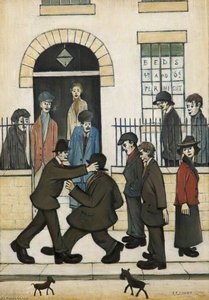
StatsFire Watcher (recto)
 Expressionism
 1943
1943 65.0 x 57.0 cm
 Read More
The artwork displayed on this page is protected by copyright law, which means we cannot legally create or sell an identical reproduction. This protection is enforced under international agreements such as the Berne Convention and by national laws, including those outlined by the U.S. Copyright Law - Title 17.
This method fully complies with copyright regulations because it does not involve copying or duplicating the protected artwork. Instead, it is a creative reinterpretation - a new painting that is influenced by the original but not identical to it.
Giclée / Art Print
Museum-quality giclée or canvas print with fast production and flexible finish options. ( Buy Hand Made Painting Switch to Digital Image)




































Pick from our preset sizes that match the artwork's original proportions.

Type the width and the height you need, to fit your frame or your wall. A print can only be cut, never made bigger than the picture, so a size with a different shape loses a part of the image. We send you a digital mockup to approve before we print anything. The picture shown on this page does not show the real cut — only the mockup does.
Worldwide Delivery () in 2 weeks instead of standard 4/5 weeks. (26 October)

Free Worldwide Express Shipping

High-Quality Linen Canvas

Full Shipping Insurance

Customs Tax Refund Guarantee

True Color Matching Guarantee

100-Day Return Policy (Defects Only)

100% Money-Back Guarantee

Bulk Discount Offer
 Glass option is only available in size under 110 CM

Fire Watcher (recto)
Giclée / Art Print
Reproduction Size
-


Total Price
$ 81
Artist Biography
The Quiet Observer of Industrial England
Laurence Stephen Lowry, born in the heart of Stretford, Cheshire, in 1887, remains one of Britain’s most beloved and distinctive voices in twentieth-century art. While his name is now synonymous with the gritty, evocative landscapes of Northern England, his journey to international acclaim was a slow, poignant ascent. For much of his life, Lowry lived as a quiet observer, working as a rent collector by day while honing his craft in the evenings. This dual existence allowed him to witness the rhythmic, often harsh, pulse of industrial life with a unique intimacy. His work does not merely represent the smoke-filled horizons of Salford and Pendlebury; it captures a profound sensitivity to the human condition, finding a quiet dignity within the stark realities of the industrial age.
Lowry’s artistic development was deeply rooted in his surroundings, yet his technical foundations were built upon a careful study of form and light. Initially influenced by the principles of Impressionism and Post-Impressionism, he sought to capture the essence of a scene rather than its mere surface. His early training at the Manchester Art School provided him with the tools to translate the sprawling factories and crowded streets into something much more symbolic. As his style matured, he moved away from grand narratives, choosing instead to focus on subtle nuances of observation. He often worked within a highly restricted palette—utilizing colors such as flake white, ivory black, vermilion, Prussian blue, and yellow ochre—to create compositions that felt both grounded in reality and elevated by a dreamlike, almost surrealist quality.
The Magic of the Matchstick Men
Perhaps the most enduring legacy of Lowry is his creation of the so-called "matchstick men." These stylized, simplified human figures, often depicted without shadows or distinct facial features, populate his urban landscapes with a sense of collective movement and shared destiny. Through these figures, Lowry transformed bustling street scenes into poetic meditations on community and solitude. Whether they are walking toward a football match, congregating near a mill, or wandering through a park, these characters embody the resilience of the working class. There is a haunting beauty in how he places these small, fragile forms against the backdrop of massive, brooding industrial structures, creating a tension between the monumental scale of industry and the delicate nature of human life.
Beyond his famous urban scenes, Lowry’s repertoire was surprisingly diverse, revealing an artist of great depth and curiosity. While the industrial landscape is his most celebrated subject, he also explored:
- Mysterious Unpopulated Landscapes: Brooding, atmospheric scenes that evoke a sense of solitude and the passage of time.
- Seascapes: Pure, elemental depictions of sea and sky that emerged from his fascination with the coast in the 1940s.
- Portraits: Intimate, often somber studies of individuals that showcase his ability to capture character through minimal detail.
- The "Marionette" Works: A collection of unpublished, surrealist-leaning pieces discovered only after his death, revealing a more experimental side of his imagination.
A Lasting Legacy in British Art
Though he achieved significant national fame following his first solo exhibition in London in 1939, Lowry’s true impact is felt in the way he redefined the English landscape. He did not seek to glorify progress or paint heroic vistas; instead, he found beauty in the mundane and the melancholic. His ability to find poignant beauty in the soot-stained streets of the North West has made his work a cornerstone of British cultural identity. Today, institutions such as The Lowry in Salford Quays serve as vital guardians of his immense legacy, housing one of the largest public collections of his work.
Lowry’s significance lies in his refusal to look away from the difficult realities of his era. By documenting the lives of ordinary people with such empathy and stylistic innovation, he ensured that the spirit of industrial England would be preserved not just as history, but as art. He remains a master of atmosphere, an artist who proved that even in the most crowded, industrial settings, there is a profound, quiet magic to be found.

Laurence Stephen Lowry
1887 - 1976 , United Kingdom
Quick Facts
- Full Name: Laurence Stephen Lowry
- Nationality: British
- Date Of Birth: 1887
- Date Of Death: 1976
- Place Of Birth: Stretford, United Kingdom
- Notable Artworks:
- An Old Street
- Swinton Moss
- Untitled (447)
- Artistic Movement Or Style: Industrial Painting
- Artists Who Influenced This Artist: ['Impressionism']
- Artists Or Movements Influenced By This Artist: ['Northern England Art']
Related Articles
Laurence Stephen Lowry: Chronicling Industrial Life with Poignant Beauty
Explore the poignant world of L.S. Lowry, Britain's iconic chronicler of industrial life. Discover his unique style, 'matchstick men', and captivating landscapes. Find original artwork & expert appraisal at OriginalUniqueArt.
British Museum Masterpieces: Explore 25 Iconic Artworks & Decor Inspiration
Journey through 25 iconic artworks at the British Museum, London! Explore masterpieces from Egyptian sculptures to Renaissance paintings & uncover their stories. Find museum-quality art reproductions and curated decor ideas on OriginalUniqueArt.com.

Philip Wilson Steer: Capturing Modern Life & British Impressionism's Essence
Explore the life & art of Philip Wilson Steer, a leading British Impressionist painter. Discover his coastal scenes, influences, and legacy. Expert analysis & high-quality reproductions at OriginalUniqueArt.
Mark Rothko's Masterpieces: 25 Paintings That Define Abstract Expressionism | OriginalUniqueArt
Explore 25 iconic Mark Rothko paintings that define Abstract Expressionism. Discover the stories, colors & emotions behind these masterpieces. Find museum-quality art reproductions and curated decor ideas at OriginalUniqueArt.com.

Crimson Threads of Narrative: Exploring Symbolism & Representation in Artworks Featuring the Red Dress
Explore the rich symbolism of the red dress in art history! From ancient power displays to iconic portraits like Cézanne’s 'Madame Cezanne', discover the cultural and artistic significance behind this captivating color. Expert analysis & insights.